Showing posts with label attention. Show all posts

Tuesday, May 10, 2011

Frequent Intermittent Rewards

Excerpt from "Fixated by Screens, but Seemingly Nothing Else," by Perri Klass, M.D., The New York Times, May 9, 2011:

Is a child’s fascination with the screen a cause or an effect of attention problems — or both? It’s a complicated question that researchers are still struggling to tease out.

The kind of concentration that children bring to video games and television is not the kind they need to thrive in school or elsewhere in real life, according to Dr. Christopher Lucas, associate professor of child psychiatry at New York University School of Medicine. “It’s not sustained attention in the absence of rewards,” he said. “It’s sustained attention with frequent intermittent rewards.”

The child may be playing for points accumulated, or levels achieved, but the brain’s reward may be the release of the neurotransmitter dopamine. Children with A.D.H.D. may find video games even more gratifying than other children do because their dopamine reward circuitry may be otherwise deficient.

Indeed, at least one study has found that when children with A.D.H.D. were treated with methylphenidate (Ritalin), which increases dopamine activity in the brain, they played video games less. The authors suggested that video games might serve as a kind of self-medication for these children.

So increased screen time may be a consequence of A.D.H.D., but some researchers fear it may be a cause, as well. Some studies have found that children who spend more time in front of the screen are more likely to develop attention problems later on.

In a 2010 study in the journal Pediatrics, viewing more television and playing more video games were associated with subsequent attention problems in both schoolchildren and college undergraduates.

The stimulation that video games provide “is really about the pacing, how fast the scene changes per minute,” said Dr. Dimitri Christakis , a pediatrician at the University of Washington School of Medicine who studies children and media. If a child’s brain gets habituated to that pace and to the extreme alertness needed to keep responding and winning, he said, the child ultimately may “find the realities of the world underwhelming, understimulating.”

Saturday, April 23, 2011

To Cultivate Attention

Excerpts from "Buddha Nature: Living in Attention," by Ken McLeod:

"It seems to me that the intention of all these practices is to cultivate attention, either by practicing attention directly or by removing what prevents attention from developing. Once attention is present, appropriate action, skillful means, bodhicitta, everything else flows quite naturally. There is no need for minute dissections of Buddhist ethics or philosophy. The phrase ‘Be there or be square’ acquired a new meaning for me. Very simply, attention reveals buddha nature and enables it to manifest in our lives...

Once I shifted my effort to paying attention to what was arising, doors started to open. I began to see a little more clearly what was going on. I'd had to let go of old ways of looking at things, some that I had learned in the course of my training, others going back much further to family patterns. The patterns became apparent. The function and purpose of the patterns also became apparent...

Bring the attention to what is arising and we know, directly, what needs to be done. This changed not only my own practice but how I tried to teach others. The source of that knowing is buddha nature. And the practice is very simple in principle: strip away whatever prevents it from manifesting.

Read the entire essay...

[Thanks, Kit !]

Tuesday, April 12, 2011

Compassion for Fun and Profit

“The first step is attention training. Attention is the basis of all higher cognitive and emotional abilities. Therefore, any curriculum for training emotional intelligence has to begin with attention training. The idea here is to train attention to create a quality of mind that is calm and clear at the same time. And this creates the foundation for emotional intelligence.”

~ Chade-Meng Tan, Google’s “Jolly Good Fellow,” talking about how the company practices compassion in its everyday business and the Search Inside Yourself program.

Thursday, March 31, 2011

People Perform Better When They Feel Committed and Engaged

Rich Fernandez, the Head of Learning and Organization Development at eBay, in conversation with Vince Horn, “Optimizing Awareness in Organizations,” Buddhist Geeks: Episode 211, March 14, 2011:

It’s almost as if with the evolution of technology and how we’ve optimized our machines, our software, our algorithms, our databases and data analysis capabilities. What comes next is optimizing our awareness and our consciousness and I think that’s increasingly something that is becoming paramount and evident in organizational life...

You know if we think about it, we all work from the age of 21 to the age of 67, 40 hours a week with a couple of weeks of vacation. That’s about 40% of our waking life spent at work -- ninety thousand hours spent at work and [during] that time we will spend most of our productive time, energy and attention.

And so cultivating the quality of the time and of the attention is increasingly paramount. That’s the case because it’s not only something that would be fulfilling for the worker or the member of the organization but it also is useful in terms of business outcomes.

Actually there’s a lot of data on this. In a workplace in which people feel committed, where they feel engaged, where they feel they’re able to really give the best of themselves and exhibit a lot of discretionary effort — when people have that level of commitment and a feeling of wellness they actually perform better.

Corporate Leadership Council and the Gallup Organization are studying hundreds of organizations and millions of employees. They’ve shown that people perform up to 20% better, for example, when they feel committed and engaged. And when they’re thriving they are 57% more productive and they are almost 90% less likely to leave organizations than others who don’t have that experience of well-being.

Well-being, mindfulness, living a sustainable work and outside life are actually differentiators in terms of how effective organizations are whether you’re mission be bottom-line driven, service driven or whatever it is that your organization is purposed for doing…

The consistent and dedicated exercise of mindfulness in the organization is kind of the underlying framework, if you will, that informs all these programs [at eBay]. Something that we’ve been doing at eBay is we’ve been bringing in mindfulness talks and [making] seminars available to employees as well as for some of our leaders and leadership teams…it’s impressive to see a room of 250 Internet employees, on at Thursday around 1:30 in the afternoon sitting in silence for 10 minutes.

See also:

Saturday, March 05, 2011

At Home in Both

Excerpt from “Just One Breath: The Practice of Poetry and Meditation,” by Gary Snyder, Tricycle Magazine, Fall 1991:

In this world of onrushing events the act of meditation—even just a "one-breath" meditation—straightening the back, clearing the mind for a moment—is a refreshing island in the stream. Although the term meditation has mystical and religious connotations for many people, it is a simple and plain activity. Attention: deliberate stillness and silence. As anyone who has practiced sitting knows, the quieted mind has many paths, most of them tedious and ordinary. Then, right in the midst of meditation, totally unexpected images or feelings may sometimes erupt, and there is a way into a vivid transparency. But whatever comes up, sitting is always instructive. There is ample testimony that a practice of meditation pursued over months and years brings some degree of self-understanding, serenity, focus, and self-confidence to the person who stays with it. There is also a deep gratitude that one comes to feel for this world of beings, teachers, and teachings.

No one—guru or roshi or priest—can program for long what a person might think or feel in private reflection. We learn that we cannot in any literal sense control our mind. Meditation cannot serve an ideology. A meditation teacher can only help a student understand the phenomena that rise from his or her own inner world—after the fact—and give tips on directions to go. A meditation teacher can be a check or guide for the wayfarer to measure herself against, and like any experienced guide can give good warning of brushy paths and dead-end canyons from personal experience. The teacher provides questions, not answers. Within a traditional Buddhist framework of ethical values and psychological insight, the mind essentially reveals itself.

Meditation is not just a rest or retreat from the turmoil of the stream or the impurity of the world. It is a way of being the stream, so that one can be at home in both the white water and the eddies. Meditation may take one out of the world, but it also puts one totally into it. Poems are a bit like this too. The experience of a poem gives both distance and involvement: one is closer and farther at the same time.

Read the entire essay…

@WhiskeyRiver

Saturday, January 29, 2011

Pinned to the Cushion

127Hours2

I was completely surprised to discover that Danny Boyle’s 127 Hours is much deeper than just a movie about someone who has to cut his arm off to survive. It’s also a brilliant account of being pinned to a de facto meditation cushion for an involuntary 5-day mindfulness intensive on the nature of thinking, feeling, the self, loving-kindness, and the liberation that can come from yielding to impersonal forces. The boulder deserves an Oscar nomination for a supporting role as both antagonist and teacher. I expected to feel uneasy, but instead I was completely absorbed in the clever depiction of an excruciating subjective experience of one person's suffering.

Aron Ralston said in one interview, "The entrapment created such an appreciation for the frolicking I had been doing until it happened and there was the euphoric feeling of being free and getting my life back again. Because of what happened, I understand what life is. I'm hopeful that people will see something inside of themselves, as well. I was in an extraordinary circumstance and it fundamentally came down to wanting to live and get back to my family. It is about survival, love and freedom — and those things are common in all of us."

The good news is that the profound yet practical insights Ralston carried out of Blue John Canyon can also be gradually cultivated through the consistent development of attentional skills over time. I enthusiastically recommend both the film and the effort required to experience high levels of concentration, sensory clarity, and equanimity without waiting for the conditions to become so extreme.

Sunday, January 16, 2011

Keeping the Button on Play

“We do have a rewind button. In fact, a lot of our life experience is actually not experienced. Our mind is in the past, ruminating, thinking back. Sometimes savoring, but in many occasions it’s thinking about the past and holding onto it. But our mind also has a fast forward where we’re thinking ahead and planning. Yet, what I want to suggest to you is that the most important thing we probably need to do in order to make sure our attention system is functioning fully, so that we’re able to actually experience the life we have, is probably to keep the button right on play. The question for me became: How do we cultivate our attention so that so that we’re actually paying attention to the present moment? And could there be a way we could train ourselves to be better able to pay attention to the present moment?

~ Dr. Amishi Jha, Associate Professor of Psychology, University of Miami

From the Schofield Barracks Training and Research on Neurobehavioral Growth (STRONG):

“Dr. Jha is a neuroscientist whose primary expertise is in understanding how the brain pays attention. Her team has been awarded grants from the Dept. of Defense, Medical Research and Material Command to conduct this project using computer-based experiments and brainwave recording to investigate if and how resilience training may improve the ways in which the brain can:

  • Pay attention
  • Be situationally aware (of one’s own immediate surroundings)
  • Be better able to manage and recover from stress

The U.S. Army realizes that body armor and physical exercise are necessary to protect soldiers’ bodies and keep them physically healthy. More recently, there has been great interest in understanding how soldiers’ brains and minds might also be best protected and kept healthy over the cycle(s) of military deployment.

The main purpose of the STRONG project is to understand if and how resilience training might provide soldiers with ‘mental armor.’

Just as daily physical exercise is important for physical fitness, neuroscientists are finding that regularly engaging in mental exercises may improve brain-fitness. The more ‘fit’ one’s brain, the better one may be at recovering from stress, solving complex problems in challenging circumstances, and handling high demands. Of course, making one’s body fit requires effort, discipline, and a commitment over a long period of time. So too does making one’s brain fit. This project aims to use cutting-edge neuroscience to measure how two different types of resilience training programs may help make soldiers’ brains and minds more fit so that they are best prepared for the upcoming challenges of deployment.”

*     *     *     *     *

See also: “In New Military, Data Overload Can Be Deadly,” by Thom Shanker and Matt Richtel, New York Times, Jan. 16, 2001

The Holy Grail of Brain Training


Illustration by Peter Arkle for Newsweek

Excerpt from “Can You Build a Better Brain?” by Sharon Begley, Newsweek, Jan. 10 & 17, 2011:

The rule that “neurons that fire together, wire together” suggests that cognitive training should boost mental prowess. Studies are finding just that, but with a crucial caveat. Training your memory, reasoning, or speed of processing improves that skill, found a large government-sponsored study called ACTIVE. Unfortunately, there is no transfer: improving processing speed does not improve memory, and improving memory does not improve reasoning. Similarly, doing crossword puzzles will improve your ability to?.?.?.?do crosswords. “The research so far suggests that cognitive training benefits only the task used in training and does not generalize to other tasks,” says Columbia’s Yaakov Stern.

The holy grail of brain training is something that does transfer, and here there are three good candidates. The first is physical exercise. Simple aerobic exercise, such as walking 45 minutes a day three times a week, improves episodic memory and executive-control functions by about 20 percent, finds Art Kramer of the University of Illinois at Urbana-Champaign. His studies have mostly been done in older adults, so it’s possible the results apply only to people whose brain physiology has begun to deteriorate—except that that happens starting in our 20s. Exercise gooses the creation of new neurons in the region of the hippocampus that files away experiences and new knowledge. It also stimulates the production of neuron fertilizers such as BDNF, as well as of the neurotransmitters that carry brain signals, and of gray matter in the prefrontal cortex. Exercise stimulates the production of new synapses, the connections that constitute functional circuits and whose capacity and efficiency underlie superior intelligence. Kramer finds that a year of exercise can give a 70-year-old the connectivity of a 30-year-old, improving memory, planning, dealing with ambiguity, and multitasking. “You can think of fitness training as changing the molecular and cellular building blocks that underlie many cognitive skills,” he says. “It thus provides more generalizable benefits than specifically training memory or decision making.”

The second form of overall mental training is meditation, which can increase the thickness of regions that control attention and process sensory signals from the outside world. In a program that neuroscientist Amishi Jha of the University of Miami calls mindfulness-based mind-fitness training, participants build concentration by focusing on one object, such as a particular body sensation. The training, she says, has shown success in enhancing mental agility and attention “by changing brain structure and function so that brain processes are more efficient,” the quality associated with higher intelligence.

Finally, some videogames might improve general mental agility. Stern has trained older adults to play a complex computer-based action game called Space Fortress, which requires players to shoot missiles and destroy the fortress while protecting their spaceship against missiles and mines. “It requires motor control, visual search, working memory, long-term memory, and decision making,” he says. It also requires that elixir of neuroplasticity: attention, specifically the ability to control and switch attention among different tasks. “People get better on tests of memory, motor speed, visual-spatial skills, and tasks requiring cognitive flexibility,” says Stern. Kramer, too, finds that the strategy-heavy videogame Rise of Nations improves executive-control functions such as task switching, working memory, visual short-term memory, and reasoning in older adults.

Read the entire article…

Friday, December 24, 2010

Capturing the Patient’s Attention

Dr. Richard Fratianne, from “Art and Medicine,” produced by Kerrie Hillman, Studio 360, December  10, 2010:

The problem is music therapy is not compensated by either governmental programs or private insurance policies, because there just isn't very much science in music therapy — yet. And so, I thought that it might be interesting to see if we could prove the value of music therapy in the burn center where pain and anxiety are really very, very high.

A burn injury is so profound that it effects every part of the person. It's not only physical and emotional, but it's an intellectual challenge and there's a spiritual threat because patients don't recognize who they are anymore. They don't feel the same. They don't look the same. Oftentimes they feel ashamed of how they look and they're so afraid. We chose burn patients because the pain is so severe and the anxiety is so high that we thought if we can prove that music therapy can actually have a positive effect in these patients, then we can rest assured that it's going to work in every patient.

Obviously, we can give pain medication, we can give sedatives and tranquilizers, but if it's a really painful dressing change there's no way you can relieve all of the pain except under anesthesia and you can't anesthetize a patient two or three times a day. The body won't tolerate it.

Music requires and integration of many parts of the brain. There's the motor part that's the physical response to playing or tapping to the rhythm of music. Then there's the limbic system, the emotional response to hearing music that brings forth feelings and thoughts and ideas. But also there's rhythm, there's tempo, there's melody — all of these things have to be integrated at the same time to appreciate music. It's amazing how the brain can do this.

The reason we need a professional music therapist to intervene in these painful procedures is that by their training they're able to capture the patient's attention. We call that entrainment. It is actively involving the patient in the musical experience. Because when their mind is diverted to participating in the therapy, they cannot think about the pain.

The earlier research just asked the patient before and after a musical experience, “Do you feel better yet?” That doesn’t really prove anything. It’s only when you’re dealing with patients like we’re dealing with in the burn unit that you can clearly identify changes in their response with music therapy. And we have done that.

One of our latest studies is utilizing the measurements of a stress hormone which is one of the products of the adrenal gland in response to stress. We know when patients are highly stressed these levels go up. And we’re measuring to see whether music therapy can actually depress those levels of the hormone. And our initial studies have shown that.

What we’re doing is new. We know that. And that’s why it’s exciting, because it is new. But the music can have a calming effect on people. How it works is still being discovered.

Sunday, December 05, 2010

The Impact of Meditation on Attention

Excerpts from Roundtable: Meeting of the Minds, Tricycle Magazine, Spring 2005:

Richard Davidson: Our initial work certainly indicates that meditation changes brain function. One of our hopes now is that a broader range of scientists will be inspired to examine the potential impact of contemplative practice on different behavioral domains. One of our goals is to launch studies that look at the impact of meditation on attention and the brain systems that support it.

We’ve been talking with experts who do experiments in which, for example, a person is required to focus on a specific object and ignore distractions. One question is whether training in meditation facilitates one’s capacity to do this, and, if it does, which parts of the brain are being affected.

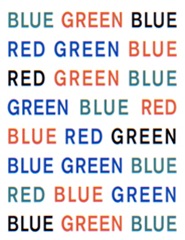
There are well-developed procedures in cognitive psychology for exploring such questions. The classic one is the Stroop Test. In one version of this test, the word “green” might be printed on a card in red, and the subject’s task would be to name the color in which the word was printed (red), ignoring the meaning of the word (green). Classically, people are slower in responding when the color of a word is inconsistent with the name of the word than when the two are the same: when the word “green” is printed in green, people are able to say “green” faster than when they’re looking at the word “green” printed in red. What this requires is that we inhibit our automatic response and focus our attention on the instructions given by the experimenter.

B. Alan Wallace: Shamatha [a meditative practice of calming the mind] is specifically aimed at controlling attention. When the word pops up, if you’re able to control your attention, you can say to yourself, “I’m not going to see the whole word. I’m going to focus on the middle of the word and ask only one question: What is its color?” If you’re looking at the whole word, the meaning of the word will compete for your attention, and you’ll be slowed down.

Attention training has broad applications. It would be helpful in the fields of education, mental health, and athletics as well as increasing individual creativity and problem-solving skills. And attention practice is crucial for cultivating the profound virtues of the heart and mind—lovingkindness, compassion, bodhicitta [awakened mind], and the realization of emptiness.

If, when anger or another afflictive emotion arises, you can say to yourself, “Never mind the object of my anger and the context; isn’t this interesting?” and investigate your own emotional state instead of merely reacting, you can also cultivate greater emotional balance and mental health.”

[Thanks, Jeanne!]

Wednesday, November 17, 2010

For One Minute

…or just look at this pole and try to relax the impulse to define it or interpret it or decide whether or not it is beautiful. Try to notice what it feels like to see, as if you had no words for any of the forms or colors in front of you, as if the words on the paper were written in a language you never learned to read.

…or let your gaze spread gently across your entire field of vision, taking in the area immediately in front of you, the farthest distance you can observe without straining, the right and left edges of your peripheral vision, and everything in between. Take it all in at once—the whole three-dimensional volume of visual space. This is what the present looks like. This is what it feels like to see without spinning a story. This is what it feels like to see as a young child sees, simply fascinated with the seeing itself. Sixty seconds can feel like a long time. Try stringing together several intervals of four or five seconds instead. 

…or listen to what this moment sounds like without needing to know the source of the sounds or to evaluate any of them as pleasant or unpleasant. Steep in the wonder of vibrations striking tiny bones inside your ears and massaging that space where all of the internal chatter plays out, wave after wave of internal sound. There’s no need to tamp down the internal sounds that well up as you’re listening. Allow them to play out as they will, trying to be aware of the silence between the waves. Use the activity of internal sound to remind you to spread your listening out in all directions and become absorbed by it. 

Wednesday, October 13, 2010

The Combustion of Egoistic Delusions

Excerpt from “This Very Moment,” by Charlotte Joko Beck, from Ordinary Magic: Everyday Life as Spiritual Path:

Back in the 1920s, when I was maybe eight or ten years old, and living in New Jersey where the winters are cold, we had a furnace in our house that burned coal. It was a big event on the block when the coal truck rolled up and all this stuff poured down the coal chute into the coal bin. I learned that there are two kinds of coal: one was called anthracite or hard coal, and the other was lignite, soft coal. My father told me about the difference in the way those two kinds of coal burned. Anthracite burns cleanly, leaving little ash. Lignite leaves lots of ash. When we burned lignite, the cellar became covered with soot and some of it got upstairs into the living room.

What does this have to do with our practice? Practice is about breaking our exclusive identification with ourselves. This process has sometimes been called purifying the mind. To “purify the mind” doesn’t mean that you become holy or other than you are; it means to strip away that which keeps a person—or furnace—from functioning best.  The furnace functions best with hard coal. But unfortunately what we’re full of is soft coal. There’s a saying in the Bible: “He is like a refiner’s fire.” It’s a common analogy, found in other religions as well. To sit in meditation is to be in the middle of a refining fire. Eido Roshi said once, “This meditation hall is not a peaceful haven, but a furnace room for the combustion of our egoistic delusions.” A meditation hall is not a place for bliss and relaxation, but a furnace room for the combustion of our egoistic delusions. What tools do we need to use? Only one. We’ve all heard of it, yet we use it very seldom. It’s called attention.

Attention is the cutting, burning sword, and our practice is to use that sword as much as we can. None of us is very willing to use it; but when we do—even for a few minutes—some cutting and burning take place. All practice aims to increase our ability to be attentive, not just in meditation but in every moment of our life.

Tuesday, October 05, 2010

The Power of Mindful Awareness

"The goal of becoming a better person is within the reach of us all, at every moment. The tool for emerging from the primitive yoke of conditioned responses to the tangible freedom of the conscious life lies just behind our brow. We need only invoke the power of mindful awareness in any action of body, speech, or mind to elevate that action from the unconscious reflex of a trained creature to the awakened choice of a human being who is guided to a higher life by wisdom."

~ Andrew Olendzki, Unlimiting Mind: The Radically Experiential Psychology of Buddhism

Here is a video interview from May 2010 in which Andrew Olendzki discusses his book with Tricycle’s Joan Duncan Oliver.


[Thanks, Whiskey River!]

Friday, October 01, 2010

Negativity Bias

horse_frightened_by_a_lion

Horse Frightened by a Lion, by George Stubbs

Excerpt from Rapt: Attention and the Focused Life by Winifred Gallagher:

According to psychology’s ‘negativity bias theory,’ we pay more attention to unpleasant feelings such as fear, anger, and sadness because they’re simply more powerful than the agreeable sort…An all too-abundant body of evidence attests to psychological pain’s bottom-up grip on your attention. In a survey of which topics we spend the most time thinking about, problematic relationships and troubled projects topped the list. You’ll work harder to avoid losing money than you will to gain the same amount. If you hear both something positive and something negative about a stranger, you’ll take the negative view. If something bad happens, even if something good does too, you’ll still feel dispirited. You’re likelier to notice threats than opportunities or signs that all’s well.

The grim testimony to a dark emotion’s way of grabbing your attention goes on and on. You’ll spot an angry face in a crowd of cheery people much faster than a cheery one in an angry crowd. You’ll process and remember negative material better than the positive sort. You’ll spend more time looking at photographs depicting nasty rather than nice behavior and react to critical words more slowly and with more eye blinks—signs of greater cognition—than to flattering ones…

For the species in general and the individual in particular, the main advantage of paying attention to an unhappy emotion is that it attunes you to potential threat or loss and pressures you to avoid or relieve the pain by solving the associated problem. Thus, your fear of becoming ill induces you to get a flu shot. Your guilt over a divorce pushes you to give extra consideration to the children. Your shame at being fired hardens your resolve to go out there and get an even better one.

Wednesday, September 22, 2010

Exercising Our Attention Potential

From “The Focused Life,” by Winifred Gallagher, from her book, Rapt: Attention and the Focused Life:

rapt Abundant research shows that most of the rich and famous, brainy and beautiful are little or no happier than individuals of ordinary means and gifts, because no matter who you are, your joie de vivre mostly derives from paying attention to someone or something that interests you. Even in the hell of the Nazi death camps, many inmates avoided depression because they took charge of and concentrated on the one thing that was left to them: their inner experience. The rates of psychological problems as well as mortality among people in extreme situations such as shipwrecks and plane crashes in remote areas are surprisingly low—often lower than in normal settings. Vicissitudes notwithstanding, these people are not sitting around brooding about the past or killing time by channel surfing but are living the focused life.

It’s not a coincidence that the term distracted once referred not just to a loss or dilution of attention but also to confusion, mental imbalance, and even madness. It’s all too easy to spend much of your life in such an unfocused, mixed-up condition, rushing toward the chimera of a better time and place to tune in and, well, be alive. It’s the fashion to blame the Internet and computers, cell phones and cable TV for this diffused, fragmented state of mind, but our seductive machines are not at fault. The real problem is that we don’t appreciate our own  ability to use attention to select and create truly satisfying experience. Instead of exercising this potential, we too often take the lazy way out, settle for less, and squander our mental money and precious time on whatever captures our awareness willy-nilly, no matter how disappointing the consequences.

Where the quality of your life is concerned, focus is not everything, but it is a great deal. The question is: If all the world’s a stage, as Shakespeare puts it, where do you shine the spotlight of your attention?

Thursday, September 02, 2010

Attention Fitness

Excerpt from “How to Focus,” by Clay Johnson, InfoVegan.com:

Many people want the ability to focus more and feel like they’re losing the ability to focus on a particular task for long periods of time. We feel like we’re losing that ability. Getting Things Done and all the other books out there tend to give you some rituals to cope with the problem— but only if you could stick to them. Most of us, just a few weeks after reading that book, sit next to filing cabinets (virtual or otherwise) and go about our merry way.

That’s because we’re focused on the wrong thing. To get a longer attention span — even a span long enough to read this article — don’t worry about managing the information. Worry about managing your attention. Paying attention, for long periods of time, is a form of endurance athleticism. Like running a marathon, it requires practice and training to get the most out of it. It is as much Twitter’s fault that you have a short attention span as it is your closet’s fault it doesn’t have any running shoes in it. If you want the ability to focus on things for a long period of time, you need attention fitness.

Neuroplasticity is how your brain changes its organization over time to deal with new experiences. It involves physical changes inside of the brain based on the particular tasks the brain is asked to complete. It’s why the hippocampus of a seasoned taxi driver in London is larger than average, and how a meditating monk grows grey matter. Your brain isn’t a mythological deity but a physical part of your body that needs to be taken care of just like the rest of your body. And your body responds to two things really well — diet and exercise. Let’s presume your brain, being a part of the body, also does.

Things like Inbox Zero or cutting down on meetings may be handy tricks, but they don’t take neuroplasticity into account. The bet there is that you have a finite amount of attention to spend, and that attention range isn’t changeable. That stuff is handy for making the best use of your limited attention span, but it’s not going to improve your attention span. It’s not going to stop your brain from being easily distracted or unfocused if you’ve already trained it to be that way.

Read the entire essay …

Monday, August 30, 2010

Seeing for Yourself What Works

Excerpt from “The Problem with Meditation Instructions,” by Jason Siff, Tricycle.com

Unlearning_Cover_Chosen.indd Although we are not often taught this, the most skillful way through an impasse in meditation is to become aware of it and of what holds it together and keeps it running. To do this, you need to keep doing the meditation instructions that have gotten you to this point, but instead of following them “harder,” try approaching them in a softer, gentler manner. Do them loosely, and don’t do them all of the time. Instead, try doing them when it is easy to do them, or, when you feel you need to. But also be willing not to do them every single time you feel the need.

By adding flexibility and choice to a meditation practice that has become rigid and restrictive, we move our attention away from a narrow focus on doing the instructions correctly to a broader awareness of how we are doing the instructions. We discover that sometimes we are using the instructions to get to some desired or anticipated meditative state and other times we are using them to avoid certain feelings, memories, or thoughts. Then there are those times when we would otherwise feel lost and confused in our meditation sittings and need the instructions as an anchor. There are many ways we have held onto the instructions we have received, so by giving more space around them and giving ourselves permission not to follow them, we can begin to see what they are actually doing for us.

*     *     *     *     *

There is a middle way here between the extremes of rigidity and passivity, one that offers a more legitimate form of meditation. The beginning instructions I have given for nearly two decades provide just enough of a grounding in the seated body for the meditator to develop a capacity to be with thoughts, feelings, and sensations as they arise. These suggestions are loose and open, but you can make them tighter if you need to. The instructions are as follows:

Sit in a comfortable position, one that you would not need to change during the sitting. If you do need to change your position, do so slowly and consciously. You may also lie down, but try to adopt a position that you would not normally sleep in.

Bring your attention to the touch of your hands resting in your lap or on your thighs. But do not try to hold your attention there. Allow thoughts, feelings, and sensations to arise, and let your attention go with them.

If your attention leaves the touch of the hands for a long period of time (several minutes), you can gently bring your attention back. Otherwise, just sit with what comes up. If you encounter an experience that is hard to tolerate, after a while of being with it you can bring your attention back to the touch of the hands. But only hold it there long enough to feel grounded or relaxed, and then, if your mind goes into that kind of experience again, just let it.

People have made rules out of these instructions, and you might too. That is fine. At some point, hopefully, you will become aware of those rules. But, for now, it is enough to know that there is no way to do this wrong, as it is not about following an instruction as much as about allowing your experiences to unfold. Seeing for yourself, from your own experience, what works and what doesn’t is what meditation is all about.

Monday, August 16, 2010

Off the Grid in Search of the Holy Grail

“Attention is the holy grail. Everything that you’re conscious of, everything you let in, everything you remember and you forget, depends on it.”

~ University of Utah psychology professor David Strayer, from “Outdoors and Out of Reach, Studying the Brain,” by Matt Richtel, New York Times (August 15, 2010)

PS Dozens of people responded to New York Time’s challenge to try giving up technology and report back about the experience. Check out their stories at The Unplugged Challenge.

[Thanks, Kit!]

Thursday, August 12, 2010

Instructions

Red Bird: Poems Instructions for living a life:
Pay attention.
Be astonished.
Tell about it.

~ Mary Oliver, from “Sometimes

Wednesday, August 11, 2010

I Have to Call Myself Back

“I’m very bad when it comes to worship. This is just me. This is probably a terrible thing to say [in a church], but I don’t need it very much. I try to live in this kind of presence and a kind of awareness and I have to call myself back time and time again to remembrance of who I am. Partly, I think, all that’s because as a kid, as a Presbyterian, I had to go to church four times on Sunday. That wears out your patience and your ass. I’ve sort of done my stint. But that’s just me. It’s not other people.”

~ Sam Keen, author of In the Absence of God: Dwelling in the Presence of the Sacred