Showing posts with label emptiness. Show all posts

Saturday, May 14, 2011

Beyond the Mind

Excerpts from Emptiness Dancing by Adyashanti:

The mind can’t fathom that there can be a true intelligence, a transcendent intelligence, that isn’t the product and outcome of thought and conceptual understanding. It can’t fathom that there could be wisdom that’s not going to come at you in the form of thoughts, in the form of acquired and accumulated knowledge.

The true spiritual urge or yearning is always and invitation beyond the mind. That’s why it’s always been said that if you go to God, you go naked or you don’t go at all. It’s the same for everybody. You go in free of your accumulated knowledge, or you are forever unable to enter. So an intelligent mind realizes its own limitation, and it’s a beautiful thing when it does.

When you stop holding on to all the knowledge, then you start to enter a different state of being. You start to move into a different dimension. You move into a dimension where experience inside gets very quiet. The mind may still be there chatting in the background, or it might not, but consciousness is no longer bothering itself with the mind. You don’t need to stop it. Your awareness just goes right past that wall of knowledge and moves into a very quiet state…

…Once your conceptual world of knowledge gets put in its rightful place, it is transcended. You see that you are eternal consciousness now appearing as woman or man, this or that character. But like every good actor, you are not what you are appearing as. Everything that exists is consciousness appearing as, or God appearing as, or Self appearing as, or spirit appearing as. The Buddha called it no-self. When that’s seen, you see Unity. There is only God. That’s all there is: God appearing as floor, as a human being, as a wall, as a chair.

No knowledge, no statement of the Truth touches what’s eternal, what you really are. And no statement about how to get there is true either, because what gets one person there doesn’t get another person there. A mind that likes to look for the one truth path cannot find it. Of course, the mind doesn’t like that. “No right path? Nothing that could be said or read that ultimately, in the end, could be true? The most enlightened being can’t speak the Truth?”

No. It’s never been done, and it never will be done. The only thing you can do is to put a pointer on the way that says, “Look that way.” A false spiritual arrow is one that points to the wall and says, “Look this way.” A true arrow is one that points beyond the wall of concepts.

Saturday, April 23, 2011

Silence No One Hears

Poem with No Speaker
by Franz Wright, from Earlier Poems

Are you looking
for me? Ask that crow

rowing
across the green wheat.

See those minute air bubbles
rising to the surface

at the still creek's edge—
talk to the crawdad.

Inquire
of the skinny mosquito

on your wall
stinging its shadow,

this lock
of moon

lifting
the hair on your neck.

When the hearts in the cocoon
start to beat,

and the spider begins
its hidden task,

and the seed sends its initial
pale hairlike root to drink,

you'll have to get down on all fours

to learn my new address:
you'll have to place your skull

besides this silence
no one hears.

Thursday, August 12, 2010

Appreciating Nothing

This presentation was my contribution to Pecha Kucha Night Columbus this evening.

Sunday, July 18, 2010

Emptiness and Fullness

“We realize this life as something always off its balance, something in transition, something that shoots out of a darkness through a dawn into a brightness that we feel to be the dawn fulfilled. In the very midst of the continuity our experience comes as an alteration. ‘Yes,’ we say at the full brightness, ‘this is what I just meant.’ ‘No,’ we feel at the dawning, ‘this is not yet the full meaning, there is more to come.’ In every crescendo of sensation, in every effort to recall, in every progress towards the satisfaction of desire, this succession of an emptiness and fullness that have reference to each other and are one flesh is the essence of the phenomenon.”

~ William James, from A Pluralistic Universe (Chapter 7: The Continuity of Experience)

Not Different

Spring, Summer, Fall, Winter...and Spring

“Form is emptiness; emptiness is form. Form is not different than emptiness; emptiness is not different than form.”

~ Heart Sutra

Friday, July 16, 2010

In the Shade of Our Names

“Our name shelters a stranger, about whom we know nothing except that he is we ourselves.”

~ Octavio Paz


Between Going and Staying
by Octavio Paz

Between going and staying the day wavers,
in love with its own transparency.
The circular afternoon is now a bay
where the world in stillness rocks.

All is visible and all elusive,
all is near and can't be touched.

Paper, book, pencil, glass,
rest in the shade of their names.

Time throbbing in my temples repeats
the same unchanging syllable of blood.

The light turns the indifferent wall
into a ghostly theater of reflections.

I find myself in the middle of an eye,
watching myself in its blank stare.

The moment scatters. Motionless,
I stay and go: I am a pause.

Thursday, June 24, 2010

We Can Be with Both

“Psychology has refined such a nuanced observation, understanding and insight about the particulars of our human psyches. And certain existential truths that are universal, of course. And there is a realm that we call absolute or universal. It’s not separate. We can call it emptiness, there are so many names. But it’s completely interwoven. It’s one with, it’s connected to, the words don’t express the fact that it’s not  separate from the particular. And the trick for us as practitioners, whether we are practitioners of psychology or meditation, is to really see and unite these experiences so that we can be present with the ordinary moments of our life, and more and more hold an understanding of those moments as Weeds and Purple Flowersbeing deeply significant, expressions of the truth of that moment. Not truth with a capital T that some reified, always true…but the truth of that moment because it’s life. It’s life in the form of you, me, this moment of experience. And then, when we really can truly know that, so many things are possible for us. We don’t have to be afraid of experience or afraid of our own minds. Of course, we like flowers, we hate weeds. We wish for happy experiences and we kind of dread scary sad ones. But as practitioners we can really be with both.”

~ Trudy Goodman, from “Zen, Vipassana, and Psychotherapy,” Buddhist Geeks Podcast: Episode 173 (May 24, 2010)

Friday, April 02, 2010

Ism After Ism

Poems should be more like essays and essays should be more like poems.

~ Charles Olson

Two of every sort shall thou bring into the Ark.

~ Genesis

*     *     *

Religion
by Stephen Dunn, from Riffs and Reciprocities: Prose Pairs

Riffs & Reciprocities: Prose Pairs First, it was more about mystery than about trying to get us to behave. Whichever, we’re still in some lonely cave, not far from that moment a lightning storm or a sunset drove us to invent the upper reaches of the sky. Religion is proof that a good story, we'll-told, is a powerful thing. Proof, too, that terror makes fabulists of us all. We’re pitiful, finally, and so oddly valiant. The dead god rising into ism after ism—that longing for coherence that keeps us, if not naive, historically challenged. To love Christ you must love the Buddha, to love Mohammed or Moses you must love Confucius and, say Schopenhauer and Nietzsche as well. They were all wise and unsponsored and insufficient, some of the best of us. I’m saying this to myself: the sacred cannot be found unless you give up some old version of it. And when you do, mon semblable, mon frère, I swear there’ll be an emptiness it’ll take a lifetime to fill. Indulge, become capacious, give up nothing, Jack my corner grocer said. He was pushing the portobellos, but I was listening with that other, my neediest ear.

Thursday, March 04, 2010

The Same Enlightenment

Filmed in Nov. 2009 at Mt. Carmel Spiritual Centre in Niagara Falls.

Friday, February 05, 2010

Nothing Made Modern Science Possible

sifr“Our word cipher, meaning zero or nothing, comes from the Arabic word Sifr, meaning zero. We call our numbers Arabic numerals, but they actually came from India. It was the Arabs, however, who brought the Indian numerals to Europe. It took centuries to convince Europeans to use them, even  though they made calculations easier than using clumsy Roman numerals. Medieval Arab scholars also took the Indian idea of representing zero (the Arabs use a dot, ٠). This enables us to write all numbers with only ten symbols (0 to 9). Without the use of the zero, modern science would be impossible!”

~ Barbara Whitesides, from Sugar Comes from Arabic: A Beginner's Guide to Arabic Letters and Words

[See also: Zero and One & Zero: The Biography of a Dangerous Idea]

Saturday, December 26, 2009

Between Waking and Dreams

Photo of western Arctic Ocean, north of Alaska, taken out of an airplane window at about 200 feet above the ice by Jeff Key.

Balance
by Adam Zagajewski
Translated by Clare Cavanagh

I watched the arctic landscape from above
and thought of nothing, lovely nothing.
I observed white canopies of clouds, vast
expanses where no wolf tracks could be found.

I thought about you and about the emptiness
that can promise one thing only: plenitude—
and that a certain sort of snowy wasteland
bursts from a surfeit of happiness.

As we drew closer to our landing,
the vulnerable earth emerged among the clouds,
comic gardens forgotten by their owners,
pale grass plagued by winter and the wind.

I put my book down and for an instant felt
a perfect balance between waking and dreams.
But when the plane touched concrete, then
assiduously circled the airport's labryinth,

I once again knew nothing. The darkness
of daily wanderings resumed, the day's sweet darkness,
the darkness of the voice that counts and measures,
remembers and forgets.

Sunday, May 03, 2009

The Comfort of Being Strangers to Ourselves

The Night, The Porch
by Mark Strand, from New Selected Poems

To stare at nothing is to learn by heart
What all of us will be swept into, and baring oneself
To the wind is feeling the ungraspable somewhere close by.
Trees can sway or be still. Day or night can be what they wish.
What we desire, more than a season or weather, is the comfort
Of being strangers, at least to ourselves. This is the crux
Of the matter, which is why even now we seem to be waiting
For something whose appearance would be its vanishing—
The sound, say, of a few leaves falling, or just one leaf,
Or less. There is no end to what we can learn. The book out there
Tells us as much, and was never written with us in mind.

Thursday, April 09, 2009

Mandatum Novum

Today is Maundy Thursday, the Christian holy day commemorating The Last Supper of Jesus with his disciples.

The word Maundy is derived through Middle English, and Old French mandé, from the Latin mandatum. It refers to the "new mandate" given by Jesus to his apostles. The Gospel of John tells the story of Jesus illustrating the significance of this mandate by washing the feet of his disciples before sharing his last meal with them on the night before he was crucified.

Christ Washing the Feet of his Disciples, Rembrandt, c. 1655 Mandatum novum do vobis ut diligatis invicem sicut dilexi vos.

“A new commandment I give unto you, That you love one another as I have loved you.”

John 13:34

Thomas Merton wrote: True emptiness is that which transcends all things and yet is imminent in all. For what seems to be emptiness in this case is pure being. But it's not this or that. Whatever you say of it, it is other than what you say. The character of emptiness, at least for a Christian contemplative, is pure love, pure freedom. Love that is free of everything, not determined by any thing or held down by any special relationship. It's love for love's sake. It's a sharing through the Holy Spirit in the infinite charity of God. And so when Jesus told his disciples to love, he told them to love as universally as the Father who sends rain alike on the just and the unjust. This purity, freedom, and indeterminateness of love is the very essence of Christianity.

Sunday, April 05, 2009

Zero and One

Shinzen Young talks about zero and one as the two main paradigms used to describe the path of enlightenment. He then talks about having a complete experience of feel, image, and talk—or the subjective self—and experiencing ordinariness as extraordinary, and experiencing the extraordinary as ordinary. Filmed in Santa Barbara in January 2009.

Friday, November 28, 2008

An Illusion of Continuity

From It’s Up to You: The Practice of Self-Reflection on the Buddhist Path by Dzigar Kongtrül:

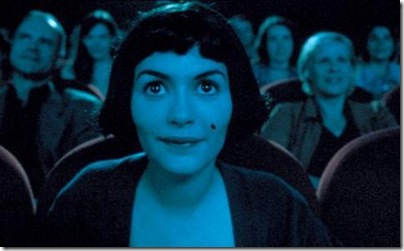
It's Ups to You: The Practice of Self-Reflection on the Buddhist Path When we’re watching a movie in the theater, we can relax and enjoy the show because we know it’s an illusion. This magical display that we’re watching is the result of a projector, film, light, screen, and our perceptions coming together. In separate momentary flashes of color, shapes, and sound, they create an illusion of continuity, which we perceive as characters, scenery, movement, and language. What we call “reality” works much the same way. Our ability to know, our sense perceptions, the seed of our past karma (the residue of our past actions), and the phenomenal world all come together to create our life’s “show.” All of these elements have a dynamic relationship, which keeps things moving and interesting. This is known as interdependence.

When we look around us, we can see that nothing exists in isolation, which is another way of saying that everything is interdependent. Everything depends upon an infinite number of causes and conditions to come into being, arise, and fall away moment by moment. Because they are are interdependent, things don’t possess a true existence of their own. For instance, how could we separate a flower from the many causes and conditions that produce it—water, soil, sun, air, seed, and so forth? Can we find a flower that exists independently from these causes and conditions? Everything is so intricately connected it is hard to point to where one thing starts and another ends. This is what is meant by the illusory or empty nature of phenomenon.

The outer world in all its variety and our inner world of thoughts and emotions are not as they seem. All phenomenon appear to exist objectively, but their true mode of existence is like a dream: apparent yet insubstantial. The experience of emptiness is not found outside the world of ordinary experience, as many people mistakenly assume. In truth, we experience emptiness when the mind is free of grasping at appearance.

Seeing the emptiness of the phenomenal world relieves us of the heavy notion of things being solid or intrinsic. When we understand that nothing exists independently, everything that does arise seems more dreamlike and less threatening. This brings a deep sense of relaxation, and we feel less need to control our mind and circumstances. Because the nature of everything is emptiness, it is possible to view our life the way we would view a movie. We can relax and enjoy the show.

[Thanks Sue!]

Le Fabuleux destin d'Amélie Poulain

Monday, November 03, 2008

Not the Center of the Universe

From "The Cosmos and You," Education Life, New York Times (10.30.08):

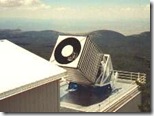
Yorke Brown designed the primary mirror support servos on the ARC and SDSS telescopes at Apache Point Observatory. For his lecture course at Dartmouth last summer, “Astronomy 3: Exploring the Universe,” Prof. Yorke Brown gave a quiz at week’s end. “Any questions?” he asked, just before one on the life cycle of stars. Just one. Johanna Evans, an English major, wanted to know: “How do you keep from despairing at the immensity of space and the smallness of us?” Professor Brown acknowledged that it was “a beautiful and important question,” but, he wondered, could it wait until after the quiz? Here are excerpts from the follow-up e-mail exchange. Subject line: Despair.

MS. EVANS: I guess the hugeness of what we are studying finally caught up with me once we broke out of the basic principles of physics. It was like opening up an unused compartment in my brain, as though one part were used to think about things that concerned my earthly sphere, and this other newly discovered part was meant to — but not ready to — grapple with HUGE realities. I felt as though the impact of my existence is small, compared to something like the impact of a supernova.

DR. BROWN: Johanna, you are most certainly an infinitesimal in the cold vastness of the cosmos, and yes, you are only one of billions of humans and other creatures who have come before and will come after, and your life is barely a mathematical instant in the span of time. But you are also, just as certainly, a miracle: you are a creature capable of thought, of wonder, of awe. You are a creature capable of recognizing that you are not the center of the Universe. And it is because of that very capacity that you can see in other people the same intrinsic value that you see in yourself. You are capable of love, and so need not despair of insignificance. See you Monday.

[Thanks Matt!]

Tuesday, September 23, 2008

A Complete Experience

Excerpt from a talk given by Shinzen Young on January 3, 2008:

To have a complete experience is to love something to death and to know it to death. Whether it’s your self or any sensory event, big or small.

When you love it to death and know it to death, you’re too busy experiencing it to make an object out of it, so in a sense it’s not there. But it’s not there because you’re so busy knowing it, so it’s more there.

It’s both more there and less there than normal human experience. Therefore it's a kind of todo and a kind of nada, a kind of completeness and a kind of nothingness at exactly the same time. Which sounds paradoxical, sort of ridiculous actually, logically speaking.

But I would have to say that most people, from my point of view, are half-alive and half-dead and they call that living. The spiritual path, or the path to enlightenment, is about being completely alive and completely dead at exactly the same time. And that’s what might be called real living, true living.

So knowing it to death is both rich and — at the same time — vacuous. And loving it to death, it’s through this absolute affirmation for it to be just as it is that its vacuity becomes experienced directly.

Sunday, April 13, 2008

Form and Space

"When the eye finds nothing to see, that no-thingness is perceived as space. When the ear finds nothing to hear, that no-thingness is perceived as stillness. When the senses, which are designed to perceive form, meet an absence of form, the formless consciousness that lies behind perception and makes all perception, all experience, possible, is no longer obscured by form. When you contemplate the unfathomable depth of space or listen to the silence in the early hours before sunrise, something within you resonates with it as if in recognition. You sense that vast depth of space as your own depth, and you know that precious stillness that has no form to be more deeply who you are than any of the things that make up the content of your life."

...

"A sane, balanced, and fruitful human life is a dance between the two dimensions that make up reality: form and space. Most people are so identified with the dimensions of form, with sense perceptions, thoughts, and emotions, that the vital hidden half is missing from their lives. Their identification with form keeps them trapped in ego."

~ Eckhart Tolle, A New Earth: Awakening to Your Life's Purpose

Thursday, March 27, 2008

Escaping Into Life

Shinzen Young from "Escaping Into Life," and interview with Michael Toms:

If I were required to give a "quick and dirty" definition of meditation, it would be that meditation is the practice of escaping into life. It's escape in the sense that one does not feel limited by the mind/body process or the surrounding situation. But, the direction of escape is not from what's happening, but rather into it.

This is very challenging. It's challenging to understand, and it's challenging to do. The experience of escaping into something is totally different from merely being passionately involved in it. When we ingenuously try to describe this experience, it comes out sounding like we are playing with words, fabricating paradoxes to shock or impress people. Escaping into something simply means having a radically complete experience of it. A radically complete experience is rich and fulfilling, but it is also empty and transparent. I sometimes say that we Buddhists are our own worst public relations representatives because our vocabulary seems designed to turn people off. You know, we are always talking about emptiness, no self, void.

...But the nothingness of the mystic is a very special kind of nothingness. The nihil of Meister Eckhart is not the nihil of nihilism. The nada of St. John of the Cross is not "nada." Nothingness is a terminus technicus, a well-defined technical term in the vocabulary of world mysticism.

Hinduism, Buddhism, Judaism, Christianity, Islam, and Taoism differ radically in their beliefs and customs. Yet, the mystics who represent the core of these traditions often speak of the Spiritual Source as a special kind of nothing. Historically, this can only partially be explained as the result of mutual influences. Despite what some New Age books would have you believe, these formulations arose independently in India, China, and the West before there was significant contact. So, we are faced with some fascinating questions. Why should they agree on such a counter-intuitive (if not downright offensive) description of God when they disagree in so many other areas? And furthermore, why does the mystic's description of the awesome creative power of nothingness sound so similar to contemporary theories of cosmology and quantum physics? Is it coincidence or convergence?

As a person of Jewish ancestry, I find it deeply satisfying that the description of God's creative activity as it appears in the Kabbalah is remarkably parallel to that of my present teacher Joshu Sasaki Roshi, contemporary Japanese Zen Master. The goal of Jewish meditation is to experience Briah yesh me ayn. In Hebrew: Briah (the creation) yesh (of things) me (from) ayn (nothing). Ayn is synonymous with Ha Makom, the Source, i.e., God. Moreover, in Kabbalah, creation is conceived as happening continuously. God literally loves us into existence each moment through the oscillating interplay of hesed (expansion) and gevurah (contraction).

Physicists speak of the creative power of quantum fluctuations of the void. This seems remarkably similar to the descriptions of mystics, especially Buddhist mystics. At the very least, it provides us with some wonderful metaphors. The enlightened people of the world can now stand up and say, "I know that what I'm trying to describe to you sounds weird and paradoxical, but it's not any weirder than these widely accepted theories of science, and as a matter of fact, it's rather similar to them."

...the concept of wave-particle complementarity is extremely useful in explaining certain aspects of meditative experience. The basic idea behind complementarity is that objects can be looked upon either as waves or particles. "Particle" does not necessarily imply "small." Any chunk of matter is a particle-a bowling ball, or the earth itself. Associated with every particle is its wave function.

When you think about it, it's absolutely astonishing, because particles and waves seem to be so fundamentally different. Particles are rigid and separate-two billiard balls recoil if they collide. Waves are bending and interactive-two water waves immediately merge upon contact. Particles have established boundaries and fixed centers. Waves expand and contract. A particle retains scratches and is vulnerable to shattering force. If you attempt to scratch or shatter a wave, it simply digests the energy of the attack into itself.

The practical implication of complementarity lies in the fact that some applications work better from the wave perspective, while other applications work better from the particle perspective. The issue boils down to knowing which perspective is appropriate, and the fact that the engineer always has the freedom to choose either one.

Spiritual freedom is very much like this. For some life applications, we must congeal the mind and body into a separate particular person-for example, when you need to figure stuff out or negotiate a contract. The problem is that most people are limited to the particulate perspective only. They are unable to immediately switch to the undulatory paradigm when they encounter situations that work better with the wave self. What situations are those? Well, let me give you just a few representative examples: enjoying a morsel of food, experiencing bereavement, making love, being embarrassed in public, and praying.

Once again, the issue here is freedom - freedom to adopt the most appropriate perspective. If you cannot dissolve into a wave, you are missing out on a lot of life. Naturally, death is frightening. Indeed, there are human experiences for which the wave self is not only appropriate, but absolutely essential. To attempt to pass through these experiences while maintaining a separate particulate self causes unspeakable suffering. Acute physical or emotional pain, chronic pain, and, of course, death itself, are in this category.

Sunday, March 23, 2008

Resurrection is the Heart of Buddhism

From Parallels Between Buddhism and Christianity, a talk given by Shinzen Young:

My teacher Sasaki Roshi used to quite regularly hold Zen retreats at a Trappist Monastery where Father Thomas Keating used to be the abbot. He would go in and put on the Trappist robes and he'd make up Christian kōans for the monks.

The first kōan he gave them was What is your experience of God when you make the sign of the cross?

He would also describe Buddhism in terms of Christianity. He would ask them questions like What was Jesus's experience of God when he was on the cross?

He would say, "Resurrection is the heart of Buddhism. Unless you understand about resurrection, you cannot understand what Buddhism is about. Dying is the easy part. The resurrection is the hard part. Any religion that doesn't teach resurrection is a false religion." He was talking about his own experience which is why he would say it with such conviction.

Do you understand what he meant when he said resurrection is the heart of Buddhism? Well, it goes back to the experience of no self and full self. Allowing the self to dissolve is half of the enlightenment experience. Allowing the self to reform without interference, that's resurrection, isn't it?

Thomas Merton wrote, "All the paradoxes about the contemplative way are reduced to this one: being without desire means being lead by a desire so great that it is incomprehensible. It's too huge to be completely felt. It's a blind desire, which seems like a desire for nothing. Only because nothing can content it. And because it is able to rest in no thing, then it rests, relatively speaking, in emptiness. But not in emptiness as such, emptiness for it's own sake, actually there's no such entity as pure emptiness. And the merely negative emptiness of the false contemplative is a thing, not a nothing."

[It's very true. In other words, the negative emptiness, empty in the sense of your bank account is empty, that's not the emptiness that the meditator is talking about. That's actually a thing.]

"True emptiness is that which transcends all things and yet is imminent in all. For what seems to be emptiness in this case is pure being. But it's not this or that. Whatever you say of it, it is other than what you say. The character of emptiness, at least for a Christian contemplative, is pure love, pure freedom. Love that is free of everything, not determined by any thing or held down by any special relationship. It's love for love's sake. It's a sharing through the Holy Spirit in the infinite charity of God. And so when Jesus told his disciples to love, he told them to love as universally as the Father who sends rain alike on the just and the unjust. This purity, freedom, and indeterminateness of love is the very essence of Christianity."