Showing posts with label dreams. Show all posts

Thursday, January 06, 2011

The Heart Will Find Itself Open

This is the Dream
by Olav H. Hauge, from The Dream We Carry

This is the dream we carry through the world
that something fantastic will happen
that it has to happen
that time will open by itself
that doors shall open by themselves
that the heart will find itself open
that mountain springs will jump up
that the dream will open by itself
that we one early morning
will slip into a harbor
that we have never known.

Thursday, November 11, 2010

Like a Flame

La vista desde nuestra palapa. (San Augustinillo, Oaxaca, noviembre de 2010)

The Dream of Now
by William Stafford

When you wake to the dream of now
from night and its other dream,
you carry day out of the dark
like a flame.

When spring comes north, and flowers
unfold from earth and its even sleep,
you lift summer on with your breath
lest it be lost ever so deep.

Your life you live by the light you find
and follow it on as well as you can,
carrying through darkness wherever you go
your one little fire that will start again.

Monday, August 02, 2010

I Had a Dream Last Night

Josh Ritter - "Change of Time" (Live, Solo Acoustic) at Fingerprints (Long Beach, California) from Doug Rice on Vimeo.

Change of Time
by Josh Ritter, from So Runs the World Away

I had a dream last night
I dreamt that I was swimming
And the stars up above
Directionless and drifting
Somewhere in the dark
Were the sirens and the thunder
And around me as I swam
The drifters who'd gone under

Time, Love
Time, Love
Time, Love
It's only a change of time

I had a dream last night
And rusting far below me
Battered hulls and broken hardships
Leviathan and lonely
I was thirsty so I drank
And though it was salt water
There was something 'bout the way
It tasted so familiar

The black clouds I'm hanging
This anchor I'm dragging
The sails of memory rip open in silence
We cut through the lowlands
All hands through the saltlands
The white caps of memory
Confusing and violent

I had a dream last night
And when I opened my eyes
Your shoulder blade, your spine
Were shorelines in the moonlight
New worlds for the weary
New lands for the living
I could make it if I tried
I closed my eyes I kept on swimming

Saturday, June 19, 2010

Like a Strange Dream

Evening Talk
by Charles Simic, from The Book of Gods and Devils

Gods and Devils (1990) Everything you didn’t understand
Made you what you are. Strangers
Whose eye you caught on the street
Studying you. Perhaps they were all-seeing
Illuminati? They knew what you didn’t,
And left you troubled like a strange dream.

Not even the light stayed the same.
Where did all that hard glare come from?
And the scent, as if mythical beings
Were being groomed and fed stalks of hay
On these roofs drifting among the evening clouds.

You didn’t understand a thing!
You loved the crowds at the end of the day
That brought you so many mysteries.
There was always someone you were meant to meet
Who for some reason wasn’t waiting.
Or perhaps they were? But not here, friend.

You should have crossed the street
And followed that obviously demented woman
With the long streak of blood-red hair
Which the sky took up like a distant cry.

Saturday, April 24, 2010

Constantly Keeping Track

Excerpts from "Sleep," Radiolab, May 25, 2007:

sticky-notes Robert Krulwich: Robert Stickgold has the theory that as you go through your day, your brain is constantly keeping track of emotional content. Your brain is going to flag that stuff, It says, Oh, I need to remember so I can work on it later. I’m going to put a sticky on this one.

Robert Stickgold: So if it puts a sticky on everything that’s hard during the day, then all the brain has to do when it’s creating a dream is go and grab stickies.

Jad Abumrad: Stickgold thinks he’s seeing the outline if the dream-making process here. It starts really simply at the very beginning of sleep, right after you fall asleep, with the replay. This, he suspects, is just the brain emptying out its stickies.

Robert Krulwich: Are you at all puzzled by the super-duper, Technicolor, extraordinarily cinematic qualities of some of these [dreams]? Because if it were just an everyday brain function to sort of make sense of the world and allow you to make new connections, you wouldn’t really need quit the movie quality.

Robert Stickgold: When we talk about dreams, what seems to come into dreams are memories, concepts, relationships, associations that have a strong emotional flavor and — I’m guessing from the data — need a full-blown orchestration to be properly processed.

“Sleep is the annihilation of consciousness, so it’s a terrible time in which everything disappears — the universe and yourself with it. I think if people didn’t sleep and didn’t have the unconsciousness of sleep, they possibly wouldn’t even realize that consciousness is an enormous gift.”

~ Dr. Giulio Tunoni

Wednesday, March 10, 2010

Not Beyond Your Imagination

James Cameron, in conversation with Elvis Mitchell for a special online edition of The Treatment, recorded live at a benefit for the Natural Resources Defense Council:


“I’ve always believed in exploration. I’ve always believed in that sense of going beyond and looking where we haven’t looked. I think the film connects that way in a number of different ways. There’s one line I hate and studios love to use: Beyond your imagination. It’s not beyond your imagination. People have great imaginations. They have great dreams when they’re kids. You can fly when you’re a kid in your dreams. As you grow up, your dreams somewhat diminish and you don’t fly as much in your dreams. I wanted to go back to that childlike dream state in this movie because I think we all kind of connect at that level. And so I wanted to create essentially a lucid dream that would connect us all at some kind of unconscious level.”

*     *     *

“We were tasked with designing all these creatures and plants and everything for this movie. And every time we thought we had a great idea somebody would bring in a photograph or some bit of nature here had beat us to the idea. Ultimately, at the end of a two-year design process, we had to just admit with great humility that nature’s imagination was better than the combined imagination of the best visual artists on the planet that I had gathered to make Avatar. And it’s true.”

*     *     *

In his talk at TED 2010, James Cameron “reveals his childhood fascination with the fantastic — from reading science fiction to deep-sea diving — and how it ultimately drove the success of his blockbuster hits Aliens, The Terminator, Titanic and Avatar.”

Monday, March 08, 2010

Leaving the Outside World Behind

Excerpt from “All-Nighters: Failing to Fall,” by Siri Hustvedt, New York Times Opinionator (March 3, 2010):

In sleep we leave behind the sensory stimulation of the outside world. A part of the brain called the thalamus, involved in the regulation of sleeping and waking, plays a crucial role in shutting out somatosensory stimuli and allowing the cortex to enter sleep. One theory offered to explain hypnogogic hallucinations is that the thalamus deactivates before the cortex in human beings, so the still active cortex manufactures images, but this is just a hypothesis. What is clear is that going to sleep involves making a psychobiological transition. Anxiety, guilt, excitement, a racing bedtime imagination, fear of dying, pain or illness can keep us from toppling into the arms of Morpheus. Depression often involves sleep disturbances, especially waking up early in the morning and not being able to get back to sleep. Weirdly enough, keeping a depressed patient awake for a couple of nights in the hospital can alleviate his symptoms temporarily. They return as soon as he begins to sleep normally again.

The Neuronal Switches for Waking and Sleeping

Saturday, December 26, 2009

Between Waking and Dreams

Photo of western Arctic Ocean, north of Alaska, taken out of an airplane window at about 200 feet above the ice by Jeff Key.

Balance
by Adam Zagajewski
Translated by Clare Cavanagh

I watched the arctic landscape from above
and thought of nothing, lovely nothing.
I observed white canopies of clouds, vast
expanses where no wolf tracks could be found.

I thought about you and about the emptiness
that can promise one thing only: plenitude—
and that a certain sort of snowy wasteland
bursts from a surfeit of happiness.

As we drew closer to our landing,
the vulnerable earth emerged among the clouds,
comic gardens forgotten by their owners,
pale grass plagued by winter and the wind.

I put my book down and for an instant felt
a perfect balance between waking and dreams.
But when the plane touched concrete, then
assiduously circled the airport's labryinth,

I once again knew nothing. The darkness
of daily wanderings resumed, the day's sweet darkness,
the darkness of the voice that counts and measures,
remembers and forgets.

Friday, April 17, 2009

Everyone’s Dream

Being a Person
by William Stafford

Be a person here. Stand by the river, invoke
the owls. Invoke winter, then spring.
Let any season that wants to come here make its own
call. After that sound goes away, wait.

A slow bubble rises through the earth
and begins to include sky, stars, all space,
even the outracing, expanding thought.
Come back and hear the little sound again.

Suddenly this dream you are having matches
everyone's dream, and the result is the world.
If a different call came there wouldn't be any
world, or you, or the river, or the owls calling.

How you stand here is important. How you
listen for the next things to happen. How you breathe.

Monday, April 13, 2009

Dreaming

From "Boyle's Got Talent," by Mike Krumboltz, Yahoo's The Buzz Log:

Susan Boyle (remember that name) became a Web phenomenon after singing "I Dreamed a Dream" from Les Miserables. The performance brought the audience to its feet and left the judges (including Simon Cowell) either speechless or in tears.

Before going on stage, Ms. Boyle admitted some self-deprecating facts about herself (she's never been kissed and lives alone with her cat, Pebbles). For those reasons and more, audiences were expecting the female William Hung. They were wrong.

Lookups on the sudden star posted huge gains. A no-name just the other day, Ms. Boyle quickly surged into our top 5,000 overall searches. Blogs and gossip rags went wild. The Mirror jumped on the story, reporting that while Ms. Boyle thought she "looked like a garage" on TV, she received a standing ovation when she showed up at her local church.

Other sources write that as a child, Ms. Boyle was the target of bullies because of a disability. But, with her newfound fame, she is getting the last laugh. In fact, she's already meeting with officials from Mr. Cowell's Sony BMG label. This may have been the first you've heard of her, but it certainly won't be the last.

Wednesday, April 08, 2009

No More Real than a Dream

From The Attention Revolution: Unlocking the Power of the Focused Mind by B. Alan Wallace:

The Attention Revolution By mindfully and discerningly attending to all kinds of perceptual appearances—material, mental, and otherwise—we can begin to distinguish between what appears to be our immediate sensory experience and our conceptual projections. In doing so, we start to discover the extent to which our waking experience is illusory. But the dreamlike nature of our experienced world may go a lot deeper than that. In the Perfection of Wisdom Sutras the Buddha makes the more radical claim that the world of our waking experience is fundamentally no more real than a dream. In a non-lucid dream, we mistakenly grasp onto all objective and subjective appearances as if they were inherently real, bearing their own intrinsic existence. Likewise, in the normal (non-lucid) waking state we do the same thing, imagining the physical world to be really “out there,” existing independently of our conceptual constructs, and we grasp onto our thoughts and other subjective experiences as being really “in here,” existing by their own inherent nature. In philosophical terms, we reify—or project as a substantial, independent existence—everything we experience while awake and asleep.

…Phenomena appear to exist inherently, independently of our conceptual frameworks, and we deludedly grasp onto them as existing just as they appear. But this simply perpetuates the dreamlike nature of experience of all kinds. When you become lucid in a dream, you begin to recognize that things are not as they appear, and now your challenge is to recognize the extent to which things in the waking state are no more real than a dream.

Friday, March 20, 2009

Like Waking Up in Another World

by James Tate, from Return to the City of White Donkeys

Return to the City of White Donkeys The Loon

A loon woke me this morning. It was like waking up
in another world. I had no idea what was expected of me.
I waited for instructions. Someone called and asked me
if I wanted a free trip to Florida. I said, "Sure. Can
I go today?" A man in a uniform picked me up in a limousine,
and the next thing I know I'm being chased by an alligator
across a parking lot. A crowd gathers and cheers me on.
Of course, none of this really happened. I'm still sleeping.
I don't want to go to work. I want to know what the loon is
saying. It sounds like ecstasy tinged with unfathomable
terror. One thing is certain: at least they are not speaking
of tax shelters. The phone rings. It's my boss. She says,
"Where are you?" I say, "I don't know. I don't recognize
my surroundings. I think I've been kidnapped. If they make
demands of you, don't give in. That's my professional advice."
Just then, the loon let out a tremendous looping, soaring,
swirling, quadruple whoop. "My god, are you alright?" my
boss said. "In case we do not meet again, I want you to know
that I've always loved you, Agnes," I said. "What?" she said.
"What are you saying?" "Good-bye, my darling. Try to remember me
as your ever loyal servant," I said. "Did you say you loved
me?" she said. I said, "Yes," and hung up. I tried
to go back to sleep, but the idea of being kidnapped had me
quite worked up. I looked in the mirror for signs of torture.
Every time the loon cried, I screamed and contorted my face
in agony. They were going to cut off my head and place it on
a stake. I overheard them talking. They seemed like very
reasonable men, even, one might say, likeable.

Tuesday, December 23, 2008

Willing to Share

"I think a poem is a dream, a dream which you are willing to share with the community. It happens a writer often doesn't understand a poem until some months after he's written it."

~ Robert Bly

Friday, November 28, 2008

An Illusion of Continuity

From It’s Up to You: The Practice of Self-Reflection on the Buddhist Path by Dzigar Kongtrül:
It's Ups to You: The Practice of Self-Reflection on the Buddhist Path When we’re watching a movie in the theater, we can relax and enjoy the show because we know it’s an illusion. This magical display that we’re watching is the result of a projector, film, light, screen, and our perceptions coming together. In separate momentary flashes of color, shapes, and sound, they create an illusion of continuity, which we perceive as characters, scenery, movement, and language. What we call “reality” works much the same way. Our ability to know, our sense perceptions, the seed of our past karma (the residue of our past actions), and the phenomenal world all come together to create our life’s “show.” All of these elements have a dynamic relationship, which keeps things moving and interesting. This is known as interdependence.

When we look around us, we can see that nothing exists in isolation, which is another way of saying that everything is interdependent. Everything depends upon an infinite number of causes and conditions to come into being, arise, and fall away moment by moment. Because they are are interdependent, things don’t possess a true existence of their own. For instance, how could we separate a flower from the many causes and conditions that produce it—water, soil, sun, air, seed, and so forth? Can we find a flower that exists independently from these causes and conditions? Everything is so intricately connected it is hard to point to where one thing starts and another ends. This is what is meant by the illusory or empty nature of phenomenon.

The outer world in all its variety and our inner world of thoughts and emotions are not as they seem. All phenomenon appear to exist objectively, but their true mode of existence is like a dream: apparent yet insubstantial. The experience of emptiness is not found outside the world of ordinary experience, as many people mistakenly assume. In truth, we experience emptiness when the mind is free of grasping at appearance.

Seeing the emptiness of the phenomenal world relieves us of the heavy notion of things being solid or intrinsic. When we understand that nothing exists independently, everything that does arise seems more dreamlike and less threatening. This brings a deep sense of relaxation, and we feel less need to control our mind and circumstances. Because the nature of everything is emptiness, it is possible to view our life the way we would view a movie. We can relax and enjoy the show.

[Thanks Sue!]
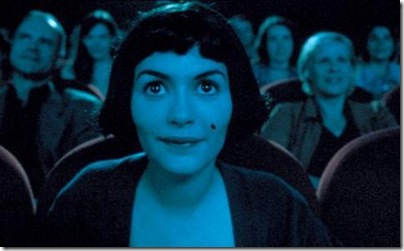
Le Fabuleux destin d'Amélie Poulain

Monday, July 28, 2008

Belief System

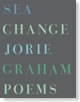
Sea Change As a species
        we dreamed. We used to
dream. We did not know for sure about
        the other species. By the mind we meant
the human mind. Open and oozing with
        inwardness. Thinking was the habitation of a
trembling colony, a fairy tale—of waiting, love—of
        the capacity for
        postponement—we shall put that
        off the majesty of the mind
        said, in the newspapers, walking among the blessed,
        out in the only
lifetime anyone had—in that space—then in the space
        of what one meant by one's
        offspring's
space. The future. How could it be performed by the mind became the
        question—how, this sensation called tomorrow and
        tomorrow? Did you look down at
        your hands just now? The dead gods
        are still being
        killed. They don't appear in
        "appearance." They turn the page for
        us. The score does not acknowledge
        the turner of
        pages. And always the
absent thing, there, up ahead, like a highway ripped open and left hanging in the
        void—only listen—there is no void, no, it is still
material, which is most terrifying, is still expanse, only without you in it, or anything else
        in it—the last word you said before
        you screamed
still on your tongue, like a taste, your broad warm tongue out of which existence as we
        know it was
made. The waves hit the rocks. The sensation of duty dissolves. The rule of
        order—of love—of
        what? Don't look at me now I'm not
        ready. It's a sur-
        prise, I want you to be
surprised. The heartbeat on its little wheels. Your given days its chariot. The rendez-
        vous awaiting. Nothing
        to be done about
        that! Also
the poking about in the ashes which was human
        curiosity—always the shadow of what the yes
        which springs from a mind
        sparks—of what filled the mind when the yes was
        felt—also human the
        ownership of such
        sad hands,
now still slicing everything, so carefully—the lemon is opening, the letter, the glance, the
        century, the sky, the forest—oh—the monster, the
        valley and the next-on
        valley, also the
army, look, what an idea, an army—the long-gone stars making their zodiac—the severed
        fingers and the dirt they're tossed onto,
the moon, sliced, the forum, sliced—still those few pillars and the written voice—here it
        comes now the jesus, the body full of its organs,
        the parts of the stoning, each part—bone, sinew—
        each stone—till she's
        gone, she's clothes on the
ground with brothers and uncles around—& the space where the blood flows
        sliced open
there—& the circle of god, the circle of justice—the red eye at the center, the crowd dispersing,
        & the halo of arms still hovering
        where each
        let fly its stone.

~ by Jorie Graham, from Sea Change: Poems

Our Dream-Like Experience of Yesterday

From "The Four Foundations Of Mindfulness," by Dzogchen Ponlop Rinpoche:

When we are dreaming, we have subject, we have object, and we have the action between the subject and the object, which is the experience of the threefold situation. As long as we remain in the dream state, those three things equally exist. We experience these three things as solid. We experience a real world, real phenomena, real body. Our own physical existence is there, the physical existence of the object is there, and the physical existence of the action is there. All three are simply existing in the dream state.

mind_beyond_death But if you look at your dream from the point of view of waking up, of the awakened state, it does not exist, right? If you look back at last night's dream, and if you look back at yesterday's experience of life, which is not really a dream, if you look back, they both equally do not exist. Your experience of yesterday is not solid; your dream of last night is not solid, as far as today is concerned. If you look back from the point of view of today, which is the awakened state, relatively speaking, then both of those equally do not exist, you know. There's no solid reason to say yesterday was more solid than last night's dream. There's no solid logical reason, so to speak, except that we cling to our dream-like experience of yesterday more than to our experience of last night's dream.

*  *  * 

Check out the two-part Buddhist Geeks discussion with Dzogchen Ponlop Rinpoche, "the only Rinpoche we know who owns and uses a Blackberry!" (Episodes 74 & 75)

Thursday, July 03, 2008

Indistinguishable

What you loved and what you strove for,
What you dreamed and what you lived through,
Do you know if it was joy or suffering?
G sharp and A flat, E flat or D sharp,
Are they distinguishable to the ear?

~ Herman Hesse

Sunday, June 08, 2008

Double Spell

“The minds that had conceived the Tower of Babel could not build it. The task was too great. So they hired hands for wages. But the hands that built the Tower of Babel knew nothing of the dream of the brain that had conceived it. One man’s hymns of praise became other men’s curses.”

From Fritz Lang’s Metropolis (1927).

"That the urban future should be at once repellent and seductive is hardly surprising, since actual cities have always cast their own double spell. Their crowded streets and cramped habitations induce claustrophobia but also promise new forms of intimacy. The alienation and loneliness that blossom in the midst of crowds are romantic and agonizing in equal measure. City life is subject to all kinds of planning, scheduling, surveillance and regulation, which makes it both efficient and dehumanizing. Its buzzing disorder holds the threat of violence and the promise of vitality."

From "Metropolis Now" by A.O. Scott in today's New York Times Sunday Magazine.

Wednesday, May 28, 2008

Bang, Bang, Bang, Kiss, Kiss

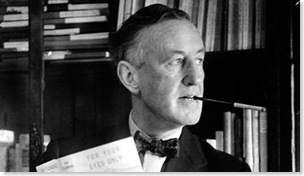
Ian Fleming

"James Bond is ... the feverish dreams of the author of what he might have been — bang, bang, bang, kiss, kiss, that sort of stuff. It's what you would expect of an adolescent mind — which I happen to possess."

~ Ian Fleming, born May 28, 1908

Tuesday, May 27, 2008

There All Day

Carnival evening : new and selected poems, 1968-1998What We Want
by Linda Pastan

What we want
is never simple.
We move among the things
we thought we wanted:
a face, a room, an open book
and these things bear our names—
now they want us.
But what we want appears
in dreams, wearing disguises.
We fall past,
holding out our arms
and in the morning
our arms ache.
We don't remember the dream,
but the dream remembers us.
It is there all day
as an animal is there
under the table,
as the stars are there

From Carnival evening : new and selected poems, 1968-1998. Heard today, the poet's birthday, on The Writer's Almanac.