"When you have an awareness of anything internally, you perceive that externally. We really do, I believe, create the world that we live in. The word ‘eye’, in its Sanskrit and Hebrew root, means fountain. In other words, this is not an organ that's receiving vibrations from what's out there going through the brain and being interpreted. It's a projector."
“A poet writes always of his personal life, in his finest work out of its tragedies, whatever it be, remorse, lost love or mere loneliness; he never speaks directly as to someone at the breakfast table.”
A friend of mine was walking along Madison Avenue, let’s say, with the New Yorker writer Roger Angell, one of the great sports writers of America…Someone recognized Angell and stopped him and began to flatter him about his writing and tell him what a great writer he was. Then my friend and Angell continued to talk…Angell said to my friend, “That’s what it’s all about.”
“What do you mean?”
“That’s what writing is all about.”
“What?”
“The love of strangers.”
Which is a sort of neuroses. Most people are satisfied with the love of people around them, although that love tends to be insufficient at most times. Whereas writers tend to court the love of total strangers and I am probably more guilty than anybody. I tend to begin each of my books with a prefatory poem that’s actually addressed to the reader. It’s my way of acknowledging the presence of the reader.
As I’m reading contemporary poetry, they tend to fall into two categories which are sort of indefinable. In one category, I feel that the poet is aware of my presence and in the other I feel that an act of typewriting or someone is committing an act of literature oblivious to my participation in it.
You might call these two kinds dogs and cats. Dogs are really interested in people, as you know, whereas cats are much more self-referential…I think of the poem as a social encounter.
Jorge Luis Borges writes:
The taste of the apple lies in the contact of the fruit with the palate, not in the fruit itself; in a similar way (I would say) poetry lies in the meeting of the poem and the reader, not in the lines of symbols printed on the pages of a book. What is essential is the aesthetic act, the thrill, the almost physical emotion with each reading.
Every morning I sit across from you at the same small table, the sun all over the breakfast things— curve of a blue-and-white pitcher, a dish of berries— me in a sweatshirt or robe, you invisible.
Most days, we are suspended over a deep pool of silence. I stare straight through you or look out the window at the garden, the powerful sky, a cloud passing behind a tree.
There is no need to pass the toast, the pot of jam, or pour you a cup of tea, and I can hide behind the paper, rotate in its drum of calamitous news.
But some days I may notice a little door swinging open in the morning air, and maybe the tea leaves of some dream will be stuck to the china slope of the hour—
then I will lean forward, elbows on the table, with something to tell you, and you will look up, as always, your spoon dripping milk, ready to listen.
"Write what you know will only get you so far. You need to write what you can imagine, write what you can research about, write what you can pretend to know. It's not duplicity—it's more, I suppose, the illusionist's art…Maybe first a novelist is a photographer. You take a photograph of something that demands that you do. You remember it, think about it, chew over it, and disassemble it and reassemble it in ways that make fictional sense."
While visiting Nagasaki in 1994, Mitchell discovered Dejima, a setting in his new book. ~ from “David Mitchell, the Experimentalist,” by Wyatt Mason, New York Times Magazine, June 25, 2010
"Sometimes technology outpaces humanity's ability to process it. I think that's where we are right now. My mind has been sliced and diced in so many ways. There's so many packets of information coming at me... It's just shocking: how is literature supposed to survive when our brain has been pummeled with information all day long at work — if we're white collar workers. When we go home, are we really going to open a thick text with 350 pages and try to waddle through it?…Here's the thing with this new technology. I think it's incredibly effective. I just don't think it's made anyone much happier. If anything, we are now always connected but we don't know what we're connected to. It's just an endless stream of information."
"Some people spend their entire lives reading but never get beyond reading the words on the page, they don’t understand that the words are merely stepping stones placed across a fast-flowing river, and the reason they’re there is so that we can reach the farther shore, it’s the other side that matters.”
“I am saying there is a different drama which is enacting itself in our country right now and it has to do with a failure to acknowledge the necessary moral and imaginative predicate that has become an entirely virtual existence, which is, you know, people spend more than half their waking hours watching television. Just think about that for a second. That has to shape the neural pathways. It creates an impatience, for example, with irresolution. And I'm doing what I can to tell stories which engage those issues in ways which can engage the imagination so that people don't feel threatened by it.”
"There are times when I look over the various parts of my character with perplexity. I recognize that I am made up of several persons and that the person that at the moment has the upper hand will inevitably give place to another. But which is the real one? All of them or none?”
George Saunders, from the documentary: My sense is that it has a lot more to do with the ways that someone is naturally charming. You know, so if you fall in love with somebody and they’re leaving town and you have two days to somehow change their mind, in that kind of life or death situation you bring forth certain traits of your personality. In my case, I would be telling jokes and I would be talking fast and I would be trying real hard to anticipate her reason for leaving and undercut them in a real energetic way. Those are all things that I would do in prose as well. I would definitely try to anticipate the reader’s objection to the story and build in a defense. I would try to be funny; I would try to be fast. So for me, the big breakthrough moment for me, was when I said to myself, ‘The reader is a person who you need to charm. You better bring your good shit. Because they don’t have time to wait around for you to work through your Hemingway phase.’
“It never struck me that writing was something anyone could teach you—or if anyone could, it was the great masters, which meant going to the library and reading with great care the authors I most loved and admired. It struck me that an MFA program could be not just helpful but actually harmful.
There’s an orthodoxy of style at MFA programs, and it’s a style that turns me off. It’s the stone soup parable. Lots of people who don’t really know what they’re doing tear your work to shreds. No matter how robust you are, it has to be a painful experience and change your work, and probably not in a good way. I’m all in favor of grad school for surgeons and car mechanics, but less so as we get towards art, where I don’t think it does much good.”
I sometimes teach classes on writing, during which I tell my students every single thing I know about the craft and habit. This takes approximately 45 minutes. I begin with my core belief—and the foundation of almost all wisdom traditions—that there is nothing you can buy, achieve, own, or rent that can fill up that hunger inside for a sense of fulfillment and wonder. But the good news is that creative expression, whether that means writing, dancing, bird-watching, or cooking, can give a person almost everything that he or she has been searching for: enlivenment, peace, meaning, and the incalculable wealth of time spent quietly in beauty.
Then I bring up the bad news: You have to make time to do this.
…I know how addictive busyness and mania are. But I ask them whether, if their children grow up to become adults who spend this one precious life in a spin of multitasking, stress, and achievement, and then work out four times a week, will they be pleased that their kids also pursued this kind of whirlwind life?
If not, if they want much more for their kids, lives well spent in hard work and savoring all that is lovely, why are they living this manic way?
…Time is not free—that’s why it’s so precious and worth fighting for.
Will they give me one hour of housecleaning in exchange for the poetry reading? Or wash the car just one time a month, for the turtles? No? I understand. But at 80, will they be proud that they spent their lives keeping their houses cleaner than anyone else in the family did, except for mad Aunt Beth, who had the vapors? Or that they kept their car polished to a high sheen that made the neighbors quiver with jealousy? Or worked their fingers to the bone providing a high quality of life, but maybe accidentally forgot to be deeply and truly present for their kids, and now their grandchildren?
I think it’s going to hurt. What fills us is real, sweet, dopey, funny life.
I’ve heard it said that every day you need half an hour of quiet time for yourself, or your Self, unless you’re incredibly busy and stressed, in which case you need an hour. I promise you, it is there. Fight tooth and nail to find time, to make it. It is our true wealth, this moment, this hour, this day.
“On a sentence-by-sentence level, it’s more spontaneous. In other words, I know what I want to have said when I’m finished with this writing, but I really don’t know, when I’m down to the nub of it to address it, what’s going to happen. I mean I know where it should go, but it certainly isn’t — the phraseology — is not prefabricated and that’s why it takes me all day to get one sentence written.”
"Reading and writing train our people for logic, grace, and precision of thought, and begin a lifelong study of the exceptional in human existence. I think literature is the history of the soul. Writing should be a journey into worthy perception."
“I was very interested in thinking about the condition of an actor, someone who’s learned to operate within scripts that are handed to them — whether the scripts are worth anything or not. It seemed to me that, in a way, stood for the problem of a lot of us as we get through our days. The scripts right now aren’t very good, but we don’t know how to step outside them very readily or at all.”
* * *
“A writer, a social satirist, looking for ways to exemplify the hypocrisies of contemporary economic disparities — the unacknowledged class system — it’s almost impossible not to find easy targets. It’s so near at hand that you only have to turn your hand and it falls into your grasp. And so I couldn’t be terribly interested with looking for those kinds of symbols. Instead I wanted to talk about what happens when you and I and everyone we know lives with them right in front of our face — two inches from our face — and yet they’re not spoken of. It’s the denial. It’s the fact that symbols of this kind of reality proliferate wildly in books and in life.
Every day you open the newspaper and you find another allegory that would’ve made Karl Marx’s jaw drop — or Roland Barthes’s jaw drop. And yet we all go on reading that newspaper. We all go on moving through our days and this is the subject of the book: what we do instead, what we think about, and how we behave in the absence of that conversation. When everything is as exaggerated and hysterically out of whack and yet somehow the machine tumbles forward day-to-day. We wake up and take our positions inside it. Well, that’s an interesting subject and an elusive one. The social satire is not elusive at all.
All you have to do is take it to the ultimate degree and then you’ve got John Carpenter’s They Live or Idiocracy. Then you’ve said it as stridently as you possibly can. You’ve made the cartoon of reality into a cartoon and then it can be shrugged off again. I was trying not to shrug it off. I was trying to inhabit it with these characters. It’s the fact that we all live in a situation that is patently absurd in many ways and yet we we have no opportunity to take it lightly. We’re living real lives. It’s tragic…I don’t mean to fall into the trap of saying there can be a non-ideological space, but you do the best you can. You meet what’s before you. You try to solve the cartoon conundrums that come your way with as much real sincerity as you can bring to them. ”
These cultural questions, so eloquently expressed by Du Bois and King (and many others), which pose the ancient, pre-Socratic problem of how shall we live, consumed my imagination and intellectual interests from adolescence into adulthood. They kept me up late at night. They colored my perceptions of all I saw and heard in the 1960s and 1970s. They were behind my first practicing meditation when I was fourteen, falling in love with philosophy when I was eighteen, and equally behind my turn to writing novels at twenty-two. This historic devotion to freedom by black America’s finest leaders also prepared me in my depths for embracing the Buddhist Dharma as the most revolutionary and civilized of possible human choices, as the logical extension of King’s dream of the “beloved community,” and Du Bois’s “vision of what the world could be if it was really a beautiful world.”
Were it not for the Buddhadharma, I’m convinced that, as a black American and an artist, I would not have been able to successfully negotiate my last half century of life in this country. Or at least not with a high level of creative productivity, working in a spirit of metta toward all sentient beings, and selfless service to others as a creator, teacher, husband, father, son, colleague, student, lecturer, editor, neighbor, friend, and citizen, which, in my teens, were ideals I decided I valued more than anything else. The obstacles, traps, and racial minefields faced by black men in a society that has long demonized them as violent, criminal, stupid, bestial, lazy, and irresponsible are well-documented…
For me, Buddhism has always been a refuge, as it was intended to be: a place to continually refresh my spirit, stay centered and at peace, which enabled me to work joyfully and without attachment even in the midst of turmoil swirling round me on all sides, through “good” times and “bad.” So I am thankful for the perennial wisdom in its two-millennia-old sutras; the phenomenological insights of Shakyamuni himself into the nature of suffering, craving, and dualism; the astonishing beauty of Sanskrit, which I’ve been privileged to study now for five years; and the methods of different forms of meditational practice, the benefits of which fill whole libraries.
"Then one day I was walking along Tinker Creek thinking of nothing at all and I saw the tree with the lights in it. I saw a backyard cedar where the mourning doves roost charged and transfigured, each cell buzzing with flame. I stood on the grass with the lights in it, grass that was wholly fire, utterly focused and utterly dreamed. It was less like seeing than like being for the first time seen, knocked breathless by a powerful glance. The flood of fire abated, but I'm still spending the power. Gradually the lights went out in the cedar, the colors died, the cells unflamed and disappeared. I was still ringing. I had been my whole life a bell, and never knew it until at that moment I was lifted and struck."
“I have an emotional attachment to the book. I think the terminology is wrong. People talk about books being turned into movies. They're not turned into movies. They sit there in bookstores and if the movie's bad, they're still in bookstores and if the movie's good, they're in bookstores but there are more copies of them. I think there are very few examples of books that are actually damaged by movies. People either don't know the movie was made or it brings readers to the books...
The most common question I think writers are asked about this is, how much control did you have? And my answer to that is, I didn't have very much control, I don't want very much control, and I don't understand how control works. Say I knew enough about directors and actors to dictate who's going to direct a movie and who's going to star in it. Well, I don't know enough about directors of photography and they can make or break a film. I don't know anything about editing and a bad editor can completely mess a film up. I don't know anything about score composers. And these are all integral parts of a movie-making process. So I'd rather give it to somebody that I trust initially and hope that they make the right decisions."
“The improvising is something that I nurtured in bed mostly, where if I wanted to describe a feeling, I would just do this thing where I’d force my brain to exist without preconceptions. And then, usually if I did that enough, I would just think of something — a new way to describe a feeling. And then in my newest book (Shoplifting from American Apparel), I deliberately didn’t do any of that…My detachment is more kind of trying to advocate to myself a way of living life that is kind of pre-language, just like experiencing things directly.”
"Happy are they who don't doubt themselves and whose pens fly across the page. I myself hesitate, I falter, I become angry and fearful, my drive diminishes as my taste improves, and I brood more over an ill-suited word than I rejoice over a well-proportioned paragraph."
“The aims of art are incommensurate (as the mathematicians say) with social aims. The aim of an artist is not to solve a problem irrefutably, but to make people love life in all its countless inexhaustible manifestations. If I were to be told that I could write a novel whereby I might irrefutably establish what seemed to me the correct point of view on all social problems, I would not even devote two hours to such a novel; but if I were to be told that what I should write would be read in about twenty years time by those who are now children, and that they would laugh and cry over it and love life, I would devote all my life and all my energies to it.”
Yes, the world of print publishing is going through a fundamental disruption brought about by the Internet. People are being laid off left and right, newspapers and magazines are folding, the book business is floundering.
In the digital world, though, social networks are now bigger than most national populations, more people are consuming more news and information than ever before, and an archive of all the world’s knowledge is being built and streamed to your favorite device. This new world brings with it as much promise as pain. It’s like youth that way.
Media will change as radically as technology allows, and right now the Internet is moving over the media landscape like a tsunami. But the job I learned to love when young was to tell stories, and the story has lost nothing in this transition. It is as elemental and as riveting as ever.
Everybody’s worried about the device. Could Microsoft’s Courier be the answer, or the iTablet? Good question, but not the most important one. It’s less the device than the devices — the crafts and the art of storytelling — that need updating most urgently for the digital world.
The young people I work with now will be the settlers of that frontier, and I can’t think of anything I would rather do than help them get there.
"The primary focus of this path of choosing wisely...is learning to stay present. Pausing very briefly, frequently throughout the day, is an almost effortless way to do this. For just a few seconds we can be right here. Meditation is another way to train in learning to stay or...learning to come back, to return to the present over and over again."
"In Zen Buddhist painting, ensō symbolizes a moment when the mind is free to simply let the body-spirit create. The brushed ink of the circle is usually done on silk or rice paper in one movement and there is no possibility of modification: it shows the expressive movement of the spirit at that time."


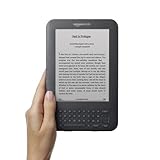


 The taste of the apple lies in the contact of the fruit with the palate, not in the fruit itself; in a similar way (I would say) poetry lies in the meeting of the poem and the reader, not in the lines of symbols printed on the pages of a book. What is essential is the aesthetic act, the thrill, the almost physical emotion with each reading.




 “On a sentence-by-sentence level, it’s more spontaneous. In other words, I know what I want to have said when I’m finished with this writing, but I really don’t know, when I’m down to the nub of it to address it, what’s going to happen. I mean I know where it should go, but it certainly isn’t — the phraseology — is not prefabricated and that’s why it takes me all day to get one sentence written.”
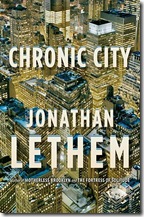
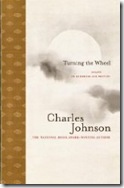 These cultural questions, so eloquently expressed by Du Bois and King (and many others), which pose the ancient, pre-Socratic problem of how shall we live, consumed my imagination and intellectual interests from adolescence into adulthood. They kept me up late at night. They colored my perceptions of all I saw and heard in the 1960s and 1970s. They were behind my first practicing meditation when I was fourteen, falling in love with philosophy when I was eighteen, and equally behind my turn to writing novels at twenty-two. This historic devotion to freedom by black America’s finest leaders also prepared me in my depths for embracing the Buddhist Dharma as the most revolutionary and civilized of possible human choices, as the logical extension of King’s dream of the “beloved community,” and Du Bois’s “vision of what the world could be if it was really a beautiful world.”
 For me, Buddhism has always been a refuge, as it was intended to be: a place to continually refresh my spirit, stay centered and at peace, which enabled me to work joyfully and without attachment even in the midst of turmoil swirling round me on all sides, through “good” times and “bad.” So I am thankful for the perennial wisdom in its two-millennia-old sutras; the phenomenological insights of Shakyamuni himself into the nature of suffering, craving, and dualism; the astonishing beauty of Sanskrit, which I’ve been privileged to study now for five years; and the methods of different forms of meditational practice, the benefits of which fill whole libraries.


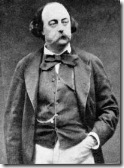 "Happy are they who don't doubt themselves and whose pens fly across the page. I myself hesitate, I falter, I become angry and fearful, my drive diminishes as my taste improves, and I brood more over an ill-suited word than I rejoice over a well-proportioned paragraph."
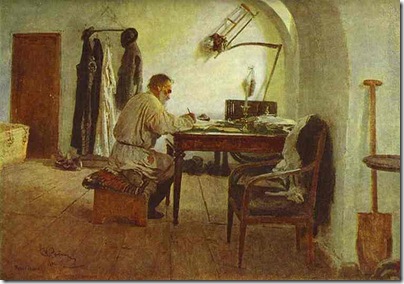 “The aims of art are incommensurate (as the mathematicians say) with social aims. The aim of an artist is not to solve a problem irrefutably, but to make people love life in all its countless inexhaustible manifestations. If I were to be told that I could write a novel whereby I might
  irrefutably establish what seemed to me the correct point of view on all social problems, I would not even devote two hours to such a novel; but if I were to be told that what I should write would be read in about twenty years time by those who are now children, and that they would laugh and cry over it and love life, I would devote all my life and all my energies to it.”




