Showing posts with label neuroscience. Show all posts

Sunday, May 15, 2011

Reasoning Is Suffused With Emotion

Excerpt from “The Science of Why We Don’t Believe Science,” by Chris Mooney, Mother Jones, April 18, 2011:

The theory of motivated reasoning builds on a key insight of modern neuroscience. Reasoning is actually suffused with emotion (or what researchers often call "affect"). Not only are the two inseparable, but our positive or negative feelings about people, things, and ideas arise much more rapidly than our conscious thoughts, in a matter of milliseconds—fast enough to detect with an EEG device, but long before we're aware of it. That shouldn't be surprising: Evolution required us to react very quickly to stimuli in our environment. It's a "basic human survival skill," explains political scientist Arthur Lupia of the University of Michigan. We push threatening information away; we pull friendly information close. We apply fight-or-flight reflexes not only to predators, but to data itself.

Illustration by Jonathon Rosen

We're not driven only by emotions, of course—we also reason, deliberate. But reasoning comes later, works slower—and even then, it doesn't take place in an emotional vacuum. Rather, our quick-fire emotions can set us on a course of thinking that's highly biased, especially on topics we care a great deal about.

Consider a person who has heard about a scientific discovery that deeply challenges her belief in divine creation—a new hominid, say, that confirms our evolutionary origins. What happens next, explains political scientist Charles Taber of Stony Brook University, is a subconscious negative response to the new information—and that response, in turn, guides the type of memories and associations formed in the conscious mind. "They retrieve thoughts that are consistent with their previous beliefs," says Taber, "and that will lead them to build an argument and challenge what they're hearing."

In other words, when we think we're reasoning, we may instead be rationalizing. Or to use an analogy offered by University of Virginia psychologist Jonathan Haidt: We may think we're being scientists, but we're actually being lawyers. Our "reasoning" is a means to a predetermined end—winning our "case"—and is shot through with biases. They include "confirmation bias," in which we give greater heed to evidence and arguments that bolster our beliefs, and "disconfirmation bias," in which we expend disproportionate energy trying to debunk or refute views and arguments that we find uncongenial.

That's a lot of jargon, but we all understand these mechanisms when it comes to interpersonal relationships. If I don't want to believe that my spouse is being unfaithful, or that my child is a bully, I can go to great lengths to explain away behavior that seems obvious to everybody else—everybody who isn't too emotionally invested to accept it, anyway. That's not to suggest that we aren't also motivated to perceive the world accurately—we are. Or that we never change our minds—we do. It's just that we have other important goals besides accuracy—including identity affirmation and protecting one's sense of self—and often those make us highly resistant to changing our beliefs when the facts say we should.

Read entire article here…

Tuesday, May 10, 2011

Frequent Intermittent Rewards

Excerpt from "Fixated by Screens, but Seemingly Nothing Else," by Perri Klass, M.D., The New York Times, May 9, 2011:

Is a child’s fascination with the screen a cause or an effect of attention problems — or both? It’s a complicated question that researchers are still struggling to tease out.

The kind of concentration that children bring to video games and television is not the kind they need to thrive in school or elsewhere in real life, according to Dr. Christopher Lucas, associate professor of child psychiatry at New York University School of Medicine. “It’s not sustained attention in the absence of rewards,” he said. “It’s sustained attention with frequent intermittent rewards.”

The child may be playing for points accumulated, or levels achieved, but the brain’s reward may be the release of the neurotransmitter dopamine. Children with A.D.H.D. may find video games even more gratifying than other children do because their dopamine reward circuitry may be otherwise deficient.

Indeed, at least one study has found that when children with A.D.H.D. were treated with methylphenidate (Ritalin), which increases dopamine activity in the brain, they played video games less. The authors suggested that video games might serve as a kind of self-medication for these children.

So increased screen time may be a consequence of A.D.H.D., but some researchers fear it may be a cause, as well. Some studies have found that children who spend more time in front of the screen are more likely to develop attention problems later on.

In a 2010 study in the journal Pediatrics, viewing more television and playing more video games were associated with subsequent attention problems in both schoolchildren and college undergraduates.

The stimulation that video games provide “is really about the pacing, how fast the scene changes per minute,” said Dr. Dimitri Christakis , a pediatrician at the University of Washington School of Medicine who studies children and media. If a child’s brain gets habituated to that pace and to the extreme alertness needed to keep responding and winning, he said, the child ultimately may “find the realities of the world underwhelming, understimulating.”

Saturday, May 07, 2011

One’s Own Perception

From “Ratmechanics,” by Katy Bowman:

We humans may not whisk, but we do have a very similar system in our body. It’s called the proprioceptive system.

Proprioception means “one’s own perception.” No, it’s not like your opinion or anything like that, but it is the ability for one part of your body to know where it is relative to the other parts. Unlike the rat, who is using the deformation of its whiskers to create an image of what is external (similar to a dolphin using sonar to “see” shapes in front of it as it is swimming), we use our proprioceptive system to create an image of what is internal, or inside the skin. Propriception works in the same way as the whiskers though. The deformation of the joints and muscles sends information to the receptors (proprioceptors) within the moving muscles and their joints. That information about a change in skeletal position then travels via our neurons to the brain to create an image.

Read more…

See also:

[Thanks, Kit!]

Thursday, May 05, 2011

Noise-Canceling Life's Din With Meditation

Noise Canceling, Without Headphones
by Roni Caryn Rabin
The New York Times
May 2, 2011

Stephanie Nash's Posture-Pedia

Studies have found that meditation helps prevent the recurrence of depression, perhaps by producing changes in parts of the brain associated with learning and anxiety. A new study suggests that meditation may modulate brain waves called alpha rhythms, which help regulate the transmission of sensory input from the surrounding environment.

Harvard researchers randomly assigned 12 healthy adults to an eight-week course of training in meditation-based stress reduction or to a control group whose participants did not meditate.

At regular intervals, researchers used an imaging technique called magnetoencephalography to measure electrical currents in an area of the brain that processes signals from the left hand. During the tests, each participant was asked to direct his attention to his or her left hand or left foot.

After eight weeks, the brain scans showed that alpha rhythms changed more quickly and in a more pronounced way in participants who had been meditating.

“If you’re reading something in a noisy environment and you want to be in a bubble, you might use your alpha rhythms like a volume knob, to turn down the volume on neurons that represent sound from the outside world,” said Catherine E. Kerr, a neuroscientist at Harvard Medical School and a co-author of the report, published April 21 in the journal Brain Research Bulletin. “We all do this to some extent, but it turns out that meditators become much more skilled at it.”

See also: Hear Out Daily Workout

Monday, May 02, 2011

Benefits Beyond Relaxation

Excerpts from “How Meditation Might Ward Off the Effects of Ageing,” by Jo Marchant, The Guardian,  April 24, 2011:

The assumption that meditation simply induces a state of relaxation is "dead wrong", says Charles Raison. Brain-imaging studies suggest that it triggers active processes within the brain, and can cause physical changes to the structure of regions involved in learning, memory, emotion regulation and cognitive processing.

The question of how the immaterial mind affects the material body remains a thorny philosophical problem, but on a practical level, "our understanding of the brain-body dialogue has made jaw-dropping advances in the last decade or two," says Raison. One of the most dramatic links between the mind and health is the physiological pathways that have evolved to respond to stress, and these can explain much about how meditation works.

When the brain detects a threat in our environment, it sends signals to spur the body into action. One example is the "fight or flight" response of the nervous system. When you sense danger, your heart beats faster, you breathe more rapidly, and your pupils dilate. Digestion slows, and fat and glucose are released into the bloodstream to fuel your next move. Another stress response pathway triggers a branch of the immune system known as the inflammatory response.

These responses might help us to run from a mammoth or fight off infection, but they also damage body tissues. In the past, the trade-off for short bursts of stress would have been worthwhile. But in the modern world, these ancient pathways are continually triggered by long-term threats for which they aren't any use, such as debt, work pressures or low social status. "Psychological stress activates these pathways in exactly the same way that infection does," says Raison…

Meditation seems to be effective in changing the way that we respond to external events. After short courses of mindfulness meditation, people produce less of the stress hormone cortisol, and mount a smaller inflammatory response to stress. One study linked meditators' lower stress to changes in the amygdala —a  brain area involved in fear and the response to threat.

Read the entire article here…

See also: Shamatha Project

Thursday, April 21, 2011

Uncoupling Negative Emotional Reactions from Behavior

From the abstract of a recent study looking at the impact on meditation practice on the decision-making process:

“Human decision-making is often framed as a competition between cognitive and emotional processes in the brain. Deviations from rational processes are believed to derive from inclusion of emotional factors in decision-making.

Here, we investigate whether a group of experienced Buddhist meditators are better equipped to regulate emotional processes compared with controls during economic decision-making in the Ultimatum Game.

We show that meditators accept unfair offers on more than half of the trials, whereas controls only accept unfair offers on one-quarter of the trials…

In summary, when assessing unfairness, meditators activate a different network of brain areas compared with controls enabling them to uncouple negative emotional reactions from their behavior. These findings highlight the clinically and socially important possibility that sustained training in mindfulness meditation may impact distinct domains of human decision-making.”

*     *     *     *     *

See also:

Wednesday, April 20, 2011

Feeling Emotion Conveyed by a Performer

Chopin’s Étude Op. 10 No. 3, Tristesse,
performed by Derek Wang (11 years old).

The Musical Brain

The brain processes musical nuance in many ways, it turns out. Edward W. Large, a music scientist at Florida Atlantic University, scanned the brains of people with and without experience playing music as they listened to two versions of a Chopin étude: one recorded by a pianist, the other stripped down to a literal version of what Chopin wrote, without human-induced variations in timing and dynamics.

During the original performance, brain areas linked to emotion activated much more than with the uninflected version, showing bursts of activity with each deviation in timing or volume.

So did the mirror neuron system, a set of brain regions previously shown to become engaged when a person watches someone doing an activity the observer knows how to do — dancers watching videos of dance, for example. But in Dr. Large’s study, mirror neuron regions flashed even in nonmusicians.

Maybe those regions, which include some language areas, are “tapping into empathy,” he said, “as though you’re feeling an emotion that is being conveyed by a performer on stage,” and the brain is mirroring those emotions.

Regions involved in motor activity, everything from knitting to sprinting, also lighted up with changes in timing and volume.

Anders Friberg, a music scientist at KTH Royal Institute of Technology in Sweden, found that the speed patterns of people’s natural movements — moving a hand from one place to another on a desk or jogging and slowing to stop — match tempo changes in music that listeners rate as most pleasing.

“We got the best-sounding music from the velocity curve of natural human gestures, compared to other curves of tempos not found in nature,” Dr. Friberg said. “These were quite subtle differences, and listeners were clearly distinguishing between them. And these were not expert listeners.”

Dr. Daniel Levitin’s project found that musicians were more sensitive to changes in volume and timing than nonmusicians. That echoes research by Nina Kraus , a neurobiologist at Northwestern University, which showed that musicians are better at hearing sound against background noise, and that their brains expend less energy detecting emotion in babies’ cries.

Separately, the Levitin team found that children with autism essentially rated each nocturne rendition equally emotional, finding the original no more emotionally expressive than the mechanical version. But in other research, the team found that children with autism could label music as happy, sad or scary, suggesting, Dr. Levitin said, that “their recognition of musical emotions may be intact without necessarily having those emotions evoked, and without them necessarily experiencing those emotions themselves.”

Read the entire article here… 

*     *     *     *     *

See also:

Tuesday, March 01, 2011

Giving Ourselves a Break

Excerpt from “Go Easy on Yourself, a New Wave of Research Urges,” by Tara Parker-Pope, New York Times, Feb. 28, 2011:

Do you treat yourself as well as you treat your friends and family?

Self-Compassion: Stop Beating Yourself Up and Leave Insecurity Behind That simple question is the basis for a burgeoning new area of psychological research called self-compassion — how kindly people view themselves. People who find it easy to be supportive and understanding to others, it turns out, often score surprisingly low on self-compassion tests, berating themselves for perceived failures like being overweight or not exercising.

The research suggests that giving ourselves a break and accepting our imperfections may be the first step toward better health. People who score high on tests of self-compassion have less depression and anxiety, and tend to be happier and more optimistic. Preliminary data suggest that self-compassion can even influence how much we eat and may help some people lose weight.

This idea does seem at odds with the advice dispensed by many doctors and self-help books, which suggest that willpower and self-discipline are the keys to better health. But Kristin Neff, a pioneer in the field, says self-compassion is not to be confused with self-indulgence or lower standards.

“I found in my research that the biggest reason people aren’t more self-compassionate is that they are afraid they’ll become self-indulgent,” said Dr. Neff, an associate professor of human development at the University of Texas at Austin. “They believe self-criticism is what keeps them in line. Most people have gotten it wrong because our culture says being hard on yourself is the way to be.”

Read the entire post…


See also: Rekindle Warmth Toward Yourself and Others


[Thanks, Matt!]

Saturday, February 19, 2011

Spectacularly Complex

Whole ColumnComputer model of a single neocortical column from a rat's brain (Photo: IBM)

Excerpt from Portraits of the Mind: Visualizing the Brain from Antiquity to the 21st Century by Carl Schoonover:

This image shows the three-dimensional configuration of ten thousand simulated neurons that constitute a single neocortical column—an anatomical unit barely wider than the head of a pin. The neocortical column, believed to be a building block of the cerebral cortex, is a mere millimeter cubed, and is repeated countless times across the expanse of the human neocortex.

Since there is simply no way to gain full experimental insight into a process at this large a scale, the Blue Brain Project was launched in 2005 in collaboration with IBM to produce a computer simulation of it. It is so spectacularly complex that a dedicated state-of-the-art supercomputer is required to keep track of all the phenomena as they recurrently influence one another; even with this computational firepower, it still takes about one hundred seconds to simulate a single second of activity.

In order to make it as realistic as possible, a wide variety of factors in included in the simulation: genetics, the shape of the dendrites, and the neurophysiological characteristics imparted by their ion channel composition. Here we see the Blue Brain’s cortical column in action: Each dendrite is simulated individually and rendered so that its color (ranging from blue to red) represents its voltage at one moment in time.

The long-term goal of the project is to uncover the broad principles of the brain function and dysfunction by simulating the entire brain of mammals, including that of humans.

<a href="http://www.macromedia.com/go/getflashplayer">Click to install the plugin</a>

Zooming Out, Highlighting a Single Neuron
Blue Brain Project video

Thursday, January 20, 2011

A Creature in the River of Knowledge

Monologue from a fictional neuroscientist speaking at an imagined Aspen Ideas Festival/TED Talk event, from “Social Animal,” by David Brooks, New Yorker, Jan. 17. 2011:

“I guess I used to think of myself as a lone agent, who made certain choices and established certain alliances with colleagues and friends…Now, though, I see things differently. I believe we inherit a great river of knowledge, a flow of patterns coming from many sources. The information that comes from deep in the evolutionary past we call genetics. The information passed along from hundreds of years ago we call culture. The information passed along from decades ago we call family, and the information offered months ago we call education. But it is all information that flows through us. The brain is adapted to the river of knowledge and exists only as a creature in that river. Our thoughts are profoundly molded by this long historic flow, and none of us exists, self-made, in isolation from it.

Columbia River plume “And though history has made us self-conscious in order to enhance our survival prospects, we still have deep impulses to erase the skull lines in our head and become immersed directly in the river. I’ve come to think that flourishing consists of putting yourself in situations in which you lose self-consciousness and become fused with other people, experiences, or tasks. It happens sometimes when you are lost in a hard challenge, or when an artist or a craftsman becomes one with the brush or the tool. It happens sometimes while you’re playing sports, or listening to music or lost in a story, or to some people when they feel enveloped by God’s love. And it happens most when we connect with other people. I’ve come to think that happiness isn’t really produced by conscious accomplishments. Happiness is a measure of how thickly the unconscious parts of our minds are intertwined with other people and with activities. Happiness is determined by how much information and affection flows through us covertly every day and year.”

Read the entire piece here…

Sunday, January 16, 2011

Keeping the Button on Play

“We do have a rewind button. In fact, a lot of our life experience is actually not experienced. Our mind is in the past, ruminating, thinking back. Sometimes savoring, but in many occasions it’s thinking about the past and holding onto it. But our mind also has a fast forward where we’re thinking ahead and planning. Yet, what I want to suggest to you is that the most important thing we probably need to do in order to make sure our attention system is functioning fully, so that we’re able to actually experience the life we have, is probably to keep the button right on play. The question for me became: How do we cultivate our attention so that so that we’re actually paying attention to the present moment? And could there be a way we could train ourselves to be better able to pay attention to the present moment?

~ Dr. Amishi Jha, Associate Professor of Psychology, University of Miami

From the Schofield Barracks Training and Research on Neurobehavioral Growth (STRONG):

“Dr. Jha is a neuroscientist whose primary expertise is in understanding how the brain pays attention. Her team has been awarded grants from the Dept. of Defense, Medical Research and Material Command to conduct this project using computer-based experiments and brainwave recording to investigate if and how resilience training may improve the ways in which the brain can:

  • Pay attention
  • Be situationally aware (of one’s own immediate surroundings)
  • Be better able to manage and recover from stress

The U.S. Army realizes that body armor and physical exercise are necessary to protect soldiers’ bodies and keep them physically healthy. More recently, there has been great interest in understanding how soldiers’ brains and minds might also be best protected and kept healthy over the cycle(s) of military deployment.

The main purpose of the STRONG project is to understand if and how resilience training might provide soldiers with ‘mental armor.’

Just as daily physical exercise is important for physical fitness, neuroscientists are finding that regularly engaging in mental exercises may improve brain-fitness. The more ‘fit’ one’s brain, the better one may be at recovering from stress, solving complex problems in challenging circumstances, and handling high demands. Of course, making one’s body fit requires effort, discipline, and a commitment over a long period of time. So too does making one’s brain fit. This project aims to use cutting-edge neuroscience to measure how two different types of resilience training programs may help make soldiers’ brains and minds more fit so that they are best prepared for the upcoming challenges of deployment.”

*     *     *     *     *

See also: “In New Military, Data Overload Can Be Deadly,” by Thom Shanker and Matt Richtel, New York Times, Jan. 16, 2001

The Holy Grail of Brain Training


Illustration by Peter Arkle for Newsweek

Excerpt from “Can You Build a Better Brain?” by Sharon Begley, Newsweek, Jan. 10 & 17, 2011:

The rule that “neurons that fire together, wire together” suggests that cognitive training should boost mental prowess. Studies are finding just that, but with a crucial caveat. Training your memory, reasoning, or speed of processing improves that skill, found a large government-sponsored study called ACTIVE. Unfortunately, there is no transfer: improving processing speed does not improve memory, and improving memory does not improve reasoning. Similarly, doing crossword puzzles will improve your ability to?.?.?.?do crosswords. “The research so far suggests that cognitive training benefits only the task used in training and does not generalize to other tasks,” says Columbia’s Yaakov Stern.

The holy grail of brain training is something that does transfer, and here there are three good candidates. The first is physical exercise. Simple aerobic exercise, such as walking 45 minutes a day three times a week, improves episodic memory and executive-control functions by about 20 percent, finds Art Kramer of the University of Illinois at Urbana-Champaign. His studies have mostly been done in older adults, so it’s possible the results apply only to people whose brain physiology has begun to deteriorate—except that that happens starting in our 20s. Exercise gooses the creation of new neurons in the region of the hippocampus that files away experiences and new knowledge. It also stimulates the production of neuron fertilizers such as BDNF, as well as of the neurotransmitters that carry brain signals, and of gray matter in the prefrontal cortex. Exercise stimulates the production of new synapses, the connections that constitute functional circuits and whose capacity and efficiency underlie superior intelligence. Kramer finds that a year of exercise can give a 70-year-old the connectivity of a 30-year-old, improving memory, planning, dealing with ambiguity, and multitasking. “You can think of fitness training as changing the molecular and cellular building blocks that underlie many cognitive skills,” he says. “It thus provides more generalizable benefits than specifically training memory or decision making.”

The second form of overall mental training is meditation, which can increase the thickness of regions that control attention and process sensory signals from the outside world. In a program that neuroscientist Amishi Jha of the University of Miami calls mindfulness-based mind-fitness training, participants build concentration by focusing on one object, such as a particular body sensation. The training, she says, has shown success in enhancing mental agility and attention “by changing brain structure and function so that brain processes are more efficient,” the quality associated with higher intelligence.

Finally, some videogames might improve general mental agility. Stern has trained older adults to play a complex computer-based action game called Space Fortress, which requires players to shoot missiles and destroy the fortress while protecting their spaceship against missiles and mines. “It requires motor control, visual search, working memory, long-term memory, and decision making,” he says. It also requires that elixir of neuroplasticity: attention, specifically the ability to control and switch attention among different tasks. “People get better on tests of memory, motor speed, visual-spatial skills, and tasks requiring cognitive flexibility,” says Stern. Kramer, too, finds that the strategy-heavy videogame Rise of Nations improves executive-control functions such as task switching, working memory, visual short-term memory, and reasoning in older adults.

Read the entire article…

Friday, January 07, 2011

Learning to Improvise

From “The Improvisational Brain,” by Amanda Rose Martinez, SeedMagazine, Dec. 14, 2010:

Aaron Berkowitz, a cognitive ethnomusicologist, who took on the task of demystifying improvisation as the focus of his dissertation work at Harvard, has a theory. He likens the process of learning to improvise to that of learning a second language. Initially, he says, it’s all about memorizing vocabulary words, useful phrases and verb conjugation tables. Your first day, you might learn to say: How are you? I’m fine. “These are like the baby steps beginning improvisers take. They learn the structure of the blues. They learn basic chords and get the form down,” said Berkowitz. But they’re still very limited in what they can do.

Credit: Flickr user maistoraA dedicated musician will immerse himself in the recordings of his chosen genre or composer, just as a language student might absorb foreign films or tapes of people speaking. Over time, both musician and student accumulate more phrases and ways to combine them. “But you still can’t really invent anything. [The language learner] can’t talk about politics or the environment,” Berkowitz said. “You’re still thinking: ‘Uh oh, here’s comes a verb. I have to put it in the past tense. I have to put it at the end of the sentence before I can say this whole phrase.”

But eventually, through constant practice, you get to the point where, scientists believe, these processes get pushed down into the subconscious. They don’t need to be consciously worked out anymore. They become a subroutine. Suddenly you realize you’re saying things you haven’t heard or memorized. You’re able to free-associate. Your brain begins exerting control at a higher level, directing bigger chunks of information that can be expressed as whole ideas.

The trajectory of acquiring a language, according to Berkowitz, where you begin with learned phrases, achieve fluency, and are eventually able to create poetry mirrors perfectly the process of learning to improvise. In the same way a language student learns words, phrases and grammatical structure so that later he can recombine them to best communicate his thoughts, a musician collects and commits to memory patterns of notes, chords and progressions, which he can later draw from to express his musical ideas.

Read the entire article…

Sunday, December 05, 2010

The Impact of Meditation on Attention

Excerpts from Roundtable: Meeting of the Minds, Tricycle Magazine, Spring 2005:

Richard Davidson: Our initial work certainly indicates that meditation changes brain function. One of our hopes now is that a broader range of scientists will be inspired to examine the potential impact of contemplative practice on different behavioral domains. One of our goals is to launch studies that look at the impact of meditation on attention and the brain systems that support it.

We’ve been talking with experts who do experiments in which, for example, a person is required to focus on a specific object and ignore distractions. One question is whether training in meditation facilitates one’s capacity to do this, and, if it does, which parts of the brain are being affected.

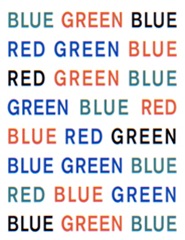
There are well-developed procedures in cognitive psychology for exploring such questions. The classic one is the Stroop Test. In one version of this test, the word “green” might be printed on a card in red, and the subject’s task would be to name the color in which the word was printed (red), ignoring the meaning of the word (green). Classically, people are slower in responding when the color of a word is inconsistent with the name of the word than when the two are the same: when the word “green” is printed in green, people are able to say “green” faster than when they’re looking at the word “green” printed in red. What this requires is that we inhibit our automatic response and focus our attention on the instructions given by the experimenter.

B. Alan Wallace: Shamatha [a meditative practice of calming the mind] is specifically aimed at controlling attention. When the word pops up, if you’re able to control your attention, you can say to yourself, “I’m not going to see the whole word. I’m going to focus on the middle of the word and ask only one question: What is its color?” If you’re looking at the whole word, the meaning of the word will compete for your attention, and you’ll be slowed down.

Attention training has broad applications. It would be helpful in the fields of education, mental health, and athletics as well as increasing individual creativity and problem-solving skills. And attention practice is crucial for cultivating the profound virtues of the heart and mind—lovingkindness, compassion, bodhicitta [awakened mind], and the realization of emptiness.

If, when anger or another afflictive emotion arises, you can say to yourself, “Never mind the object of my anger and the context; isn’t this interesting?” and investigate your own emotional state instead of merely reacting, you can also cultivate greater emotional balance and mental health.”

[Thanks, Jeanne!]

Friday, November 12, 2010

A High Resolution Emotional Radar Screen

Shinzen Young, from “A Meeting with a Pioneering Meditation Teacher,” with Tami Simon, Sounds True’s Insight at the Edge (November 2, 2010):

“Neuroscientists are aware that there is a system in the brain that they call the limbic system; it’s sometimes called the emotional brain. What I’ve attempted to do is create certain focusing exercises that will allow a person to be able to detect when their limbic system activates. So, then, well how do you go about doing this? Well, I can give you a tangible example.

Let’s say you’re listening to music and, as you listen to music, you are monitoring how your body is reacting to the music. Your body may smile if you like the music, but then at some point if there’s something you don’t like about the music, you get some other kind of sensation reaction in your body.

Or, you can listen to people talking, listen to people you agree with—politicians, philosophers, religious leaders—listen to them and then notice the impact on your body. Then, listen to people you disagree with—religious leaders, political leaders, philosophers—who have the opposite of your beliefs, then watch what happens in the body. Pay attention to that.

By monitoring your body’s reactions to sounds, especially human speech sounds or music, and then by monitoring your body’s reaction to external visual impressions, with time you can develop a sensitivity to detect the locations and flavors of sensation that are emotional in nature. It’s a training and it takes a while, but if you’re willing to do it, your whole body becomes like this high resolution emotional radar screen. So, as soon as there’s an impact from the physical world, you’re aware if there’s any emotional juice, however subtle—subtle is significant. If there is, you’re able to detect it and open up to it. If there’s not, you’re also aware of that fact.

So, by doing exercises in that way, eventually you learn to detect the subtle emotional reactions that we’re constantly having in the body that are triggered by other events. And, that’s how you go about doing it.”

Listen to the entire interview…

Wednesday, October 20, 2010

At the Core

Sam Harris (Photo by Jonathan Alcorn / Zuma) “I see nothing irrational about seeking the states of mind that lie at the core of many religions. Compassion, awe, devotion and feelings of oneness are surely among the most valuable experiences a person can have…Ecstasy, rapture, bliss, concentration, a sense of the sacred—I’m comfortable with all of that…I think all of that is indispensable and I think it’s frankly lost on much of the atheist community.”

~ Sam Harris, from “Sam Harris Believes in God,” Newsweek, October 18, 2010

Tuesday, October 12, 2010

Changing All the Time

“For a while, people had this notion that plasticity must be a good thing. It’s a good thing that the brain can change because we can learn new things—and that’s true. But if plasticity is an intrinsic property of the brain, it’s neither good nor bad. It’s just the way it is…I think we’re now learning that, in fact, the brain is changing all the time, that the brain is changing with everything we think and with everything we experience. And so the challenge is to learn enough about it so that you can guide those changes.”

~ Alvaro Pascual-Leone, professor of Neurology at Harvard Medical School

The Brain That Changes Itself from Andrew Girgis on Vimeo.

Thursday, September 30, 2010

Critical Functions of the Prefrontal Cortex

Excerpt from “Nine Ways Mindfulness Can Change Your Life,”  by Elisha Goldstein, Mental Help Net, September 28, 2010:

Through his experience in working with brain trauma, Daniel Siegel, M.D., author The Mindful Brain: Reflection and Attunement in the Cultivation of Well-Being, The Mindful Therapist: A Clinician's Guide to Mindsight and Neural Integration, and others found that the prefrontal cortex hosts nine critical functions that happen to associate with outcomes in mindfulness research and healthy attachment in children.

1. Response Flexibility — Here is a trait that lies at the cornerstone of Viktor Frankl ’s quote. “In between stimulus and response there’s a space…” and when we become aware of that space, there are choices. This is where we can break out of the auto-pilot of past conditionings and become aware of more options and be more flexible. We don’t have to pick up the bottle, or go back to the abusive partner, or walk around the block without noticing the flowers. Having this as a trait allows us to automatically recognize that there are choices and options.

2. Fear Modulation — While a little fear can be helpful (“I’m afraid of driving too close to the car in front of me”), more often it seeps into the intricacies of our lives and keeps us stuck in old patterns. For example, “I’m afraid to open up to him because I don’t want to be hurt.” I always give the analogy that if babies were afraid to learn how to walk because of the multitude of times they fell, they’d never learn to walk. Learning how to turn the volume down on our fear can help drop our anxieties over our imperfections and come back into a playful adventuring of daily life.

3. Body Regulation — In moments of overwhelm it’s easy for the heart to start beating faster, muscles to tense, the breath to become more rapid, getting the body ready for fight, flee or freeze. The activation of fighting or fleeing is a result of our sympathetic nervous system getting revved up. Stopping, resting or freezing is an activation of our parasympathetic nervous system. The ability to regulate our bodies means that we have a natural balance of these two nervous systems reliably telling us when to go and when to rest.

4. Attuned Communication — If a stressful day is upon us, it’s likely that we’re primed to not attune to others around us. At work, this leads to miscommunications and frustration, at home this leads to thoughts of not being cared about and distance in a relationship. Being able to naturally feel the internal state of another persona and reflect that back to them breeds security and feeling connected. The man on his deathbed said, “It’s about who you love and how you love them, and the rest of it never mattered.” You don’t get that experience in life without being able to attune to others.

5. Emotional Resiliency — It’s easy to get swept up on auto-pilot, being taken for a ride and not knowing how we suddenly ended up depressed, anxious or with a hot temper tantrum. Have the ability to be emotionally resilient means being better able to monitor our mood and lifting ourselves up when we’re down and down when we’re too up. This doesn’t mean living a neutral existence, just a more balanced one. We still experience the myriad of emotions that are out there, they just less often take us for rides into unhealthy emotional spirals.

6. Improved Insight — People often ask, “Do you think it’s important to look at what happened to me in the past or is all that matters in the here and now?” My response is always, “All your experiences of the past make up who you are today. So your past lives in the present. In order to find true self-acceptance we have to understand where our reactivity comes from and then turn to it with a sense of compassion and caring.” We can also intentionally pay attention to the future as we do with any of our aspirations. Through insight we get to know and befriend our auto-pilot so we can work in concert rather than in conflict.

7. EmpathyEmpathy allows us to connect and feel love for others. We are putting ourselves in their shoes and being able to discern where they are coming from, what they are thinking and feeling. The way we’re defining empathy here is also with a lens of kindness and compassion and with an eye on the greater good. 

8. Morality — This is defined as having your eye on the greater good in concert with your actions. Moral thoughts alone are not enough to cultivate morality, we need to be walking the talk.

9. Reliable Intuition — One of the follies of western culture at this point is the Descartian split of thinking and feeling. An overemphasis on the intellect without an appreciation for the wisdom of the body. After all, we now know that we have neural networks in our hearts and intestines. Reliable intuition is a reliable auto-pilot. We may not be aware in the moment of the underlying reasoning, we just get a sense for something. It is cultivated when we’re able to connect with the sensory world of the body that may tune us in to sensing when something or someone is safe or unsafe. Without experience and practice this intuition is more likely to be less reliable breeding misperceptions and unhealthy actions influenced by mood or prior trauma.

More…

Wednesday, September 22, 2010

Exercising Our Attention Potential

From “The Focused Life,” by Winifred Gallagher, from her book, Rapt: Attention and the Focused Life:

rapt Abundant research shows that most of the rich and famous, brainy and beautiful are little or no happier than individuals of ordinary means and gifts, because no matter who you are, your joie de vivre mostly derives from paying attention to someone or something that interests you. Even in the hell of the Nazi death camps, many inmates avoided depression because they took charge of and concentrated on the one thing that was left to them: their inner experience. The rates of psychological problems as well as mortality among people in extreme situations such as shipwrecks and plane crashes in remote areas are surprisingly low—often lower than in normal settings. Vicissitudes notwithstanding, these people are not sitting around brooding about the past or killing time by channel surfing but are living the focused life.

It’s not a coincidence that the term distracted once referred not just to a loss or dilution of attention but also to confusion, mental imbalance, and even madness. It’s all too easy to spend much of your life in such an unfocused, mixed-up condition, rushing toward the chimera of a better time and place to tune in and, well, be alive. It’s the fashion to blame the Internet and computers, cell phones and cable TV for this diffused, fragmented state of mind, but our seductive machines are not at fault. The real problem is that we don’t appreciate our own  ability to use attention to select and create truly satisfying experience. Instead of exercising this potential, we too often take the lazy way out, settle for less, and squander our mental money and precious time on whatever captures our awareness willy-nilly, no matter how disappointing the consequences.

Where the quality of your life is concerned, focus is not everything, but it is a great deal. The question is: If all the world’s a stage, as Shakespeare puts it, where do you shine the spotlight of your attention?

Friday, September 03, 2010

Naturally Metacognitive

WATCH FULL PROGRAM

See also: