Showing posts with label eating. Show all posts

Tuesday, March 01, 2011

Giving Ourselves a Break

Excerpt from “Go Easy on Yourself, a New Wave of Research Urges,” by Tara Parker-Pope, New York Times, Feb. 28, 2011:

Do you treat yourself as well as you treat your friends and family?

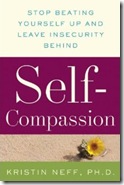
Self-Compassion: Stop Beating Yourself Up and Leave Insecurity Behind That simple question is the basis for a burgeoning new area of psychological research called self-compassion — how kindly people view themselves. People who find it easy to be supportive and understanding to others, it turns out, often score surprisingly low on self-compassion tests, berating themselves for perceived failures like being overweight or not exercising.

The research suggests that giving ourselves a break and accepting our imperfections may be the first step toward better health. People who score high on tests of self-compassion have less depression and anxiety, and tend to be happier and more optimistic. Preliminary data suggest that self-compassion can even influence how much we eat and may help some people lose weight.

This idea does seem at odds with the advice dispensed by many doctors and self-help books, which suggest that willpower and self-discipline are the keys to better health. But Kristin Neff, a pioneer in the field, says self-compassion is not to be confused with self-indulgence or lower standards.

“I found in my research that the biggest reason people aren’t more self-compassionate is that they are afraid they’ll become self-indulgent,” said Dr. Neff, an associate professor of human development at the University of Texas at Austin. “They believe self-criticism is what keeps them in line. Most people have gotten it wrong because our culture says being hard on yourself is the way to be.”

Read the entire post…


See also: Rekindle Warmth Toward Yourself and Others


[Thanks, Matt!]

Wednesday, February 09, 2011

A Blank Canvas for Flavor

“I think of flavor the way a painter thinks of color. Ice cream is a blank canvas for flavor, filling your nose and mouth as it melts. Food is an art form to be experienced.”

~ Jeni Britton Bauer, artisan ice cream empress 

Airy meringue stars on their way into a batch of Violets & Meringue Ice Cream

The BombeBastick

Torching marshmallows for Sweet Potato with Torched Marshmallows Ice Cream

Sweet Corn with Black Raspberries from the stunning gallery by photographer George Lange

Pre-order Jeni’s debut cookbook, Jeni’s Splendid Ice Creams, which is being published by Artisan this spring. In it, she reveals secrets for recreating many of her signature flavors using a modestly priced automatic ice cream maker

Thursday, September 02, 2010

Marketing vs. Reality

marketing-vs-reality

From I Love Charts

Saturday, July 31, 2010

A Sincere Form of Flattery

Matt made the homemade version of Jeni's Lemon-Blueberry Frozen Yogurt in our new automatic ice cream maker. He even used fresh local blueberries from the farmers market. It tastes just like what everyone around here stands in line to eat!


Maybe instead of a book club we have an ice cream social with everyone bringing their attempts at one of these flavors:

Monday, July 12, 2010

Field Trip

Summer Trip to Jorgensen Farm from Jeni's Splendid Ice Creams on Vimeo.

“Last month, a few of us went on a field trip to Jorgensen Farm. There, we visited Val Jorgensen, our peppermint farmer. She showed us her green house and the field of Robert Mitchum peppermint we use to flavor our Backyard Mint ice cream. We got to visit with her chickens and sheep and clip some lavender to take home with us.”

~ Jeni Britton Bauer

Sunday, June 20, 2010

A Plague of Insatiability

Excerpt from “Dysregulation Nation,” by Judith Warner, New York Times Sunday Magazine (June 20, 2010):

Running the Numbers: An American Self-Portrait  (Chris Jordan). Depicts 106,000 aluminum cans, the number used in the US every thirty seconds.

In the late 1970s, the historian Christopher Lasch famously described America as a culture of narcissism. Today we might well be called a nation of dysregulation. The signs that something is amiss in our inner mechanisms of control and restraint are everywhere. Eating disorders, “in general a disorder of self-regulation,” according to Darlene M. Atkins, director of the Eating Disorders Clinic at Children’s National Medical Center in Washington, grew epidemic in the past few decades, and in recent years have spread to minority communities, younger girls, older women and boys and men too. Obesity is viewed in many cases by mental-health experts as another form of self-dysregulation:a “pathologically intense drive for food consumption” akin to drug addiction, in the words of Nora D. Volkow, director of the National Institute on Drug Abuse, and Charles P. O’Brien, a professor in the department of psychiatry at the University of Pennsylvania, who have argued for including some forms of obesity as a mental disorder in the coming version of the psychiatric bible, the DSM-V.

In book publishing, addiction memoirs seem to have evolved into the bildungsromans of our time, their broad popularity suggesting that stories of self-destruction through excess can be counted upon to inspire a reliable there-but-for-the-grace-of-God affinity in readers. We read about dopamine fiends sitting enslaved to their screens, their brains hooked on the bursts of pleasure they receive from the ding of each new e-mail message or the arousing flash of a tweet. We see reports of young children so unable to control their behavior that they’re being expelled from preschool. And teenagers who, after years spent gorging on instant gratification (too-easy presents from eager-to-please parents, the thrill of the fast-changing screen), are restless, demanding, easily bored and said to be suffering from a plague of insatiability.

Mental-health professionals report seeing increasing numbers of kids who are all out of sync: they can’t sustain attention, regulate their rage, moderate their pain, tolerate normal types of sensory input. Some of this is biological; a problem of faulty brain wiring. But many of the problems — in both children and adults — according to Peter C. Whybrow, director of the Semel Institute for Neuroscience and Human Behavior at the University of California in Los Angeles, come from living in a culture of excess.

Under normal circumstances, the emotional, reward-seeking, selfish, “myopic” part of our brain is checked and balanced in its desirous cravings by our powers of cognition — our awareness of the consequences, say, of eating too much or spending too much. But after decades of never-before-seen levels of affluence and endless messages promoting instant gratification, Whybrow says, this self-regulatory system has been knocked out of whack. The “orgy of self-indulgence” that spread in our land of no-money-down mortgages, he wrote in his 2005 book, “American Mania: When More Is Not Enough,” has disturbed the “ancient mechanisms that sustain our physical and mental balance.”

More…

Friday, November 13, 2009

Watching

Half Grapefruuit with Cherry by Terry Trambauer Norris

Grapefruit
by Ted McMahon, from The Uses of Imperfection

My grandfather got up early to section grapefruit.
I know because I got up quietly to watch.
He was tall. His hairless shins stuck out
below his bathrobe, down to leather slippers.
The house was quiet, sun just up, ticking of
the grandfather clock tall in the corner.

The grapefruit were always sectioned just so,
nestled in clear nubbled bowls used
for nothing else, with half a maraschino
centered bleeding slowly into
soft pale triangles of fruit.
It was special grapefruit, Indian River,
not to be had back home.

Doves cooed outside and the last night-breeze
rustled the palms against the eaves.
He turned to see me, pale light flashing
off his glasses
and smiled.

I remember as I work my knife along the
membrane separating sections.
It's dawn. The doves and palms are far away.
I don't use cherries anymore.
The clock is digital
and no one is watching.

[More by Ted McMahon from The Writer’s Almanac.]

Friday, November 06, 2009

Cultivating Ourselves

Excerpt from “Apples, Apples, Apples,” by Verlyn Klinkenborg, New York Times, November 5, 2009:

One good way to think about modern agriculture is to think about apples. applesFor part of our history, culminating around the end of the 19th century, there was something about us — about our appetite, our farms, our economy — that loved diversity in apples. One standard reference, from 1905, lists more than 6,500 distinct varieties. There are apples for keeping, cooking, eating and the making of ciders, with names as colorful as they are various: Scollop Gillyflower, Red Winter Pearmain, Kansas Keeper.

Modern agriculture, as well as our carefully created preference for processed over fresh food, has pushed us in the opposite direction, toward uniformity...According to one estimate, only 11 varieties make up 90 percent of all the apples sold in this country, and Red Delicious alone counts for nearly half of that...

We live now in the world of the generic apple, in large part because our taste buds have gone generic. Cultivating ourselves is the first step toward rediversifying the fields and orchards around us.

[Thanks Kit!]

Wednesday, August 19, 2009

Food Pleasure in Overdrive

Born Round “What my grandmother and my mother imbued in me was a love of food. And a sense of the joy of food, a firm conviction that food mattered, and that food was a vehicle for pleasure. In my case, I sometimes drove that vehicle at about a hundred and thirty miles an hour. And sometimes ended up in a ditch on the side of the road. Though I believe that food is a vehicle of pleasure, and a glorious vehicle at that, I felt like every time someone who’s a recognized food writer wrote a memoir, it was madly romantic, gauzy. And the truth of the matter is, one’s love of food can get out of hand. My story is not only about the joy of food, but also about the danger of food. I wanted to write about disordered food behavior, about food demons, but to not demonize food.”

~ Frank Bruni, discussing his memoir Born Round: The Secrect History of a Full-Time Eater on The Book Bench: The New Yorker (August 19, 2009)

Sunday, May 17, 2009

Nothing Has to Change

“Mindfulness is about paying attention, and the awareness and freedom that emerge from that present-moment gesture of profound relationality and consciousness. It is the antidote to addictive preoccupations and indeed, preoccupations of all kinds that carry us away from the actuality of the present moment. When we start to pay attention in an intentional and nonjudgmental way, as we do when we cultivate mindfulness, and thus bring ourselves back into the present moment, we are tapping into very deep natural resources of strength, creativity, balance, and yes, wisdom—interior resources that we may never have realized we even possess. Nothing has to change. We don’t have to be any different or ‘better.’ We don’t have to lose weight. We don’t have to fix any imbalances or strive for any ideals. All we have to do is pay attention to aspects of our lives that we may have been ignoring in favor of various idealizations that have unwittingly carried us further and further from our intrinsic wholeness (the root meaning of the words health, healing, and holy) that is already here, available to us in this very moment, and in any and every moment, a wholeness that is never not present.”

~ Jon Kabat-Zinn, from the forward to Mindful Eating: A Guide to Rediscovering a Healthy and Joyful Relationship with Food by Jan Chozen Bays

Wednesday, April 15, 2009

Taco Bell Drive-Thru Folk Song

Rhett and Link

Wednesday, November 28, 2007

Surpassing the Creativity of All Other Ice Cream Makers

Photo by Michelle MaguireIt's true. Anyone who has tasted it knows the Denver Post and the New York Times aren't exaggerating. Even Al Roker, Lynne Rossetto Kasper, and Dean & Deluca are in the know.

In today's New York Times, Marian Burros writes, "Jeni’s of Columbus, Ohio, has surpassed the creativity of all other ice cream makers with its versions like goat cheese and Cognac fig sauce....Jeni’s Splendid Ice Creams’ intense, offbeat flavors would be worth a drive to Ohio. My favorites were the goat cheese, salty caramel, coffee, Thai chili and torrone, plus lime cardamom lingonberry frozen yogurt and forest berry and pear riesling sorbets. Six pints start at $70; jenisicecreams.com, (614) 488-3224."

My favorites are pistachio, pumpkin five spice, dark cocoa mint gelato, and the pear riesling sorbet. You have to try her ice cream sandwiches with a thick slab of ice cream squished between traditional Parisian macaroons. I'm sure they will be world famous one day.

Deadline for ordering in time for Christmas delivery is 12/19.

Thursday, August 16, 2007

The Ethics of Eating

Barbara Kingsolver discussing her new book—Animal, Vegetable, Miracle—with Krista Tippett on Speaking of Faith:

Ms. Tippett: Now I'm looking at the sweep of your writing over, say, the last 10 years. It seems to me that that September 11th also kind of formed the sense of urgency that you have now. You talked then about the prideful wastefulness, our prideful wastefulness as a nation. I think you just described that in more detail.

Ms. Kingsolver: Sometimes I think it's prideful. Sometimes I think it's just clueless. I mean that to describe myself as much as anyone. We don't have a clue sometimes about how or what we are wasting. It's so easy for us to have, for example, foods that were grown on the other side of the world and brought to us, without any idea who grew it, who worked for what low wage to harvest it, who had to breathe pesticides in order to put it on a truck. You know, those questions have — a curtain has been drawn over the whole process so that we've come to look at our food as a product. It isn't. It's, it's all…

Ms. Tippett: Those are moral questions.
Ms. Kingsolver: It's all a process and those are moral questions. If we care to draw back the curtain and look, it isn't all bad news. I think the subject of food seems daunting because there are so many different questions, so many different problems. And that's something that really compelled me about writing this book. I love to start with a huge unanswerable boggling kind of question and see if I can whittle it down into the shape of a really good yarn. You know, I just love to see if I can give it a plot and make you laugh all along the way and maybe make you cry at the end, and create something that will invite you in. And then when you're finished and you close the book, maybe you'll step out into the world in a slightly different way and ask your own questions and answer the questions in your own way.
---
And this from Small Wonder, her collection of essays written in the wake of September 11th:

"Something new is upon us and yet nothing is ever new. We are alive in a fearsome time, and we have been given new things to fear. We've been delivered huge blows but also huge opportunities to reinforce or reinvent our will, depending on where we look for honor and how we name our enemies. The easiest thing is to think of returning the blows. But there are other things we must think about as well, other dangers we face. A careless way of sauntering across the earth and breaking open its treasures, a terrible dependency on sucking out the world's best juices for ourselves — these may also be our enemies. The changes we dread most may contain our salvation."

Monday, February 12, 2007

Food Is What You Want To Eat

"Eat food. Not too much. Mostly plants. That, more or less, is the short answer to the supposedly incredibly complicated and confusing question of what we humans should eat in order to be maximally healthy. I hate to give away the game right here at the beginning of a long essay, and I confess that I’m tempted to complicate matters in the interest of keeping things going for a few thousand more words. I’ll try to resist but will go ahead and add a couple more details to flesh out the advice. Like: A little meat won’t kill you, though it’s better approached as a side dish than a main. And you’re much better off eating whole fresh foods than processed food products. That’s what I mean by the recommendation to eat “food.” Once, food was all you could eat, but today there are lots of other edible foodlike substances in the supermarket. These novel products of food science often come in packages festooned with health claims, which brings me to a related rule of thumb; if you’re concerned about your health, you should probably avoid food products that make health claims. Why? Because a health claim on a food product is a good indication that it’s not really food, and food is what you want to eat."


- Unhappy Meals by Michael Pollan, New York Times Magazine, Jan. 28, 2007