Showing posts with label truth. Show all posts

Saturday, May 14, 2011

Beyond the Mind

Excerpts from Emptiness Dancing by Adyashanti:

The mind can’t fathom that there can be a true intelligence, a transcendent intelligence, that isn’t the product and outcome of thought and conceptual understanding. It can’t fathom that there could be wisdom that’s not going to come at you in the form of thoughts, in the form of acquired and accumulated knowledge.

The true spiritual urge or yearning is always and invitation beyond the mind. That’s why it’s always been said that if you go to God, you go naked or you don’t go at all. It’s the same for everybody. You go in free of your accumulated knowledge, or you are forever unable to enter. So an intelligent mind realizes its own limitation, and it’s a beautiful thing when it does.

When you stop holding on to all the knowledge, then you start to enter a different state of being. You start to move into a different dimension. You move into a dimension where experience inside gets very quiet. The mind may still be there chatting in the background, or it might not, but consciousness is no longer bothering itself with the mind. You don’t need to stop it. Your awareness just goes right past that wall of knowledge and moves into a very quiet state…

…Once your conceptual world of knowledge gets put in its rightful place, it is transcended. You see that you are eternal consciousness now appearing as woman or man, this or that character. But like every good actor, you are not what you are appearing as. Everything that exists is consciousness appearing as, or God appearing as, or Self appearing as, or spirit appearing as. The Buddha called it no-self. When that’s seen, you see Unity. There is only God. That’s all there is: God appearing as floor, as a human being, as a wall, as a chair.

No knowledge, no statement of the Truth touches what’s eternal, what you really are. And no statement about how to get there is true either, because what gets one person there doesn’t get another person there. A mind that likes to look for the one truth path cannot find it. Of course, the mind doesn’t like that. “No right path? Nothing that could be said or read that ultimately, in the end, could be true? The most enlightened being can’t speak the Truth?”

No. It’s never been done, and it never will be done. The only thing you can do is to put a pointer on the way that says, “Look that way.” A false spiritual arrow is one that points to the wall and says, “Look this way.” A true arrow is one that points beyond the wall of concepts.

Wednesday, September 01, 2010

As Complete as Possible

Excerpt from "Happiness and Completion," by Ken McLeod:

For me, spiritual practice is now not so much about happiness as about completion, a way of experiencing life that is as complete as possible in each and every moment.

...when we see and accept what is actually happening, even if it is very difficult or painful, mind and body relax, and in that rest, there is an exquisite quality that comes through just experiencing what arises, completely, with no separation.

Some might call it joy, but it is not a giddy or excited joy. Rather it is a deep and quiet joy, a joy that, in some sense is always there, waiting for us, but usually touched only when some challenge, pain, or tragedy leaves us with no other option.

Others might call it truth, but this is a loaded and misleading word, carrying with it the notion of something that exists apart from experience itself. The notion of truth also sets up an opposition, with what is held to be false, and such duality necessarily leads to hierarchy, authority, and institutional thinking and its associated forms of mind killing.

... the desire for happiness itself is a form of suffering as it leads to a struggle with experience, e.g., in the context of relationships, the desire for continual happiness undermines emotional connection.

Thus, for me, the purpose of practice is how to be with whatever arises in this experience we call 'life', nothing more, and nothing less. Everything we do in practice is aimed at the development of the willingness, skills, and capacities needed to experience life this way.

Read the complete essay…

Thursday, June 24, 2010

No Other Meaning

The House Was Quiet And The World Was Calm
by Wallace Stevens, from Harmonium

The house was quiet and the world was calm.
The reader became the book; and summer night

Was like the conscious being of the book.
The house was quiet and the world was calm.

The words were spoken as if there was no book,
Except that the reader leaned above the page,

Wanted to lean, wanted much to be
The scholar to whom his book is true, to whom

The summer night is like a perfection of thought.
The house was quiet because it had to be.

The quiet was part of the meaning, part of the mind:
The access of perfection to the page.

And the world was calm. The truth in a calm world,
In which there is no other meaning, itself

Is calm, itself is summer and night, itself
Is the reader leaning late and reading there.

[Thanks Mark!]

We Can Be with Both

“Psychology has refined such a nuanced observation, understanding and insight about the particulars of our human psyches. And certain existential truths that are universal, of course. And there is a realm that we call absolute or universal. It’s not separate. We can call it emptiness, there are so many names. But it’s completely interwoven. It’s one with, it’s connected to, the words don’t express the fact that it’s not  separate from the particular. And the trick for us as practitioners, whether we are practitioners of psychology or meditation, is to really see and unite these experiences so that we can be present with the ordinary moments of our life, and more and more hold an understanding of those moments as Weeds and Purple Flowersbeing deeply significant, expressions of the truth of that moment. Not truth with a capital T that some reified, always true…but the truth of that moment because it’s life. It’s life in the form of you, me, this moment of experience. And then, when we really can truly know that, so many things are possible for us. We don’t have to be afraid of experience or afraid of our own minds. Of course, we like flowers, we hate weeds. We wish for happy experiences and we kind of dread scary sad ones. But as practitioners we can really be with both.”

~ Trudy Goodman, from “Zen, Vipassana, and Psychotherapy,” Buddhist Geeks Podcast: Episode 173 (May 24, 2010)

Wednesday, June 09, 2010

The Same Source

Moleskin“Every day we slaughter our finest impulses. That is why we get a heartache when we read those lines written by the hand of a master and recognize them as our own, as the tender shoots which we stifled because we lacked the faith to believe in our own powers, our own criterion of truth and beauty. Every man, when he gets quiet, when he becomes desperately honest with himself, is capable of uttering profound truths. We all derive from the same source. There is no mystery about the origin of things. We are all part of creation, all kings, all poets, all musicians; we have only to open up, only to discover what is already there.”

~ Henry Miller, from Sexus

Both are Valid

teeth-of-angels

“Real art shows you in great, eye-popping detail that the world is either a good or a bad place. Both are valid, certainly, and it is up to us to decide how we want to fit those unarguable truths into our own existence.”

~ From the Teeth of Angels, by Jonathan Carroll

Tuesday, April 13, 2010

Truth Versus Gossip

Photo study for The Gossips from Norman Rockwell: Behind the Camera

“Rumors are a great source of comfort for people…When you’re looking at truth versus gossip, truth doesn’t stand a chance.”

~ Barbara Mikkelson of Snopes.com, from “Debunkers of Fictions Sift the Net,” by Brian Stelter, New York Times, April 4, 2010

Saturday, March 20, 2010

Speak Up

truth

@JSCarroll

Friday, November 20, 2009

It’s a Search

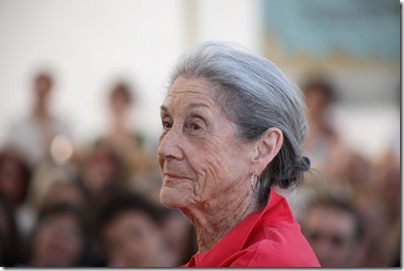
Nadine Gordimer photo by Dan Porges "People make the mistake of regarding commitment as something solely political. A writer is committed to trying to make sense of life. It's a search. So there is that commitment first of all: the commitment to the honesty and determination to go as deeply into things as possible, and to dredge up what little bit of truth you with your talent can then express."

~ Nadine Gordimer

[Thanks Garrison Keillor!]

Tuesday, October 20, 2009

Animals Never Lie

Excerpt from White Apples by Jonathan Carroll:

White Apples “Here's something you must know and don't forget it—animals never lie. They don't lie, they don't put on disguises, and they are always true to what they are. That's why you can trust them."

“Excuse me, but I do not trust lions. Or bears or snakes—"

"That’s because you want them to be the creatures you imagined as a child. Lions should be the strong but sweet beasts in a Disney cartoon. But they aren't, so when they start acting like lions you're angry at them for not being the fantasy animals you imagined. Real bears don't wear top hats and ride unicycles. Nor do they sleep in bed next to Goldilocks. Human beings force them to do those stupid things in circuses and films or children's books. Sure, some might be more docile or more ferocious than others, but in the end they will always, always be bears. You know you should never should turn your back on a bear. You should never even get near them; it's that simple. They're not being dishonest—you are in your perception of them."

Saturday, August 15, 2009

A Context for Correcting Misinformation

Kathleen Hall Jamieson in conversation with Bill Moyers and Drew Altman on Bill Moyers Journal (8.14.09):

unSpun : Finding Facts in a World of Disinformation People who are angry and frustrated and not necessarily well informed in part driven by people who are on the other side of the reform effort. And it's driving into news evocative visuals that are leading the public, I think, to overgeneralize the extent to which there is principal, reasoned dissent from health care reform.

...But when people are shouting at each other, the answer doesn't get through. And when you're impugning the integrity of the person who's answering the questions, the member of Congress, that person's response isn't going to be believed if it is able to be articulated and isn't simply shouted down.

And so it's not creating context in which misinformation on both sides can be corrected. And that's the problem. We don't have a deliberative process here taking place in public to inform public opinion.

Instead, we're potentially distorting it.

Wednesday, June 03, 2009

Trying to Get Something Real

An excerpt from The Brothers Bloom by Rian Johnson:

Rachel Weisz as Penelope in The Brothers BloomBLOOM
Stephen enjoyed it. He loved the idea that we were internationally infamous art smugglers, but I think deep down, same as me, he felt like we were putting on a persona, faking it.

PENELOPE
Telling a story.

BLOOM
He’d love to die on a job. Cornered at midnight on a run to Jakarta. That’s his dream, to tell his story so well it fulfills itself. It somehow would make it finally real for him.

PENELOPE
That’s kinda the thing we all want, right?

BLOOM
Trying to get something real by telling yourself stories is a trap. Trust me on that one.

Saturday, April 25, 2009

Momentary Playthings of Recognition

Some Playthings
by John Hollander, from A Draft of Light

A Draft of Light A trembling brown bird
standing in the high grass turns
out to be a blown

oakleaf after all.
Was the leaf playing bird, or
was it “just” the wind

playing with the leaf?
Was my very noticing
itself at play with

an irregular
frail patch of brown in the cold
April afternoon?

These questions that hang
motionless in the now-stilled
air: what of their

frailty, in the light
of even the most fragile
of problematic

substances like all
these momentary playthings
of recognition?

Questions that are asked
of questions: no less weighty
and lingeringly

dark than the riddles
posed by any apparent
bird or leaf or breath

of wind, instruments
probing what we feel we know
for some kind of truth.

Monday, December 22, 2008

Aware of the Possibility

moviegoer “What is the nature of the search? you ask. Really it is very simple; at least for a fellow like me. So simple that it is often overlooked. The search is what everyone would take if he were not sunk in the everydayness of his own life. To be aware of the possibility of the search is to be onto something. Not to be onto something is to be in despair.”

~ Walker Percy, The Moviegoer

Wednesday, December 17, 2008

Caring is Not Grounded in Reasons

The Reasons of Love "Love enters the picture through reflection on what it is to care about something or someone, which is related to but not identical with desiring something, finding it valuable, or finding it important. And we are led to reflection on what we care about through confronting the most basic questions about how we should live, or what Frankfurt calls ‘authoritative reasoning about what to do.’ Nothing can answer that question for us without appealing to what we can, or do, or should care about. Caring about something is not the same as wanting it, since we may desire many things that we do not really care about at all. We can also be in no doubt about the intrinsic value of something without caring about it or giving it any importance in our lives. When we care about something, we may well find it valuable, but the caring itself is not a response to its value. In this way, caring is not grounded in reasons; but at the same time caring about something is productive of reasons, for caring about something necessarily involves taking its interests as reasons for acting. The reasons we have are dependent on what we care about, rather than the other way around."

~ Richard Moran, from Essay-review of The Reasons of Love by Harry Frankfurt

Princeton Professor Harry Frankfurt discusses ideas and themes of his book, "On Bullshit."

Friday, December 05, 2008

When We Have Not Yet Learned To Pretend It All Makes Sense

Excerpts from “The History of the Personal and The Personal in History: The Poetry of Patrick Phillips,” by Billy Reynolds, storySouth (2005):

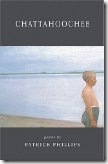
Chattahoochee I think the mysteries in Chattahoochee arise less from a conscious decision to withhold “the facts,” and more from my uncertainty: my sense that there is no unalloyed truth about my childhood, or any childhood, and about the family conflict at the heart of the book. I am always wary of deciding for the reader, or for myself, what those memories mean and what they are about. Instead I wanted to return to memories that I didn’t understand, but at the same time could not seem to escape. The common thread of the stories told in the book—a boy accidentally shooting a pregnant deer, a brother setting his face on fire, a drunken baptism at a poker game—is that I don’t know what any of them mean, but I’ve always known they were important. Such memories feel like oracles in the epics, in that the hero knows they mean something, but he always gets it wrong. I guess I still find the world bewildering, and what interests me about childhood is that at that point we have not yet learned to pretend it all makes sense. Children watch and witness. I guess I’m saying that if one secret of poetry is knowing more than you reveal, another is revealing how little you know.

There is nothing that gives me more delight in poetry than surprise. I think of Rilke’s “you must change your life.” Of Bishop: “And I let it go.” Of Herbert: “Me thought I heard one calling, Child / and I replied, My Lord.” And if surprise is one of my great pleasures in poetry, it requires first an expectation, and the suspense of waiting for it to be fulfilled. I love the narrative movement of sonata form, when a symphony establishes a phrase, elaborates it almost beyond recognition, and then finally returns to the tonic key that we had almost, but not quite, forgotten. It is journey that ends in a homecoming. And that is, I think, the ideal relationship between decorum and surprise: a poem that is both surprising and inevitable in its closing lines, as the formal contract with the reader is upheld, but not in the way that we expected.

Look
By Patrick Phillips, from Chattahoochee.


I'd like to ask my mother
why I'm here, straddling
one thigh of her bell-bottom jeans,
listening to her whisper look
look sweetie
in my ear.

But I can't stop staring
at our fat cat Walina,
ancestor of every cat
that ever roamed that house,

as she blinks back at me,
licks between her claws,
then turns again to eating
the clear, vein-laced skin
stretched over the faces
of her babies squirming
in a pulled-out dresser drawer.

I'd like to ask—but this is back
before anything means anything, when it all just is,
and even the squinting kittens
are like a game my mother made up
to pass the drizzly afternoon.

Back in the cold, dark evening
of childhood, where I'm always
alone: watching Walina
close her mouth around the runt—
the sleepy one, the one too weak
to butt its head against her,
that meows and meows
though no sound comes out,
when she drops it outside the drawer.

This is in the oldest room
of the house behind my eyelids,
where the world began:
where a light bulb pops and flickers
over everything, and no one
ever comes to stop the kitten
from dragging its sack of blood
all over the white linoleum.

Tuesday, December 02, 2008

The Problem

Excerpts from an interview with Truthdig columnist and author Chris Hedges in The Sun Magazine (Dec. 2008), “Moral Combat: Chris Hedges on War, Faith, and Fundamentalism."

I Don't Believe in Athiests Fundamentalism can be found within either a secular or a religious framework. It’s a binary worldview that divides the world into us and them, good and evil, right and wrong. It’s a belief that you and those who subscribe to your ideology have found the absolute truth, which must be accepted by everyone, and those who won’t accept it must be silenced or eradicated. Fundamentalism is an abdication of our moral responsibility to make difficult decisions, because within a fundamentalist movement people are told what to do. They don’t believe in a plurality of truths or ways of being. Fundamentalism is anti-intellectual, because it discourages investigation of other cultures, histories, and belief systems.

...Fundamentalism is a form of tribalism. There’s a great comfort in it, because it discourages self-criticism and self-reflection. Retreating into tribal groups is a way to revert to a childlike state of security, rather than live as an adult and struggle with ambiguity.

...I think that those who remain open to other realities must always cope with anxiety. That is the pain of being fully human. The only other choice is to live in an authoritarian system — either religious or secular — where moral choice is made for you, because you are told what is moral and what is immoral.

...Communism, fascism, religious fanaticism, neocon utopianism in Iraq — there are all sorts of ideologies that can motivate people to kill. Religion is just one. Like political ideologies, theological systems are a human creation. God is a human concept, a flawed attempt by human beings to acknowledge, cope with, and explain the infinite, which is the only reality.

...Like art, [religion] is an attempt at wisdom, which doesn’t come from knowledge. You can memorize as many sutras, verses, and prayers as you want, but it will never make you wise. Religion and art are both ways of grappling with those non-rational forces of love, beauty, truth, grief, and meaning that make one a whole individual. The problem is not religion. The problem is the human heart. And the new atheists don’t get that. People will always find reasons to act inhumanely, whether it’s religion, or nationalism, or “Liberté, égalité, fraternité,” or the workers’ paradise.

Friday, November 21, 2008

The Only Idea Worth the Fuss

“Despite its slippery way with time and space and narrative and Mr. Kaufman’s controlled grasp of the medium, Synecdoche, New York is as much a cry from the heart as it is an assertion of creative consciousness. It’s extravagantly conceptual but also tethered to the here and now, which is why, for all its flights of fancy, worlds within worlds and agonies upon agonies, it comes down hard for living in the world with real, breathing, embracing bodies pressed against other bodies. To be here now, alive in the world as it is rather than as we imagine it to be, seems a terribly simple idea, yet it’s also the only idea worth the fuss, the anxiety of influence and all the messy rest, a lesson hard won for Caden [Cotard]. Life is a dream, but only for sleepers.”

~ Manohla Dargis, “Dreamer, Live in the Here and Now,” New York Times (10.24.08)

synecdoche-ny-poster-big

Wednesday, September 17, 2008

A Different Level of Acceptance to What Is

"I talk about God all the time in class, and I'm pretty confident in my relationship with God. And therefore, I'm comfortable using the word. But when I define spirit, it's that which exists within that's of truth and love. And so when I refer to grace or to spirit or to God, I'm talking of truth and love."

"It comes down to this for me: You can't get to God through your head, at least in my experience. I might come back in 20 years and say, you know, 'Remember everything I was saying at 41? I was totally wrong.' But how I've experienced it is that you can't get to God through your head, because it's determined by your five senses, so therefore we're limited to what we know, what we see, what we've experienced here on earth."

"For me, I've only been able to get to God through my heart, not through what I know but through what I feel because feelings lead to surrender. Surrender allows you to step into that unknown state where there's a different level of acceptance to what is rather than what you're choosing it to be. So for me, you release the tension, it opens you up to feelings, feelings connect you to surrender, and suddenly you're hearing with a new ear that moves beyond human interpretation but to spiritual perception which is infinite and limitless."

~ Seane Corn, from "Yoga: Meditation in Action," Speaking of Faith (9.11.08)

Thursday, June 26, 2008

Inner Truths

Charles Baxter "Writers may be practiced liars on the page, but they usually have a great respect for inner truths. There are, of course, exceptions, many of them famous. But writers tend to respect the truth of things and the otherness of other people, which makes them very poor liars. Very few writers are successful sociopaths. This is not the case with literary critics, who are often very good at lying."

~ Charles Baxter

[Thanks Linda!]