Showing posts with label mystery. Show all posts

Monday, March 21, 2011

Listen to Your Life

Japanese Garden, Dawes Arboretum (March 19, 2011)

"Listen to your life. See it for the fathomless mystery that it is. In the boredom and the pain of it no less than the excitement and gladness: touch, taste, smell your way to the holy and hidden heart of it because in the last analysis all moments are key moments, and life itself is grace."

~ Frederick Buechner, from Now and Then

Wednesday, March 09, 2011

Whether We Know It or Not

Lumpini Park, Bankgok (2004)

On Bowing at Strange Altars
from ScurrilousMonk

Whether we know it or not,
All altars are created out of the same need.

Whether we know it or not,
All altars express the same desire.

Whether we know it or not,
All altars ask the same question.

Whether we know it or not,
All altars honor the same mystery.

Saturday, March 05, 2011

Steadied by the Darkness

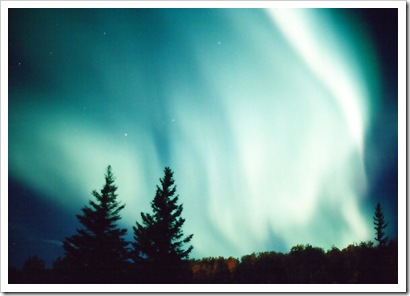
Northern Lights over Fairbanks, Alaska (Stormscape Photography / Michael Phelps)

In the Sleep of Reason
by John Haines (1924 – 2011), from The Owl in the Mask of the Dreamer: Collected Poems

And so I closed that book,
laid down the pen
and closed my eyes.

What had I thought to find,
reading by the light of cyphers,
abstract and piercing
in their constellations?

Nothing that night and the wind
could not have told me,
had I raised my head,
dimmed my lamp, and listened—

I, a thoughtful man, prone
to the dust of bindings,
coughing in the dry sequence
of verse and chapter
(for I had reasons).

And while I was sleeping,
came a small beak at my heart,
like a thorn, insistently
probing . . .

And I in terror awoke,
to know in that room
a tread ceaseless and pacing.

As if from within my being
came this upwelling,
of brute and shouldering forms:

heavy and beastlike, buoyant
and birdlike, but nothing
I could name, they moved
at ease, about and within me . . .

creatures of the starlight,
but also of the mind,
harbor to wolf and warlock.

So much do I remember now:
the pulse of obedient hearts,
hot tongues licking
the night; and I heard,

like a dry wind over leaves,
the scaly rustling of reptiles
coiling and resting . . .
All turned in the lamplight

eyes that never turned from mine
in their bright interrogation
(for I could see them,
and yet they were not there).

And I would speak, my hand
upheld to shield me,
when the shutter clapped
and my lamp blew out—

(was it a natural wind,
or a spirit-breath
lifting the leaves
of heavy trees in the night?)

And all subsided in the hush
that followed, in the calm
of great wings folding
and shadowy forms lying down.

I rose and left that room,
the house of my grief
and my bondage, my book
never again to be opened.

To see as once I saw,
steadied by the darkness
in which I walked
and would make my way.

See also: “John Haines, a Poet of the Wild, Dies at 86,” by Douglas Marin, New York Times, Mar. 5, 2011

Wednesday, February 16, 2011

Be Still While You are Still Alive

Year-End Retreat 2009, Rancho Palos Verdes

In Silence
by Thomas Merton, from The Strange Islands

Be still.
Listen to the stones of the wall.
Be silent, they try
to speak your

name.
Listen
to the living walls.

Who are you?
Who
are you? Whose
silence are you?

Who (be quiet)
are you (as these stones
are quiet). Do not
think of what you are
still less of
what you may one day be.

Rather
be what you are (but who?)
be the unthinkable one
you do not know.

O be still, while
you are still alive,
and all things live around you

speaking (I do not hear)
to your own being,
speaking by the unknown
that is in you and in themselves.

“I will try, like them
to be my own silence:
and this is difficult. The whole
world is secretly on fire. The stones
burn, even the stones they burn me.
How can a man be still or
listen to all things burning?
How can he dare to sit with them
when all their silence is on fire?”

Saturday, February 12, 2011

Poetry Deal Breakers

A response from Billy Collins to the question, Could you say a little about the deal breakers that keep you from reading a poem?

“Well, the word cicada. I won’t tolerate that. I’m just sick of them. So if I’m reading a poem and I come across the word cicada, I stop. Deal breaker. That’s it. I mean, that’s one easy one to answer.

I guess other poems that I tend not to finish are poems that exhibit a kind of presumptuousness in that the first couple of lines, I feel like I’m suddenly in an ambulance with someone and he or she is being taken to the psychiatric ward and is telling me about some inner psychic terror that their suffering from without having really introduced themselves. And that seems to be a form of kind of psychological bad manners.

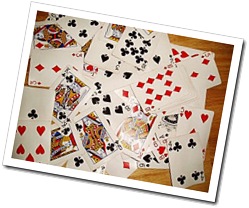
I appreciate poems that are clear and then mysterious. I think poems that work for me are poems in which a writer really appreciates and understands the difference between what to be clear about and what to be mysterious about. So what cards to turn over and what cards to leave face down. And if you leave all the cards face down—I mean some poems read that way to me—there’s really no game. It’s just kind of fifty-two bits of obscurity. And if you turn them all over, it’s just too obvious. So I think the manipulation of the clear and the mysterious, in the right way, are deal makers for me.”   
From Billy Collins Live: A Performance at the Peter Norton Symphony Space, April 20, 2005

Monday, August 09, 2010

Satisfied with the Mystery

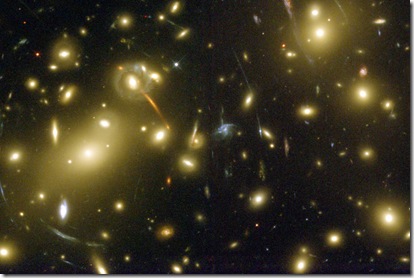
Abell 2218: A Galaxy Cluster Lens

"The most beautiful experience we can have is the mysterious. It is the fundamental emotion that stands at the cradle of true art and true science. Whoever does not know it and can no longer wonder, no longer marvel, is as good as dead, and his eyes are dimmed. It was the experience of mystery—even if mixed with fear—that engendered religion. A knowledge of the existence of something we cannot penetrate, our perceptions of the profoundest reason and the most radiant beauty, which only in their most primitive forms are accessible to our minds: it is this knowledge and this emotion that constitute true religiosity. In this sense, and only this sense, I am a deeply religious man...I am satisfied with the mystery of life's eternity and with a knowledge, a sense, of the marvelous structure of existence—as well as the humble attempt to understand even a tiny portion of the Reason that manifests itself in nature."

~ Albert Einstein, from The World as I See It


[Thanks for the Einstein quote, Liv!]

Wednesday, May 19, 2010

Seeing the Other Side of Things

magritte-rock

René Magritte wrote, "To equate my painting with symbolism, conscious or unconscious, is to ignore its true nature. People are quite willing to use objects without looking for any symbolic intention in them, but when they look at paintings, they can't find any use for them. So they hunt around for a meaning to get themselves out of the quandary, and because they don't understand what they are supposed to think when they confront the painting. They want something to lean on, so they can be comfortable. They want something secure to hang on to, so they can save themselves from the void. People who look for symbolic meanings fail to grasp the inherent poetry and mystery of the image. No doubt they sense this mystery, but they wish to get rid of it. They are afraid. By asking ‘what does this mean?’ they express a wish that everything be understandable. But if one does not reject the mystery, one has quite a different response. One asks other things."

"To the extent that my pictures have any value," [Magritte] once said, lobbing a grenade at the experts and explainers, "they do not lend themselves to analysis." He quoted Victor Hugo, "We never see but one side of things." And to this he added, "it's precisely this 'other side' that I'm trying to express."

From "The Artist Who Was Master of the Double Take," by Bennett Schiff, Smithsonian Magazine (September 1992)

Sunday, May 02, 2010

Finding Words

Mai's Quiet Zone, 2004

Dr. Alan Dienstag from “Alzhiemer’s, Memory, and Meaning,” in conversation with Krista Tippett on Speaking of Faith, March 26, 2009:

I was working with a woman who actually first brought her sister to see me. Her name was Ann, and she wanted, her sister to join one of the writing groups [for people in the early stages of Alzheimer’s], but her sister wasn't right for it. About two years later, she came back, and she [herself] had been diagnosed with Alzheimer's. And so I started to work with her, and she joined one of my support groups.

She was in the group for a long time, and then it just became impossible for her to participate. The conversation was moving too fast. She just didn't have the language. She couldn't string together more than a sentence or two, and it just wasn't working. And so she had to leave the group.

Her husband, who was just extraordinarily devoted to her, really wanted her to maintain her connection with me. It was very helpful that I had known her before. And she would bring photo albums in. She would do a little tchotchke tour of my office. You know, when it wasn't really possible to talk about things, she would kind of walk around and we would look at objects. She was very taken by the birds outside the window. I mean, that was the kind of time that we spent together.

And then even that became difficult. She was one of those people who started to kind of retreat into almost a mask-like blankness. It was harder and harder to access her. And so we were reaching the end of that time, and I was talking to her husband, telling him that I just didn't think that it was a really fruitful way for her to spend her time and so on.

So it was around that time, and I was going on vacation, and she loved the beach and I loved the beach and this was something that we used to connect about.

As I was leaving I said, "Ann, I'm going to the beach. I'm going to be away for a while." And she smiled and her face kind of lit up.

I said, "What do you love about the beach?"

She kind of drifted away, as she did, and she got very quiet. And again I waited and I thought, well, you know, she can't really answer that question.

And she turned to me and she said, "There's some kind of music that lives there."

Friday, April 02, 2010

Ism After Ism

Poems should be more like essays and essays should be more like poems.

~ Charles Olson

Two of every sort shall thou bring into the Ark.

~ Genesis

*     *     *

Religion
by Stephen Dunn, from Riffs and Reciprocities: Prose Pairs

Riffs & Reciprocities: Prose Pairs First, it was more about mystery than about trying to get us to behave. Whichever, we’re still in some lonely cave, not far from that moment a lightning storm or a sunset drove us to invent the upper reaches of the sky. Religion is proof that a good story, we'll-told, is a powerful thing. Proof, too, that terror makes fabulists of us all. We’re pitiful, finally, and so oddly valiant. The dead god rising into ism after ism—that longing for coherence that keeps us, if not naive, historically challenged. To love Christ you must love the Buddha, to love Mohammed or Moses you must love Confucius and, say Schopenhauer and Nietzsche as well. They were all wise and unsponsored and insufficient, some of the best of us. I’m saying this to myself: the sacred cannot be found unless you give up some old version of it. And when you do, mon semblable, mon frère, I swear there’ll be an emptiness it’ll take a lifetime to fill. Indulge, become capacious, give up nothing, Jack my corner grocer said. He was pushing the portobellos, but I was listening with that other, my neediest ear.

Monday, February 01, 2010

Another World

"Il y a un autre monde mais il est dans celui-ci."

~ Paul Éluard

this-world

Talking of Power and Love
by Paul Éluard

Between all my torments between death and self
Between my despair and the reason for living
There is injustice and this evil of men
That I cannot accept there is my anger

There are the blood-coloured fighters of Spain
There are the sky-coloured fighters of Greece
The bread the blood the sky and the right to hope
For all the innocents who hate evil

The light is always close to dying
Life always ready to become earth
But spring is reborn that is never done with
A bud lifts from dark and the warmth settles

And the warmth will have the right of the selfish
Their atrophied senses will not resist
I hear the fire talk lightly of coolness
I hear a man speak what he has not known

You who were my flesh’s sensitive conscience
You I love forever you who made me
You will not tolerate oppression or injury
You’ll sing in dream of earthly happiness
You’ll dream of freedom and I’ll continue you

Monday, January 25, 2010

The Elementary Course

Year-End Retreat 2009, Rancho Palos VerdesMysticism for Beginners
by Adam Zagajewski, from Mysticism for Beginners

The day was mild, the light was generous.
The German on the café terrace
held a small book on his lap.
I caught sight of the title:
Mysticism for Beginners.
Suddenly I understood that the swallows
patrolling the streets of Montepulciano
with their shrill whistles,
and the hushed talk of timid travelers
from Eastern, so-called Central Europe,
and the white herons standing—yesterday? the day before?—
like nuns in fields of rice,
and the dusk, slow and systematic,
erasing the outlines of medieval houses,
and olive trees on little hills,
abandoned to the wind and heat,
and the head of the Unknown Princess
that I saw and admired in the Louvre,
and stained-glass windows like butterfly wings
sprinkled with pollen,
and the little nightingale practicing
its speech beside the highway,
and any journey, any kind of trip,
are only mysticism for beginners,
the elementary course, prelude
to a test that’s been
postponed.

Friday, October 02, 2009

An Experience Beyond Thought

"Poetic craft is a carcass, a sham. If poetry doesn't come as naturally as leaves to a tree, then it better not come at all…A poem needs understanding through the senses. The point of diving in a lake is not immediately to swim to the shore; it's to be in the lake, to luxuriate in the sensation of water. You do not work the lake out. It is an experience beyond thought. Poetry soothes and emboldens the soul to accept mystery."

~ Ben Wishaw as John Keats in Jane Campion’s Bright Star


Bright Star
by John Keats

Bright star, would I were stedfast as thou art--
Not in lone splendour hung aloft the night
And watching, with eternal lids apart,
Like nature's patient, sleepless Eremite,
The moving waters at their priestlike task
Of pure ablution round earth's human shores,
Or gazing on the new soft-fallen mask
Of snow upon the mountains and the moors--
No--yet still stedfast, still unchangeable,
Pillow'd upon my fair love's ripening breast,
To feel for ever its soft fall and swell,
Awake for ever in a sweet unrest,
Still, still to hear her tender-taken breath,
And so live ever--or else swoon to death.

Tuesday, July 14, 2009

There It Sits

H. L. Mencken “Penetrating so many secrets, we cease to believe in the unknowable. But there it sits nevertheless, calmly licking its chops.”

~ H. L. Mencken

Tuesday, November 25, 2008

Hints of a Hunger

Mary Gordon “Writing and prayer both involve a lot of waiting, and I think that's a very important discipline. The experience of prayer and the experience of creation are very similar, and there is this kind of, again, attentiveness mixed with an openness that is necessary for both the creation of art and for prayer.”

“This desire for beauty and the desire for meaning are very mysterious, and for me they're hints of something. They're hints of a hunger for something that is not reachable except through something transcendent, some transcendent person. Why do we want meaning? It is ridiculous. Children suffer. Bad people do very well. There shouldn't be a desire for meaning. Life should have told us that there is no meaning, and we keep searching for it, and we keep being angry when we don't have it. So what is that hunger? What is that appetite? I don't know. It's very mysterious to me. But it seems to me an important way of understanding, or at least framing the question, what is it to be human?”

~ Mary Gordon, from “Profile: Mary Gordon,” Religion and Ethics  Newsweekly (10.26.07)

From Mary Gordon’s prayers for the un-prayed for
For those whose work is invisible; for those who paint the undersides of boats; makers of ornamental drains on roofs too high to be seen; for cobblers who labor over inner soles; for seamstresses who stitch the wrong sides of lining; for scholars whose research leads to no obvious discovery. Grant them perseverance for the sake of your love, which is humble, invisible, and heedless of reward.

Thursday, October 16, 2008

Daughter

A daughter is not a passing cloud, but permanent,
holding earth and sky together with her shadow.
She sleeps upstairs like mystery in a story,
blowing leaves down the stairs, then cold air, then warm.
We who at sixty should know everything, know nothing.
We become dull and disoriented by uncertain weather.
We kneel, palms together, before this blossoming altar.

~ James Lenfestey, from American Life in Poetry: Column 186

Thursday, September 18, 2008

The Common Source

"This oceanic feeling of wonder is the common source of religious mysticism, of pure science and art for art's sake."

~ Arthur Koestler

Monday, August 25, 2008

No, I Would Not Leave You if You Suddenly Found God

By Jennifer Michael Hecht from The Next Ancient World

Praise wild dancing in the kitchen.
Praise sitting and talking to the doctor.
Praise phone calls from my sister.
Praise phone calls from you, a little drunk, leaning toward me.
Praise old lovers who show up when they are needed.
Praise our mothers, safe in another state.
Praise my apartment with its three wide rooms.
Praise the blue sky above the brick buildings.
Praise my back windows: trees, fire escapes, cafe lights.
Praise coffee (it destroys sadness).
Praise encyclopedias.
Praise you calling crying.
Praise ibuprofen.
Praise painting on wood.
Praise all the days in the photographs.
Praise the press of my breasts against the inside of my winter coat.
Praise the name of my winter coat: Big Black.
Praise this feeling of trying to write about the truth.
Praise the Byzantine Empire.
Praise the salt in sweat. We are not alone. Praise making you laugh.
Praise making you proud.
Praise the second cup of coffee.
Praise having a party to go to tonight.
Praise my halting therapist.
Praise mixed baby lettuce.
Praise my confidence.
Praise my talent.
Praise bravery in the face of fear.
Praise my fearlessness.
Praise my fear.
Praise pickled herring with onions.
Praise the Arctic Circle.
Praise the Mighty Tonka truck.
Praise the forklift; praise the crane.
Praise theater tickets.
Praise the repetition of names.
Praise the Virgin.
Praise the Magdalene.
Praise Magellan.
Praise Central Park.
Praise your uneven teeth.
Praise blood-stained sheets.
Praise the land, and what I know about its bedrock.
Praise David, dancing wild around the ark of his Lord.
Praise the job of work of truth.
Praise the phrase "job of work."
Praise your faith in me.
Praise your courage.
Praise my faithfulness.
Praise my dedication.
Praise that you sleep with one eye open because a dog bit your face.
Praise your extra nipple.
Praise that we are not lovers.
Praise that we touch each other like lovers.
Praise that you figure out the movie before me.
Praise my desperation.
Praise my terrible fear.
Praise Jones Beach.
Praise the boys in long pants selling frozen Snickers at the sea shore.
Praise death.
Praise the memory of being tiny and tumbled under the ocean, close
to death. Praise arch support.
Praise chewing on a steak bone.
Praise other people's poems.
Praise the Empire State Building.
Praise swimming out so far, I forget the fact of land.
Praise eating chicken-cutlet sandwiches with my brother at the beach.
Praise doing the puzzle with my mother.
Praise my father explaining the universe.
Praise that after visiting Great-Grandma Bertha's,
we went to Coney Island.
Praise three of us fitting in one seat on the Cyclone.
Praise the weird little town where you were raised.
Praise that you were born here where I was born.
Praise the ex-lovers we have in common; praise chocolate.
Praise living at the millennium.
Praise the rotary phone.
Praise broccoli rabe with garlic and olive oil.
Praise total abandon.
Praise bringing out the harpies.
Praise using every muscle.
Praise thirst and water.
Praise the landing on the moon.
Praise singing loud and hard.
Praise going to bed exhausted.
Praise your poems.
Praise my poems.
Praise that we drink too much.
Praise you promising me that you will stop smoking.
Praise how I moon over you.
Praise how you love me.
Praise your strong husband.
Praise dancing to swing.
Praise dancing to the blues.
Praise the borscht at Veselka.
Praise my first gray hairs.
Praise acetaminophen.
Praise Australopithecus.
Praise speaking the truth.
Praise knowing that life is an endeavor of truth.
Praise knowing that life is the becoming towards truth.
Praise the authentic moments of working with someone towards truth.
Praise desire.
Praise stupefying desire.
Praise north and south.
Praise the yellow sun on the red brick buildings outside my windows.
Praise knowing that it is midnight out the back window
because the cafe lights go off.
Praise oranges.
Praise midnight out the front windows and the Empire State Building
goes dark.
Praise Cezanne's apples and oranges.
Praise men from their callused feet to their beautiful thinning hair.
Praise women from Sappho biting her lip
through the first hip-swagger of the new millennium.
Praise the shark giving birth to live young.
Praise the bird.
Praise the words "decapitated" and "disembodied."
Praise rhyme.
Praise meter.
Praise certainty.
Praise indivisibility.
Praise the movies; praise writing songs.
Praise asking each other when we are supposed to bleed.
Praise talking to myself alone in the dark.
Praise my endless pleasure in the godless solitude of my private mind.
Praise the giraffe and the porcupine.
Praise sloth.
Praise gluttony.
Praise a man's hand pressing the small of my back.
Praise your tiny feet.
Praise travel.
Praise the refusal of travel.
Praise your blue eyes.
Praise kissing men: desert of whiskers, oasis of lips.
Praise kissing women and the effort not to bite.
Praise the lips and the tongues and the grease.
Praise the feast.
Praise agony.
Praise defeat.
Praise that we used to dance in public and that now we dance at home.
Praise faith.
Praise glory.
Praise praise.
Praise your brilliant heart.
Praise the mystical abundance of your horrifying heart.
No, I will not leave you if you want to worship God.

Listen (RealAudio, 2:04)

"A History of Doubt," Speaking of Faith (May 3, 2007)

Friday, August 08, 2008

Deprived of the Ability to Subtract

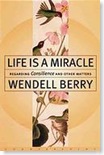
From LIfe is a Miracle: An essay against modern superstition by Wendell Berry:

If there are critics of science in government and the bureaucracies, they are largely inaudible. In the universities, the scientists generally proceed from promotion to promotion and from grant to grant, leaving few recorded moments of conscience or professional self-doubt; and the professors of the humanities seem for the most part merely to be abashed by the sciences, deferring to their certainties, adopting their values, admiring their wealth, and longing even to imitate their methodology and their jargon. The journalists think it intellectually chic to stand open-mouthed before any wonder of science whatsoever. The media, cultivating their mediocrity, seem quite comfortably unaware that many of the calamities from which science is expected to save the world were caused in the first place by science -- which meanwhile is busy propagating further calamities, hailed now as wonders, from which later it will undertake to save the world. Nobody, so far as I have heard, is attempting to figure out how much of the progress resulting from this enterprise is net. It is as if a whole population has been genetically deprived of the ability to subtract.

I know that there are some scientists who are speaking and writing sound criticism of science or of scientific abuses of science, but these people seem to have the status of dissidents or heretics; they are not accepted as partners in a necessary dialogue. Typically, their criticisms and objections are not even answered. (If you are making money and have power, why debate?) In short, the scientific critics of science are not effective. That there has been no effective criticism of science is demonstrated, for instance, by science's failure to attend to the possibility of small-scale or cheap or low-energy or ecologically benign technologies. Most applications of science to our problems result in large payments to large corporations and in damages to ecosystems and communities. These eventually will have to be subtracted (but not, if they can help it, by the inventors or manufacturers) from whatever has been gained.

*     *     *

The only science we can have is human science; it has human limits and is involved always with human ignorance and human error. It is a fact that the solutions invented or discovered by science have tended to lead to new problems or to become problems themselves. Scientists discovered how to use nuclear energy to solve some problems, but any use of it is enormously dangerous to us all, and scientists have not discovered what to do with the waste. (They have not discovered what to do with old tires.) The availability of antibiotics leads to the overuse of antibiotics. And so on. Our daily lives are a daily mockery of our scientific pretensions. We are leaning to know precisely the location of our genes, but significant numbers of us don't know the whereabouts of our children. Science does not seem to be lighting the way; we seem rather to be leapfrogging into the dark along series of scientific solutions, which become problems, which call for further solutions, which science is always eager to supply, and which it sometimes cannot supply.

Thursday, March 06, 2008

Homecoming

"When you think about language and you think about consciousness, it's just incredible to think that we can make any sounds that can reach over across to each other at all...I think the beauty of being human is that we're incredibly, intimately near each other. We know about each other, but yet we do not know or never can know what it's like inside another person. And it's amazing, you know, here am I sitting in front of you now, looking at your face, you're looking at mine and yet neither of us have ever seen our own faces. And that in some way, thought is the face that we put on the meaning that we feel and that we struggle with and that the world is always larger and more intense and stranger than our best thought will ever reach. And that's the mystery of poetry, you know, is poetry tries to draw alongside the mystery as it's emerging and somehow bring it into presence and into birth."

...

"That's what I call spirituality, the art of homecoming. So it's St. Augustine's phrase, Deus intimior intimo meo — "God is more intimate to me than I am to myself." Then you go to Meister Eckhart, and you get the other side of it which you must always keep together with it, where in Middle High German, he says (in German) that means, "God becomes and God unbecomes," or translated it means that God is only our name for it and the closer we get to it the more it ceases to be God. So then you are on a real safari with the wildness and danger and otherness of God.

"And I think when you begin to get a sense of the depth that is there then your whole heart wakens up. You know, I mean, I love Irenaeus' thing from the second century, which said, the Glory of the human being — "The glory of God is the human being fully alive." And I think in our culture that one of the things that we are missing is that these thresholds where we can encounter this, and where we move into new change in our lives, there are no rituals to help us to recognize them or to cross them worthily."

-- John O'Donohue in conversation with Krista Tippett on Speaking of Faith (2.28.08).