Showing posts with label wonder. Show all posts

Thursday, May 19, 2011

Prayer About Everyone and Everything

Roger Ebert, from “A Prayer Beneath the Tree of Life,” Chicago Sun Times, May17, 2011:

Terrence Malick's new film is a form of prayer. It created within me a spiritual awareness, and made me more alert to the awe of existence. I believe it stands free from conventional theologies, although at its end it has images that will evoke them for some people. It functions to pull us back from the distractions of the moment, and focus us on mystery and gratitude…

Many films diminish us. They cheapen us, masturbate our senses, hammer us with shabby thrills, diminish the value of life. Some few films evoke the wonderment of life's experience, and those I consider a form of prayer. Not prayer ‘to’ anyone or anything, but prayer ‘about’ everyone and everything. I believe prayer that makes requests is pointless. What will be, will be. But I value the kind of prayer when you stand at the edge of the sea, or beneath a tree, or smell a flower, or love someone, or do a good thing. Those prayers validate existence and snatch it away from meaningless routine…

What Malick does in The Tree of Life is create the span of lives. Of birth, childhood, the flush of triumph, the anger of belittlement, the poison of resentment, the warmth of forgiving. And he shows that he feels what I feel, that it was all most real when we were first setting out, and that it will never be real in that way again.”

See also: Metacritic

Sunday, April 24, 2011

Searching for Heaven

"Heaven and earth don’t exist anymore. The earth is round. The cosmos has no up and down. It is moving constantly. We can no longer fix the stars to create an ideal place. This is our dilemma.

It is natural to search for our beginnings, but not to assume it has one direction. We live in a scientific future that early philosophers and alchemists could not foresee, but they understood very fundamental relationships between heaven and earth, that we have forgotten…North, south, east, and west, up and down are not issues. For me, this also relates to time. Past, present, and future are essentially the same direction. It is about finding symbols that move in all directions.

My spirituality is not New Age. It has been with me since I was a child. I know that in the last few decades religion has been made shiny and new. It’s like a business creating a new product. They are selling salvation. I’m not interested in being saved. I’m interested in reconstructing symbols. It’s about connecting with an older knowledge and trying to discover continuities in why we search for heaven."

~ Anselm Kiefer, from “History of Our World

The Mountain from Terje Sorgjerd on Vimeo.

Three Lilies
by Brooks Haxton, from Uproar: Antiphonies to Psalms

Weeping may endure for a night, but joy cometh in
            the morning. Psalm 30

Before dawn, under a thin moon disappearing
east, the planet Mercury, the messenger
and healer, came up vanishingly
into the blue beyond the garden where
three lilies at the bottom of the yard
arrayed white trumpets on iron stalks
under a slow, slow lightning from the sun.
I stood on a rotten step myself,
and smelled them from a hundred feet away.

Wednesday, March 09, 2011

Whether We Know It or Not

Lumpini Park, Bankgok (2004)

On Bowing at Strange Altars
from ScurrilousMonk

Whether we know it or not,
All altars are created out of the same need.

Whether we know it or not,
All altars express the same desire.

Whether we know it or not,
All altars ask the same question.

Whether we know it or not,
All altars honor the same mystery.

Thursday, January 06, 2011

Standing in the Sky

“You are standing in the sky. When we think of the sky, we tend to look up, but the sky actually begins at the earth. We walk through it, yell into it, rake leaves, wash the dog, and drive cars in it. We breathe it deep within us. With every breath, we inhale millions of molecules of sky, heat them briefly, and then exhale them back into the world. At this moment, you are breathing some of the same molecules once breathed by Leonardo da Vinci, William Shakespeare, Anne Bradstreet, or Colette. Inhale deeply. Think of The Tempest. Air works the bellows of our lungs, and it powers our cells. We say “light as air,” but there is nothing lightweight about our atmosphere, which weighs 5,000 trillion tons. Only a clench as stubborn as gravity’s could hold it to the earth; otherwise it would simply float away and seep into the cornerless expanse of space.”

~ Diane Ackerman, from A Natural History of the Senses

Sunday, December 05, 2010

On and On

“There is a fundamental reason why we look at the sky with wonder and longing—for the same reason that we stand, hour after hour, gazing at the distant swell of the open ocean.

94 percent of the human body is made up of the key elements oxygen, carbon, and hydrogen.

There is something like an ancient wisdom, encoded and tucked away  in our DNA, that knows its point of origin as surely as a salmonid knows its creek.

Intellectually, we may not want to return there, but the genes know, and long for their origins—their home in the salty depths.

But if the seas are our immediate source, the penultimate source is certainly the heavens…

The spectacular truth is—and this is something that your DNA has known all along—the very atoms of your body—the iron, calcium, phosphorus, carbon, nitrogen, oxygen, and on and on—were initially forged in long-dead stars.

This is why, when you stand outside under a moonless, country sky, you feel some ineffable tugging at your innards. We are star stuff. Keep looking up.”

~ Jerry Waxman

Thursday, August 12, 2010

Instructions

Red Bird: Poems Instructions for living a life:
Pay attention.
Be astonished.
Tell about it.

~ Mary Oliver, from “Sometimes

Wednesday, August 11, 2010

I Have to Call Myself Back

“I’m very bad when it comes to worship. This is just me. This is probably a terrible thing to say [in a church], but I don’t need it very much. I try to live in this kind of presence and a kind of awareness and I have to call myself back time and time again to remembrance of who I am. Partly, I think, all that’s because as a kid, as a Presbyterian, I had to go to church four times on Sunday. That wears out your patience and your ass. I’ve sort of done my stint. But that’s just me. It’s not other people.”

~ Sam Keen, author of In the Absence of God: Dwelling in the Presence of the Sacred

Monday, August 09, 2010

Satisfied with the Mystery

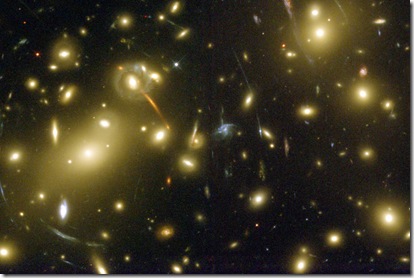
Abell 2218: A Galaxy Cluster Lens

"The most beautiful experience we can have is the mysterious. It is the fundamental emotion that stands at the cradle of true art and true science. Whoever does not know it and can no longer wonder, no longer marvel, is as good as dead, and his eyes are dimmed. It was the experience of mystery—even if mixed with fear—that engendered religion. A knowledge of the existence of something we cannot penetrate, our perceptions of the profoundest reason and the most radiant beauty, which only in their most primitive forms are accessible to our minds: it is this knowledge and this emotion that constitute true religiosity. In this sense, and only this sense, I am a deeply religious man...I am satisfied with the mystery of life's eternity and with a knowledge, a sense, of the marvelous structure of existence—as well as the humble attempt to understand even a tiny portion of the Reason that manifests itself in nature."

~ Albert Einstein, from The World as I See It


[Thanks for the Einstein quote, Liv!]

Tuesday, May 18, 2010

Only Rising and Falling

Orion on Film, Matthew Spinelli

The World as It is
by Carolyn Miller

No ladders, no descending angels, no voice
out of the whirlwind, no rending
of the veil, or chariot in the sky—only
water rising and falling in breathing springs
and seeping up through limestone, aquifers filling
and flowing over, russet stands of prairie grass
and dark pupils of black-eyed Susans. Only
the fixed and wandering stars: Orion rising sideways,
Jupiter traversing the southwest like a great firefly,
Venus trembling and faceted in the west—and the moon,
appearing suddenly over your shoulder, brimming
and ovoid, ripe with light, lifting slowly, deliberately,
wobbling slightly, while far below, the faithful sea
rises up and follows.

From American Life in Poetry: Column 269

Friday, March 26, 2010

We’ve Seen it All Before

Excerpt from the introduction of Taking Our Places: The Buddhist Path to Truly Growing Up by Norman Fischer:

Taking Our Places Another characteristic of maturity — one that any of us would mention — is experience. A grown-up is someone who is experienced and, through having lived long enough to have seen many things, has a point of view and a measure of savvy about how life works. There is certainly no substitute for the experience that accumulates as the years go by, but it is also possible to be alive for a long time and not really experience our living, not really see our life. The human capacity for self-deception and blindness runs deep. We may be alive, but we have not necessarily lived. If we accumulate experiences without really engaging with them, then our experience tends to make us stodgy and boring. As we catalog and define our experiences, possessing them without ever really being possessed by them, we begin to expect that new situations will just be repetitions of old ones. Soon we feel as if we’ve seen it all before. We know what to expect. Our point of view gradually becomes a set of blinders rather than a searching flashlight.

But if we pay close and open attention to our experiences, life’s larger patterns begin to come into view. We see that all things are transitory and unique. Nothing repeats. We understand that, though always instructive, the past can never tell us what the future will be. Within the larger pattern that experience reveals, there are endless variations. Insofar as we see this, our experience increases our wonder at and appreciation of all that happens. With little life experience, we might be naively excited by the novelty of a person we meet or an event that occurs. But when we truly appreciate our experience, we respond to that newness with a deeper understanding of its meaning and wonder as we relate it to what we have seen before. Far from dampening our sense of wonder, real experience refreshes and mellows it.

Sunday, March 21, 2010

Nature Guards Its Secrets

Spring Equinox 2010

Look Again
by Sarah Lindsay, from Twigs and Knucklebones 

I know how little I know
from observation:
that the dog sleeping on the rug
with pure concentration
will be sleeping, each time I look up,
in a different direction,

that five wart-lidded mushrooms
can form on the lawn
in the time rain takes
to shift from falling to fallen,

that my eyes are too slow
to track shooting stars, too quick
to spy continental drift,
and Earth conceals its spin
by spinning me with it,

that a tree won’t let me
see its growth, only its height,
that hairs on my head go singly gray
only by night. 

Saturday, December 12, 2009

Into the Cathedral


“Under the ice, the divers  find themselves in a separate reality where space and time acquire a strange new dimension. Those few who have experienced the world under the frozen sky often speak of it as going down into the cathedral.”

~ Werner Herzog, from his 2007 film, Encounters at the End of the World

[Thanks Kit!]

Wednesday, November 25, 2009

There is Grandeur, If You Look

More Funny Ideas About Grandeur
by Ruth Padel, from Darwin: A Life in Poems

'To Emma, in case of my sudden death.
      I have just finished this sketch
of my species theory. If true, as I believe,
      it will be a considerable step
in science. My most solemn last request
      is that you devote 400 pounds
to its publication.'

'There is grandeur, if you look
      at every organic being
as the lineal successor of some other form,
      now buried under thousands of feet of rock.
Or else as a co-descendant, with that buried form,
      from some other inhabitant of this world
more ancient still, now lost.

Out of famine, death and struggle for existence,
      comes the most exalted end
we're capable of conceiving: creation
      of the higher animals!
Our first impulse is to disbelieve — 
      how could any secondary law
produce organic beings, infinitely numerous,

characterized by most exquisite
      workmanship and adaptation?
Easier to say, a Creator designed each.
      But there is a simple grandeur in this view —
that life, with its power to grow, to reach, feel,
      reproduce, diverge, was breathed
into matter in a few forms first

and maybe only one. To say that while this planet
      has gone cycling on
according to fixed laws of gravity,
      from so simple an origin, through selection
of infinitesimal varieties, endless forms
      most beautiful and wonderful
have been, and are being, evolved.'


Charlie Darwin

by Low Anthem, from Oh My God, Charlie Darwin

Set the sails I feel the winds a'stirring
Toward the bright horizon set the way
Cast your wreckless dreams upon our Mayflower
Haven from the world and her decay

And who could heed the words of Charlie Darwin
Fighting for a system built to fail
Spooning water from their broken vessels
As far as I can see there is no land

Oh my god, the water's all around us
Oh my god, it's all around

And who could heed the words of Charlie Darwin
The lords of war just profit from decay
And trade their children's promise for the jingle
The way we trade our hard earned time for pay

Oh my god, the water's cold and shapeless
Oh my god, it's all around
Oh my god, life is cold and formless
Oh my god, it's all around

Explore Studio 360’s November 20, 2009 episode on Evolution.

Thursday, November 19, 2009

The First Mouth that Drops Open in Surprise

From “The Writer as Illusionist,” by William Maxwell, from A William Maxwell Portrait:

A William Maxwell Portrait: Memories and Appreciations The writer has everything in common with the vaudeville magician except this: The writer must be taken in by his own tricks. Otherwise the audience will begin to yawn and snicker. Having practiced more or less incessantly for five, ten, or twenty years, knowing that the trunk has a false bottom and the opera hat a false top, with the white doves in a cage ready to be handed to him from the wings and his clothing full of unusual, deep pockets containing odd playing cards and colored scarves knotted together and not knotted together and the American flag, he must begin by pleasing himself. His mouth must be the first mouth that drops open in surprise, in wonder, as (presto chango!) this character’s heartache is dragged squirming from his inside coat pocket, and that character’s future has become his past while he was not looking.

With his cuffs turned back, to show that there is no possibility of deception being practiced on the reader, the writer invokes a time…invokes a place…He uses words to invoke his version of hat-wand the Forest of Arden. If he is a good novelist, you can lean against his trees; they will not give way. If he is a bad novelist, you probably shouldn’t. Ideally, you ought to be able to shake them until an apple falls on your head. (The apple of understanding.)

A Continual State of Surprise

Backyard (November 19, 2009)

“So strange, life is. Why people do not go around in a continual state of surprise is beyond me.”

~ William Maxwell

Thursday, November 05, 2009

You’ve Been Contemplative

From Buddha's Brain: The Practical Neuroscience of Happiness, Love, and Wisdom by Rick Hanson, Ph.D. with Richard Mendius, MD:

Buddha's Brain There’s been a growing interest in the contemplative traditions, which have been investigating the mind—and thus the brain—for thousands of years, quieting the mind/brain enough to catch its softest murmurs and developing sophisticated ways to transform it. If you want to get good at anything, it helps to study those who have already mastered that skill, such as top chefs on TV if you like to cook.

Therefore, if you’d like to feel more happiness, inner strength, clarity, and peace, it makes sense to learn from contemplative practitioners—both dedicated lay people and monastics—who’ve really pursued the cultivation of these qualities.

Although “contemplative” may sound exotic, you’ve been contemplative if you’ve ever meditated, prayed, or just looked at the stars with a sense of wonder. The world has many contemplative traditions, most of which are associated with its major religions, including Christianity, Judaism, Islam, Hinduism, and Buddhism…

…scientists, clinicians, and contemplatives have already learned a great deal about the brain states that underlie wholesome mental states and how to activate those brain states. These important discoveries give you a great ability to influence your own mind. You can use that ability to reduce any distress or dysfunction, increase well-being, and support spiritual practice; these are the central activities of what could be called the path of awakening, and our aim is to use brain science to help you travel far and well upon it.

Saturday, October 10, 2009

Every Particle of Earth

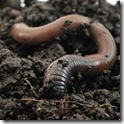
Common european earthworm (Lumbricus terrestris) "Although the conclusion may appear at first startling, it will be difficult to deny the probability, that every particle of earth forming the bed from which the turf in old pasture land springs, has passed through the intestines of worms."

~ Charles Darwin

Wednesday, September 30, 2009

A New Science of Happiness

Dacher Keltner from “Forget Survival of the Fittest: It Is Kindness That Counts,” by David DiSalvo, Scientific American Mind (September 2009):

Dacher Keltner Recent research is suggesting that our capacities for virtue and cooperation and our moral sense are old in evolutionary terms, and these capacities are found in the emotions I write about.

A new science of happiness is finding that these emotions can be readily cultivated in familiar ways, bringing out the good in others and in oneself. Here are some recent empirical examples:

  • Experiences of reverence in nature or of being around those who are morally inspiring improves people’s sense of connection to one another and their sense of purpose.
  • Meditating on a compassionate approach to others shifts resting brain activation to the left hemisphere, a region associated with happiness, and boosts immune functions.
  • Talking about what we are thankful for—in classrooms, at the dinner table or in a diary—boosts happiness, social well-being and health.
  • Devoting resources to others, rather than indulging a materialist desire, brings about lasting well-being.

This kind of science gives me many hopes for the future. At the broadest level, I hope that our culture shifts from a consumption-based, materialist culture to one that privileges the social joys (play, caring, touch, mirth) that are our older (in the evolutionary sense) sources of the good life. In more specific terms, I see this new science informing practices in almost every realm of life.

More…

Friday, September 25, 2009

The Ebb and Flow of Endless Motion

Here are our thoughts—voyagers’ thoughts,

Here not the land, firm land, alone appears, may then by them be said;
The sky o’erarches here—we feel the undulating deck beneath our feet,
We feel the long pulsation—ebb and flow of endless motion;
The tones of unseen mystery—the vague and vast suggestions of the briny world—the liquid-flowing syllables,
The perfume, the faint creaking of the cordage, the melancholy rhythm,
The boundless vista, and the horizon far and dim, are all here,
And this is Ocean’s poem.

~ Walt Whitman, “In Cabin’d Ships at Sea,” from Leaves of Grass

[Thanks Lisa Ann!]

Thursday, September 24, 2009

When I Was a Child I Understood

What I Understood
by Katha Pollitt, from The Mind-Body Problem

When I was a child I understood everything
about, for example, futility. Standing for hours
on the hot asphalt outfield, trudging for balls
I'd ask myself, how many times will I have to perform
this pointless task, and all the others? I knew
about snobbery, too, and cruelty—for children
are snobbish and cruel—and loneliness: in restaurants
the dignity and shame of solitary diners
disabled me, and when my grandmother
screamed at me, "Someday you'll know what it's like!"
I knew she was right, the way I knew
about the single rooms my teachers went home to,
the pictures on the dresser, the hoard of chocolates,
and that there was no God, and that I would die.
All this I understood, no one needed to tell me.
the only thing I didn't understand
was how in a world whose predominant characteristics
are futility, cruelty, loneliness, disappointment
people are saved every day
by a sparrow, a foghorn, a grassblade, a tablecloth.
This year I'll be
thirty-nine, and I still don't understand it.

[More poems by Katha Pollitt.]