



Walking the Razor’s Edge
Excerpt from “This Very Moment,” by Charlotte Joko Beck, from Ordinary Magic: Everyday Life as Spiritual Path:

The point at which we need to practice walking the razor’s edge is whenever we begin to be upset (angry, irritated, resentful, jealous). First, we need to know we’re upset. Many people don’t even know that upset is taking place. When we meditate and begin to know our minds and our reactions, we begin to be aware that yes, we are upset.

When we are experiencing nonverbally we are walking the razor’s edge—we are in the present moment. When we walk the edge the agonizing states of separateness are pulled together, and we experience perhaps not happiness but joy. Understanding the razor’s edge (and not just understanding it, but doing it) is what meditation practice is. The reason it’s difficult is that we don’t want to do it. We know we don’t want to do it. We want to escape from it.
If I feel that I’ve been hurt by you, I want to stay with my thoughts about the hurt. I want to increase my separation; it feels good to be consumed by those fiery, self-righteous thoughts. By thinking, I try to avoid feeling the pain. The more sophisticated my practice becomes, the more quickly I see this trap and return to experiencing the pain, the razor’s edge. And where I might once have stayed upset for two years, the upset shrinks to two months, two weeks, two minutes. Eventually I can experience an upset as it happens and stay right on the razor’s edge.
In fact the enlightened life is simply being able to walk that edge all the time. And while I don’t know anyone who can always do this, certainly after years of practice we can do it much of the time. It is joy to walk that edge.
Still, it is necessary to acknowledge that most of the time we want nothing to do with that edge; we want to stay separate. We want the sterile satisfaction of wallowing in “I am right.” That’s a poor satisfaction, of course, but still we will usually settle for a diminished life rather than experience life as it is when that seems painful and distasteful.
All troublesome relationships at home and work are born of the desire to stay separate. By this strategy we hope to be a separate person who really exists, who is important. When we walk the razor’s edge we’re not important; we’re no-self, embedded in life. This we fear—even though life as no-self is pure joy. Our fear drives us to stay over here in our lonely self-righteousness. The paradox: only in walking the razor’s edge, in experiencing the fear directly, can we know what it is to have no fear.


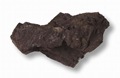
 What does this have to do with our practice? Practice is about breaking our exclusive identification with ourselves. This process has sometimes been called purifying the mind. To “purify the mind” doesn’t mean that you become holy or other than you are; it means to strip away that which keeps a person—or furnace—from functioning best. The furnace functions best with hard coal. But unfortunately what we’re full of is soft coal. There’s a saying in the Bible: “He is like a refiner’s fire.” It’s a common analogy, found in other religions as well. To sit in meditation is to be in the middle of a refining fire. Eido Roshi said once, “This meditation hall is not a peaceful haven, but a furnace room for the combustion of our egoistic delusions.” A meditation hall is not a place for bliss and relaxation, but a furnace room for the combustion of our egoistic delusions. What tools do we need to use? Only one. We’ve all heard of it, yet we use it very seldom. It’s called attention.



