
A Showbiz Idea of Being Important
From "Practicing Like Your Hair's on Fire," by Gelek Rinpoche, Buddhadharma (Fall 2008):
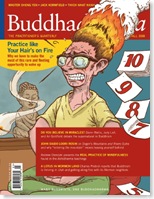 Many of us complain, “I have no time.” I like to call that a good, fancy, stylish excuse. Everybody likes to say, “I’m too busy,” because everybody would like to seem important. It is a great excuse that offers several benefits: you can avoid what you don’t want to do; it gives you a showbiz idea of being important; and all the important people do it, so you can include yourself with them.
I refer to that as busy laziness. We experience this kind of laziness because we have a problem recognizing our real priorities.
...
In short, our human life, with the limitless capacity of our minds, is capable of producing any results we wish. If your goal is to get rich, your human life is capable of producing it. If you want to become famous, your life is capable of doing it. Hollywood is full of such people. It's the same with anything else you choose to do. Whether you are satisfied with the results or not is a different story, but human life is capable of delivering the goods. If you want to be fully enlightened, if your ultimate goal is to achieve enlightenment, then this life is capable of delivering that as well. From our point of view we may fail, but it won't be because our human life lacked the capacity for total enlightenment. It's be because we didn't take advantage of it.


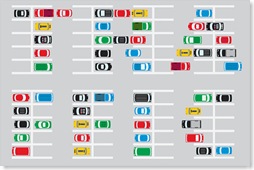
 Compounding this vehicular hubris is the fact that most of the driving we do appears to be safer than it is. Driving rarely commands 100 percent of our attention, and so we feel comfortable multitasking: talking on the phone, unfolding a map, taking in the Barca-Lounger on the road’s shoulder. Vanderbilt cites a statistic that nearly 80 percent of crashes involve drivers not paying attention for up to three seconds. Thus the places that seem the most dangerous — narrow roads, hairpin turns — are rarely where people mess up. “Most crashes,” Vanderbilt writes, “happen on dry roads, on clear, sunny days, to sober drivers.” For this reason, roads that could be straight are often constructed with curves — simply to keep drivers on the ball.
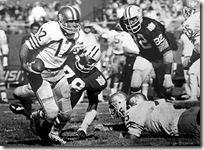 "At times, and with increasing frequency now, I experience a kind of clarity that I've never seen adequately described in a football story. Sometimes, for example, time seems to slow way down, in an uncanny way, as if everyone were moving in slow motion. It seems as if I have all the time in the world to watch the receivers run their patterns, and yet I know the defensive line is coming at me just as fast as ever. I know perfectly well how hard and fast those guys are coming and yet the whole thing seems like a movie or a dance in slow motion. It's beautiful."
 It’s no secret. White people want to be writers. Why wouldn’t they? Work 10 hours a week from a country house in Maine or England. Get called a genius by other white people, and maybe get your book made into a film.

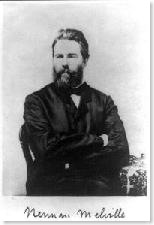
 But it was a flop. Readers didn't like it. His American publisher only printed 3,000 copies, and most of those never even sold; in 1853, a warehouse fire destroyed the plates and the unsold books, and the publisher refused to reset the book or compensate Melville.
 To Katharine: At Fourteen Months




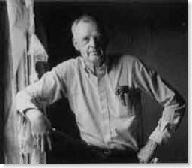


 The core of all navigation is probably uncertainty: tolerating not knowing makes it possible to find your way. Not knowing means embracing what is not known rather than fighting with yourself over it. Since the mind always strives to know, not knowing is disorienting in a useful way. Uncertainty and not knowing teach you not to believe the stories your mind feeds you day in and day out. If you allow your own course to be mysterious, then even the hard things can become easy. This is the beginning of awakening.