Friday, February 22, 2008

Ten Things You Never Knew

...about George Washington, born on this day in 1732:

  1. His dentures were carved from a hippopotamus tusk. They were drilled with a hole to fit over Washington's one remaining tooth, and they rubbed against his natural tooth in such a way that Washington was in constant pain, and so he used an alcoholic solution infused with opium.

  2. Baron von Steuben (left) walks with Gen. George Washington through the Continental Army camp at Valley Forge in 1778, shown in an engraving after Howard Pyle. By the time he reached 30, he had survived malaria, smallpox, pleurisy, dysentery. He was fired at on two separate occasions — and in one of them, his horse was shot out from under him and four bullets punctured his coat. He also fell off a raft into an icy river and nearly drowned.

  3. During the last night of his life, a doctor friend came over to perform an emergency tracheotomy on Washington. Arriving too late, the doctor tried to resurrect Washington by thawing him in cold water, then wrapping him in blankets and rubbing him in order to activate blood vessels, then opening his trachea to inflate his lungs with air, and then transfusing blood from a lamb into him.

  4. He enjoyed playing cards, hunting foxes and ducks, fishing, cockfighting, horse racing, boat racing, and dancing. He bred hound dogs and gave them names like "Sweet Lips" and "Tarter."

  5. Building Mt. VernonHis favorite foods included mashed potatoes with coconut, string beans with mushrooms, cream of peanut soup, salt cod, and pineapples.

  6. He snored very loudly.

  7. He did not wear a powdered wig, as was fashionable at the time. Instead, he powdered his own red-brown hair.

  8. Washington had a speech impediment and was not good at spelling. He would often mix up i's and e's when speaking and in writing.

  9. There are 33 counties, seven mountains, nine colleges, and 121 post offices named after Washington.

  10. He delivered the shortest inaugural address ever. It was only 133 words long and took 90 seconds to deliver.

From The Writer's Almanac (2/22/08)

Be Still

while you worry about what each note means,
the band plays on.

you are running from a dog
who only chases because you run.
turn and face him.

though you hear the buzzing of the bee grow louder
be still.
do not fear a sting you have never felt,
you just might be a flower.

do not worry
about things falling into place.
where they fall
is the place

-- Mark Hartley

Perfection of Wisdom

"Every single mundane structure is the astonishing lion's roar of perfect wisdom."

-- Prajñāpāramitā Sutras

Thursday, February 21, 2008

It Either Feels Right Or It Feels Wrong

"I really go off of my gut as a filmmaker. I feel like I have an inner barometer that kind of works for tone and realness and I basically approach every decision that way. For me, directing is really simple. You basically watch something and it either feels right or it feels wrong. And it's that way if you look at props, if you're looking at location, if you're looking at performance, if you're looking at an edit, you're reading a screenplay. It either feels right or wrong, and if it's wrong, why and how do you fix it? That's the whole job in a nutshell.

-- Jason Reitman, discussing Juno with Elvis Mitchell on KCRW's The Treatment (2/13/08)


Wednesday, February 20, 2008

Neural Activity

A neuro-headset which interprets the interaction of neurons in the brain will go on sale later this year.

"It picks up electrical activity from the brain and sends wireless signals to a computer," said Tan Le, president of US/Australian firm Emotiv. "It allows the user to manipulate a game or virtual environment naturally and intuitively."

...The headset implements a technology known as non-invasive electroencephalography (EEG) to read the neural activity.

-- From "Brain Control Headset for Gamers," by Darren Waters, Technology Editor, BBC News

headset

[Thanks Dōshin!]

Monday, February 18, 2008

The Band's Visit

"Stranded in the Israeli desert, the eight Egyptian members of the Alexandria Ceremonial Police Orchestra look a bit like a joke in search of a punch line. If The Band’s Visit were any other kind of film — a little more pat, say, and rather less knowing — these eight souls might quickly transform into mere props in a small-scale sermon about Middle East man’s humanity to Middle East man, minus the politics of course...[Israeli writer and director] Kolirin, it emerges, is wrenching comedy out of intense melancholia."

-- Manohla Dargis, "Strangers in a Land That’s Not So Strange," The New York Times (12/7/07)

They Don't Make Great Reality Shows

"I know so many chefs who are thoughtful and creative and like balance in their lives, but they don’t make great reality shows...I get home most workdays around 10:30 p.m. and go to bed instantly. I’ve always worked nights. I am fourth-generation restaurant people. When I get home, I can walk into the house and be in bed asleep within seven minutes...I do ballroom dancing every week. I love it. Our restaurant is right across from a dance studio, and they asked me to do a dance contest. I practiced real hard and won, and I’ve danced ever since."

-- Chef Rick Bayless, "Midwest Mex," Domains interview by Edward Lewine (New York Times Sunday Magazine, 2/17/08)

Saturday, February 16, 2008

From a Huge Mess to a Proper Script

michael-clayton-poster"Every script is different, but I sort of have an accumulation stage where I gather lots and lots of material. And I sketch. And I make a huge, huge mess. A big compost pile of scenes and dialogue and research and this huge, huge, mess. And at a certain point, that's over. And then I try to write and outline very, very quickly. Really as quickly as I possibly can -- four days or a week or something -- that's almost every scene of the movie...Films are pretty brisk, it's a two-hour experience...There's sort of a pregnant moment where you can't accumulate and you can't waste time any more and it's finally [time to] do it...I try to rush through, scene by scene by scene. And then I'll take a long time turning that into a proper script...As I get rolling, I don't want to stop working. I go from not being able to work to not being able to stop working."

-- Tony Gilroy, writer and director of Michael Clayton, in conversation with Elvis Mitchell on The Treatment (2/6/08)

Tony Gilroy direction George Clooney in Michael Clayton

Thursday, February 14, 2008

To Celebrate in Private

My Mistress Sparrow is Dead: Great stories, from Chehov to MunroJeffrey Eugenides: One of the first things my wife Karen and I decided when we got together was that we would never celebrate Valentine's Day. One of the first things that made me fall in love with her was our mutual mutual antipathy for Valentine's Day.

Michele Norris: What? Wait a minute. An author who puts together a collection of love stories has a total antipathy towards Valentine's Day?

JE: Oh, yes. Don't you think it's the cheapening and commodification of something rare that we'd all like to celebrate in private and at our own time? 

MN: I personally like flowers and chocolate.

-- From 'My Mistress's Sparrow' Gives Love a Bad Name, All Things Considered (2/13/08)

Accelerando

Delicatessen

Wednesday, February 13, 2008

Miniature Moons

Miranda July has been playing the typewriter during live performances of this song from The Sads, typing up poems and tossing them into the audience.

With Briony's typing being used a central component of Atonement's soundtrack, I'm wondering if this suggests a trend.

Tuesday, February 12, 2008

The Snow Man

A Cardinal sits in a snow-covered tree in Port Washington, New York February 22, 2008. REUTERS/Shannon Stapleton (US)

One must have a mind of winter
To regard the frost and the boughs
Of the pine-trees crusted with snow;

And have been cold a long time
To behold the junipers shagged with ice,
The spruces rough in the distant glitter

Of the January sun; and not to think
Of any misery in the sound of the wind,
In the sound of a few leaves,

Which is the sound of the land
Full of the same wind
That is blowing in the same bare place

For the listener, who listens in the snow,
And, nothing himself, beholds
Nothing that is not there and the nothing that is.

-- Wallace Stevens

Everything Is Writable

Sylvia PlathAnd by the way, everything in life is writable about if you have the outgoing guts to do it, and the imagination to improvise. The worst enemy to creativity is self-doubt.

Zach Condon (Beirut) and Alma Har'el

Elephant Gun

“Zach and I spoke on the phone and I asked him: ‘Zach, who is singing the song?’ and he said ‘a safari hunter’. That’s how it started.” - Alma Har’el


Postcards from Italy

"All the footage with Zach Condon was shot in our back yard and around Silver Lake, California."

In The Middle

radianceof a life that's as complicated as everyone else's,
struggling for balance, juggling time.
The mantle clock that was my grandfather's
has stopped at 9:20; we haven't had time
to get it repaired. The brass pendulum is still,
the chimes don't ring. One day I look out the window,
green summer, the next, the leaves have already fallen,
and a grey sky lowers the horizon. Our children almost grown,
again how to love, between morning's quick coffee
and evening's slow return. Steam from a pot of soup rises,
mixing with the yeasty smell of baking bread. Our bodies
twine, and the big black dog pushes his great head between;
his tail, a metronome, 3/4 time. We'll never get there,
Time is always ahead of us, running down the beach, urging
us on faster, faster, but sometimes we take off our watches,
sometimes we lie in the hammock, caught between the mesh
of rope and the net of stars, suspended, tangled up
in love, running out of time.

-- Barbara Crooker, from Radiance

Sunday, February 10, 2008

More Than Just Hair and Make-Up

Phillip Toledano

"For me, fashion photography is like writing. Sometimes it's a short story, sometimes it's a one-liner, but it's always more than just hair and make-up."

-- Phillip Toledano

PS The images below are the ones I spotted in Interview Magazine (3/08). They are just now showing up on his web page in the fashion section.

Phillip Toledano for Interview Magazine.

Phillip Toledano for Interview Magazine.

Phillip Toledano for Interview Magazine.

Phillip Toledano for Interview Magazine.

We Fly Too Much

Julie Christie photographed for the New York Times by Ryan McGinely"I think we fly too much—we all know we fly too much and move around too much. We go to many other places, and although that was once my life—I wanted nothing more on earth than to travel and travel and travel—it's a question of getting older. I have been to so many incredible places, I have seen so many incredible things, and now I've got to deal with the inside of my head."

-- Julie Christie in conversation with Elvis Mitchell, Interview Magazine (March 2008)

What does it mean?

It is the nature of stone
to be satisfied.
It is the nature of water
to want to be somewhere else.

Everywhere we look:
the sweet guttural swill of the water
tumbling.
Everywhere we look:
the stone, basking in the sun,

or offering itself
to the golden lichen.

It is our nature not only to see
that the world is beautiful

but to stand in the dark, under the stars,
or at noon, in the rainfall of light,

frenzied,
wringing our hands,

half-mad, saying over and over:

what does it mean, that the world is beautiful—
what does it mean?

-- Mary Oliver, from Gravel

Saturday, February 09, 2008

Nessun Dorma

"It was Grammy night, 1998. Luciano Pavarotti was scheduled to perform Nessun Dorma at Radio City where he was being honored with a Grammy Award for Lifetime Achievement. Twenty-five minutes before his performance, the maestro was in a state of panic; he knew he could not go on stage; he had been stricken with laryngitis. Aretha Franklin agreed to step in with one stipulation: all the air conditioning must be turned off. True to form, Aretha—a 17-time Grammy Award winner—performed a rendition of Nessun Dorma that was so electrifying it moved Pavarotti to tears and led to one of the greatest ovations I've ever heard. This marked one of the most memorable moments in Grammy history."

Phil Ramon & Danielle Evin, Dog Ears: Grammy Awards 50th Anniversary Edition, The Huffington Post (1/25/08)

[Thanks Matt!]

Unprepared for Long Wars

"Suicides among active-duty soldiers in 2007 reached their highest level since the Army began keeping such records in 1980, according to a draft internal study obtained by The Washington Post. Last year, 121 soldiers took their own lives, nearly 20 percent more than in 2006."

"At the same time, the number of attempted suicides or self-inflicted injuries in the Army has jumped sixfold since the Iraq war began. Last year, about 2,100 soldiers injured themselves or attempted suicide, compared with about 350 in 2002, according to the U.S. Army Medical Command Suicide Prevention Action Plan."
...

"The Army was unprepared for the high number of suicides and cases of post-traumatic stress disorder among its troops, as the wars in Iraq and Afghanistan have continued far longer than anticipated. Many Army posts still do not offer enough individual counseling and some soldiers suffering psychological problems complain that they are stigmatized by commanders. Over the past year, four high-level commissions have recommended reforms and Congress has given the military hundreds of millions of dollars to improve its mental health care, but critics charge that significant progress has not been made."

-- Dana Priest, "Soldier Suicides at Record Level," The Washington Post (1/31/08)

THE CAMERA IS JEAN-DO

"The diving bell is an image of his stroke, the prison in which he is forever trapped, what neurologists call 'locked-in syndrome.' The butterfly is his imagination and his memory, flying free."

Ronald Harwood at his home in London. Photo by Jean-Philippe DeFaut for The New York Times

"But no butterfly for me. My imagination nestled in his diving bell, inert. For two weeks I agonized and finally came to the conclusion that I would have to tell Kathy [Kennedy, the film's producer] she had misplaced her faith in me. No alternative but to return the money. Now, nothing concentrates a writer's mind more wonderfully than the thought of having to give back the money. I stared at the phone, gathering courage to call my agent when, like a thunderbolt, literally, an idea exploded in my head. What if the story unfolded from Jean-Do's point of view? What if the camera did the blinking? Audiences would not have to gaze endlessly on this pitiful human being but instead see everything as though they themselves were locked in. I rushed to my desk, set the scene in his hospital room, and started: 'Blackness. Silence,' and when I came to write in bold: THE CAMERA IS JEAN-DOMINIQUE BAUBY, KNOWN AS JEAN-DO, I knew the screenplay was possible."

-- Ronald Harwood, who received an Oscar nomination for his screenplay adaptation of The Diving Bell and the Butterfly writing in Script (Jan./Feb. 2008)

Wednesday, February 06, 2008

Suffering Bodies

"First of all, we don't know what to do with our own pain, so what to do with the pain of others? We don't know what to do with our own weakness except hide it or pretend it doesn't exist. So how can we welcome fully the weakness of another if we haven't welcomed our own weakness?...And there are some elements despicable in ourselves, which we don't want to look at, but which are part of our natures, that we are mortal."

Jean Vanier"We are very fragile in front of the future. Accidents and sicknesses is the reality. We are born in extreme weakness and our life will end in extreme weakness. So this, people don't want to hold on to that. They want to prove something. They want security. They want to have big bank accounts and all that sort of stuff. But then also, a whole lots of fear is within us...We are a frightened people. And, of course, the big question is, why are we so frightened of people with disabilities?""

"The balance of our world frequently is seen as a question of power. That if I have more power and more knowledge, more capacity, then I can do more...and when you have power, we can very quickly push people down. 'I'm the one that knows and you don't know,' and 'I'm strong and I'm powerful, I have the knowledge.' And this is the history of humanity."

"And that is all of what I'd call the whole educational system, is that we must educate people to become capable and to take their place in society. That has value, obviously. But it's not quite the same thing as to educate people to relate, to listen, to help people to become themselves. So the equilibrium that people with disabilities could bring is precisely this equilibrium of the heart."

Krista Tippett's Interview with Jean Vanier "...You see, maybe our father is a very strong man. A businessman. And when he comes home, if he gets down on his hands and knees and plays with the children, it's the child that is teaching the father something about tenderness, about love, about the father looking at the needs of the child, the face of the child, the hands of the child, relating to the child."

"...the incredible thing about children is they're unified in their body and in — whereas we, we can be very disunified. We can say one thing and feel another. And so as a child can teach us about unity and about fidelity and about love, so it is people with disabilities."

"You'll find lot of communities which are based on the word, thus to say we speak of an ideal Becoming Human, Jean Vaniertogether and we are committed to an ideal or to a vision and so on. But L'Arche is based on body and on suffering bodies. And so they are seen as useless, and so we welcome those who apparently are useless. And it's a suffering body which brings us together. And it's attention to the body. You see, when somebody comes to our community and is quite severely handicapped, what is important is to see that the body is well. Bathing, helping people dress, to eat. It's to communicate to them through the body. And then, as the body can become comfortable, then the spirit can rise up. There's a recognition. There's a contact. There's a relationship."

-- Jean Vanier in a conversation with Krista Tippett on Speaking of Faith (12/20/07) The Wisdom of Tenderness

Eastern Standard Time

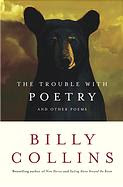
The Trouble with Poetry and Other PoemsPoetry speaks to all people, it is said,
but here I would like to address
only those in my own time zone,
this proper slice of longitude
that runs from pole to snowy pole
down the globe through Montreal to Bogota.

Oh, fellow inhabitants of this singular band,
sitting up in your many beds this morning—
the sun falling through the windows
and casting a shadow on the sundial—
consider those in other zones who cannot hear these words.

They are not slipping into a bathrobe as we are,
or following the smell of coffee in a timely fashion.

Rather, they are at work already,
leaning on copy machines,
hammering nails into a house-frame.

They are not swallowing a vitamin like us;
rather they are smoking a cigarette under a half moon,
even jumping around on a dance floor,
or just now sliding under the covers,
pulling down the little chains on their bed lamps.

But we are not like these others,
for at this very moment on the face of the earth,
we are standing under a hot shower,

or we are eating our breakfast,
considered by people of all zones
to be the most important meal of the day.

Later, when the time is right,
we might sit down with the boss,
wash the car, or linger at a candle-lit table,
but now is the hour for pouring the juice
and flipping the eggs with one eye on the toaster.

So let us slice a banana and uncap the jam,
lift our brimming spoons of milk,
and leave it to the others to lower a flag
or spin absurdly in a barber's chair—
those antipodal oddballs, always early or late.

Let us praise Sir Stanford Fleming
the Canadian genius who first scored
with these lines the length of the spinning earth.

Let us move together through the rest of this day
passing in unison from light to shadow,
coasting over the crest of noon
into the valley of the evening
and then, holding hands, slip into the deeper valley of night."

-- Billy Collins, from The Trouble with Poetry and Other Poems

Tuesday, February 05, 2008

The Great Tragedy of Speed

"Speed in work has compensations. Speed gets noticed. Speed is praised by others. Speed is self-important. Speed absolves us. Speed means we don't really belong to any particular thing or person we are visiting and thus appears to elevate us above the ground crossing_the_unknown_seaof our labors.  When it becomes all-consuming, speed is the ultimate defense, the antidote to stopping and really looking. If we really saw what we were doing and who we had become, we feel we might not survive the stopping and the accompanying self-appraisal. So we don't stop, and the faster we go, the harder it becomes to stop. We keep moving on whenever any form of true commitment seems to surface. Speed is also warning, a throbbing, insistent indicator that some cliff edge or other is very near, a sure diagnostic sign that we are living someone else's life and doing someone else's work. But speed saves us the pain of all that stopping; speed can be such a balm, a saving grace, a way we tell ourselves, in unconscious ways, that we are really not participating.

"The great tragedy of speed as an answer to the complexities and responsibilities of existence is that very soon we cannot recognize anything or anyone who is not traveling at the same velocity as we are. We see only those moving in the same whirling orbit and only those moving with the same urgency. Soon we begin to suffer a form of amnesia, caused by the blurred vision of velocity itself, where those germane to our humanity are dropped from our minds one by one. We start to lose sight of any colleagues who are moving at a slower pace, and we start to lose sight of the bigger, slower cycles that underlie our work. We especially lose sight of the big, unfolding wave form passing through our lives that is indicative of our central character. On the personal side, as slaves to speed, we start to lose sight of family members, especially children, or those who are ill or infirm, who are not flying through the world as quickly and determinedly as we are. Just as seriously, we begin to leave behind the parts of our own selves that limp a little, the vulnerabilities that actually give us color and character. We forget that our sanity is dependent on a relationship with longer, more patient cycles extending beyond the urgencies and madness of the office."

-- David Whyte, from Crossing the Unknown Sea: Work as a pilgrimage of identity

[Thanks Kit!]

Monday, February 04, 2008

Acting Paradox

Tilda_Swinton

"I thought of Karen as a bad actress poorly cast."

-- Tilda Swinton, regarding the conniving corporate lawyer she portrayed in Michael Clayton (Entertainment Weekly, 1/29/08). This was one of my favorite performances of the year.

Cashing In

Paul_Thomas_Anderson

"It quite honestly never occurred to me. Somebody said, 'Is making a film like silver prospecting?' and I thought, It's exactly like that. You hack away. You hack away. You're not sure what it's going to be worth or if you're going to find anything. And then maybe you find something that you like that gives you an indication that something else might be there. So you figure, Well, I could just take this stuff and crawl back up to the top of the hole and go to the assay office and maybe that'll be it. But instead, you think, Maybe there's even more underneath there. So you light a stick of dynamite. You stick it in. You blow it up and you just keep after it. I mean, I know that's how I feel -- sure -- in approaching a film or writing it and making it, whatever it is. And then cashing the silver in and finding out what it's worth never really ends up being as satisfying or as fun as it was to be down in that hole."

-- Paul Thomas Anderson discussing his film, There Will Be Blood, with Elvis Mitchell on KCRW's The Treatment (1/30/08)

The Ability to Change

"In a sense, stories are about change. And the measuring stick that savethecattells us who succeeds and who doesn't is seen in the ability to change. Good guys are those who willingly accept change and see it as a positive force. Bad guys are those who refuse to change, who will curl up and die in their own juices, unable to move out of the rut their lives represent. To succeed in life is to be able to transform. That's why it's the basis not only of good storytelling but also the world's best-known religions. Change is good because it represents re-birth, the promise of a fresh start."

-- Blake Snyder, Save the Cat!: The last book on screenwriting you'll ever need

Friday, February 01, 2008

Adjectives of Scale

Photograph by Michael Yamashita for National Geographic

“Avoid adjectives of scale, you will love the world more and desire it less.”

-- Former poet laureate Robert Hass paraphrasing Japanese haiku master Matsuo Bashō. Howard Norman recently traveled the 17th century Japanese poet's path for his National Geographic article, "On the Trail of a Ghost." See more photos taken for this project by Michael Yamashita.

[Thanks Dōshin!]

The Most Beautiful Place on Earth

"This is the most beautiful place on earth. There are many such places. Every man, every woman, carries in heart and mind the image of the ideal place, the right place, the one true home, known or unknown, actual or visionary. A houseboat in Kashmir, a view down Atlantic Avenue in Brooklyn, a gray gothic farmhouse two stories high at the end of a red dog road in the Allegheny Mountains, a cabin on the shore of a blue lake in spruce and fir country, a greasy alley near the Hoboken waterfront, or even, possibly, for those of a less demanding sensibility, the world to be seen from a comfortable apartment high in the tender, velvety smog of Manhattan, Chicago, Paris, Tokyo, Rio or Rome — there's no limit to the human capacity for the homing sentiment."

-- From the beginning of Desert Solitaire by Edward Abbey

What is true?

"I think that film is, in a way, a dead medium. In that with theater you've got accidents that can happen, you've got performances that change, but this is a recording. And so what I try to sort of do is infuse my screenplays with enough information so that upon repeated viewings, you can have a different experience.

Rather than the movie going linearly to one thing and at the end it tells you what the movie is about, I try to keep it kind of like a conversation with the audience. With each individual member of the audience, hopefully...

I have this averse reaction to Hollywood romances. They've been very damaging to me growing up, I feel, in that I had these expectations in the world of what my life was going to be like, and what my romantic life was going to be like. And as I got older and I realized my life wasn't like that, it became kind of depressing. And then I thought, real life is more interesting and maybe I should try to explore that and not put more damaging stuff into the world.

And so I'm always sort of trying to think, What is true? -- I mean true to me, which is all I know -- and then try to sort of reject the ideas which come from other movies. Which is a very hard thing to do because you often don't know that your ideas of a scene or a relationship come from movies, not from your real life."

-- Charlie Kaufman

Below is the IMDB summary of the plot of Synecdoche, New York, which he wrote and directed:

synecdocheTheater director Caden Cotard (Philip Seymour Hoffman) is mounting a new play. Fresh off of a successful production of Death of a Salesman, he has traded in the suburban blue-hairs and regional theater of Schenectady for the cultured audiences and bright footlights of Broadway. Armed with a MacArthur grant and determined to create a piece of brutal realism and honesty, something into which he can put his whole self, he gathers an ensemble cast into a warehouse in Manhattan's theater district. He directs them in a celebration of the mundane, instructing each to live out their constructed lives in a small mockup of the city outside. As the city inside the warehouse grows, Caden's own life veers wildly off the tracks. The shadow of his ex-wife Adele (Catherine Keener), a celebrated painter who left him years ago for Germany's art scene, sneers at him from every corner. Somewhere in Berlin, his daughter Olive is growing up under the questionable guidance of Adele's friend, Maria (Jennifer Jason Leigh). He's helplessly driving his marriage to actress Claire (Michelle Williams) into the ground. Sammy Barnathan (Tom Noonan), the actor Caden has hired to play himself within the play, is a bit too perfect for the part, and is making it difficult for Caden to revive his relationship with the alluringly candid Hazel (Samantha Morton). Meanwhile, his therapist, Madeline Gravis (Hope Davis), is better at plugging her best-seller than she is at counseling him. His is second daughter, Ariel, is retarded. And a mysterious condition is systematically shutting down each of his autonomic functions, one by one. As the years rapidly pass, Caden buries himself deeper into his masterpiece. Populating the cast and crew with doppelgangers, he steadily blurs the line between the world of the play and that of his own deteriorating reality.

synecdoche (sĭ-nĕk'də-kē) pronunciation

Schenectady (skə-nĕk'tə-dē) pronunciation

Tuesday, January 29, 2008

Day-to-Day

"Any idiot can face a crisis; it is this day-to-day living that wears you out."

-- Anton Chekov

Sunday, January 27, 2008

The Father

The actor Max Von Sydow photographed by Julian Schnabel.

“After Julian sent me the script, we didn’t discuss it very much. He didn’t tell me that, in some ways, I would be playing his father. But movies are like that — I had never met Mathieu Amalric until the day of our first scene, and he had to shave me. It was rather intimate, and he did cut me. But it’s always that way: you’re supposed to be involved with someone in the film and you’ve just met them for the first time and then, 10 minutes later, you say, ‘I love you,’ and you are in bed.”

“When I was making the film, it was impossible not to think about my father. I was born in Sweden, and my father, who was a professor of Scandinavian folklore, was 50 when I was born. When I was 20, he was 70, and on the day of his 70th birthday, he had a little stroke. Small strokes followed for the next four years. That changed him. And I regret that I was not more curious about him at that time. All the questions I would like to ask today, I haven’t asked.”

-- Max Von Sydow discussing his role in The Diving Bell and the Butterfly with Lynn Hirschberg (The New York Times, 1/27/08)

If We Were Quantum Particles

"Our convincing feeling is that time is absolute. It is a very convincing feeling...Our convincing feeling is that there should be no limit to how fast you can travel. We just go faster and faster and faster. Our convincing feelings are based on our experiences because of the size that we are — literally, the speed at which we move, the fact that we evolved on a planet under a particular star. So our eyes, for instance, are peak in their perception at yellow, which is the wave band the sun peaks at. And so it's not an accident that our perceptions and our physical environment are connected. And so we're limited, also, by that."

"That makes our intuitions excellent for ordinary things, for ordinary life. And that's how we evolve. That's how our brains evolved and our perceptions Janna Levinevolved, was to respond to things like the Sun and the Earth and these scales. And if we were quantum particles, we would think quantum mechanics was totally intuitive.  And it's not intuitive for anybody else that we would think that things fluctuating in and out of existence or not being certain or whether they're particles or waves or — these kinds of strange things that come out of quantum theory would seem absolutely natural."

"And what would seem really bizarre is the kind of rigid, clear-cut world that we live in. So I guess my answer would be that our intuitions are based on our minds, our minds are based on our neural structures, our neural structures evolved on a planet, under a sun, with very specific conditions. So we reflect the physical world that we evolved from. So I guess our intuitions are good, our intuitions are good for a lot of things. And that's why they're good...It's not a miracle."

-- Theoretical physicist and novelist Janna Levin in conversation with Krista Tippett on Speaking of Faith (1/10/08) "Mathematics, Purpose, Truth"

Tuesday, January 22, 2008

Egocide

shadow_dance"Perhaps people who choose suicide for emotionally devastating reasons really want to commit egocide, to kill off fear-based habits, inner assailing voices, pointless quarrels with the conditions of existence, and besieging griefs. They may believe that they have no corresponding resources at their disposal to deal with these dismaying asperities. The practice of befriending the shadow provides just such a set of resources."

-- David Richo, Shadow Dance: Liberating the power and creativity of your dark side

The Code

Marie-Josée Croze in The Diving Bell and the Butterfly

"The jumbled appearance of my chorus line stems not from chance but from cunning calculation. More than an alphabet, it is a hit parade in which each letter is placed according to the frequency of its use in the French Language. That is why E dances proudly out in front, while W labors to hold on to last place. B resents being pushed back next to V, and haughty J—which begins so many sentences in French—is amazed to find itself so near the rear of the pack. Roly-poly G is annoyed to have to trade places with H, while T and U, the tender components of tu, rejoice that they have not been separated. All this reshuffling has a purpose: to make it easier for those who wish to communicate with me."

"It is a simple enough system. You read off the alphabet (ESA version, not ABC) until, with a blink of my eye, I stop you at the letter to be noted. The maneuver is repeated for the letters that follow, so that fairly soon you have a whole word, and then fragments of more or less intelligible sentences. That, at least, is the theory. In reality, all does not go well for some visitors. Because of nervousness, impatience, or obtuseness, performances vary in the handling of the code (which is what we call this method for transcribing my thoughts). Crossword fans and Scrabble players have a head start. Girls manage better than boys. By dint of practice, some of them know the code by heart and no longer even turn to our special notebook—the one containing the order of the letters and in which all my words are set down like the Delphic oracle's."

-- Jean-Dominique Bauby, The Diving Bell and the Butterfly

Art and Truth

"All art is autobiographical. The pearl is the oyster's autobiography."

-- Federico Fellini

Giulietta Masina being photographed by Federico Fellini on the set of La Strada (1954).

"The only time Federico blushes is when he tells the truth."

-- Giulietta Masina, wife of Fellini, starred in many of his films

Sunday, January 20, 2008

Fleeting Beauty

"A self-taught chef and artist, Jim Denevan draws inspiration from the earth to create sensual works of fleeting beauty—culinary installations in sunny farmlands across America and large-scale art pieces on the wave-swept sands of coastal beaches."

Jim Denevan

"When I'm doing a drawing, I'm personifying the place that is empty. A place that is unmarked." -- Jim Denevan

Saturday, January 19, 2008

Looking Out the Window

"All the desks of my life have faced windows and except for an overwrought two-year period in the late Photo of Michael Pollan's Writing House taken by John Peden1980s when I worked on a word processor, I have always spent most of my time staring out the window, noting what is there, daydreaming or brooding. Most of the so-called imaginative life is encompassed by these three activities that blend so seamlessly together, not unlike reading the dictionary, as I often do as well, entire mornings can slip by, in a blissful daze of preoccupation. It's bizarre to me that people think that I am 'prolific' and that I must use every spare minute of my time when in fact, as my intimates have always known, I spend most of my time looking out the window. (I recommend it.)"

-- Joyce Carol Oates, In the Studio (The American Poetry Review, July/Aug 2003)

Wednesday, January 16, 2008

Truth Waits

Tao Te Ching


Truth waits for eyes unclouded by longing.
Those who are bound by desire see only the outward container.

-- Tao Te Ching

Tuesday, January 15, 2008

My Link to Humanity

The problem is that we have so little tolerance for uncomfortable feelings. I'm not even talking about unpleasant outer circumstances, but that feeling in your stomach of I don't want this to be happening. You try to escape it in some way, but if somehow you could stay present and touch the rawness of the experience, you can really learn something...Go to your body and connect with the physical sensation. It always feels really bad; it's usually a tightening in the throat or the heart of the solar plexus. Stay with that and say to yourself, 'Millions of people all over the world have this kind of discomfort, fear--I don't even have to call it anything--this feeling of not wanting things to be this way. This is my link to humanity.' Connect with the idea that this moment is a shared experience all over the world."

-- Pema Chödrön, O Magazine (Feb. 2008)

I need it to satisfy me

Mo'Nique: We've gotten so used to beating people up because they don't look like what we think they should look like and I'm just saying, you know, I'm not buyin' it no more. I got double bellies, my legs rub  together, my arms flap, I got a chubby neck -- hell, I got it all, baby, but I got a smile on my face and a Snicka in my pocketbook.

snickersFaith: Now, here's a question: Would you share it?

Mo'Nique: My Snicka'? You know, that's a great question, because it depends, okay. Sharin' a Snicka depends on what's happenin' at the situation.

Faith: Mmhmm.

Mo'Nique: If it's early in the mornin' and you just wakin' up and you got that cravin' for a Snicka cuz it's gonna be a long day and Rhonda looks at me as if she wants a bite -- I look back at her with a little violence in my eye! Like, this is a Snicka, I need it to satisfy me. It's gonna be a long day.

Faith: Go get your own Snicker, Rhonda.

-- Mo'Nique speaking with Faith Salie on Fair Game (1/15/08)

Ripening Like a Tree

"Leave to your opinions their own quiet undisturbed development, which, like all progress must come from deep within and cannot be pressed or hurried by anything. Rainer Maria RilkeEverything is gestation and then bringing forth. To let each impression and each germ of a feeling come to completion wholly in itself, in the dark, in the inexpressible, the unconscious, beyond the reach of one's own intelligence, and await with deep humility and patience the birth-hour of a new clarity: that alone is living the artist's life.

Being an artist means not reckoning and counting, but ripening like the tree which does not force its sap, and stands confident in the storms of spring without the fear that after them may come no summer. It does come. But it comes only to the patient, who are there as though eternity lay before them, so unconcernedly still and wide."

-- Ranier Maria Rilke, Letters To A Young Poet

Monday, January 14, 2008

Destination Bookstores

Here are nine bookstores that are worth a trip according to Beth Harpaz, Travel Editor for the Associated Press. Read the details on the USA Today site. I didn't specifically build a trip around them, but I've somehow been fortunate enough to make it to all of these except the ones in Florida and Arkansas. From Rachel Leow's A Historian's Craft blog

Here are a couple of international additions to her list:

Shakespeare & Co.Shakespeare & Co.
Paris

Saturday, January 12, 2008

The Diving Bell and the Butterfly

“Hold fast to the human inside you, and you will survive.”

The critics aren't exaggerating. It's brilliant. It's the kind of movie that as you're watching, you are immediately aware it will be impossible to forget.

Looking Closely, Seeing Through
A stroke left magazine editor Jean-Dominique “Jean-Do” Bauby locked inside his paralyzed body, forcing him to live primarily in his mind. His only means of communicating was to blink his left eye in response to the alphabet being recited. The details of his story offer a glimpse into some key aspects of mindfulness.

Mindfulness is the ability to keep track of the components of sensory experiences as they arise in various combinations, moment-by-moment. The basic building blocks of sensory experience include physical-type sensations in the body, emotional-type sensations in the body, external visual stimuli, mental images, external sounds, and internal sounds and conversations.

The tagline for The Diving Bell and The Butterfly says, “Let your imagination set you free.” The word imagination comes from the Latin imāginārī meaning to form a mental picture to oneself. With his body having become a closed door, Jean-Do’s only escape is through the window of his left eye and his mind. The movie screen becomes the viewer's window into seeing the world from his perspective.

It is through the visual component of the thinking process that we experience memories, plans, and fantasies. In Julian Schnabel’s film, as in the practice of mindfulness, Jean-Do experiences a blurring and merging of his internal (subjective) experience and the external (objective) world.

As Jean-Do reluctantly accepts his physical paralysis with greater and greater degrees of equanimity, his prison gradually becomes a home. Through concentration, clarity, and acceptance, Jean-Do was able to see the world more clearly and, fortunately for us, to patiently communicate his story one letter at a time.

Friday, January 11, 2008

Ready to Accept Truth

"I am looking on benches and streets, in logic and code. I am looking in the form of truth stripped to the bone. Truth that livesmadmandreams independently of us, that exists out there in the world. Hard and unsentimental. I am ready to accept truth no matter how alarming it turns out to be. Even if it proves incompleteness and the limits of human reason. Even if it proves we are not free.

"They are here in our minds, Turing's luminescent gems, Gödel's platonic forms. There are no social hierarchies to scale. No racial barriers given to us along with our brains, built into the structure of our thoughts — no bullying into blind faith, no threats of eternal damnation — just honesty, truth, and reason."

-- Janna Levin, from A Madman Dreams of Turing Machines

Listen to Krista Tippet's conversation with Janna Levin on Speaking of Faith (1/10/08) "Mathematics, Purpose, and Truth"

Wednesday, January 09, 2008

Drunk History Vol. I

Featuring Michael Cera

Tuesday, January 08, 2008

The Ones that Have the Most Power

Photo by Marc Hom"I’ve always been a bit more comfortable with my subconscious and not so comfortable when I think about things too much. It’s like when I doodle. That’s when I know it means something to me on some weird level, as opposed to sitting down with the idea of drawing a skeleton. Say I’m on the phone, just sitting around, doodling. I’ll look at what I’ve done and think, Oh, that’s a strange character. Then I’ll notice myself doing it over and over. Those are the ones that have the most power for me, because they’re coming from within."

-- Tim Burton, from What I've Learned (Esquire, Jan. 2008). More interviews on this topic.

Heaviness

It wasn't all that easy when you up and walked away.
But I'll leave that little story for another rainy day.
I know your burden's heavy as you wheel it through the night;
The guru says it's empty but that doesn't make it light.

bookoflonging

So let’s drink to when it’s over
and let's drink to when we meet.
I'll be standing on this corner
where there used to a street.

-- Leonard Cohen

You can listen to a conversation about his collection of poems, Book of Longing, on Fresh Air (1/1/07).

Thursday, December 27, 2007

Benazir Bhutto

June 21, 1953 – December 27, 2007

benazir_bhutto

"When I was a very young child I remember I was always against violence. It was an era when people used to go shooting and hunting. I remember once coming out on the veranda in our home in the countryside -- and my father was teaching my brother to shoot a parrot and... I remember seeing the parrot fall down dead and bleed, and I remember being appalled by it. And I remember the parrot fluttering and I can't bear to see blood to this day or killing. I'm very much against war and conflict and the taking of life, and I think that seeing that little bird -- green and beautiful and living and chirping in the tree, and then falling down dead -- did have a profound effect. It sounds silly to say that I should feel so strongly about a bird, but I remember my father telling me when he was facing the death sentence that 'I remember the little girl who cried so much because a bird died, how she must feel.' So for me, human life is very, very sacred."

...

"...before [my father] died, I had my last meeting with him, in the death cell, and he said that, 'You have suffered so much.' I had been in prison myself, and he said, 'You are so young. You just finished your university. You came back. You had your whole life and look at the terror under which we have lived.' So he said, 'I set you free. Why don't you go and live in London or Paris or Switzerland or Washington, and you are well taken care of, and have some happiness because you have seen too much suffering.' I reached out through the prison bars, and I remember grasping his hands and saying, 'No, papa, I will continue the struggle that you began for democracy.' "

...

"If you believe in something, go for it, but know that when you go for it there's a price to be paid. Be ready to pay that price and you can contribute to the welfare of society, and society will acknowledge you and respect you for it. And don't be afraid. Don't be afraid."

...

"I think that as nation states begin to become weaker because of the force of globalization, there will be a greater reversion to ethnicity and to religious violence. I fear that the international community lacks a mechanism for conflict prevention or being in a position to end the conflict. Everyone is looking towards America, and the American people have their own problems. They can be there if there's a strategic concern, but they can't be there everywhere. So there is a lack of growth of regional institutions that could deal with regional violence and leave the global problems or the strategic problems to the more global powers. I fear the 21st Century could witness a period of contradiction where there is the greatest era of peace -- the super power rivalry having gone -- but there is a lot of localized violence."

--Benazir Bhutto (Interview from October 2000)

Tuesday, December 25, 2007

Foundations

Kate Nash

Protection

"Your art is too delicate. If you margot2desire the pat on the back too much, then you're not going to be true to the purest form of it. It's a constant struggle not to need the feedback, to try and stay true to your innermost voice. You need to protect it with a strong force field."

-- Nicole Kidman

"As an actress you have to be willing to be bad. margotYou have to be willing to jump off the ledge, which is a lazy metaphor but the best I can do right now. But, you know, a willingness to fall on your face and know that your director is going to catch you. If you don't have that, if you're protecting yourself in your performance, it's not going to be good."

-- Jennifer Jason Leigh

From separate conversations with Michael Cunningham about their new film Margot at the Wedding for Interview Magazine.

Sunday, December 23, 2007

Gymnastique

Best Movies of 2007 (New York Times)

"I know it’s hard to believe, but during the past 12 months I sometimes went two or three weeks in a row without finding anything to mock, deflate or be disappointed by, and my inner curmudgeon was frequently elbowed aside by a wide-eyed, arm-waving enthusiast."

-- A.O. Scott

"These aren’t necessarily the year’s best (impossible to determine given the glut of films), just the two that matter most to me, that dug in the deepest and rearranged my own givens."

-- Manohla Dargis

"The betrayal of the body, decrepitude and death: in 2007 an unprecedented number of serious films, along with the usual slasher movies, contemplated the end of life. Might they be a collective baby-boom response to looming senescence and a fraying social safety net? Or do they reflect an uneasy sense that humanity is facing end times, when global warming, terrorism, nuclear proliferation and the war in Iraq, or any combination thereof, could bring on doomsday?

-- Stephen Holden

Feist

My Man, My Moon


1 2 3 4


Feist

Thursday, December 20, 2007

Emotional Risk Is Where It's At

Starring Frank Langella, Lauren Ambrose, Lili Taylor, Karl Bury, Anitha Gandhi, Sean T. Krishnan, Jessica Hecht, and Adrian Lester"Starting Out in the Evening...takes on a character who, in his daily grind [as an author], approaches the question of transformation. He looks at character, he looks at life, and he's looking for the collision between the two in order to speak about what humanity goes through. But the irony here is, in his own life, he's removed himself from the intimacies that put him at risk.

"I suppose one of the things that the struggles of my own life have taught me is that emotional risk is where it's at. That's where real change comes from. That's where real growth comes from. That's how we stretch our life muscle as artists and that's how we make our relationships work. We avail ourselves. We open ourselves. And I find that theme dominating almost everything I've been working on for the last ten years. This idea of surrender. This idea of opening rather than closing."

--Director Andrew Wagner in conversation with Elvis Mitchell on KCRW's The Treatment (12.12.07)

Friday, December 14, 2007

Making an Object of God

Rick Scibelli Jr. for The New York Times

"Enlightenment? I don’t like the subject at all...but the question really is, what is satori in the first place? About satori, I believe you can find all sorts of different descriptions of it in the bookstore if you go there and I feel a lot more coming to the bookstores, a lot more different descriptions."

“Buddhism does not acknowledge the existence of a world-creating God. But having said that, Buddhism does not at the same time reject the existence of God.

"There are a lot of different books out there. But the moment someone says the truth or God is an object or takes it as an object, that is already a mistake. God is neither object nor subject. The moment you say any little thing about God, you’re already making an object of God and Buddhism cautions you about that. At that moment you’re making an idiot out of God, you’re making a fool out of God."

--- Sasaki Roshi, "A Very Old Zen Master and His Art of Tough Love," Ralph Blumenthal, The New York Times (12.9.07)

Real Red Blood

"In high school, you know, there really wasn't that much around in terms of music. I mean , grunge was kind of happening, but me and none of my friends were old enough to go...We had kind of a top 40 station. But Nashville Skyline -- my parents owned it. I knew Dylan's name, but I dusted that record off and put I it on because of Johnnie Cash. It took a long time for the rest of that josh_ritter2record to sink in, but 'Girl from the North Country' hit me hard. I really think it was like somebody discovering punk for the first time.

"That was my moment when I realized that music was something that anybody could do. You know, here it is -- it's imperfections and it's excitement and the fact that it's real red blood making this record. And really singing. It sounded like they'd been up all night. You could almost tell that they needed to shave.

"Without that song, I might not have ever discovered it. I mean, it was just such a huge moment. I really think it was like seeing the person you want to marry. Either that day or the day after, I went down to Kmart and I got a guitar."

-- Josh Ritter discussing the influence of Bob Dylan on his musical career (Studio 360, 11.23.07)

Tuesday, December 11, 2007

That Empty Space

Writers are often asked: "How do you write? With a word processor? an electric typewriter? a quill? longhand?" But the essential question is: "Have you found a space, that empty space, which should surround you when you write? Into that space, which is like a form of listening, of attention, will come the words, the words your characters will speak, ideas - inspiration." If a writer cannot find this space, then poems and stories may be stillborn. When writers talk to each other, what they discuss is always to do with this imaginative space, this other time. "Have you found it? Are you holding it fast?"

-- From Doris Lessing's Nobel Prize acceptance speech (12/08/07)