Thursday, September 11, 2008

Prayer for the Dead

The light snow started late last night and continued
all night long while I slept and could hear it occasionally
enter my sleep, where I dreamed my brother
Howard Kestenbaumwas alive again and possessing the beauty of youth, aware
that he would be leaving again shortly and that is the lesson
of the snow falling and of the seeds of death that are in everything
that is born: we are here for a moment
of a story that is longer than all of us and few of us
remember, the wind is blowing out of someplace
we don't know, and each moment contains rhythms
within rhythms, and if you discover some old piece
of your own writing, or an old photograph,
you may not remember that it was you and even if it was once you,
it's not you now, not this moment that the synapses fire
and your hands move to cover your face in a gesture
of grief and remembrance.

by Stuart Kestenbaum, who "lost his brother Howard in the destruction of the twin towers of the World Trade Center" on this day seven years ago. From American Life in Poetry: Column 181.

Stains

"How do we deal with the stains of our own history? How do we take those aspects of our social history, slavery being the largest one, that we have a democratic country that was founded and based in slavery, and how do you talk about that?"

~ Ann Hamilton, from Art:21

Ann Hamilton describes myein, her installation representing the US at the 48th Venice Biennale in 1999, in the following excerpt from "Histories that Haunt," by Mary Katherine Coffey (Art Journal, Fall 2001):

I took this project very seriously and really thought about how a work can explore some of the absences that are in our historical record, or that are pervasively present, but in some ways invisible to us. Can material form be a way of looking? When I first visited the pavilion in Venice, I thought, "This neo-classical form is every bank in Iowa." This is an American form, and it sent me straight into the arms of Thomas Jefferson at Monticello. And yet the building is almost a scale model. When you get in, the facade is not fulfilled by the experience and the volume of the inside. So very early on, I decided that I wanted to take on the building as both an object and subject of the work, to make a work that was both inside and outside of the building. The first gesture of the work was to empty the space, to open the skylights to light for the first time in some fifteen years, and to make alterations architecturally that then embed the work in the structure of the building. The glass wall [in front o f the pavilion] served to distort the view into the building as well as the view out. The glass changed and liquefied the solidity and the authority of the kind of architectural history that you are looking at when you approach the pavilion.

When you first walked in and entered the small rotunda, there was a blind window that had been revealed. It was one we found as we went into the membrane of the building. It didn't offer a view back out, but rather a reflection of your backlit shadow, as you entered. You could then turn any direction within the rotunda to enter an L-shaped configuration of consecutive galleries, two on each side, each one the same, each treated the same except for the change in light.

On the walls was a text--Charles Reznikoff's Testimony: The United States 1885-1915--translated into Braille. It's a two-volume work that is based on his research in the thirties on court records from the turn of the last century. Intensely colored fuchsia powder was falling around the perimeter of each of the rooms, catching, rolling, falling off the Braille text and then accumulating on the floor. The voice that you heard was my reading of Lincoln's Second Inaugural Address in international phonetic code. So if you walked the landscape of the interior of the room and wrote out the letters that you were hearing, you would transcribe the text. Both of the references to language, in Braille and phonetic code, are veiled in such a way that language doesn't become the vehicle through which you arrive at a certain set of information. And so you had to sense your way through this.

A table, the only object in the piece, stood at the exterior and was knotted with white cloth at its surface. In part, it was an homage to my own textile heritage and sensibility, in that tying a knot in a piece of string or cloth was one of the earliest forms of record keeping. The system of government we have is based on legalistic structure. So the record-keeping reference is here in material form.


Excerpt from Testimony: The United States, 1885-1890
by Charles Reznikoff

Several white men went at night to the Negro's
house,
shot into it,
and set fire to his cotton on the gallery
his wife and children ran under the bed
and as the firing from guns and pistols went on
and the cotton blazed up, ran through a side door
into the woods.
The Negro himself, badly wounded, fled to the
house of a neighbor—
a white man--
and got inside.
He was followed,
and one of those who ran after him
put a shotgun against the white man's door
and shot a hole through it.
Justice, however, was not to be thwarted,
for five of the men who did this to the Negro
were tried:
for "unlawfully and maliciously
injuring and disfiguring"-
the white man's property.

Tuesday, September 09, 2008

A Skill You'll Actually Get To Use

Excerpt from What Now? by Ann Patchett from an essay based on the commencement address she gave at Sarah Lawrence in May 2006:

what_now In a world that is flooded with children's leadership camps and grown-up leadership seminars and bestselling books on leadership, I count myself as fortunate to have been taught a thing or two about following. Like leading, it is a skill, and unlike leading, it's one that you'll actually get to use on a daily basis. It is senseless to think that at every moment of our lives we should all be the team captain, the class president, the general, the CEO, and yet so often this is what we're being prepared for.

No matter how many great ideas you might have about salad preparation or the reorganization of time cards, waitressing is not a leadership position. You're busy and so you ask somebody to bring the water to table four. Someone else is busy and so you clear the dirty plates from table twelve. You learn to be helpful and you learn to ask for help.

It turns out that most positions in life, even the big ones, aren't really so much about leadership. Being successful, and certainly being happy, comes from honing your skills in working with other people. For the most part we travel in groups—you're ahead of somebody for a while, then somebody's ahead of you, a lot of people are beside you all the way. It's what the nuns had always taught us: sing together, eat together, pray together.

Because We Agree On So Much

Excerpts from What 'Culture War'? by Dick Meyer, Los Angeles Times (August 27, 2008):

The idea that there is vast war over the moral and spiritual compass of the nation is a dramatic narrative, and it has dominated popular political analysis for nearly two decades. It makes for potent, inflammatory political commercials. It just doesn't have the added virtue of being true.

Poll after poll, focus group after focus group show that the vast majority of Americans — the Silent Majority, perhaps? — are pragmatic, independent and un-partisan in their basic views. They are eclectic: "liberal" on some matters, "conservative" on others.

In fact, it's because we agree on so much that our elections are so close.

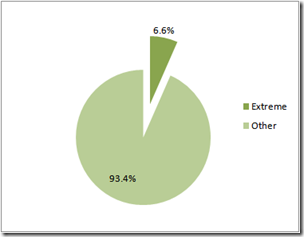
Extremists, however rare, are becoming more common and, importantly, more rabid. Analyzing survey data from the National Opinion Research Center, political scientist Arthur Brooks discovered that the percentage of people who described themselves as either "extreme liberals" or "extreme conservatives" grew a stunning 35% from 1972 to 2004. Still, as a percentage of the total population, the extremist factions — right and left combined — remain a small slice, 6.6%.

 image

The political elite and the politically engaged are, of course, much more likely to be on the extreme wings than the majority. These also happen to be the people who not only go to conventions, but whom the cable news bookers corral to argue about politics on their shows. Increasingly, they are also the people who host television and radio talk shows, who publish blogs and who make civic noise.

But they are not us. Despite the stories we will read, hear and see this week and next, Americans are a much more pragmatic, moderate and independent crowd.

Monday, September 08, 2008

Already Inside

From an interview with actress Michelle Williams in the New York Times yesterday:

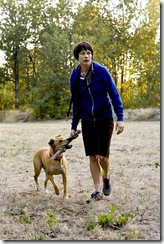
Photo by by Simon Max Hill/Oscilloscope Laboratories[While portraying a character whose financial situation unravels] “I thought a lot about what you look like when you think nobody’s looking at you, when you feel completely invisible. Your entire life happens inside because you don’t think anyone notices you. Which is very different from me. Not that I don’t have any inside life, but I feel watched, all the time.”

“...Acting sometimes reminds me of therapy in that the more you talk about a traumatic or profound event, the more it loses its emotional tension. Switch on a bright light and find there is no boogeyman in the closet. So it is the same with a scene. Never tell the other actor or the director what you are doing.”

[She explained that the trick is to allow herself] “to live in so much mystery, to rely on a feeling, an instinct, on faith, really, that everything I need is already inside me, and best I just don’t block the exit.”

Thursday, September 04, 2008

What My Mind Calls Self

The Clause
by C.K. Williams from The Singing

This entity I call my mind, this hive of restlessness,
this wedge of want my mind calls self,
this self which doubts so much and which keeps reaching,
keeps referring, keeps aspiring, longing, towards some state
from which ambiguity would be banished, uncertainty expunged;

this implement my mind and self imagine they might make together,
which would have everything accessible to it,
all our doings and undoings all at once before it,
so it would have at last the right to bless, or blame,
for without everything before you, all at once, how bless, how blame?

this capacity imagination, self and mind conceive might be the "soul,"
which would be able to regard such matters as creation and
     destruction,
origin and extinction, of species, peoples, even families, even mine,

of equal consequence, and might finally solve the quandary
of this thing of being, and this other thing of not;

these layers, these divisions, these meanings or the lack thereof,
these fissures and abysses beside which I stumble, over which I reel:
is the place, the space, they constitute,
which I never satisfactorily experience but from which the fear
I might be torn away appalls me, me, or what might most be me?

Even mine, I say, as if I might ever believe such a thing;
bless and blame, I say, as though I could ever not.
This ramshackle, this unwieldy, this jerry-built assemblage,
this unfelt always felt disarray: is this the sum of me,
is this where I'm meant to end, exactly where I started out?

Tuesday, September 02, 2008

The Work of Education

maria_montessori "Establishing lasting peace is the work of education; all politics can do is keep us out of war."

~ Maria Montessori

From The Writer's Almanac (8.31.08):

"...today there are more than 5,000 Montessori schools in the United States, 300 of which are public schools. A study in 2006 published in the journal Science tested public school children in inner-city Milwaukee, some who had won a district lottery to attend the public Montessori school, and a separate control group who had entered the Montessori lottery but did not get picked. (This was to account for differences in home environment between the sorts of parents who want their children to attend Montessori; in this study, every participant's parents had wanted their child to enroll in Montessori.)"

"The study showed that five-year-olds who attended Montessori had better vocabulary and math skills, as well as better social problem-solving skills — that when presented with stories of behavior dilemmas, Montessori children used 'a higher level of reasoning by referring to justice or fairness to convince the other child' to share. Twelve-year-old Montessori children were deemed to have written essays that were 'significantly more creative' and that employed 'significantly more sophisticated sentence structures' than their non-Montessori peers, though their spelling and grammar skills were at an equal level."

Friday, August 29, 2008

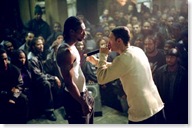
8 (Mile) is Enough

Photo by Pat Shannahan, USA Today Did anybody else notice that Barack Obama borrowed some of his speech writing skills from Eminem?

I pulled up the movie's plot outline from Wikipedia this morning and the similarities are uncanny. I'm predicting "Lose Yourself" will be played following rousing speeches yet to come.

"The climax of the movie takes place at the battle. Rabbit's friends hype him throughout the film as an incredible rapper, but until this point the film only shows snippets of his skills. The tournament has three rounds, and in each of them Rabbit faces a member of the "Leaders of the Free World", a group that feuds with Rabbit and his friends throughout the film. Rabbit wins both of the first two rounds with progressively more impressive freestyle raps."

"In the last round, he is paired against Papa Doc, the tournament's most feared battler and Jimmy's main antagonist throughout the 8milestoryline. Rabbit is aware that Doc knows all his weak points, so he decides to address them preemptively with his freestyle. Rabbit acknowledges without shame his white trash roots and the various humiliations the Free World clique have inflicted on him. He then uses the difficult life he's had as a springboard to reveal the truth about Papa Doc: despite passing himself off as a thug, he has a privileged background. Doc, whose real name is Clarence, attended Cranbrook, a private school located in upper class Bloomfield Hills. Rabbit makes a reference to Shook Ones Pt. II, the beat that the DJ is spinning, by calling Papa Doc a 'halfway crook,' which sends the crowd into a frenzy. Doc is left with nothing to say in rebuttal, drops the mic, and Rabbit takes the title."

Man on Wire

“To me it’s so simple that life should be lived on the edge of life. You have to exercise in rebellion, to refuse to taper yourself to rules, to refuse your own success, to refuse to repeat yourself to see every day, every year, every idea as a true challenge and then you are going to live your life on a tight rope.”

~ Phillippe Petit


You are here

From Personal Days by Ed Park:

Our office is located on what must be the least populated semi-wide street in all of Manhattan, a no-man's land just far enough from two fashionable neighborhoods to be considered part of neither. Wind gets stuck here. At twilight, crumpled newspapers scuttle across the pavement like giant crabs. Plastic bags advance in tumbleweed fashion. Sometimes it feels like the edge of the world.

We occupy the middle three floors of a nine-floor building, at the uneasy intersection of two quasi-avenues, which merge without clear signage. Further complicating matters is the abundance of honorary street names for people you've never heard of. Rabbi S. Blankman Street? "Mama" O'Sullivan Road? Who were these colorful figures of yesteryear? Cabbies throw their hands up and think of turning in their medallions.

The Starbucks just down the road, uncomfortably situated on a corner between a boarded-up bar and a boarded-up locksmith, looks like a bordello. We call it the Bad Starbucks for it's low-impact saxophone music and an absence of natural light combined with doomed, possibly improvised original drinks like the Pimm's cup chai.

The Good Starbucks, two blocks farther in the opposite direction, also looks like a house of ill repute, but with better ventilation and more freebies, little paper cups of cake.

We're within five minutes of two subway stops, but at such illogical angles to them that we have difficulty instructing people how to get here: You go left and then cut across the second parking lot, not the one that says PARK.

To make it easier we tell them we'll meet up by the newspaper stand right outside the subway station three blocks away. We ask them beforehand, What will you be wearing? We describe ourselves: Glasses, dark shirt. This could be anybody.

Thursday, August 28, 2008

Capable of Being

"Treat people as if they were what they ought to be, and you help them to become what they are capable of being."

~ Johann Wolfgang von Goethe

Wednesday, August 27, 2008

Stored Honey

"Art is the stored honey of the human soul, gathered on wings of misery and travail."

~ Theodore Dreiser

Tuesday, August 26, 2008

Lakes of Canada

Sufjan Stevens covers a song by The Innocence Mission on Cincinnati's Memorial Hall roof (April 2007).

La Blogothèque

Monday, August 25, 2008

Not Enough

Emmylou Harris
from All I Intended to Be

The Patient Labyrinth

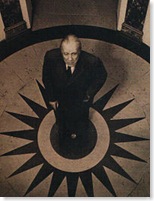
Jorge_Luis_Borges_Hotel "Through the years, a man peoples a space with images of provinces, kingdoms, mountains, bays, ships, islands, fishes, rooms, tools, stars, horses, and people. Shortly before his death, he discovers that the patient labyrinth of lines traces the image of his own face."

~ Jorge Luis Borge

Flesh and Blood and Soul and Feeling

Walking a Literary Labyrinth "I can hardly conceive how limited my perception would be without the books I have been privileged to read, how superficial my understanding of others, how undeveloped my sympathies. And I mean here, especially, without fiction, which puts flesh and blood on, and the soul and feeling in, other human beings. Precisely because if its appeal to my imagination, which Webster's dictionary defines as 'the act or power of forming a mental image of something not present to the senses or never before wholly perceived in reality,' in fiction I come to know and understand people I may not have met otherwise. And thus I am persuaded to a more compassionate, generous, and loving response in my life beyond books."

~ Nancy M. Malone, from Walking a Literary Labyrinth

[Thanks Kit!]

No, I Would Not Leave You if You Suddenly Found God

By Jennifer Michael Hecht from The Next Ancient World

Praise wild dancing in the kitchen.
Praise sitting and talking to the doctor.
Praise phone calls from my sister.
Praise phone calls from you, a little drunk, leaning toward me.
Praise old lovers who show up when they are needed.
Praise our mothers, safe in another state.
Praise my apartment with its three wide rooms.
Praise the blue sky above the brick buildings.
Praise my back windows: trees, fire escapes, cafe lights.
Praise coffee (it destroys sadness).
Praise encyclopedias.
Praise you calling crying.
Praise ibuprofen.
Praise painting on wood.
Praise all the days in the photographs.
Praise the press of my breasts against the inside of my winter coat.
Praise the name of my winter coat: Big Black.
Praise this feeling of trying to write about the truth.
Praise the Byzantine Empire.
Praise the salt in sweat. We are not alone. Praise making you laugh.
Praise making you proud.
Praise the second cup of coffee.
Praise having a party to go to tonight.
Praise my halting therapist.
Praise mixed baby lettuce.
Praise my confidence.
Praise my talent.
Praise bravery in the face of fear.
Praise my fearlessness.
Praise my fear.
Praise pickled herring with onions.
Praise the Arctic Circle.
Praise the Mighty Tonka truck.
Praise the forklift; praise the crane.
Praise theater tickets.
Praise the repetition of names.
Praise the Virgin.
Praise the Magdalene.
Praise Magellan.
Praise Central Park.
Praise your uneven teeth.
Praise blood-stained sheets.
Praise the land, and what I know about its bedrock.
Praise David, dancing wild around the ark of his Lord.
Praise the job of work of truth.
Praise the phrase "job of work."
Praise your faith in me.
Praise your courage.
Praise my faithfulness.
Praise my dedication.
Praise that you sleep with one eye open because a dog bit your face.
Praise your extra nipple.
Praise that we are not lovers.
Praise that we touch each other like lovers.
Praise that you figure out the movie before me.
Praise my desperation.
Praise my terrible fear.
Praise Jones Beach.
Praise the boys in long pants selling frozen Snickers at the sea shore.
Praise death.
Praise the memory of being tiny and tumbled under the ocean, close
to death. Praise arch support.
Praise chewing on a steak bone.
Praise other people's poems.
Praise the Empire State Building.
Praise swimming out so far, I forget the fact of land.
Praise eating chicken-cutlet sandwiches with my brother at the beach.
Praise doing the puzzle with my mother.
Praise my father explaining the universe.
Praise that after visiting Great-Grandma Bertha's,
we went to Coney Island.
Praise three of us fitting in one seat on the Cyclone.
Praise the weird little town where you were raised.
Praise that you were born here where I was born.
Praise the ex-lovers we have in common; praise chocolate.
Praise living at the millennium.
Praise the rotary phone.
Praise broccoli rabe with garlic and olive oil.
Praise total abandon.
Praise bringing out the harpies.
Praise using every muscle.
Praise thirst and water.
Praise the landing on the moon.
Praise singing loud and hard.
Praise going to bed exhausted.
Praise your poems.
Praise my poems.
Praise that we drink too much.
Praise you promising me that you will stop smoking.
Praise how I moon over you.
Praise how you love me.
Praise your strong husband.
Praise dancing to swing.
Praise dancing to the blues.
Praise the borscht at Veselka.
Praise my first gray hairs.
Praise acetaminophen.
Praise Australopithecus.
Praise speaking the truth.
Praise knowing that life is an endeavor of truth.
Praise knowing that life is the becoming towards truth.
Praise the authentic moments of working with someone towards truth.
Praise desire.
Praise stupefying desire.
Praise north and south.
Praise the yellow sun on the red brick buildings outside my windows.
Praise knowing that it is midnight out the back window
because the cafe lights go off.
Praise oranges.
Praise midnight out the front windows and the Empire State Building
goes dark.
Praise Cezanne's apples and oranges.
Praise men from their callused feet to their beautiful thinning hair.
Praise women from Sappho biting her lip
through the first hip-swagger of the new millennium.
Praise the shark giving birth to live young.
Praise the bird.
Praise the words "decapitated" and "disembodied."
Praise rhyme.
Praise meter.
Praise certainty.
Praise indivisibility.
Praise the movies; praise writing songs.
Praise asking each other when we are supposed to bleed.
Praise talking to myself alone in the dark.
Praise my endless pleasure in the godless solitude of my private mind.
Praise the giraffe and the porcupine.
Praise sloth.
Praise gluttony.
Praise a man's hand pressing the small of my back.
Praise your tiny feet.
Praise travel.
Praise the refusal of travel.
Praise your blue eyes.
Praise kissing men: desert of whiskers, oasis of lips.
Praise kissing women and the effort not to bite.
Praise the lips and the tongues and the grease.
Praise the feast.
Praise agony.
Praise defeat.
Praise that we used to dance in public and that now we dance at home.
Praise faith.
Praise glory.
Praise praise.
Praise your brilliant heart.
Praise the mystical abundance of your horrifying heart.
No, I will not leave you if you want to worship God.

Listen (RealAudio, 2:04)

"A History of Doubt," Speaking of Faith (May 3, 2007)

Thursday, August 21, 2008

Trapped by the Fame of Being a Character

From The Writer's Almanac:

Christopher Robin Milne It's the birthday of the boy who inspired the Winnie-the-Pooh books: Christopher Robin Milne, born in 1920 in London, England, the son of the children's writer A.A. Milne. His parents expected a girl and the only name they had picked out was Rosemary, so when they realized they needed to name a boy, they couldn't decide, so each parent chose one.

When Christopher Robin was a year old, he got a teddy bear that he called Edward, and his father took the name "Winnie" from a bear at the London Zoo that Christopher loved. That bear and Christopher's other stuffed toys became the inspiration for the stories his father wrote about Winnie-the-Pooh and friends. But at the same time that A.A. Milne was writing poems and stories about Christopher Robin, the boy was brought up almost completely by a nanny. He was taken downstairs three times a day to visit his parents. He loved to work with his hands — sewing, knitting, dismantling clocks, and rigging up burglar alarms. He took apart and reassembled the lock on his nursery door when he was just seven years old.

Before Christopher Robin started school, he loved to help his father write his stories, but at school his classmates mocked him and recited verses about him from his father's books. Christopher grew to resent his father for making it impossible for him to have a normal life. He went off to the army, and when he returned he felt even more trapped by the fame of being a character in Winnie-the-Pooh, so he decided to leave London and open a bookshop in Dartmouth with his wife, although it attracted lots of customers looking to meet the original Christopher Robin. Eventually, he published three memoirs: The Enchanted Places (1975), Path Through the Trees (1979), and Hollow on the Hill (1982).

Wednesday, August 20, 2008

From We and Them to Us

"Researcher Hans Rosling uses his cool data tools to show how countries are pulling themselves out of poverty. He demos Dollar Street, comparing households of varying income levels worldwide. Then he does something really amazing."

A Showbiz Idea of Being Important

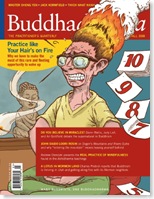
From "Practicing Like Your Hair's on Fire," by Gelek Rinpoche, Buddhadharma (Fall 2008):

hair_on_fire Many of us complain, “I have no time.” I like to call that a good, fancy, stylish excuse. Everybody likes to say, “I’m too busy,” because everybody would like to seem important. It is a great excuse that offers several benefits: you can avoid what you don’t want to do; it gives you a showbiz idea of being important; and all the important people do it, so you can include yourself with them.

I refer to that as busy laziness. We experience this kind of laziness because we have a problem recognizing our real priorities.

...

In short, our human life, with the limitless capacity of our minds, is capable of producing any results we wish. If your goal is to get rich, your human life is capable of producing it. If you want to become famous, your life is capable of doing it. Hollywood is full of such people. It's the same with anything else you choose to do. Whether you are satisfied with the results or not is a different story, but human life is capable of delivering the goods. If you want to be fully enlightened, if your ultimate goal is to achieve enlightenment, then this life is capable of delivering that as well. From our point of view we may fail, but it won't be because our human life lacked the capacity for total enlightenment. It's be because we didn't take advantage of it.

Tuesday, August 19, 2008

Being Normal is Extraordinary

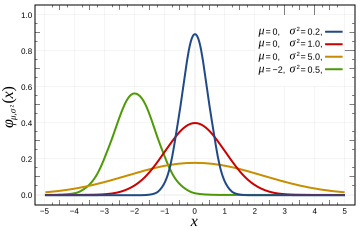
Probability density function for the normal distribution

From "Typically Twisted," by Kathleen McGowan, Pscyhology Today (August 2008)

Being normal is actually extraordinary. It's an unusual combination of specific traits that all have to do with being extra likable. The people who see themselves as most normal (and are seen that way by others) are much less neurotic than the average person, uncommonly easy to get along with, unusually respectful of propriety, and highly responsible.

Normal people may be nicer than average, but they also have character traits that aren't universally appealing. They're not adventurous. They're not above average in intelligence, nor are they outgoing. Truth be told, a lot of our best qualities are unusual. A sense for music like Mozart's is certainly exceptional. So is the ability to speak six languages, or the courage to leap onto the subway tracks to save a stranger's life.


Time Stops

Frozen Grand Central
Improve Everywhere

[Thanks Kimberly!]

Monday, August 18, 2008

No Self Behind the Curtain

Despite our every instinct to the contrary, there is one thing that consciousness is not: some entity deep inside the brain that corresponds to the "self," some kernel of awareness that runs the show, as the "man behind the curtain" manipulated the illusion of a powerful magician in The Wizard of Oz. After more than a century of looking for it, brain researchers have long since concluded that there is no conceivable place for such a self to be located in the physical brain, and that it simply doesn't exist.

From "Glimpses of the Mind," by Michael D. Lemonick, Time (Aug. 17, 1995)

Friday, August 15, 2008

Vidéomusique

A sample of the music videos by young Montréal artists from this year's Vidéomusique, part of The Québec Triennial at Musée d'art contemporain de Montréal.


Walk the Walk
The National Parcs


Them Kids
Sam Roberts


Montréal -40° C
Malajube


Une Rose Noire
Paul Cargnello


Luscious Life
Patrick Watson


Au gré des saisons
Dumas

Saturday, August 09, 2008

If It Takes Me All Day (Aubade II)

The Lamps Unlit
by Billy Collins

It is difficult to write an aubade,
a song about noon, or a few crepuscular lines
without stopping to realize
just where you are on the dial of a certain day

which is at least a beginning
and better than the usual blind rush
into the future, believed to reside
over the next in an infinite series of hills.

I'm all for noticing that the light
in the tops of the trees,
is different now with the grass cold
and moist, the heads of flowers yet unfolded,

all for occupying a chair by a window
or a wayside bench for an hour—
time enough to look here and there
as the caravan of time crosses the sand,

time to think of the dead and lost friends,
their faces hidden in the foliage,
and to consider the ruination of love,
a wisp of smoke rising from a chimney.

And who cares if it takes me all day
to write a poem about the dawn
and I finish in the dark with the night—
some love it best—draped across my shoulders.

From A Public Space (Issue 6)

It Hasn't Amounted to Much (Aubade I)

"I feel I am landed on my 45th year as if washed up on a rock, not knowing how I got here or ever had a chance of being anywhere else. ... Anyone would think I was Tolstoy, the value I put on writing, but it hasn't amounted to much."

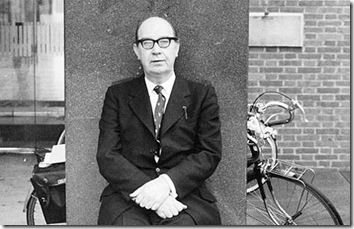
~ Philip Larkin, from a letter he wrote in 1966

Philip Larkin

From 1974 to 1977, Larkin worked on a single 50-line poem—the last major poem he wrote—called "Aubade," about watching the sunrise in a bedroom and thinking about the fear of death. It's the poem that most critics considered to be his masterpiece (Writer's Almanac).

Aubade

I work all day, and get half-drunk at night.
Waking at four to soundless dark, I stare.
In time the curtain-edges will grow light.
Till then I see what's really always there:
Unresting death, a whole day nearer now,
Making all thought impossible but how
And where and when I shall myself die.
Arid interrogation: yet the dread
Of dying, and being dead,
Flashes afresh to hold and horrify.
The mind blanks at the glare. Not in remorse
—The good not done, the love not given, time
Torn off unused—nor wretchedly because
An only life can take so long to climb
Clear of its wrong beginnings, and may never;
But at the total emptiness for ever,
The sure extinction that we travel to
And shall be lost in always. Not to be here,
Not to be anywhere,
And soon; nothing more terrible, nothing more true.

This is a special way of being afraid
No trick dispels. Religion used to try,
That vast, moth-eaten musical brocade
Created to pretend we never die,
And specious stuff that says No rational being
Can fear a thing it will not feel, not seeing
That this is what we fear—no sight, no sound,
No touch or taste or smell, nothing to think with,
Nothing to love or link with,
The anasthetic from which none come round.

And so it stays just on the edge of vision,
A small, unfocused blur, a standing chill
That slows each impulse down to indecision.
Most things may never happen: this one will,
And realisation of it rages out
In furnace-fear when we are caught without
People or drink. Courage is no good:
It means not scaring others. Being brave
Lets no one off the grave.
Death is no different whined at than withstood.

Slowly light strengthens, and the room takes shape.
It stands plain as a wardrobe, what we know,
Have always known, know that we can't escape,
Yet can't accept. One side will have to go.
Meanwhile telephones crouch, getting ready to ring
In locked-up offices, and all the uncaring
Intricate rented world begins to rouse.
The sky is white as clay, with no sun.
Work has to be done.
Postmen like doctors go from house to house.

Friday, August 08, 2008

Not as Crazy as It Sounds

22

Tao_te_ching Learn how to stand still
if you want to go places.
Get on your knees
if you want to stand tall.
If you want wisdom,
empty your mind.
If you want the world,
renounce your riches.
Push yourself until you're exhausted,
and then you'll find your strength.

You can go far
if you don't have anything to carry.
The more you acquire,
the less you can really see.

A Master takes this to heart
and sets an example
for everybody else.

She doesn't show off
so people take notice.
She's not out to prove anything
so people take her at her word.
She doesn't brag about herself
but people know what she's done.
She hasn't got an agenda
but people know what she can do.
She's not out to get anybody
so nobody can get in her way.

"Learn how to stand still
if you want to go places."
That's not as crazy as it sounds.
Get in touch with Tao,
and you'll see what I mean.

33

Knowing things makes you smart,
but knowing yourself makes you wise.
To rule others, you must be powerful,
but to rule yourself,
you must be strong.

If you have only what you need,
you have true wealth.
If you never give up,
you will find a way.
If you stay true to yourself,
you will never be lost.
If you stay alive your whole life,
you've really lived.

Translation by Ron Hogan

Feeling Safe Kills

From "Slow-Moving Vehicle," a New York Times review of Traffic by Tom Vanderbilt:

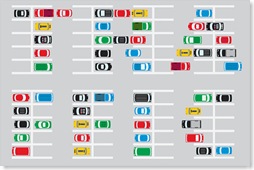
Traffic jams are not, by and large, caused by flaws in road design but by flaws in human nature. While this is bad news for drivers — there’s not much to be done about human nature — it is good news for readers of Tom Vanderbilt’s new book. “Traffic” is not a dry examination of highway engineering; it’s a surprising, enlightening look at the psychology of human beings behind the steering wheels.

...Nowadays, the cause of collisions, or one of them, is people believing they’re better drivers than they are. We base our judgment on the number of crashes we’ve been in, rather than on the number of accidents we narrowly avoid, which, if we’re being honest (or we’re being me), happen just about every time we drive.

Compounding this vehicular hubris is the fact that most of the driving we do appears to be safer than it is. Driving rarely commands 100 percent of our attention, and so we feel comfortable multitasking: talking on the phone, unfolding a map, taking in the Barca-Lounger on the road’s shoulder. Vanderbilt cites a statistic that nearly 80 percent of crashes involve drivers not paying attention for up to three seconds.  Thus the places that seem the most dangerous — narrow roads, hairpin turns — are rarely where people mess up. “Most crashes,” Vanderbilt writes, “happen on dry roads, on clear, sunny days, to sober drivers.” For this reason, roads that could be straight are often constructed with curves — simply to keep drivers on the ball.

This basic truth — feeling safe kills — lies beneath many of the book’s insights...

...S.U.V.’s are more dangerous than cars. Not just because they’re slower to stop and harder to maneuver, but because — by conferring a sense of safety — they invite careless behavior.

Deprived of the Ability to Subtract

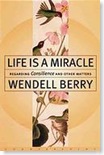
From LIfe is a Miracle: An essay against modern superstition by Wendell Berry:

If there are critics of science in government and the bureaucracies, they are largely inaudible. In the universities, the scientists generally proceed from promotion to promotion and from grant to grant, leaving few recorded moments of conscience or professional self-doubt; and the professors of the humanities seem for the most part merely to be abashed by the sciences, deferring to their certainties, adopting their values, admiring their wealth, and longing even to imitate their methodology and their jargon. The journalists think it intellectually chic to stand open-mouthed before any wonder of science whatsoever. The media, cultivating their mediocrity, seem quite comfortably unaware that many of the calamities from which science is expected to save the world were caused in the first place by science -- which meanwhile is busy propagating further calamities, hailed now as wonders, from which later it will undertake to save the world. Nobody, so far as I have heard, is attempting to figure out how much of the progress resulting from this enterprise is net. It is as if a whole population has been genetically deprived of the ability to subtract.

I know that there are some scientists who are speaking and writing sound criticism of science or of scientific abuses of science, but these people seem to have the status of dissidents or heretics; they are not accepted as partners in a necessary dialogue. Typically, their criticisms and objections are not even answered. (If you are making money and have power, why debate?) In short, the scientific critics of science are not effective. That there has been no effective criticism of science is demonstrated, for instance, by science's failure to attend to the possibility of small-scale or cheap or low-energy or ecologically benign technologies. Most applications of science to our problems result in large payments to large corporations and in damages to ecosystems and communities. These eventually will have to be subtracted (but not, if they can help it, by the inventors or manufacturers) from whatever has been gained.

*     *     *

The only science we can have is human science; it has human limits and is involved always with human ignorance and human error. It is a fact that the solutions invented or discovered by science have tended to lead to new problems or to become problems themselves. Scientists discovered how to use nuclear energy to solve some problems, but any use of it is enormously dangerous to us all, and scientists have not discovered what to do with the waste. (They have not discovered what to do with old tires.) The availability of antibiotics leads to the overuse of antibiotics. And so on. Our daily lives are a daily mockery of our scientific pretensions. We are leaning to know precisely the location of our genes, but significant numbers of us don't know the whereabouts of our children. Science does not seem to be lighting the way; we seem rather to be leapfrogging into the dark along series of scientific solutions, which become problems, which call for further solutions, which science is always eager to supply, and which it sometimes cannot supply.

Thursday, August 07, 2008

Idea + Square = Origami

From TED Talks:

Origami, as Robert Lang describes it, is simple: "You take a creature, you combine it with a square, and you get an origami figure." But Lang's own description belies the technicality of his art; indeed, his creations inspire awe by sheer force of their intricacy. His repertoire includes a snake with one thousand scales, a two-foot-tall allosaurus skeleton, and a perfect replica of a Black Forest cuckoo clock. Each work is the result of software (which Lang himself pioneered) that manipulates thousands of mathematical calculations in the production of a "folding map" of a single creature.

The marriage of mathematics and origami harkens back to Lang's own childhood.  As a first-grader, Lang proved far too clever for elementary mathematics and quickly became bored, prompting his teacher to give him a book on origami. His acuity for mathematics would lead him to become a physicist at the California Institute of Technology, and the owner of nearly fifty patents on lasers and optoelectronics. Now a professional origami master, Lang practices his craft as both artist and engineer, one day folding the smallest of insects and the next the largest of space-bound telescope lenses.

Download Robert Lang's Treemaker software to start designing your own origami projects.

Wednesday, August 06, 2008

Every Tool Can be Misapplied

From "How Meditation Works," by Shinzen Young:

Deep contemplative attainment does not make a person perfect; it confers mind power, a sense of happiness which is not dependent on circumstances, and a basically loving orientation toward one's environment. It does not, however, automatically guarantee immunity from stupidity, poor judgement or cultural myopia.

Furthermore, each meditative system has its characteristic weaknesses. Theravadan Vipassana meditation could make one humorless and depersonalized if not balanced with loving-kindness meditation. Tantric practice can easily degenerate into manipulation, sterile ritual and obscurantism. Belief in original enlightenment and just sitting could get in the way of rapid growth. In Japan, Zen training, particularly Rinzai training, can be brutal and imbue a tendency towards authoritarianism. In fact, Zen suffered a temporary eclipse in Japan following World War II precisely because it had been widely used as an underpinning for militarism. The practice of meditation to get tough and the cultivation of detached repose so that one may kill and be killed without fear or compunction represents a tragic perversion.

Finally, it is a mistake to identify meditation with a particular life style. Obviously, if one's daily life is seamy and chaotic, it will be difficult to attain a settled mind, but it is ludicrous to think that a person must be a vegetarian or enter a monastery to make headway in meditation. Such externals can help. They can also distract. The path to freedom is systematic and open to all. You don't need to be a Buddhist to profit from Buddhist meditation.

That these aberrations and misdirections exist should not in the least surprise, dismay or discourage us. Every tool can be misapplied. The fact is that each of the above approaches to meditation, if skillfully and persistently cultivated, produces a well-balanced, fulfilled individual whose very presence benefits his or her fellows. As such, they represent significant and powerful contributions to human culture.

Tuesday, August 05, 2008

The Way of Ignorance

I said to my soul, be still, and wait without hope
For hope would be hope for the wrong thing; wait without love,
For love would be love of the wrong thing; there is yet faith
But the faith and the love and the hope are all in the waiting.
Wait without thought, for you are not ready for thought:
So the darkness shall be the light, and the stillness the dancing.
Whisper of running streams, and winter lightning.
The wild thyme unseen and the wild strawberry,
The laughter in the garden, echoed ecstasy
Not lost, but requiring, pointing to the agony
Of death and birth.

You say I am repeating
Something I have said before. I shall say it again.
Shall I say it again? In order to arrive there,
To arrive where you are, to get from where you are not,
You must go by a way wherein there is no ecstasy.
In order to arrive at what you do not know
You must go by a way which is the way of ignorance.
In order to possess what you do not possess
You must go by the way of dispossession.
In order to arrive at what you are not
You must go through the way in which you are not.
And what you do not know is the only thing you know
And what you own is what you do not own
And where you are is where you are not.

~ T.S. Eliot, from "East Coker," the second poem of his Four Quartets

Time Seems to Slow Way Down

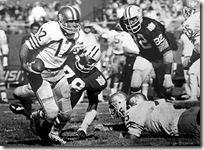
John Brodie "At times, and with increasing frequency now, I experience a kind of clarity that I've never seen adequately described in a football story. Sometimes, for example, time seems to slow way down, in an uncanny way, as if everyone were moving in slow motion. It seems as if I have all the time in the world to watch the receivers run their patterns, and yet I know the defensive line is coming at me just as fast as ever. I know perfectly well how hard and fast those guys are coming and yet the whole thing seems like a movie or a dance in slow motion. It's beautiful."

~ John Brodie, former quarterback for the San Francisco 49ers from an interview in January 1973

Writers Workshops

#21 from Stuff White People Like by Christian Lander:

writers_workshops It’s no secret.  White people want to be writers.  Why wouldn’t they? Work 10 hours a week from a country house in Maine or England.  Get called a genius by other white people, and maybe get your book made into a film.

Every single white person harbors this dream.  No matter what they tell you, all of them have at least one chapter of a novel stashed away somewhere.

Being a marginally crafty race, white people will often seek out every possible route to achieving this goal, and one of the most popular methods has been writers workshops.

Stuff White People LikeThese are expensive mini go-to-school type vacations.  Where you talk with a published writer (often someone you haven’t heard of,  but they have a book on Amazon) who will tell you how they became writers. If there is time, they will listen to you read your stuff and tell that you it’s good but it needs work on (a) structure, (b) characters, (c) dialogue. Then they will collect their check and go back to their country house or studio apartment in New York.

Saturday, August 02, 2008

The Flash

By Italo Calvinao from Numbers in the Dark:
Numbers in the Dark It happened on day, at a crossroads, in the middle of a crowd, people coming and going.

I stopped, blinked: I understood nothing. Nothing, nothing about anything; I didn't understand the reasons for things or for people, it was all senseless, absurd. And I started to laugh.

What I found strange at the times was that I'd never realized before. That up until then I had accepted everything: traffic lights, cars, posters, uniforms, monuments, things completely detached from any sense of the world, accepted them as if they were some necessity, some chain of cause and effect that bound them together.

Then the laugh died in my throat, I blushed, ashamed. I waved to get people's attention and "Stop a second!" I shouted, "there's something wrong! Everything's wrong! We're doing the absurdist things! This can't be the right way! Where will it end?"

People stopped around me, sized me up, curious. I stood there in the middle of them, waving my arms, desperate to explain myself, to have them share the flash of insight that had suddenly enlightened me: and I said nothing. I said nothing because the moment I'd raised my arms and opened my mouth, my great revelation had been as it were swallowed up again and the words had come out any old how, on impulse.

"So?" people asked, "what do you mean? Everything's in its place. All is as it should be. Everything is a result of something else. Everything fits in with everything else. We can't see anything absurd or wrong!"

And so I stood there, lost, because as I saw it now everything had fallen into place again and everything seemed natural, traffic lights, monuments, uniforms, towerblocks, tramlines, beggars, processions; yet this didn't calm me down, it tormented me.

"I'm sorry," I answered. "Perhaps it was me that was wrong. It seemed that way. But everything's fine. I'm sorry," and I made off amid their angry glares.

Yet, even now, every time (often) that I find I don't understand something, then, instinctively, I'm filled with hope that perhaps this will be my moment again, perhaps once again I shall understand nothing, I shall grasp that other knowledge, found and lost in an instant.

Friday, August 01, 2008

The NeoCube

The NeoCube

Almost Completely Forgotten

"Methinks that what they call my shadow here on earth is my true substance. Methinks that in looking at things spiritual, we are too much like oysters observing the sun through the water, and thinking that thick water the thinnest of air."

~ Herman Melville (Aug. 1, 1819 – Sep. 28, 1891), Moby Dick

From The Writer's Almanac (8/1/08):

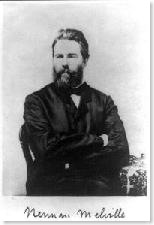
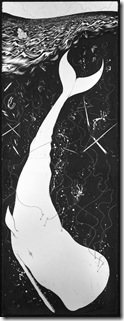
...Melville got married and had four children, and the family bought a farm in Herman Melville 1860Massachusetts, where Melville became friends with Nathaniel Hawthorne. Melville was working on Moby-Dick, his story of Captain Ahab's obsessive hunt for the great white whale, and Hawthorne encouraged him to make the novel an allegory, not just an account of whaling.

Melville became consumed with writing Moby-Dick. He would work all day without eating until evening, and he would bellow across the house, "Give me Vesuvius' crater for an inkstand!" He was elated when he finished his novel (published in 1851) and considered  it his greatest work yet. He wrote to Hawthorne, "I have written a wicked book and feel as spotless as the lamb." But it was a flop. Readers didn't like it. His American publisher only printed 3,000 copies, and most of those never even sold; in 1853, a warehouse fire destroyed the plates and the unsold books, and the publisher refused to reset the book or compensate Melville.
Melville wrote two more novels just to make money, and he said the experience was like "sawing wood," but he still couldn't make enough to live on. His work became darker and more psychological, and it sold even fewer copies, and Melville began to get depressed. His last major work was The Confidence Man (1857), a biting satire of American life. He wrote poetry but couldn't find a publisher, so he had to publish it himself. He moved to New York and got a job as a customs inspector on the New York docks. The manuscript of his final work, Billy Budd, was found in his desk after he died. At the time of his death, Melville had been almost completely forgotten, and The New York Times called him "Henry Melville" in his obituary. Moby-Dick is now considered one of the great American novels.

Thursday, July 31, 2008

El Sistema

"In my view, the root cause of all our social problems is exclusion. We must fight to ensure that a larger number of people -- everyone, if that's possible -- have access to this wonderful world, the world of music, the world of the orchestra, the world of song, the world of art."

~ José Antonio Abreu

Monday, July 28, 2008

Belief System

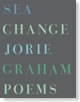
Sea Change As a species
        we dreamed. We used to
dream. We did not know for sure about
        the other species. By the mind we meant
the human mind. Open and oozing with
        inwardness. Thinking was the habitation of a
trembling colony, a fairy tale—of waiting, love—of
        the capacity for
        postponement—we shall put that
        off the majesty of the mind
        said, in the newspapers, walking among the blessed,
        out in the only
lifetime anyone had—in that space—then in the space
        of what one meant by one's
        offspring's
space. The future. How could it be performed by the mind became the
        question—how, this sensation called tomorrow and
        tomorrow? Did you look down at
        your hands just now? The dead gods
        are still being
        killed. They don't appear in
        "appearance." They turn the page for
        us. The score does not acknowledge
        the turner of
        pages. And always the
absent thing, there, up ahead, like a highway ripped open and left hanging in the
        void—only listen—there is no void, no, it is still
material, which is most terrifying, is still expanse, only without you in it, or anything else
        in it—the last word you said before
        you screamed
still on your tongue, like a taste, your broad warm tongue out of which existence as we
        know it was
made. The waves hit the rocks. The sensation of duty dissolves. The rule of
        order—of love—of
        what? Don't look at me now I'm not
        ready. It's a sur-
        prise, I want you to be
surprised. The heartbeat on its little wheels. Your given days its chariot. The rendez-
        vous awaiting. Nothing
        to be done about
        that! Also
the poking about in the ashes which was human
        curiosity—always the shadow of what the yes
        which springs from a mind
        sparks—of what filled the mind when the yes was
        felt—also human the
        ownership of such
        sad hands,
now still slicing everything, so carefully—the lemon is opening, the letter, the glance, the
        century, the sky, the forest—oh—the monster, the
        valley and the next-on
        valley, also the
army, look, what an idea, an army—the long-gone stars making their zodiac—the severed
        fingers and the dirt they're tossed onto,
the moon, sliced, the forum, sliced—still those few pillars and the written voice—here it
        comes now the jesus, the body full of its organs,
        the parts of the stoning, each part—bone, sinew—
        each stone—till she's
        gone, she's clothes on the
ground with brothers and uncles around—& the space where the blood flows
        sliced open
there—& the circle of god, the circle of justice—the red eye at the center, the crowd dispersing,
        & the halo of arms still hovering
        where each
        let fly its stone.

~ by Jorie Graham, from Sea Change: Poems

Our Dream-Like Experience of Yesterday

From "The Four Foundations Of Mindfulness," by Dzogchen Ponlop Rinpoche:

When we are dreaming, we have subject, we have object, and we have the action between the subject and the object, which is the experience of the threefold situation. As long as we remain in the dream state, those three things equally exist. We experience these three things as solid. We experience a real world, real phenomena, real body. Our own physical existence is there, the physical existence of the object is there, and the physical existence of the action is there. All three are simply existing in the dream state.

mind_beyond_death But if you look at your dream from the point of view of waking up, of the awakened state, it does not exist, right? If you look back at last night's dream, and if you look back at yesterday's experience of life, which is not really a dream, if you look back, they both equally do not exist. Your experience of yesterday is not solid; your dream of last night is not solid, as far as today is concerned. If you look back from the point of view of today, which is the awakened state, relatively speaking, then both of those equally do not exist, you know. There's no solid reason to say yesterday was more solid than last night's dream. There's no solid logical reason, so to speak, except that we cling to our dream-like experience of yesterday more than to our experience of last night's dream.

*  *  * 

Check out the two-part Buddhist Geeks discussion with Dzogchen Ponlop Rinpoche, "the only Rinpoche we know who owns and uses a Blackberry!" (Episodes 74 & 75)

Thursday, July 24, 2008

Something to share with the class?

[Spotted on JC's blog]

Objects in Motion, Objects at Rest

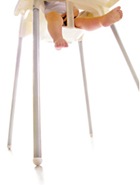
highchair To Katharine: At Fourteen Months

All morning, you've studied the laws
of spoons, the rules of books, the dynamics
of the occasional plate, observed the principles
governing objects in motion and objects
at rest. To see if it will fall, and if it does,
how far, if it will rage like a lost penny
or ring like a Chinese gong--because
it doesn't have to--you lean from your chair
and hold your cup over the floor.
It curves in your hand, it weighs in your palm,
it arches like a wave, it is a dipper
full of stars, and you're the wind timing
the pull of the moon, you're the water
measuring the distance from which we fall.

by Joelle Biele, from American Life in Poetry (Column 174)

Wednesday, July 23, 2008

What People Forget

"I've learned that people will forget what you said, people will forget what you did, but people will never forget how you made them feel."

~ Maya Angelou

Introducing Samantha Crain

“I always wanted to be a performer. I was in college studying English literature but I probably would have joined the circus after graduation if I wasn’t doing music...being in a touring band [really] is...like being in the circus.”

~ Samantha Crain, from Paste Magazine (7.20.08)


Saturday, July 19, 2008

The American Way of Debt

From The Debt Trap, a New York Times "series of articles and multimedia about the surge in consumer debt and the lenders who made it possible."

american_debt

Friday, July 18, 2008

Tuning Between Stations

"As a child, I remember playing with my grandfather's shortwave ham radio set in the blisteringly hot attic of his Ohio home. And I loved tuning between stations and listening to all the tones and beeps and whistles and static. And often I will do that now today. I'll just turn on a shortwave radio, put it next to the bed, and mistune it somehow so I'm really not hearing any station directly. There's something about that I find opens my mind...I find a peace and excitement at the same time."

~ Ben Burtt, the voice of Wall-E, discussing some of his sound design inspirations with Kurt Anderson on Studio 360 (6.27.08).

Below, he explains how he created the lightsaber sound.