Showing posts with label fame. Show all posts

Friday, January 02, 2009

A Role to Play

Annie Leibovitz, from Annie Leibovitz at Work:

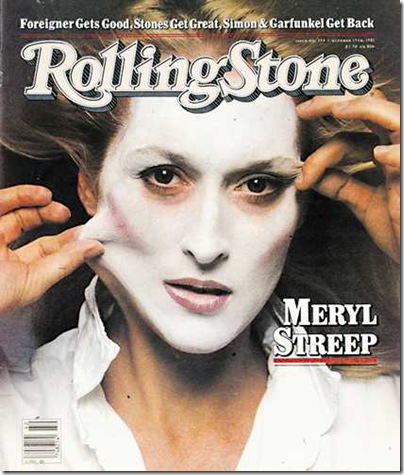
Annie Leibovitz at Work Actors who are photogenic like being photographed, and I’ve come to understand that they make the photograph. I realized when I studied pictures of Marilyn Monroe that it almost didn’t matter who the photographer was. She took charge. It seemed like she was taking the picture. There are other actors, however, who resist being photographed. They feel awkward. It doesn’t seem to them to have anything to do with their work. Meryl Streep and Robert Din Niro are in this category. I have the impression that a photograph seems superficial to them. They associate it with being a star and they think of themselves as actors first. They don’t want to be connected to the star machinery. I think also that actors such as Streep and De Niro got into acting to get away from themselves. They like playing roles and they feel cornered by a photograph. They don’t feel that projecting their personalities is part of what they do. They associate a photograph with selling themselves.

The picture of Meryl Streep in whiteface was made during a session that didn’t start out well. Meryl had only recently become a movie star. I had already done a fashion sitting with her for Vogue, and Life had used a head shot taken from that sitting on their cover a few months earlier. Francesco Scavullo had just shot her for the cover of Time. This round of publicity was for The French Lieutenant’s Woman. Meryl was uncomfortable with all the attention she was getting and she cancelled the first appointment for the shoot, but she was finally persuaded to come to my studio for two and a half hours one morning. She came in and talked about how she didn’t want to be anybody, she was nobody, just an actress. There were a lot of clown books lying around the studio and some white makeup left over from an idea I had for either James Taylor or John Belushi. I told Meryl that she didn’t have to be anybody in particular, and I suggested that maybe she would like to put on whiteface. To be a mime. That set her at ease. She had a role to play. It was her idea to pull at her face.


Monday, September 08, 2008

Already Inside

From an interview with actress Michelle Williams in the New York Times yesterday:

Photo by by Simon Max Hill/Oscilloscope Laboratories[While portraying a character whose financial situation unravels] “I thought a lot about what you look like when you think nobody’s looking at you, when you feel completely invisible. Your entire life happens inside because you don’t think anyone notices you. Which is very different from me. Not that I don’t have any inside life, but I feel watched, all the time.”

“...Acting sometimes reminds me of therapy in that the more you talk about a traumatic or profound event, the more it loses its emotional tension. Switch on a bright light and find there is no boogeyman in the closet. So it is the same with a scene. Never tell the other actor or the director what you are doing.”

[She explained that the trick is to allow herself] “to live in so much mystery, to rely on a feeling, an instinct, on faith, really, that everything I need is already inside me, and best I just don’t block the exit.”

Thursday, August 21, 2008

Trapped by the Fame of Being a Character

From The Writer's Almanac:

Christopher Robin Milne It's the birthday of the boy who inspired the Winnie-the-Pooh books: Christopher Robin Milne, born in 1920 in London, England, the son of the children's writer A.A. Milne. His parents expected a girl and the only name they had picked out was Rosemary, so when they realized they needed to name a boy, they couldn't decide, so each parent chose one.
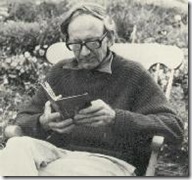
When Christopher Robin was a year old, he got a teddy bear that he called Edward, and his father took the name "Winnie" from a bear at the London Zoo that Christopher loved. That bear and Christopher's other stuffed toys became the inspiration for the stories his father wrote about Winnie-the-Pooh and friends. But at the same time that A.A. Milne was writing poems and stories about Christopher Robin, the boy was brought up almost completely by a nanny. He was taken downstairs three times a day to visit his parents. He loved to work with his hands — sewing, knitting, dismantling clocks, and rigging up burglar alarms. He took apart and reassembled the lock on his nursery door when he was just seven years old.

Before Christopher Robin started school, he loved to help his father write his stories, but at school his classmates mocked him and recited verses about him from his father's books. Christopher grew to resent his father for making it impossible for him to have a normal life. He went off to the army, and when he returned he felt even more trapped by the fame of being a character in Winnie-the-Pooh, so he decided to leave London and open a bookshop in Dartmouth with his wife, although it attracted lots of customers looking to meet the original Christopher Robin. Eventually, he published three memoirs: The Enchanted Places (1975), Path Through the Trees (1979), and Hollow on the Hill (1982).

Sunday, May 13, 2007

No Longer a Solitary Act

From Sex, Drugs, and Updating Your Blog by Clive Thompson (New York Times, 5/11/07):

When Jonathan Coulton first began writing his weekly songs, he carefully tracked how many people listened to each one on his Web site. His listenership rose steadily, from around 1,000 a week at first to 50,000 by the end of his yearlong song-a-week experiment. But there were exceptions to this gradual rise: five songs that became breakout “hits,” receiving almost 10 times as many listeners as the songs that preceded and followed them. The first hit was an improbable cover song: Coulton’s deadpan version of the 1992 Sir Mix-a-Lot rap song “Baby Got Back,” performed like a hippie folk ballad. Another was “Code Monkey,” his pop song about a disaffected cubicle worker.

Obviously, Coulton was thrilled when his numbers popped, not least because the surge of traffic produced thousands more dollars in sales. But the successes also tortured him: he would rack his brains trying to figure out why people loved those particular songs so much. What had he done right? Could he repeat the same trick?

“Every time I had a hit, it would sort of ruin me for a few weeks,” he told me. “I would feel myself being a little bit repressed in my creativity, and ideas would not come to me as easily. Or else I would censor myself a little bit more.” His fans, he realized, were most smitten by his geekier songs, the ones that referenced science fiction, mathematics or video games. Whenever he branches out and records more traditional pop fare, he worries it will alienate his audience.

For many of these ultraconnected artists, it seems the nature of creativity itself is changing. It is no longer a solitary act: their audiences are peering over their shoulders as they work, offering pointed comments and suggestions.

Code Monkey

Sunday, January 14, 2007

The Wrong Reasons

"If you have a success you have it for the wrong reasons. If you become popular it is always because of the worst aspects of your work."

Wednesday, November 08, 2006

No Content

"You can ask me anything you want about acting and I will try and answer. But if what you want to know about is fame and celebrity, then I can't help you. Because the whole celebrity thing has no content to it. It's not valuable, it's not meaningful, it's not anything. It's not real."

~ Julianne Moore