Monday, February 12, 2007

Food Is What You Want To Eat

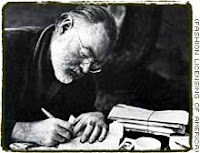
"Eat food. Not too much. Mostly plants. That, more or less, is the short answer to the supposedly incredibly complicated and confusing question of what we humans should eat in order to be maximally healthy. I hate to give away the game right here at the beginning of a long essay, and I confess that I’m tempted to complicate matters in the interest of keeping things going for a few thousand more words. I’ll try to resist but will go ahead and add a couple more details to flesh out the advice. Like: A little meat won’t kill you, though it’s better approached as a side dish than a main. And you’re much better off eating whole fresh foods than processed food products. That’s what I mean by the recommendation to eat “food.” Once, food was all you could eat, but today there are lots of other edible foodlike substances in the supermarket. These novel products of food science often come in packages festooned with health claims, which brings me to a related rule of thumb; if you’re concerned about your health, you should probably avoid food products that make health claims. Why? Because a health claim on a food product is a good indication that it’s not really food, and food is what you want to eat."


- Unhappy Meals by Michael Pollan, New York Times Magazine, Jan. 28, 2007

Like Now

From The Invention of Hugo Cabret by Brian Selznick:

"It's so beautiful," said Isabelle. "It looks like the whole city is made out of stars."

"Sometimes I come up here at night, even when I'm not fixing the clocks, just to look at the city. I like to imagine that the world is one big machine. You know, machines never have any extra parts. They have the exact number and type of parts they need. So I figure if the entire world is a big machine, I have to be here for some reason. And that means you have to be here for some reason, too."

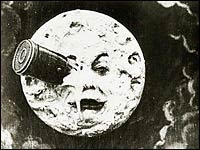
'A Trip to the Moon (Le Voyage dans la lune) by French filmmaker and special-effects pioneer George Melies in 1902 inspired author Brian Selznick. For instance, a scene in which the Man in the Moon is hit in the eye by a giant space bullet is echoed in Selznick's book.' - NPRThey watched the stars, and they saw the moon hanging high above them. The city sparkled below, and the only sound was the steady rhythmic pulse of the clock's machinery. Hugo remembered another movie he and his father had seen a few years earlier, where time stops in all of Paris, and everyone is frozen in their tracks. But the night watchman of the Eiffel Tower, and some passengers who land in an airplane, are mysteriously able to move around the silent city. What would that be like? Even if all the clocks in the station break down, thought Hugo, time won't stop. Not even if you really want it to.

Like now.


Saturday, February 10, 2007

What About Me?


Books by Sakyong Mipham

Thursday, February 08, 2007

Today is No Different

A NYC taxi driver returned a bag containing 31 diamond rings which he found in the trunk of his cab after dropping off a passenger who gave him a 30-cent tip on a $10.70 fare.

"All my life, I tried to be honest. Today is no different. I'm not going to take someone else's money or property to make me rich. I don't want it that way," said Osman Chowdhury, a soft-spoken cabbie, who was a contractor in Bangladesh until he came to the United States 15 years ago. He does not own a cab but rents one.

"I enjoy my life. I'm satisfied," said Chowdhury.

- Associated Press story

Monday, February 05, 2007

Magic for Beginners

I’m enjoying a delicious collection of short stories by Kelly Link called Magic for Beginners. Her eccentric characters and hip wit remind me of Elizabeth McCracken. These stories lure us into blurry places (simulateously mundane and fantastic) between genres. You can read the first story, "The Faery Handbag" and a sampling of her other stories online.

I’ll tempt you into her clever world with a couple of excerpts from “The Hortlak,” in which two characters work alternating shifts at a 24-hour convenience store (“Eric was night, and Batu was day.”) and a third, a woman named Charley (“the moon”) who works in an animal shelter, drops by the store frequently while out giving the dogs she has to euthanize one final ride in her car.

Batu said it was clear Charley had a great capacity for hating; and also a great capacity for love. Charley’s hatred was seasonal: in the months after Christmas, Christmas puppies started growing up. People got tired of trying to house-train them. All February, all March, Charley hated people. She hated people in December, too, just for practice.

Being in love, Batu said, like working retail, meant that you had to settle for being hated, at least part of the year. That was what the months after Christmas were all about. Neither system—not love, not retail—was perfect. When you looked at dogs, you saw this, that love didn’t work.

Batu said it was likely that Charley, both her person and her Chevy, were infested with dog ghosts…Nonhuman ghosts, he said, were the most difficult of all ghosts to dislodge, and dogs were worst of all. There is nothing as persistent, as loyal, as clingy as a dog.

“So you can see these ghosts?" Eric said.

“Don’t be ridiculous,” Batu said. “You can’t see that kind of ghost. You smell them.”
…

Batu had spent a lot of time reorganizing the candy aisle according to chewiness and meltiness. The week before, he had arranged it so that if you took the first letter of every candy, reading across from left to write, and then down, it spelled out the first sentence of To Kill a Mockingbird, and then also a line of Turkish poetry. Something about the moon.

Sunday, February 04, 2007

Trust

Trust

It's like so many other things in life
to which you must say no or yes.
So you take your car to the new mechanic.
Sometimes the best thing to do is trust.

The package left with the disreputable-looking
clerk, the check gulped by the night deposit,
the envelope passed by dozens of strangers—
all show up at their intended destinations.

The theft that could have happened doesn't.
Wind finally gets where it was going
through the snowy trees, and the river, even
when frozen, arrives at the right place.

And sometimes you sense how faithfully your life
is delivered, even though you can't read the address.

- Thomas R. Smith, from Waking before Dawn © Red Dragonfly Press

Story is What Penetrates

"The narrative impulse is always with us; we couldn't imagine ourselves through a day without it...We need myths to get by. We need story; otherwise the tremendous randomness of experience overwhelms us. Story is what penetrates."

- Robert Coover

Friday, February 02, 2007

All Your Senses Open

We saw Children of Men last night and I was surprised to notice that it was based on a book written by P.D. James, the mystery writer. Wikipedia reports that Alfonso Cuarón's film is a loose adaptation of the book which was published in 1992 ("substantial changes were made in terms of plot, political message and characters in the updated film"), but I was still curious enough to reserve a copy from the library. Here's an excerpt of the book from the author's web page.

Check out the mystery writing tips where I found this quote: "You must go through life with all your senses open to experiences, good and bad. Empathize with other people, and believe that nothing which happens to a true writer is ever wasted."

The Unreal is More Powerful than the Real

"The unreal is more powerful than the real, because nothing is as perfect as you can imagine it, because it's only intangible ideas, concepts, beliefs, fantasies that last. Stone crumbles. Wood rots. People, well, they die, but things as fragile as a thought, a dream, a legend, they can go on and on."

- Chuck Palahniuk

Thursday, February 01, 2007

Basic Facility

“You have to really stick with it. You gotta really put in three or four years of apprenticeship just to get some basic facility with it.”

- Paul Attanasio (Screenwriter: Quiz Show, Donnie Brasco, Sphere, The Sum of All Fears, The Good German, The Bourne Ultimatum, East of Eden; Producer: House) on discipline and the craft of screenwriting.

The Paradox of Acting [and Life]

This comment from John Lahr's delicious essay on stagefright ("Petrified," The New Yorker, Aug. 28, 2006) reminds me of the simulatenous yet contradictory skills developed through meditation which contribute to regular life becoming gradually more awake:

"The paradox of acting is that, like surfing, it requires both relaxation and concentration. If there is concentration without relaxation, or relaxation without concentration, the performance doesn't work."
Lahr quotes pianist Charles Rosen who sees "stagefright as an inevitable and appropriate result of a vituoso's perfectionism."

'Stagefright is not merely symbolically but functionally necessary, like the dread of a candidate before an examination or a job interview, both designed essentially as a test of courage. Stagefright, like epilepsy, is a divine ailment, a sacred madness...It is a grace that is sufficient in the old Jesuit sense -- that is, insufficient by itself but a necessary condition for success.'

Conspiring to Distract You

Excerpt from A Librarian's Lament: Books Are a Hard Sale an essay by Thomas Washington from The Washington Post (1/21/07):

Typically, many people in my line of work no longer have the title of librarian. They are called media and information specialists, or sometimes librarian technologists. The buzzword in the trade is "information literacy," a misnomer, because what it is really about is mastering computer skills, not promoting a love of reading and books. These days, librarians measure the quality of returns in data-mining stints. We teach students how to maximize a database search, about successful retrieval rates. What usually gets lost in the scramble is a careful reading of the material.

...

I recently spoke with a junior who was stressed about her decreasing ability to focus on anything for longer than two minutes or so. I tried to inspire her by talking about the importance of reading as a way to train the brain. I told her that a good reader develops the same powers of concentration that an athlete or a Buddhist would employ in sport or meditation. "A lot out there is conspiring to distract you," I said.

She rolled her eyes. "That's your opinion about books. It doesn't make it true." To her, the idea that reading might benefit the mind was, well, lame.

A library's neglected shelves reveal the demise of something important, especially for young readers starved for meaning -- for anything profound. Still, I'm not ready to throw in the towel just yet. I'm turning the new-arrivals shelf into a main attraction in my school's library. Recently I stood Charles Dickens's "Bleak House" next to the DVD version produced by the BBC. Lady Dedlock (Gillian Anderson) graced both covers. A senior fingered the DVD for a minute, then turned it over to read the blurb. "The book is too long," she said. "Is the movie any better?"

"You're right. The book is long," I said. "But once you start this one, you won't be able to put it down, right from that first page about the London fog."

"I think I'll watch the DVD," the student said.

And in my library ledger, I'll register this as a sale.

Monday, January 29, 2007

Never Fully Getting Inside

Richard Ford speaking with Michal Silverblatt on KCRW's Bookworm:

MS: You’ve been with the hero of these books (The Sportswriter, Independence Day, and The Lay of the Land), Frank Bascomb, for how many years?

RF: Twenty five.

What is it like to inhabit a character for that long?

Well, I don’t know if that’s the word I would use: inhabited. And indeed, over the course of three books, I have written other books in between. And so, it’s more of a matter of, first of all, going an fetching something that you think you used to have, which is to say a measuring voice, which is Frank’s voice for me. It’s more projecting it.


You know Graham Greene said that writers are people who impersonate other people and so that’s what I think I do. Without the notion of inhabiting. For me it’s more important to make something -- a character or a narrative arc -- that’s separate from myself, that I kind of operate at arm’s length a bit. I sometimes think it’s like Bergen and Charlie, you know, I’ve got my hand in his back and I’m making him say these things and I’m making his head move and making him respond, but never fully getting inside.
...
One of the painful things for me, is that Frank comes to know that he’s not going to be remembered. And that in the realm of a novel in which you’re the hero and you’re saying everything, you can feel very big. You know, the largeness of thoughtfulness, of meditation, can seem enormous, and yet in this book, Bascomb is going to be experiencing his own smallness, his own distance from himself. And it’s very, it seems to me, hard to do: to have the world contract to your own size when you’re the hero of a novel, narrated by yourself…in other words, that a certain kind of really-hard-to-earn humility seems to beset him at a certain point.

I think that that’s true. You know, the moral address of realistic fiction, at least as I understand it, is to say to the reader: pay attention, pay attention, pay attention. Because those things that are small, which we overlook because they are so familiar to us, will gain in stature and will gain, for us, a sense of moral responsibility when we notice them more fully. And then that becomes my task. My task is to make the minutiae of the book be felicitous, be interesting, be provocative, and yet at the same time, not promote them to a higher stature of importance—seen from the point of view of eternity—than we know they are.

Thursday, January 25, 2007

On a Path to Becoming Wind-like

Excerpt from a talk given by Shinzen Young called Understanding Impermanence:

The word for spirit in English is from the Latin, spīritus which is a translation of a Greek word, pneuma. Pneuma is a translation of a Hebrew word, ruach which means breath or wind. So when we say we’re on a spiritual path, people can interpret this in a lot of different ways. I like to interpret it literally. You are on a path to becoming spiritualis. You are on a path to becoming wind-like: powerful and insubstantial and unfixated.

The native people of the plains of North America have a natural way of expressing this idea. In the Sundance ceremony, you dance around a cottonwood tree. If you look at a cottonwood tree, it’s a little different from other trees. It has the ability to respond to the wind very immediately. With the tiniest little movement of wind, you can see the direction and magnitude of the wind at a very fine scale in the accelerations and decelerations of each little leaf in the cottonwood tree. You can see ruach in that tree. So you dance around that tree and look at that tree for four days. It gets you in sync with one of the flows of nature.

And why does that tree work that way? Well, if you look at the way the leaves are articulated on the stems, they are very pliant instead of being rigid. There’s a link between our equanimity, a kind of pliancy in our sense gates, so that the more equanamous we become, the more we literally vibrate with ruach, with spirit, with the wind, with the basic forces of nature.

Wednesday, January 24, 2007

Sisyphus of Mississippi

From For Delta Librarian, The End by J.R. Moehringer, L.A. Times Staff Writer, September 23, 2006:

People call him a librarian, and he surely looks like a librarian, with his sedentary frame, thick eyeglasses, fastidiously trimmed hair and goatee. But, deep down, he feels like something else, something more. He feels like the Sisyphus of Mississippi. He feels like a superhero in one of his beloved comic books, even though he fights the forces of darkness with little more than night classes and meager grants, and he loses more than he wins; 30 years of that would make even Spiderman cranky.

He'll admit this much: He's done with the Delta. Born in Memphis, Tenn., raised in Webb, Miss., he's never lived anywhere else and he's ready for a change. He hates change, clings to his 1986 computer and keeps phone numbers in his checkbook because he refuses to figure out his cellphone, but today he's making the biggest change of all. Leaving the Delta. He's proud of his home, and desperate to escape it, and the contradictions about him only start there. Kind and rude, eloquent and reticent, he's an altruistic loner, a misanthropic do-gooder, a study in inscrutability straight out of Eudora Welty or William Faulkner.

He's a literacy crusader who's hard to read.

He used to love his job. Even back at the start, when he first got hired to drive the county bookmobile. It was 1976, three years after he'd graduated from Delta State, and though he earned peanuts, he felt important, because every time he piloted his cargo of novels and Bibles through the cotton fields, people with no running water and not enough to eat would come racing out to meet him.

Photo gallery

Tuesday, January 23, 2007

Oscar Nominations


Best Supporting Actress
Adriana Barraza, Babel
Cate Blanchett, Notes on a Scandal
Abigail Breslin, Little Miss Sunshine *
Jennifer Hudson, Dreamgirls
Rinko Kikuchi, Babel

Best Supporting Actor
Alan Arkin, Little Miss Sunshine *
Jackie Earle Haley, Little Children
Djimon Hounsou, Blood Diamond
Eddie Murphy, Dreamgirls
Mark Wahlberg, The Departed

Best Lead Actress
Penelope Cruz, Volver
Judi Dench, Notes on a Scandal
Helen Mirren, The Queen *
Meryl Streep, The Devil Wears Prada
Kate Winslet, Little Children

Best Lead Actor
Leonardo DiCaprio, Blood Diamond
Ryan Gosling, Half Nelson
Peter O'Toole, Venus
Will Smith, The Pursuit of Happyness
Forest Whitaker, The Last King of Scotland *

Best Director
Alejandro Gonzalez Inarritu, Babel
Martin Scorsese, The Departed *
Clint Eastwood, Letters from Iwo Jima
Stephen Frears, The Queen
Paul Greengrass, United 93

Best Picture


Monday, January 22, 2007

The Individual is Irrelevant to Art

From The Faith of a Writer: Life, Craft, Art by Joyce Carol Oates:


"JCO" is not a person, nor even a personality, but a process that has resulted in a sequence of texts. Some of the texts are retained in my (our) memory, but some have bleached out, like pages of print left too long in the sun. Many of the texts have been translated into foreign languages, which is to say into texts at another remove from the primary - sometimes even the author's name, on the dust jacket of one of those texts, is unrecognizable by the author. I, on the contrary, am fated to be "real" - "physical" - "corporeal" - to "exist in Time." I continue to age year by year, if not hour by hour, while "JCO," the other, remains no fixed age - in spiritual essence, perhaps, forever poised between the fever of idealism and the chill of cynicism, a precocious eighteen years old. Yet, can a process be said to have an age? - an impulse, a strategy, an obsessive tracery, like planetary orbits to which planets, "real" planets, must conform?

No one wants to believe this obvious truth: the "artist" can inhabit any individual, for the individual is irrelevant to "art." (And what is "art"? - a firestorm rushing through Time, arising from no visible source and conforming to no principles of logic or causality.)

Losing Oneself in the Process

"As fiction writers we split ourselves into parts: The self and the characters we write about all abide within us. At times, during the process of writing, it's possible to experience the disintegration of the self. This is the ecstasy of writing and of art, of losing oneself in the process of creating."

- Alice Hoffman, Character Study, Writers Digest Feb. 2007

Her most recent novel, Skylight Confessions, was published this month.

Sunday, January 21, 2007

No Pants Subway Ride

A group in called Improv Everywhere staged its sixth annual No Pants Subway Ride on January 13th in New York City. Participants are not supposed to reveal their secret mission - to give people a fun New York experience to laugh about - when asked by the fully dressed passengers "Where are your pants?" Instead they shrugged their shoulders, shook their heads and claimed to be having one of those days where you just know you're forgetting something but don't figure it out until it's too late.

One guy acted surprised by his apparel deficit when he pretended to wake up from a pantless subway nap. He was able to buy a pair of pants from another participant who was along for the ride in the role of trouser salesman.

During last year's event, eight people were arrested and handcuffed. The charges were dropped due to the lack of laws forbidding the wearing of underwear in public.

Check out some of the photos and stories from this year's mission as well as the group's other missions.

A Means of Transit and a Lasting Refuge

From Time's Magpie: A Walk in Prague by Myla Goldberg:

"Communism’s most enduring legacy lies underground. Prague’s metro is composed of three lines that roughly bisect each other at Prague’s center to form a sprawling, six-pronged subterranean constellation. The Communist conception of human nature may have been improvident but the Soviets were masters of subway construction. More than ten years after the dissolution of the Soviet regime, Prague’s metro is much grubbier than it once was but as efficient as ever, providing its citizenry both a means of transit and a lasting refuge in case of nuclear apocalypse.

The vertiginous depth of Prague’s subway tunnels is certainly due in part to the river they are required to pass beneath, but the ever-practical Soviets very likely intended the Cold War-era metro stations to double as fallout shelters. The stations are cavernous, their floors marble, their walls covered with brightly colored metallic tiles, each tile dimpled like a giant, space-age ashtray. The perfectly round bore of the massive subway tunnels calls to mind drilling machines lifted from the most speculative of da Vinci’s notebooks or the pages of a Jules Verne novel.
These profoundly subterranean stations are reached via epic, steeply angled escalators that plunge 150 feet underground. To minimize this distance, the escalators run at cartoonishly high speeds, making it easy to envision eyeballs or noses or hair being left behind as the escalator whisks away. To anyone accustomed to the steady plod of the American escalator, Prague’s version feels thrillingly unsafe: the heart accelerates at each embarkation and the phrase “to ride an escalator” reverts to its original, early twentieth-century meaning when mechanized stairs were reason enough to visit the downtown department store. Despite the escalators’ demonic speed it still takes an awfully long time to reach or leave the surface, but to walk rather than stand is strictly for Sherpas. There is time for lengthy plot descriptions of complex novels on these escalators; there is time for intense philosophical debate. It is easy to imagine love affairs beginning and ending in the time it takes to ride from top to bottom. It is not uncommon to see someone sitting on an escalator step as they ride, elbow resting on knee, hand cradling chin, asleep."

Friday, January 19, 2007

To My Surprise It Started Writing Itself


"Bachelorette"

I'm a fountain of blood
In the shape of a girl
You're the bird on the brim
Hypnotized by the Whirl

Drink me, make me feel real
Wet your beak in the stream
Game we're playing is life
Love is a two way dream

Leave me now, return tonight
Tide will show you the way
If you forget my name
You will go astray
Like a killer whale
Trapped in a bay

I'm a path of cinders
Burning under your feet
You're the one who walks me
I'm your one way street

I'm a whisper in water
Secret for you to hear
You are the one who grows distant
When I beckon you near

Leave me now, return tonight
The tide will show you the way
If you forget my name
You will go astray
Like a killer whale
Trapped in a bay

I'm a tree that grows hearts
One for each that you take
You're the intruder hand
I'm the branch that you break

Hints of the Big Picture

When someone asks if you believe in God, they want you to describe the specific concepts you use to approximate your current perception of the big picture. However, a gulf looms between language and the aggregate of our memories, plans, hopes, fears, comforts, challenges, and preferences. It is not unlike the contrast between the cheeseburger pictured on the menu board and the one served to you in wax paper or what separates the glowing movie review from the two hours squandered watching a stranger’s thinly realized dream. So much of the trouble in our lives (personal, social, local, national, global) falls apart in this apparently insignificant space.

The question, which actually reveals more about the person asking than it can possibly reveal about the person who is trying to answer, boils the ineffable down in order to separate us into our neat, familiar tribes. It reduces the conundrums of the ages down to the equivalent of asking which football team you think will win the championship, which operating software you are running, or which discount retail store brand you embrace.

The inquirer is usually fishing for a simple yes or no response. Based on your answer, you might find yourself being guided down a simple decision tree to drill down to one of the traditional belief systems and possibly down to specific subcategories to determine where you fit. But all these distinctions seem to be factors of our capacity for language specificity. Being creatures and therefore created in some mysterious manner (isn’t sexual reproduction mysterious enough), it seems there would exist serious limitations for our minds to ever comprehend the big picture fully – not that we are incapable of getting hints of it. Isn’t this why we have poetry, literature, music, science, and math? But attempting to communicate these hints – even trying to pass them on with noble intentions – generates sparks from the friction of words grinding against one another.

Does a leaf need to have clear concepts of twigs, branches, trunks, and roots in order to have a complete and satisfying experience of its brief life? Maybe it is enough to just enjoy the pull of the sun, the comfort of the breeze and the other leaves swaying with you, the unexpected drama of dusk, and perhaps even the lilting descent to the cold ground.

Thursday, January 18, 2007

So Startling

To live is so startling it leaves little time for anything else.

- Emily Dickinson

Happiness Must Include Unhappiness

"I treat the happiness I have now with great respect, great appreciation, because I know how fragile and precarious it is - how easily it can go. I am more aware that happiness is a composite total, that it is not some sort of sweet, safe heaven. To mean anything, it must include unhappiness."

Monday, January 15, 2007

A Kind of Prison

"When I was a child I was constantly being told that various habits of mine - I suppose including reading – made me less black than I should be. But the idea that you can be less authentic than you are is nonsense. There’s no such thing. And to struggle under that idea, to concern yourself constantly about your identity seems to me a kind of prison. And it’s one that white people don’t have to anything like to the same degree. They have a kind of existential freedom that they don’t even notice because it is what every human being should have and deserves to have and is natural. But if you don’t have it, if you‘re constantly wondering instead not what it is to be but what it is to be black, then you’re completely cornered. So I suppose that all my characters to some extent are looking for identities. Constantly when I’m in interviews I’m being told, 'Your books are all about the search for identity,' and I always think My gosh, my books are all about that search being entirely pointless.”

- Zadie Smith, discussing her novel, On Beauty, with Michael Silverblatt on KCRW's Bookworm.

Neruda Songs

"I realized it was a kind of force that I was listening to," he said recently. "It wasn't the trained voice so much that impressed me... it was the soul behind it."


- Peter Lieberson talking about hearing the voice of his wife, Lorriane Hunt Lieberson, on a recording before meeting her. He composed 'Neruda Songs' for her based on five love poems written by Pablo Neruda.

About Alice

This is from a review written by Peter Stevenson in the New York Times Book Review about Calvin Trillin's new book "About Alice":

To read a first-person narrative too often involves being clamped in an embrace by a writer who means well but insists on meaning too much. The banality of ego.

And yet.

Sometimes we come across a piece of first-person writing that shocks us back into a restorative innocence vis-à-vis the human heart. The secret of Calvin Trillin’s slim but walloping book, “About Alice,” is that its structure follows the contours of an old-fashioned piece of reportage, using a scrim of detachment to build tension and, when that is pulled aside, revealing an underlying core of enchantment. “About Alice” is an unabashed love letter to Trillin’s wife, Alice, who died in 2001 at the age of 63 while awaiting a heart transplant, after a battle with lung cancer 25 years previously had left her heart weakened by radiation.

Sunday, January 14, 2007

Carrots as Sticks

"For the last few years I've tried to force myself to write at least one page every day, which doesn't sound like much but it's actually pretty hard to manage. Because I'm not allowed to do a make-up day. I can't do two pages the next day. The punishment for not completing my page is that I have to eat a vegetarian meal the next day. One of the big boons for me as a writer was smoking. But when I turned 40 I decided I had to stop smoking. Then all the problems with stopping smoking appeared and one of those included weight gain. So I do all these healthy things, and I guess I look at the unhealthy lifestyle as the reward. I really do set up all kinds of hoops to jump through with carrots at the end, including TV shows that I want to watch. I have to finish my page before I watch the show. Lost is the show that I'm currently obsessed."


"I usually have more than one thing I'm working on at once -- I've been working on three different novels. When I get stuck on one, I hop back and forth. It's sort of freeing: I can say I'm abandoning this thing that I hate forever and I'm moving on to something that's good. I'll find that I'll go back to [the other project] in a day or a week and like it again. But that moment of wanting to trash something -- that Virginia Woolf moment when you have to be stopped from filling your pocket with stones -- comes pretty regularly for me. Switching is probably a good thing."


The Wrong Reasons

"If you have a success you have it for the wrong reasons. If you become popular it is always because of the worst aspects of your work."

Friday, January 12, 2007

Puzzles vs. Mysteries

Malcolm Gladwell explores the difference between a puzzle and a mystery in the context of modern information sharing, concealing, and overload using the Enron scandal as his primary example (The New Yorker, 1/08/2007).

He writes, "If things go wrong with a puzzle, identifying the culprit is easy: it's the person who withheld information. Mysteries, though, are a lot murkier: sometimes the information we've been given is inadequate, and sometimes we aren't very smart about making sense of what we've been given, and sometimes the question itself cannot be answered. Puzzles come to satisfying conclusions. Mysteries often don't."

He draws comparisons to intelligence gathering and analysis during World War II and Watergate and notes that several people were able to see through the energy company's obfuscation by examining publicly available financial reports. He closes with this delicious tidbit about a paper written by business students three years before the troubles erupted and the company declared bankruptcy.

“In the spring of 1998, Macey notes, a group of six students at Cornell University’s business school decided to do their term project on Enron. “It was for an advanced financial-statement-analysis class taught by a guy at Cornell called Charles Lee, who is pretty famous in financial circles,” one member of the group, Jay Krueger, recalls. In the first part of the semester, Lee had led his students through a series of intensive case studies, teaching them techniques and sophisticated tools to make sense of the vast amounts of information that companies disclose in their annual reports and S.E.C. filings. Then the students picked a company and went off on their own. “One of the second-years had a summer-internship interview with Enron, and he was very interested in the energy sector,” Krueger went on. “So he said, ‘Let’s do them.’ It was about a six-week project, half a semester. Lots of group meetings. It was a ratio analysis, which is pretty standard business-school fare. You know, take fifty different financial ratios, then lay that on top of every piece of information you could find out about the company, the businesses, how their performance compared to other competitors.”

"The people in the group reviewed Enron’s accounting practices as best they could. They analyzed each of Enron’s businesses, in succession. They used statistical tools, designed to find telltale patterns in the company’s financial performance—the Beneish model, the Lev and Thiagarajan indicators, the Edwards-Bell-Ohlsen analysis—and made their way through pages and pages of footnotes. “We really had a lot of questions about what was going on with their business model,” Krueger said. The students’ conclusions were straightforward. Enron was pursuing a far riskier strategy than its competitors. There were clear signs that “Enron may be manipulating its earnings.” The stock was then at forty-eight dollars—at its peak, two years later, it was almost double that—but the students found it over-valued. The report was posted on the Web site of the Cornell University business school, where it has been, ever since, for anyone who cared to read twenty-three pages of analysis. The students’ recommendation was on the first page, in boldfaced type: “Sell”.

Thursday, January 11, 2007

Not Computers

“…people think they’re not computers because they have feelings and computers don’t have feelings. But feelings are just having a picture on the screen in your head of what is going to happen tomorrow or next year, or what might have happened instead of what did happen, and if it is a happy picture they smile and if it is a sad picture they cry.”

- Mark Haddon, from The Curious Incident of the Dog in the Night-time

Tuesday, January 09, 2007

Iroha Uta

This ancient Japanese poem contains each of the phonemes from the Gojuuonzu (50-Sound Chart) and illustrates a core concept in Buddhism - impermanence (anicca). School children in Japan are taught it the way American children learn to recite the alphabet.


Iroha Uta

Iro wa nioedo, chirinuru wo
Waga-yo tare-zo tsune-naran?
Ui no okuyama kyookoete
Asaki yume miji, ei mo sezu


The Flower Song
Translated by Shinzen Young

Bright indeed the flowers may be, but surely not for long.
In this life, who indeed, will not someday be gone?
Passing beyond the furthest peak in the Province of Shifting Streams,
No longer will I drunken speak, nor gaze at shallow dreams.

Wednesday, December 27, 2006

Silence

Over all the hilltops
Silence,
Among all the treetops
You feel hardly
A breath moving.
The birds fall silent in the woods.
Simply wait! Soon
You too will be silent.

- Johann Wolfgang Goethe

Monday, December 25, 2006

How It Is with Want

"However he had managed it, the crisis was over. Our larder was full again, and we no longer stood up from meals craving more, no longer moaned about our gurgling bellies. You'd think this turnaround would have earned our undying gratitude, but the fact was that we quickly learned to take it for granted. Within ten days, it seemed perfectly normal that we should be eating well, and by the end of the month it was hard to remember the days when we hadn't. That's how it is with want. As long as you lack something, you yearn for it without cease. If only I could have that one thing, you tell yourself, all my problems would be solved. But once you get it, once the object of your desires is thrust into your hands, it begins to lose its charm. Other wants assert themselves, other desires make themselves felt, and bit by bit you discover that you're right back where you started."

- Paul Auster, Mr. Vertigo

Sunday, December 24, 2006

Modern Navel Gazing

My daughter and I wandered around an athletic shoe store last night as we finished up our Christmas shopping. Of the thousands of shoes on display, the one or two she was interested in were not available in her size. Even the pair she settled on fell into a puzzling gray area between too small and too large. Two young women continued their discussion of the various scheduling and employee discount policies of other stores in the mall as we approached the cash register. Neither of them ever made eye contact with us.

As the younger woman rang us up, she called out to a male employee who had just come around the counter. “Hey, how does this look?”

She lifted up the front of her shirt to reveal her bright pink belly button jewelry with several parts all mysteriously held in place and dangling from the canvas of her skin.

“Looks good,” the guy told her. “Where’d you get it?”

“Hot Topic,” she said, suggesting that she worked it in over her break. “I used to have a martini glass, but I lost my olive.”

A previous generation aspired to play out what they’d seen on movie screens, my generation remains alert for opportunities to use the smart ass humor we grew up with watching sitcoms, while the current generation is busy acting out millions of personal reality shows. Innuendo and sugar-coated romance have retired to a gated community in Florida, sarcasm is still fighting to make a painfully honest living, and the navels we gaze at now belong to strangers.

Saturday, December 23, 2006

To Study the Self is to Forget the Self

Quotes from Eihei Dogen, one of the founders of the Sōtō school of Zen Buddhism:

Although we say that mountains belong to the country, actually, they belong to those who love them.

When you see forms or hear sounds fully engaging body-and-mind, you grasp things directly. Unlike things and their reflections in the mirror, and unlike the moon and its reflection in the water, when one side is illumined the other side is dark.

To study the buddha way is to study the self. To study the self is to forget the self. To forget the self is to be actualized by myriad things. When actualized by myriad things, your body and mind as well as the bodies and minds of others drop away. No trace of realization remains, and this no-trace continues endlessly.

Friday, December 22, 2006

Mind the Gap

"You know marriage and kids, it’s wonderful, but it doesn’t give you meaning. I mean it gives you an imperative, but it doesn’t help you. My father always used to say -- you know in the tube -- ‘Mind the gap.’ I don’t know, it’s just the distance between life as you dream it and life as it is."

- Cate Blanchett as Sheba Hart in Notes on a Scandal

Cookies, Cookies, Cookies

From Jonathan Carroll's blog today (it reminds me of the Secret Santa I read about yesterday, the poem Jorie Graham read on KCRW, and - much less poetically - an article on the etiquette of regifting I read this morning):

"Every year at this time a friend goes a little crazy and bakes hundreds of Christmas cookies which she then gives away to friends and co-workers. Each person gets a box of them that must weigh four pounds. Even if you're a Christmas cookie fanatic, it takes weeks to eat all of them. I got my stash earlier today. Carrying it home under my arm, I bumped into a really raggedy street person who looked like he hadn't had a merry Christmas in one hell of a long time. He asked for money. Instead I spontaneously offered him the box of cookies. He snatched it out of my hands and looked it over suspiciously, as if it were a joke or a ticking bomb ready to go off in his face. Satisfied that it was okay, the man asked shyly if he could open it. Then he asked what was inside. Before I could answer, he saw the mound of cookies in there and his face transformed. Cookies! he said, almost groaning. Cookies, cookies, cookies. He wouldn't stop saying that word as he reached in, grabbed a handful and ate them all at once."

Thursday, December 21, 2006

Secret Santa

"I see the smiles and looks of hopelessness turn to looks of hope in an instant," he says. "After all, isn't that what we were put here on Earth for — to help one another?"

- Larry Stewart, a Missouri businessman who has given about $1.3 million over the year, usually by handing cash to random strangers.

Wednesday, December 20, 2006

Father and Daughter

"Father and Daughter is a film about longing, the kind of longing which quietly, yet totally, affects our lives." - Michael Dudok de Wit (Script, Design and Animation)

Michael Dudok de Wit was born in 1953 and educated in Holland. In 1978, he graduated from the West Surrey College of Art in England with his first film The Interview. After working for a year in Barcelona, he settled in London where he directs and animates award-winning commercials for television and cinema. In 1992, he created the short film Tom Sweep, followed by The Monk and the Fish (1994), which was made in France with the studio Folimage. This film was nominated for an Oscar and has won numerous prizes including a César and the Cartoon d'Or. Michael also illustrates books and teaches animation at art colleges in England and abroad.

Fifteen minute film on UK Teacher TV program of Michael Dudok de Wit discussing the work that went into The Monk and the Fish.

Filmography: Tom Sweep (1992); The Monk and the Fish (1994); Father and Daughter (2000)


Running Time: 8 minutes 30 seconds
Year of Release: 2000
Production: Cloudrunner Ltd, UK, and CineTe Filmproductie bv, Holland
Techniques: Pencil, charcoal and software application ANIMO
Other Contributors: Normand Roger (Composer), Claire Jennings and Willem Thijssen (Producers), Arjan Wilschut (Main Co-Animator), Jean-Baptiste Roger (Sound), and Alistair Becket and Nic Gill (Technical Directors)
Awards include: Independent Film Award, Ottawa International Animation Festival, 2000; Grand Prize, Cinanima Animation Festival, 2000; Grand Prix Narrative Films, Holland Animation Film Festival, 2000; and Best International Animated Film, Clermont-Ferrand Short Film Festival, 2001

The Carpet-Laying Theory

“I’m not a structured writer. I have the carpet-laying theory which is you put it out there until there is a lump and you keep pushing the lump across the floor until the whole thing just lies flat. Every time you write there is going to be a bulge, something doesn’t work and you have to find your way to get it to the other end.”

– Bruce Joel Rubin

"...whether there is anything inside me that I have not yet unpacked."

I found this delicious little biography of Quentin Crisp, as well as the quotes, on a site called Byzant Mystical.

Quentin Crisp (1908-1999) was a writer, actor and individualist, born Denis Pratt on Christmas Day 1908 in Carshalton, Surrey, England. He was educated at a boarding school in Derbyshire that he described as 'a cross between a monastery and a prison'. He went to live in London in the 1920's, changed his name and found work as a book designer and art-school model. His openly effeminate appearance and manner during a time when homosexuality was still illegal led to frequent abuse and beatings, and this life was described in his 1968 autobiography, 'The Naked Civil Servant'. It sold only 3500 copies, but a 1976 television film based on the book and starring John Hurt brought instant celebrity to Crisp, then 68. Acting on stage and film followed, along with further best-selling books, including his New York diaries, 'Resident Alien'. He was renowned for his wit, flamboyance and eccentricity, describing himself as 'one of the great stately homos of England', and in 1982 he moved to a cluttered bedsit on Manhattan's Lower East Side where he lived 'in the profession of being'. He died at 90 in, incongruously, Chorlton-cum-Hardy, Manchester, England on 21 November 1999, before the start of a one-man tour. When he was once asked what he would like in his obituary, he replied, "Mr. Crisp thanks the world for letting him stay so long."

  • I neither look forward, where there is doubt, nor backward, where there is regret; I look inward and ask myself not if there is anything out in the world that I want and had better grab quickly before nightfall, but whether there is anything inside me that I have not yet unpacked. I want to be certain that, before I fold my hands and step into my coffin, what little I can do and say and be is completed.

  • It's no good running a pig farm badly for 30 years while saying, 'Really, I was meant to be a ballet dancer.' By then, pigs will be your style.

  • No one is boring who will tell the truth about himself.

  • Politics are not an instrument for effecting social change; they are the art of making the inevitable appear to be a matter of wise human choice.

  • What many men feel convention is preventing them from expressing may not be some hideous piratical urge to rape or homicide, but the feminine side of their natures.

  • On a day like today, I don't go out at all, and then I can remain wrapped in a filthy dressing gown, doing absolutely nothing. And someone said, "I don't think you should say that. Couldn't you say you meditate?" So I meditate.

Sunday, December 17, 2006

We Can be Absent

Michael Silverblatt talked in March 2006 with Jorie Graham about her work on KCRW's Bookworm. I was startled by her articulate and logical yet passionate way of describing the challenge of attempting to remaining awake to the present.


This is what is wrong: we, only we, the humans, can retreat from ourselves and
not be
altogether here.
We can be part full, only part, and not die. We can be in and out of here, now,
at once, and not die. The little song, the little river, has banks. We can pull up
and sit on the banks. We can pull back
from the being of our bodies, we can live in a
portion of them, we can be absent, no one can tell.

- Jorie Graham, "Other," from Overlord (HarperCollins, 2005)

Oblivious to the Present

"Children are often envied for their supposed imaginations, but the truth is that adults imagine things far more often than children do. Most adults...wander the world deliberately blind, living only inside their heads, in their fantasies, in their memories and worries, oblivious to the present, only aware of the past or future...Imagination can be a beautiful thing, but it's also a trap. The wisest people are those who use their imaginations when they are children, and then learn to see the actual as adults."


Marc Chagall, Study for "Over Vitebsk", 1914, oil on canvas.
Photo: Private collection, St. Petersburg. © 2001


"It is a great injustice that those who die are often people we know, while those who are born are people we don't know at all. We name children after the dead in the dim hope that they will resemble them, pretending to blunt the loss of the person we knew while struggling to make the person we don't know into less of a stranger. It's compelling, this idea that the new person is so tightly bound to the old, but most of us are afraid to believe it. But what if we are right? Not that the new person is the reincarnation of the old, but rather, more subtly, that they know each other, that the already-weres and the not-yets of our world, the mortals and the natals, are bound together somewhere just past where we can see, in a knot of eternal life."


- Dara Horn, The World to Come

Friday, December 15, 2006

A Steady Loss of Sharpness

“Ours is a culture based on excess, on overproduction; the result is a steady loss of sharpness in our sensory experience. All the conditions of modern life -- its material plenitude, its sheer crowdedness -- conjoin to dull our sensory faculties.”

– Susan Sontag

Damien Rice in Concert

Damien Rice performing from WXPN and World Cafe Live in Philadelphia on Dec. 15, 2006.

"Rice grew up in Ireland, where he was inspired by music and painting from an early age. Once a member of the moderately successful Irish indie-rock group Juniper, Rice left the band to wander around Europe for a year before returning to Ireland to pursue a solo career. He scraped together a demo, which was discovered by David Arnold, a producer for the likes of Björk and Paul Oakenfold." - NPR's Live Fridays

"His two immaculately produced albums, 2004's magnificent O and the new 9, sound plenty grandiose, but it's artistic rather than commercial ambition that seems to drive their dense and sometimes difficult songs." - NPR's Song of the Day

www.damienrice.com

Thursday, December 14, 2006

We Must Love Them Both

“We must love them both, those whose opinions we share and those whose opinions we reject, for both have labored in the search for truth and both have helped us in the finding of it.”

– Thomas Aquinas

Prisons We Choose to Live Inside

In this small collection of essays, Doris Lessing considers the challenges involved in thinking and acting independently amid and the powerful pressures to fit into groups—friends, family, work, church, clubs, neighborhoods, political parties, national governments, etcetera.

"We are group animals still, and there is nothing wrong with that. But what is dangerous is not the belonging to a group, or groups, but not understanding the social laws that govern groups and govern us."

I never get tired of reading about and discussing the concept of groupthink, or group mind, as this author calls it. I see it as one of the most important issues in our lives: negotiating the balance between personal freedom and the common good. This requires objectivity which is challenging enough for us as individuals and daunting for large, complex groups.

"I think when people look back at our time, they will be amazed at one thing more than any other. It is this—that we do know more about ourselves now than people did in the past, but that very little of this knowledge has been put into effect."

It also takes objectivity to see that our situation is not hopeless.

"This is a time when it is frightening to be alive, when it is hard to think of human beings as rational creatures. Everywhere we look we see brutality, stupidity, until it seems that there is nothing else to be seen but that—a descent into barbarism, everywhere, which we are unable to check. But I think that while it is true there is a general worsening, it is precisely because things are so frightening we become hypnotized, and do not notice—or if we notice, belittle—equally strong forces on the other side, the forces, in short of reason, sanity and civilization."

Wednesday, December 13, 2006

The Wisdom of No Escape

"There's a common misunderstanding among all the human beings who have ever been born on the earth that the best way to live is to try to avoid pain and just try to get comfortable. You can see this even in insects and animals and birds. All of us are the same.

A much more interesting, kind, adventurous, and joyful approach to life is to begin to develop our curiosity, not caring whether the object of our inquisitiveness is bitter or sweet. To lead a life that goes beyond pettiness and prejudice and always wanting to make sure that everything turns out on our own terms, to lead a more passionate, full, and delightful life than that, we must realize that we can endure a lot of pain and pleasure for the sake of finding out who we are and what the world is, how we tick and how our world ticks, how the whole thing just is. If we're committed to comfort at any cost, as soon as we come up against the least edge of pain, we're going to run; we'll never know what's beyond that particular barrier or wall or fearful thing."

- Pema Chödrön, from The Wisdom of No Escape and the Path of Loving Kindness

Monday, December 11, 2006

Audubon on Viagra

“Walton Ford was born in 1960 in Larchmont, New York. Ford graduated from the Rhode Island School of Design with the intention of becoming a filmmaker, but later adapted his talents as a storyteller to his unique style of large-scale watercolor. Blending depictions of natural history with political commentary, Ford’s meticulous paintings satirize the history of colonialism and the continuing impact of slavery and other forms of political oppression on today’s social and environmental landscape. Each painting is as much a tutorial in flora and fauna as it is as a scathing indictment of the wrongs committed by nineteenth-century industrialists or, locating the work in the present, contemporary American consumer society. An enthusiast of the watercolors of John James Audubon, Ford celebrates the myth surrounding the renowned naturalist-painter while simultaneously repositioning him as an infamous anti-hero who, in reality, killed more animals than he ever painted.” - art:21

From the description of Sensations of an Infant Heart, Brooklyn Museum:

When John James Audubon was a young boy, his stepmother’s pet monkey strangled Audubon’s favorite pet parrot. The monkey was kept chained after the incident. Later Audubon would write that the “sensations of my infant heart at this cruel sight were agony to me” and that the painful memory may have been one of the reasons he painted birds.

Interviews:

Friday, December 08, 2006

We're So Comfortable that We're Miserable

I think Western culture has things backwards. We equate comfort with happiness, and now we’re so comfortable that we’re miserable. There’s no struggle in our life, no sense of adventure. I’ve found that I’m never more alive than when I’m pushing and I’m in pain and I’m struggling for high achievement. In that struggle, I think there’s a magic.

Unless you’re pushing yourself, you’re not living to the fullest. You can’t be afraid to fail, but unless you fail, you haven’t pushed hard enough. If you look at successful people and happy people, they fail a lot, because they’re constantly trying to go further and expand.

- Dean Karnazes, 44-year-old ultrarunner and six-time winner of the 199-mile Saturn Relay Ultra (and the first and only person to run a marathon to the South Pole in running shoes) writing in Outside January 2007.

Thursday, December 07, 2006

Underwhelmed by It All

Results from this poll indicates that perennial boredom among teenagers persists in spite of the overabundance of options they have for amusing themselves:

A new Los Angeles Times/Bloomberg poll, the first in a series of annual entertainment surveys, finds that a large majority of the 12- to 24-year-olds surveyed are bored with their entertainment choices some or most of the time, and a substantial minority think that even in a kajillion-channel universe, they don't have nearly enough options. "I feel bored like all the time, 'cause there is like nothing to do," said Shannon Carlson, 13, of Warren, Ohio, a respondent who has an array of gadgets, equipment and entertainment options at her disposal but can't ward off ennui.

Monday, December 04, 2006

Readers are Dead

From the BOOKFORUM interview with Gore Vidal:

BF: You write in Point to Point Navigation that you were once a "famous novelist," by which you don't mean you've stopped writing novels. You say, "To speak today of a famous novelist is like speaking of a famous cabinetmaker or speedboat designer."

GV: Yes. There's no such thing as a famous novelist.

BF: But what about a writer like Salman Rushdie?

GV: He's moderately well known, but he's not read by a large public. He's very good, but "famous" has nothing to do with being good or bad.

BF: A few critics have declared the American novel dead.

GV: I don't think the novel is dead. I think the readers are dead. The novel doesn't interest anybody, and that's largely because there are no famous novelists. Fame means that you are touching everybody or potentially touching everybody with what you've done—that they like to think about it and talk about it and exchange views on it.

Saturday, December 02, 2006

Technology vs. Nature

The U.S. Fish and Wildlife Service estimates between 4 and 50 million bird deaths are caused each year by the country's 105,000 communication (cell phone, television) towers.

"During bad weather, birds can mistake tower lights for the stars they use to navigate. They will circle a tower as if in a trance, often until they crash into the structure, its guy wires or other birds. Sometimes disoriented birds simply plummet to the ground from exhaustion. The fatally hypnotic effect of warning beacons on birds is not a new phenomenon; early lighthouses attracted swarms of birds. But as towers proliferate to accommodate an ever-growing number of mobile phones and other devices, conservationists say bird deaths are climbing."

- Jim Puzzanghera, Los Angeles Times, Nov. 27, 2006

Confession

"People seem not to see that their opinion of the world is also a confession of their character."

- Ralph Waldo Emerson

Friday, December 01, 2006

Poetry in the Forecast

The weather is all over the map in Columbus today. It began with a cold drizzle and by mid-morning the clouds started to break up setting the stage for a bright afternoon. But the clouds regrouped and now the backdrop is completely gray. The temperature is dropping. I watched the wind marshal battalions of leaves into the streets. It seemed to defy the laws of nature that the same wind could animate every other line into charging in opposite directions. The bare trees looked down helplessly and struggled to keep their balance.

In search of some meaning, I turned to the forecast which only offered poetry for the coming days: a few showers from time to time, winds could occasionally gust, clouds and sun mixed in the morning, generally clear skies with a few passing clouds. My favorite line, for Sunday: times of sun and clouds. It all sounds so gentle, but through the window it looks so stark. The wind that is blowing is the kind that makes your bones cold.

This is nothing compared to what the Internet says is happening in other Midwestern cities: sleet, snow, freezing rain, thousands of people without power.