“When you start on a long journey, trees are trees, water is water, and mountains are mountains. After you have gone some distance, trees are no longer trees, water no longer water, mountains no longer mountains. But after you have travelled a great distance, trees are once again trees, water is once again water, mountains are once again mountains.”
~ attributed to Ch'ing-yüan, from The Way of Zen by Alan Watts
“We need to create the space for what I call managed dissent. If we are to shift paradigms, if we are to make breakthroughs, if we are to destroy myths, we need to create an environment in which expert ideas are battling it out, in which we're bringing in new, diverse, discordant, heretical views into the discussion, fearlessly, in the knowledge that progress comes about, not only from the creation of ideas, but also from their destruction—and also from the knowledge that, by surrounding ourselves by divergent, discordant, heretical views, all the research now shows us that this actually makes us smarter.
Encouraging dissent is a rebellious notion because it goes against our very instincts, which are to surround ourselves with opinions and advice that we already believe or want to be true. And that's why I talk about the need to actively manage dissent.
Google CEO Eric Schmidt is a practical practitioner of this philosophy. In meetings, he looks out for the person in the room—arms crossed, looking a bit bemused—and draws them into the discussion, trying to see if they indeed are the person with a different opinion, so that they have dissent within the room. Managing dissent is about recognizing the value of disagreement, discord and difference.”
"That it doesn't strike us at all when we look around us, move about in space, feel our own bodies, shows how natural these things are to us. We do not notice that we see space perspectively or that our visual field is in some sense blurred towards the edges. It doesn't strike us and never can strike us because it is the way we perceive. We never give it a thought and it's impossible we should, since there is nothing that contrasts with the form of our world. What I wanted to say is it's strange that those who ascribe reality only to things and not to our ideas move about so unquestioningly in the world as idea and never long to escape from it."
"The primary focus of this path of choosing wisely...is learning to stay present. Pausing very briefly, frequently throughout the day, is an almost effortless way to do this. For just a few seconds we can be right here. Meditation is another way to train in learning to stay or...learning to come back, to return to the present over and over again."
"In Zen Buddhist painting, ensō symbolizes a moment when the mind is free to simply let the body-spirit create. The brushed ink of the circle is usually done on silk or rice paper in one movement and there is no possibility of modification: it shows the expressive movement of the spirit at that time."




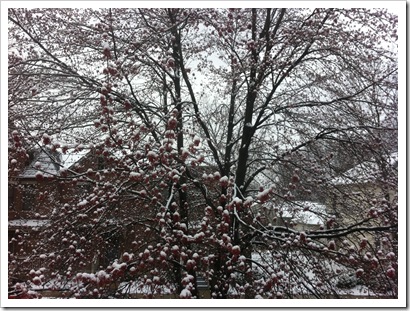

 "That it doesn't strike us at all when we look around us, move about in space, feel our own bodies, shows how natural these things are to us. We do not notice that we see space perspectively or that our visual field is in some sense blurred towards the edges. It doesn't strike us and never can strike us because it is the way we perceive. We never give it a thought and it's impossible we should, since there is nothing that contrasts with the form of our world. What I wanted to say is it's strange that those who ascribe reality only to things and not to our ideas move about so unquestioningly in the world as idea and never long to escape from it."



