Thursday, November 30, 2006

Stirring Performance

A twig of a man sang as he stirred a stream of honey into his tea. His eyes darted around the café and then back to his spoon and steaming paper cup. A great deal of effort went into conveying the absence of self-consciousness. His skinny jeans looked roomy on him. They were rolled into broad cuffs floating just above unlaced black boots. A Burberry plaid ball cap was stuffed into his back pocket and an old thermal shirt spilled out from a tight denim jacket. There was a red bandana tied around his neck.

I tried to make out the lyrics or melody of his song to discern whether he was a manic musician or just manic, but the café chatter and the milk frothing machine drowned out the details. Then he struck up a conversation with a woman pouring cream into her coffee. His voice was deep and there was nothing unusual at all about the even volley of their brief chat. They walked out together, exchanging first names, but I could see how the internal music fueled the delicate and lively movement of his gait, his empty hand held out in front of him like a ballerina’s.


Tuesday, November 28, 2006

Fidelity

Regina Spektor

You're a Bittersweet Classic, Charlie Brown

I heard this great piece on NPR this morning about how A Charlie Brown Christmas almost never made it on the air for the first time in 1965. CBS thought that the jazz didn't mix well with traditional carols, that the voices should be provided by professional child actors, and that the tone and themes were too heavy for kids. It turned out that half of the people watching television across the country that night tuned in to watch.

The composer of the soundtrack, Vince Guaraldi, died unexpectedly of a heart attack in 1976. "He was found in a room at the Red Cottage Inn hotel, relaxing between sets at Butterfield's nightclub in Menlo Park, California. Guaraldi had just finished recording the soundtrack for It's Arbor Day, Charlie Brown earlier that afternoon."

He wasn't around to discover that his music had become modern Christmas classics. A remastered edition of the soundtrack, which has never been out of print, has been released this year.

Monday, November 27, 2006

What's Worth Saving


"[The] question of what's worth saving determines what paintings hang in museums, and I think it also determines a great deal of what our own lives look like. It seems like a vast cultural decision, the casting away of one artist and the canonizing of another, but it actually begins as a very personal choice, when we each privately decide what's worth reading, seeing, remembering, and keeping. And it is only those things that we choose to keep that are allowed to extend across generations and survive us. This is true for works of art, but I think it is also true for every element of our private lives — and it is this choice of what's worth saving that connects us to other people, and becomes the only real link between the living and the dead."

- Dara Horn, from an essay about writing her novel, The World to Come. Listen to her discuss the novel with Michael Silverblatt on KCRW's Bookworm (April 20, 2006).

Not What, but Who

James Baldwin, speaking with Terry Gross on Writers Speak:

The homosexual question is tied up with the whole American idea of masculinity: the whole infantile idea (according to me) and absolutely untrue. To be a man is much more various than the American myth has it. As I myself have lived and I have observed, love is where you find it. Your maturity, I think, is signaled by the depth or extent to which you can accept the dangers and the power and the beauty of love.

...Before I left this country, I had been afflicted with so many labels that I had become invisible to myself. I had to go away to some place to get rid of all these labels and find out not what I was, but who.

...it was a very simple matter for me to say to myself, I’m going this way and only death will stop me, and I’m going to live my life, the only life I have, in the sight of God.

The Artist's Job

"[The artist's] job is not to present merely the external life of his character. He must fit his own human qualities to the life of this other person, and pour into it all of his own soul. The fundamental aim of our art is the creation of this inner life of a human spirit, and its expression in an artistic form."


- Constantin Stanislavsky, An Actor Prepares

Friday, November 24, 2006

Multitudes

Do I contradict myself?

Very well then I contradict myself,
(I am large, I contain multitudes.)


Thursday, November 23, 2006

There's Diversity Within Me

Whoever you may be, when you behold
This odd, misshapen picture which is me
And there is laughter on your lips
Your eyes are flashing with hilarity,
And your whole face is seized by mirth
As you discover yet another monstrous detail
In him who bears the name Vertumnus,
Being thus called in poems of the ancients
And by Apollo’s learned sons;
Unless you clearly see that ugliness
Which makes me beautiful,
You cannot know that there’s a certain
Ugliness more beautiful than any beauty.

There’s diversity within me,
Though despite my diverse aspect, I am one.

That diversity of mine
Renders faithfully and truly
Diverse things just as they are.
Raise your eyebrows now and frown,
Listen hard with concentration,
Lend your ear to what I say
That I may entrust you, friend,
With the secret of new art.

Excerpt from Don Gregorio Comanini’s poem on the Giuseppe Arcimboldo painting of Emperor Rudolf II as Vertumnus, the Roman god of vegitationa and transformation. The portrait was a gift to the emperor after Acrimboldo left Prague to return to his native Milan in 1587.

Barriers

"Your task is not to seek for love, but merely to seek and find all the barriers within yourself that you have built against it."

Tuesday, November 21, 2006

Imagining Happiness

From Happiness: A Guide to Developing Life's Most Important Skill
by Matthieu Ricard

To imagine happiness as the achievement of all our wishes and passions is to confuse the legitimate aspiration to inner fulfillment with a utopia that inevitably leads to frustration.

In affirming that "happiness is the satisfaction of all our desires" in all their "multiplicity," "degree," and "duration," Kant dismisses it from the outset to the realm of the unachievable. When he insists that happiness is the condition of one for whom "everything goes according to his wish and will" we have to wonder about the mystery whereby anything might go according to our wishes and will.

Even if, ideally, the satisfaction of all our desires were achievable, it would lead not to happiness but in the creation of new desires or, just as likely, to indifference, disgust, or even depression. Why depression? If we were to convince ourselves that satisfying all our whims would make us happy, the collapse of that delusion would make us doubt the very existence of happiness.

If I have more than I could possibly need and I am still not happy, happiness must be impossible. That's a good example of how far we can go in fooling ourselves about the causes of happiness. The fact is that without inner peace and wisdom, we have nothing we need to be happy.

The Influence of Strangers

“Tennessee [Williams] didn’t fit comfortably into his own minority, so I had the confidence not to fit either.”


– John Waters, The New York Times (11/17)
Book Review Podcast: An Interview with John Waters

Face Blindness

“They can see your eyes, your nose, your mouth – and still not recognize your face. Now scientists say people with prosopagnosia may help unlock some of the deepest mysteries of the brain.”

- Joshua Davis, writing about prosopagnosia or “face blindness” in Wired

Monday, November 20, 2006

The Tearless and Unblinking Distance

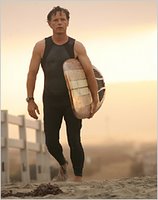
"The difference between a cult and faith is time. I believe that we are a single organism, and that something is at stake in this particular moment...We are going to be doing a story that is on HBO and there are these endearing characters. It is about surfing, but some of the characters levitate...Ostensibly it is about a family of surfers who seem to have become more and more disassociated from themselves and from good surfing. They were all champions, and they are in one way or another alienated, loaded and ascetic...And then a strange guy comes into their life: John from Cincinnati."

"...the look of the show...was informed not by Martin Scorcese or MTV, but by his mentor Robert Penn Warren."

“Have you ever seen moonlight on the Wabash as the diesel rigs boom by? Have you ever wondered how the moonlit continent might look through the tearless and unblinking distance of God’s wide eye,” he quoted Warren over the phone. “I have been working to make sure that the camera is stationed at a tearless and unblinking distance.”

- David Milch discussing his new television series John from Cincinnati with David Carr from The New York Times (11/20/2006)

Iraq in Fragments

"Iraq in Fragments illuminates post-war Iraq in three acts, building a vivid picture of a country pulled in different directions by religion and ethnicity. Filmed in verité style, with no scripted narration, the film power fully explores the lives of ordinary Iraqis: people whose thoughts, beliefs, aspirations, and concerns are at once personal and illustrative of larger issues in Iraq today." (Typecast Pictures)

  • "From 300 hours of material, Mr. Longley has created a collage of images, sounds and characters, an intimate, partial portrait of an unraveling nation -- a portrait that gains power partly by virtue of its incompleteness." A.O. Scott, The New York Times
  • "Alone among the works I've seen and read about Iraq in the last three years, Iraq in Fragments captures the tremendous complexity and variability of the country, offering neither facile hope nor fashionable despair." Andrew O'Hehir, Salon.com

Metacritic Reviews

3,000 Messages Per Day

"Each day, marketers expose Americans to some 12 billion display ads, 3 million radio ads, and more than 300,000 television commercials. The unsolicited electronic junk mail known as spam now constitutes some 10 percent of all worldwide e-mail. The average U.S. consumer receives roughly 1 million marketing messages a year across all media, or about 3,000 messages per day."

- From Net Worth: Shaping Markets When Customers Make the Rules, by John Hagel III and Marc Singer (Harvard Business School Press)

Born to Live

"Man is born to live, not to prepare for life."

- Boris Pasternak

The Bureaucracy of Mass Murder

From Holocaust archive tells many new stories (Arthur Max, Associated Press):

Half a dozen buildings in Bad Arolsen, a German spa town, houses an immense archive of the victims of Nazi persecution. The documents are maintained by the International Tracing Service which is connected to the International Committee of the Red Cross.

The fifty million pages of files include “scraps of paper, transport lists, registration books, labor documents, medical and death registers make reference to 17.5 million individuals caught up in the machinery of persecution, displacement, and death."

To operate history's greatest slaughter, the Nazis created a bureaucracy that meticulously recorded the arrest, movement and death of each victim. What documents survived Nazi attempts to destroy them were collected by the Allies to help people find missing relatives. The first documents were sent in 1946 to Bad Arolsen, and the administration was handed over to the Red Cross in 1955."

Anne Frank is listed among the names of Jews picked up from Amsterdam and transported to concentration camps.

“But most of the lives recorded in Bad Arolsen are known to none but their families. They are people like Cornelis Marinus Brouwenstijn, a Dutchman who vanished into the Nazi gulag at age 22 for illegally possessing a radio. In a plain manila envelope are his photo, a wallet, some snapshots, and a naughty typewritten joke about women in the army.”

"Over the years, the International Tracing Service has answered 11 million requests to locate family members or provide certificates supporting pension claims or reparations. It says it has a 56 percent rate of success in tracing the requested name. But the workload has been overwhelming. Two years ago it had a backlog of nearly half a million unanswered queries. Director Blondel says the number was whittled down to 155,000 this summer and will disappear by the spring of 2008. New queries have slowed to just 700 a month."

“Compounding the delay in releasing the files is the cumbrous makeup of the governing committee. Any decision on their future requires the assent of all 11 member nations — Belgium, Britain, France, Germany, Greece, Israel, Italy, Luxembourg, the Netherlands, Poland and the United States.”

Archivist Sabine Stein: "Former inmates and their families want to see some tangible part of their history; they want to tell their stories. What I find most frustrating is that they have all these documents and they are just sitting on them."

Paul Shapiro, of the
U.S. Holocaust Memorial Museum in Washington:"What victims of these crimes fear the most is that when they disappear — and it's happening very fast now — no one will remember the names of the families they lost.”

PS This post has been conjuring up images of Anselm Kiefer's lead books (Zweistromland, Buch mit Flügeln).

Sunday, November 19, 2006

Free Running vs. Parkour

The opening scene in the new James Bond movie, Casino Royale, reminded me of a video clip of a kid scaling buildings and doing diving flips off them then immediately getting back up to run off in search of more obstacles. It turns out there are a couple of terms describing this activity. They started out as synonymous, but have parted ways based on intent.

  • Free running uses acrobatic moves to respond with buildings and their environment in an emphasis on asthetics and athletics.
  • Parkour is more about being able to quickly escape and evade pursuers using free running techniques to access the inaccessible.

Bond is obviously interested in parkour, but jump over the first two minutes of this clip to get a taste of free running:


Saturday, November 18, 2006

Strange Conversation

Kris Delmhorst was inspired by the work of well-known poets (Walt Whitman, Robert Browning, E.E. Cummings, Lord Byron, George Eliot and Edna St. Vincent Millay, etc.) to compose the songs on her latest album, Strange Conversation. "Some of the poems are set verbatim to music, some dismantled and reassembled in significantly new renditions, others merely used as the jumping-off point for Delmhorst's own literate lyrical take."

Excerpt from From Light of the Light
lyrics adapted from: Walt Whitman, "A Passage to India"

O my soul.
Steer us to uncharted waters, hoist the anchor, shake out every sail.
My brave soul.
If they’re all the seas of heaven
Why should we not go where all maps fail?

Everything is Music
lyrics adapted from Rumi, "Where Everything Is Music"

We've come to the place where everything is music
Everything is music, let it play.

Why do you stay in jail when the door is wide open?
Let the beauty that you love be what you do.

Stop talking now, open up the window
The one right there in the middle of your heart
Give us your hands, sit down in this circle
You know you got no need to keep yourself apart

Today you wake up sad and empty, don't go back to sleep.
There's a million ways to kneel and kiss the ground.

Don't worry now, about saving all these songs,
There's so many more just waiting to be found.
And if all these instruments should disappear
We would still hear something coming up from way down in the ground

Because we've come to the place where everything is music
Everything is music, let it play.

NPR interview from November 16, 2006 (thanks rrobinson)

Friday, November 17, 2006

Authority

I once found myself unable to smooth talk a delusional old man into returning to the psychiatric hospital after learning that he'd left against medical advice. He had spent the past several days lying on his couch in the same immodest turquoise gown they had given him and that he'd walked home in. There was a piece of tape on one forearm from the IV they'd used to rehydrate him.

He was so entranced by voices and grand ideas that he only got up to snack on leftover KFC mashed potatoes and gravy from the fridge. He had lost interest in his usual pastimes: composing poetry (Martin Luther King Jr. is a hell of a man,/I’m not fit to kiss that man’s shoes) and sticking Hustler Magazine pages to his walls with paste he made himself out of flour and water.

He was not taking his medications or washing himself or his clothes. None of my usual strategies were working. When he finally chased me out of his subsidized apartment brandishing a plastic spoon yelling, “If you don’t get out of here, I’m going to stuff these potatoes up your ass,” the only choice was to call for an ambulance.

Our problem wasn’t a big priority since he could probably stay alive indefinitely with this set of symptoms. I sat waiting on the hallway stairs while I rescheduled appointments and caught up on paperwork. When two firemen arrived, I reviewed the situation with them. They seemed bored by the abundance of healthy vital signs. One of them said to him, “Sir, why don’t you let your case manager drive you over to the hospital?”

He paused, turning his face away to consider the idea, then said, “Okay.”

As we pulled away, he waved good-bye to the men like a little boy after visiting a pilot in an airplane cockpit. I could sense their pity for him that I didn’t try asking him nicely to begin with, not realizing that it was their uniforms that had sealed the deal.