Showing posts with label Ray Bradbury. Show all posts

Tuesday, March 22, 2011

Experimenting with Forms

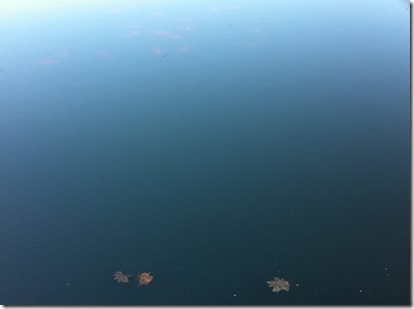
Japanese Garden, Dawes Arboretum (March 19, 2011)

“We are the miracle of force and matter making itself over into imagination and will. Incredible. The Life Force experimenting with forms. You for one. Me for another. The Universe has shouted itself alive. We are one of the shouts.”

~ Ray Bradbury

Tuesday, September 14, 2010

Don’t Look to Be Saved

Volkszählung (Census), by Anselm Kiefer, 1991“The books are to remind us what asses and fools we are. They're Caesar's praetorian guard, whispering as the parade roars down the avenue, 'Remember, Caesar, thou art mortal.' Most of us can't rush around, talk to everyone, know all the cities of the world, we haven't time, money or that many friends. The things you're looking for…are in the world, but the only way the average chap will ever see ninety-nine per cent of them is in a book. Don't ask for guarantees. And don't look to be saved in any one thing, person, machine, or library. Do your own bit of saving, and if you drown, at least die knowing you were headed for shore.”

~ From Fahrenheit 451 by Ray Bradbury

Saturday, January 23, 2010

Remain Warm among Ice

From Moby-Dick, by Herman Melville:

The Fossil Whale, Frank Stella For the whale is indeed wrapt up in his blubber as in a real blanket or counterpane; or, still better, an Indian poncho slipt over his head, and skirting his extremity. It is by reason of this cosy blanketing of his body, that the whale is enabled to keep himself comfortable in all weathers, in all seas, times, and tides. What would become of a Greenland whale, say, in those shuddering, icy seas of the north, if unsupplied with his cosy surtout? True, other fish are found exceedingly brisk in those Hyperborean waters; but these, be it observed, are your cold-blooded, lungless fish, whose very bellies are refrigerators; creatures, that warm themselves under the lee of an iceberg, as a traveller in winter would bask before an inn fire; whereas, like man, the whale has lungs and warm blood. Freeze his blood, and he dies. How wonderful is it then — except after explanation — that this great monster, to whom corporeal warmth is as indispensable as it is to man; how wonderful that he should be found at home, immersed to his lips for life in those Arctic waters! where, when seamen fall overboard, they are sometimes found, months afterwards, perpendicularly frozen into the hearts of fields of ice, as a fly is found glued in amber. But more surprising is it to know, as has been proved by experiment, that the blood of a Polar whale is warmer than that of a Borneo native in summer.

It does seem to me, that herein we see the rare virtue of a strong individual vitality, and the rare virtue of thick walls, and the rare virtue of interior spaciousness. Oh, man! admire and model thyself after the whale! Do thou, too, remain warm among ice. Do thou, too, live in this world without being of it. Be cool at the equator; keep thy blood fluid at the Pole. Like the great dome of St. Peter's, and like the great whale, retain, O man! in all seasons a temperature of thine own.

[Check out Kurt Anderson’s Peabody Award winning episode of 360 in which he sails into the icy waters in search of Melville’s white whale with the help of Laurie Anderson, Stanley Crouch, David Ives, Elizabeth Schultz, Tony Kushner, Frank Stella, and Ray Bradbury.]

Sunday, March 16, 2008

Ghost against Ghost

"The fact is simple enough. Through a lifetime, by ingesting food and water, we build cells, we grow, we become larger and more substantial. That which was not, is. The process is undetectable. It can be viewed only at intervals along the way. We know it is happening, but we don't know quite how or why.
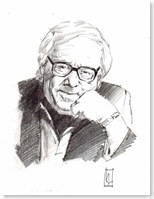
bradbury "Similarly, in a lifetime, we stuff ourselves with sounds, sights, smells, tastes and textures of people, animals, landscapes, events, large and small. We stuff ourselves with these impressions and experiences and our reactions to them. Into our subconscious goes not only factual data but reactive data, our movement toward or away from the sensed events.

"These are the stuffs, the foods, on which the Muse grows. This is the storehouse, the file, to which we must return every waking hour to check reality against memory, and in sleep to check memory against memory, which means ghost against ghost, in order to exorcise them, if necessary.

"What is the subconscious to every other man, in its creative aspect becomes, for writers, the Muse. They are two names for one thing. But no matter what we call it, here is the core of the individual we pretend to extol, to whom we build shrines and hold lip services in our democratic society. For it is in the totality of experience reckoned with, filed and forgotten, that each man is truly different from all others in the world."

...

"Read poetry every day of your life. Poetry is good because it flexes muscles you don't use often enough. Poetry expands the senses and keeps them in prime condition. It keeps you aware of your nose, your eye, your ear, your tongue, your hand. And, above all, poetry is compacted metaphor or simile. Such metaphors, like Japanese paper flowers, may expand outward into gigantic shapes. Ideas lie everywhere through the poetry books, yet how rarely have I heard short-story teachers recommending them for browsing...

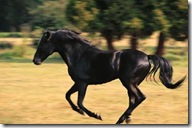
"What poetry? Any poetry that makes your hair stand up along your arms. Don't force yourself too hard. Take it easy. Over the years you may catch up to, horsemove even with, and pass T.S. Eliot on your way to other pastures. You say you don't understand Dylan Thomas? Yes, but your ganglion does, and your secret wits, and all your unborn children. Read him, as you read a horse with your eyes, set free and charging over and endless green meadow on a windy day."
-- Ray Bradbury, "How to Keep and Feed the Muse," The Writer Magazine (April 2008), reprinted from 1961.

Wednesday, October 25, 2006

How You See It

"The people there were gods and midgets and knew themselves mortal and so the midgets walked tall so as not to embarrass the gods and the gods crouched so as to make the small ones feel at home. And, after all, isn't that what life is all about, the ability to go around back and come up inside other people's heads to look out at the damned fool miracle and say: oh, so that's how you see it!? Well, now, I must remember that."

- Ray Bradbury, from the introduction to Dandelion Wine