Showing posts with label reading. Show all posts

Sunday, February 27, 2011

Web Freedom isn’t Free

From “Living Singles,” by Virginia Heffernan, New York Times Sunday Magazine, Feb. 27, 2011:

The market for narrative nonfiction shrank not because people got dumber or lost their attention spans; narrative nonfiction, like so many 20th-century forms, fell on hard times when the Web came along, and readers stopped paying for content…

…When the iPhone first appeared, followed by the Kindle and then the iPad, it became clear that e-books and apps provided a way to siphon the resources of the Internet to individuals, who could now sample that energy without having to be vulnerable to the Web’s commercialism. That was an enormous breakthrough. Anyone who’s honest with herself knows that the Web stopped being a great place for consumers of culture a year or two ago. You think you’re reading the Web these days, but it’s reading you — gathering data on you, trying to sell you stuff, pushing you to other links. On the Web, reading is shopping. And sometimes you don’t want to shop.

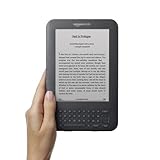
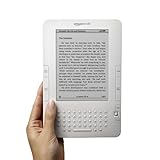
kindle-coffee The Kindle in particular brought me the first moment of peace from Web noise that I’d had in a long time. True, I thought I loved the Web noise when the only alternative was to recede into analog culture — but I have adored the silence I’ve found on the Kindle.

I never thought I’d back off the Web, but I have. The once-glorious freedom of the Web was not free. Its price is a bone-deep commercialism that cannot yet be circumvented. For convenience, comprehensiveness and social life, I still visit, but now I see these visits as at least as risky and irritating as they are liberating and exhilarating.

Read the whole essay here…

PS I’ve really enjoyed this column and am sad to see it go. Visit ArtsBeat to keep an eye on Virginia Heffernan’s eyewitness traffic reports from the intersection of media and technology.

Saturday, February 12, 2011

Poetry Deal Breakers

A response from Billy Collins to the question, Could you say a little about the deal breakers that keep you from reading a poem?

“Well, the word cicada. I won’t tolerate that. I’m just sick of them. So if I’m reading a poem and I come across the word cicada, I stop. Deal breaker. That’s it. I mean, that’s one easy one to answer.

I guess other poems that I tend not to finish are poems that exhibit a kind of presumptuousness in that the first couple of lines, I feel like I’m suddenly in an ambulance with someone and he or she is being taken to the psychiatric ward and is telling me about some inner psychic terror that their suffering from without having really introduced themselves. And that seems to be a form of kind of psychological bad manners.

I appreciate poems that are clear and then mysterious. I think poems that work for me are poems in which a writer really appreciates and understands the difference between what to be clear about and what to be mysterious about. So what cards to turn over and what cards to leave face down. And if you leave all the cards face down—I mean some poems read that way to me—there’s really no game. It’s just kind of fifty-two bits of obscurity. And if you turn them all over, it’s just too obvious. So I think the manipulation of the clear and the mysterious, in the right way, are deal makers for me.”   

From Billy Collins Live: A Performance at the Peter Norton Symphony Space, April 20, 2005

Saturday, January 29, 2011

The Love of Strangers

“A poet writes always of his personal life, in his finest work out of its tragedies, whatever it be, remorse, lost love or mere loneliness; he never speaks directly as to someone at the breakfast table.”

~ William Butler Yeats, from A General Introduction for My Work

Billy Collins, from “Dear Reader,” a reading and lecture delivered at the Key West Literary Seminar:

A friend of mine was walking along Madison Avenue, let’s say, with the New Yorker writer Roger Angell, one of the great sports writers of America…Someone recognized Angell  and stopped him and began to flatter him about his writing and tell him what a great writer he was. Then my friend and Angell continued to talk…Angell said to my friend, “That’s what it’s all about.”

“What do you mean?”

“That’s what writing is all about.”

“What?”

“The love of strangers.”

Which is a sort of neuroses. Most people are satisfied with the love of people around them, although that love tends to be insufficient at most times. Whereas writers tend to court the love of total strangers and I am probably more guilty than anybody. I tend to begin each of my books with a prefatory poem that’s actually addressed to the reader. It’s my way of acknowledging the presence of the reader.

As I’m reading contemporary poetry, they tend to fall into two categories which are sort of indefinable. In one category, I feel that the poet is aware of my presence and in the other I feel that an act of typewriting or someone is committing an act of literature oblivious to my participation in it.

You might call these two kinds dogs and cats. Dogs are really interested in people, as you know, whereas cats are much more self-referential…I think of the poem as a social encounter.

Jorge Luis Borges writes:

braeburnpage The taste of the apple  lies in the contact of the fruit with the palate, not in the fruit itself; in a similar way (I would say) poetry lies in the meeting of the poem and the reader, not in the lines of symbols printed on the pages of a book. What is essential is the aesthetic act, the thrill, the almost physical emotion with each reading.


Dear Reader
by Billy Collins, from Picnic, Lightning

Every morning I sit across from you
at the same small table,
the sun all over the breakfast things—
curve of a blue-and-white pitcher,
a dish of berries—
me in a sweatshirt or robe,
you invisible.

Most days, we are suspended
over a deep pool of silence.
I stare straight through you
or look out the window at the garden,
the powerful sky,
a cloud passing behind a tree.

There is no need to pass the toast,
the pot of jam,
or pour you a cup of tea,
and I can hide behind the paper,
rotate in its drum of calamitous news.

But some days I may notice
a little door swinging open
in the morning air,
and maybe the tea leaves
of some dream will be stuck
to the china slope of the hour—

then I will lean forward,
elbows on the table,
with something to tell you,
and you will look up, as always,
your spoon dripping milk, ready to listen.

james-dean-breakfast-2

Saturday, December 04, 2010

A Long, Hard Slog

Lessons from General Grant,” by Francis Wilkinson, The Week, November 26, 2010:

I'm a tragically slow reader, so I choose my books carefully. Lately, I've been reading the memoirs of U.S. Grant, albeit at a tortoise pace that makes my typical slow motion look like an Evelyn Wood demo. I've kept the book bedside for a couple years now, and still Appomattox is nowhere in sight. I move through chapters like heavy artillery through mud.

Yet the pace suits me — and the material. The war was a long, hard slog. And Grant's reflections have such resonance that I keep putting the book down to listen to the echoes. The fight against Mexico in 1846, Grant laments, was a "political" war waged on a false premise. Has a contemporary ring, doesn't it? The general who presided over the greatest destruction of American life in history — more than 600,000 soldiers on both sides died — also surprises with compassion. Contemptuous of slavery and committed to crushing the rebellion, Grant nonetheless has an ample soft spot for the enemy, taking risks to protect his foes' dignity. When Grant is ordered to handle rebels "without gloves" — including evicting Southern civilians from their homes and arresting them — he simply ignores the command. In fact, he fails to make a single arrest, having "deemed it better that a few guilty men should escape than that a great many innocent ones should suffer." It’s hard to resist projecting this thoughtful, anguished titan — a civil libertarian up to his epaulets in carnage — into the era of Guantánamo and Abu Ghraib. Grant didn't shrink from violence, but he didn't surrender principle, either. He did his duty, and he won. I peeked at the ending.

Tuesday, October 26, 2010

Can’t Read if We Don’t Teach Them


Lyrics from Shine
by John Legend, for the documentary Waiting for “Superman”

So dark, but I see sparks, if we don't snuff them out.
We gotta let them flame, let them speak their name.
Let them reach up to the clouds.
Can't eat if we don't feed them.
Can't read if we don't teach them.
There's no line if we just hide them.
Don't just let them die.

Let them shine.
Let them shine on.
Let them shine.
Let them shine on.

Stars flicker in the distance, lonely out in space.
They sing out when we're not listening, because we don't see their face.
We can let them die, we can make them high.
Hold the little miracles that live inside.
Let them shine.

Tuesday, September 14, 2010

Don’t Look to Be Saved

Volkszählung (Census), by Anselm Kiefer, 1991“The books are to remind us what asses and fools we are. They're Caesar's praetorian guard, whispering as the parade roars down the avenue, 'Remember, Caesar, thou art mortal.' Most of us can't rush around, talk to everyone, know all the cities of the world, we haven't time, money or that many friends. The things you're looking for…are in the world, but the only way the average chap will ever see ninety-nine per cent of them is in a book. Don't ask for guarantees. And don't look to be saved in any one thing, person, machine, or library. Do your own bit of saving, and if you drown, at least die knowing you were headed for shore.”

~ From Fahrenheit 451 by Ray Bradbury

Monday, August 02, 2010

An Endless Stream

"Sometimes technology outpaces humanity's ability to process it. I think that's where we are right now. My mind has been sliced and diced in so many ways. There's so many packets of information coming at me... It's just shocking: how is literature supposed to survive when our brain has been pummeled with information all day long at work — if we're white collar workers. When we go home, are we really going to open a thick text with 350 pages and try to waddle through it?…Here's the thing with this new technology. I think it's incredibly effective. I just don't think it's made anyone much happier. If anything, we are now always connected but we don't know what we're connected to. It's just an endless stream of information."

~ Gary Shteyngart, author of Super Sad True Love Story, talking to Terry Gross on Fresh Air (August 2, 2010).

Friday, June 25, 2010

Stepping Stones

Stepping Stones Crossing the River Duddon to Seathwaite

"Some people spend their entire lives reading but never get beyond reading the words on the page, they don’t understand that the words are merely stepping stones placed across a fast-flowing river, and the reason they’re there is so that we can reach the farther shore, it’s the other side that matters.”

José Saramago

Thursday, June 24, 2010

No Other Meaning

The House Was Quiet And The World Was Calm
by Wallace Stevens, from Harmonium

The house was quiet and the world was calm.
The reader became the book; and summer night

Was like the conscious being of the book.
The house was quiet and the world was calm.

The words were spoken as if there was no book,
Except that the reader leaned above the page,

Wanted to lean, wanted much to be
The scholar to whom his book is true, to whom

The summer night is like a perfection of thought.
The house was quiet because it had to be.

The quiet was part of the meaning, part of the mind:
The access of perfection to the page.

And the world was calm. The truth in a calm world,
In which there is no other meaning, itself

Is calm, itself is summer and night, itself
Is the reader leaning late and reading there.

[Thanks Mark!]

Monday, March 22, 2010

A Global Water Cooler

Excerpt from “Texts Without Context,” by Michiko Kakutani, New York Times (March 17, 2010):

Today's technology has bestowed miracles of access and convenience upon millions of people, and it’s also proven to be a vital new means of communication. Twitter has been used by Iranian dissidents; text messaging and social networking Web sites have been used to help coordinate humanitarian aid in Haiti; YouTube has been used by professors to teach math and chemistry. But technology is also turning us into a global water-cooler culture, with millions of people sending each other (via e-mail, text messages, tweets, YouTube links) gossip, rumors and the sort of amusing-entertaining-weird anecdotes and photographs they might once have shared with pals over a coffee break. And in an effort to collect valuable eyeballs and clicks, media outlets are increasingly pandering to that impulse — often at the expense of hard news. “I have the theory that news is now driven not by editors who know anything,” the comedian and commentator Bill Maher recently observed. “I think it’s driven by people who are” slacking off at work and “surfing the Internet.” He added, “It’s like a country run by ‘America’s Funniest Home Videos.’ ”

Friday, March 12, 2010

The Most Fruitful Type of Mind Wandering

Excerpt from “Stop Paying Attention: Zoning Out Is a Crucial Mental State,” by Carl Zimmer, Discover (June 2009):

When our minds wander, we lose touch with the outside world. We don’t actually black out, of course, but we are more likely to make mistakes, fail to encode memories, or miss a connection. Zoning out makes us particularly prone to these errors. Schooler and Smallwood, along with Merrill McSpadden of the University of British Columbia, tested the effect of zoning out by having a test group read a Sherlock Holmes mystery in which a villain used a pseudonym. As people were reading the passages discussing this fact, the researchers checked their state of attentiveness. Just 30 percent of the people who were zoning out at the key moments could give the villain’s pseudonym, while 61 percent of the people who weren’t zoning out at those moments succeeded.

These results are shocking when you stop to think about them. Each of us has a magnificent hive of billions of neurons in our head, joined to each other by trillions of connections. The human brain is arguably the most complex organ in the natural world. And yet studies on mind wandering are showing that we find it difficult to stay focused for more than a few minutes on even the easiest tasks, despite the fact that we make mistakes whenever we drift away.

The fact that both of these important brain networks become active together suggests that mind wandering is not useless mental static. Instead, Schooler proposes, mind wandering allows us to work through some important thinking. Our brains process information to reach goals, but some of those goals are immediate while others are distant. Somehow we have evolved a way to switch between handling the here and now and contemplating long-term objectives. It may be no coincidence that most of the thoughts that people have during mind wandering have to do with the future.

Even more telling is the discovery that zoning out may be the most fruitful type of mind wandering. In their fMRI study, Schooler and his colleagues found that the default network and executive control systems are even more active during zoning out than they are during the less extreme mind wandering with awareness. When we are no longer even aware that our minds are wandering, we may be able to think most deeply about the big picture.

More…

[See also: Shinzen Young’s Focus Out strategy]

Thursday, March 11, 2010

A Journey into Worthy Perception

Barry Hannah

"Reading and writing train our people for logic, grace, and precision of thought, and begin a lifelong study of the exceptional in human existence. I think literature is the history of the soul. Writing should be a journey into worthy perception."

~ Barry Hannah, who died last week at his home in Mississippi

[Thanks Jonathan Carroll!]

Monday, February 22, 2010

To Map Out the World

Art Spiegelman and Francoise Mouly discussing The Toon Treasury of Classic Children’s Comics with Michael Silverblatt on KCRW’s Bookworm (February 4, 2010).

Francoise Mouly: Kids aren’t necessarily — the way we imagine they might be — looking for escape and fantasy. Actually, the seven year old, the eight year old, is eager for a way to map out information — to map out the world. And that’s part of the reason why comics appeal to them. Because they are a very instinctive way to structure information…As Art has often referred to it, it’s a story made manifest spatially. You have a very instinctive way to understand narratives and to understand character’s emotion…It gives you cues. It is in and of itself a medium that kids can use to understand all other kinds of visual information – much more than watching television or playing video games…They can go back to the same story and read it over and over again. And also because it’s done by one person — it’s drawn by hand — it inspires them to want to make comics.

Art Spiegelman: What makes this a real treasury rather than just a bunch of product put together in four hundred pages of offering [is that] so much of this is written and drawn by the same person…And here when we’re looking at Walt Kelly and Sheldon Mayer and, to a degree, John Stanley and certainly Carl Barks, they were really able to enter and make a whole world themselves. Really act it out, draw it, and write it. So you’re really throbbing inside one person’s brain. And to have that many brains presenting fully realized worlds, you feel it when you’re looking through these stories. They have a kind of urgency in their own way…These characters are a lot more complex than Spider Man. Little Lulu is so much more richer than Peter Parker.

Tuesday, February 16, 2010

To Find Another Way

From “Kindle Armageddon: How the Publishing Industry Is Slitting Its Own Throat,” by Dan Agin, Huffington Post (Feb. 14, 2009):

“Once upon a time, the only books that existed were books copied by hand by monks and scribes and sold to the very rich for the equivalent of $5000 or $6000 a book. Then along came the printing press, and all the monks and scribes had to find another way to earn their bread.

Once upon a time the only books that existed were books on paper made by printing presses and sold to the rich and not so rich and not rich at all for enough money to make publishing houses worth hundreds of millions of dollars, enough money to pay high salaries to publishing executives. Then along came the digital book, and many thousands of people in and around publishing had to find another way to earn their bread.

The subtext of the story is the impact of technology on culture and commerce, and the unfailing collapse of any industry that allows itself to be blinded by sloth, short term greed, and general mediocrity of attitudes.”

More…

[Thanks Kit!]

Saturday, October 24, 2009

Reading

"The main effort of arranging your life should be to progressively reduce the amount of time required to decently maintain yourself so that you can have all the time you want for reading."

~ Norman Rush

Sunday, September 06, 2009

Seasoned Advice for New College Students

Excerpts from “College Advice, From People Who Have Been There Awhile,” Week in Review, New York Times (September 6, 2009):

Stanley Fish Stanley Fish (teaching since 1962): I would advise students to take a composition course even if they have tested out of it. I have taught many students whose SAT scores exempted them from the writing requirement, but a disheartening number of them couldn’t write and an equal number had never been asked to. They managed to get through high-school without learning how to write a clean English sentence, and if you can’t do that you can’t do anything.

I give this advice with some trepidation because too many writing courses today teach everything but the craft of writing and are instead the vehicles of the instructor’s social and political obsessions. In the face of what I consider a dereliction of pedagogical duty, I can say only, “Buyer beware.” If your writing instructor isn’t teaching writing, get out of that class and find someone who is.

Martha Nussbaum Martha Nussbaum (teaching since 1975): It’s easy to think that college classes are mainly about preparing you for a job. But remember: this may be the one time in your life when you have a chance to think about the whole of your life, not just your job. Courses in the humanities, in particular, often seem impractical, but they are vital, because they stretch your imagination and challenge your mind to become more responsive, more critical, bigger. You need resources to prevent your mind from becoming narrower and more routinized in later life. This is your chance to get them.

Gary Wills Garry Wills (teaching since 1962): Read, read, read. Students ask me how to become a writer, and I ask them who is their favorite author. If they have none, they have no love of words.

Friday, June 19, 2009

Inspirational Reading

From “Some Thoughts on the Lost Art of Reading Aloud,” by Verlyn Klinkenborg, New York Times (May 16, 2009):

Reading aloud recaptures the physicality of words. To read with your lungs and diaphragm, with your tongue and lips, is very different than reading with your eyes alone. The language becomes a part of the body, which is why there is always a curious tenderness, almost an erotic quality, in those 18th- and 19th-century literary scenes where a book is being read aloud in mixed company. The words are not mere words. They are the breath and mind, perhaps even the soul, of the person who is reading.

…I read aloud to my writing students, and when students read aloud to me I notice something odd. They are smart and literate, and most of them had parents who read to them as children. But when students read aloud at first, I notice that they are trying to read the meaning of the words. If the work is their own, they are usually trying to read the intention of the writer.

It’s as though they’re reading what the words represent rather than the words themselves. What gets lost is the inner voice of the prose, the life of the language. This is reflected in their writing, too, at first.

[Thanks Kit!]

Sunday, January 04, 2009

A Modest Proposal for the Publishing Industry

From “The Plot Curdles,” by Julian Gough (New York Times, 1.4.09):

As we all know, lax writing practices earlier this decade led to irresponsible writing and irresponsible reading. This simply put too many families into books they could not finish. We are seeing the impact on readers and neighborhoods, with five million Americans now behind on their reading. Some are just walking away from novels they should never have been reading in the first place. What began as a subprime reading problem has spread to other, less-risky readers and contributed to excess inventories.

These troubled novels are now parked, or frozen, on the shelves of libraries, bookstores and other reading institutions, preventing these institutions from financing readable novels. The normal buying and selling of nearly all types of literature has become challenged.

The role of the ratings agencies cannot be overlooked in creating this crisis. The Pulitzer, Booker and National Book Foundation committees continued to award top ratings to these novels, even as unread copies piled up all over America.

These unreadable novels are clogging up our literary system, and undermining the strength of our otherwise sound literary institutions. As a result, Americans’ personal libraries are threatened, and the ability of readers to borrow, and of libraries to lend, has been disrupted.

[Read responsibly on…]

Thursday, October 30, 2008

Ball of Light

"Man reading should be man intensely alive. The book should be a ball of light in one's hand."

~ Ezra Pound

Monday, August 25, 2008

Flesh and Blood and Soul and Feeling

Walking a Literary Labyrinth "I can hardly conceive how limited my perception would be without the books I have been privileged to read, how superficial my understanding of others, how undeveloped my sympathies. And I mean here, especially, without fiction, which puts flesh and blood on, and the soul and feeling in, other human beings. Precisely because if its appeal to my imagination, which Webster's dictionary defines as 'the act or power of forming a mental image of something not present to the senses or never before wholly perceived in reality,' in fiction I come to know and understand people I may not have met otherwise. And thus I am persuaded to a more compassionate, generous, and loving response in my life beyond books."

~ Nancy M. Malone, from Walking a Literary Labyrinth

[Thanks Kit!]