


Why It Takes All Day

~ John McPhee, discussing his writing process and his new collection of essays, Silk Parachute, with Michael Silverblatt on KCRW’s Bookworm (March 18, 2010).



~ John McPhee, discussing his writing process and his new collection of essays, Silk Parachute, with Michael Silverblatt on KCRW’s Bookworm (March 18, 2010).
Jonathan Lethem, discussing his most recent novel, Chronic City, with Michael Silverblatt on KCRW’s Bookworm (January 28, 2010):
“I was very interested in thinking about the condition of an actor, someone who’s learned to operate within scripts that are handed to them — whether the scripts are worth anything or not. It seemed to me that, in a way, stood for the problem of a lot of us as we get through our days. The scripts right now aren’t very good, but we don’t know how to step outside them very readily or at all.”
* * *
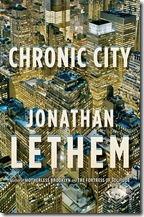
Every day you open the newspaper and you find another allegory that would’ve made Karl Marx’s jaw drop — or Roland Barthes’s jaw drop. And yet we all go on reading that newspaper. We all go on moving through our days and this is the subject of the book: what we do instead, what we think about, and how we behave in the absence of that conversation. When everything is as exaggerated and hysterically out of whack and yet somehow the machine tumbles forward day-to-day. We wake up and take our positions inside it. Well, that’s an interesting subject and an elusive one. The social satire is not elusive at all.
All you have to do is take it to the ultimate degree and then you’ve got John Carpenter’s They Live or Idiocracy. Then you’ve said it as stridently as you possibly can. You’ve made the cartoon of reality into a cartoon and then it can be shrugged off again. I was trying not to shrug it off. I was trying to inhabit it with these characters. It’s the fact that we all live in a situation that is patently absurd in many ways and yet we we have no opportunity to take it lightly. We’re living real lives. It’s tragic…I don’t mean to fall into the trap of saying there can be a non-ideological space, but you do the best you can. You meet what’s before you. You try to solve the cartoon conundrums that come your way with as much real sincerity as you can bring to them. ”
Art Spiegelman and Francoise Mouly discussing The Toon Treasury of Classic Children’s Comics with Michael Silverblatt on KCRW’s Bookworm (February 4, 2010).

Art Spiegelman: What makes this a real treasury rather than just a bunch of product put together in four hundred pages of offering [is that] so much of this is written and drawn by the same person…And here when we’re looking at Walt Kelly and Sheldon Mayer and, to a degree, John Stanley and certainly Carl Barks, they were really able to enter and make a whole world themselves. Really act it out, draw it, and write it. So you’re really throbbing inside one person’s brain. And to have that many brains presenting fully realized worlds, you feel it when you’re looking through these stories. They have a kind of urgency in their own way…These characters are a lot more complex than Spider Man. Little Lulu is so much more richer than Peter Parker.
Trouble
by Matthew Dickman, from All-American Poem
Marilyn Monroe took all her sleeping pills
to bed when she was thirty-six, and Marlon Brando’s daughter
hung in the Tahitian bedroom
of her mother’s house,
while Stanley Adams shot himself in the head. Sometimes
you can look at the clouds or the trees
and they look nothing like clouds or trees or the sky or the ground.
The performance artist Kathy Change
set herself on fire while Bing Crosby’s sons shot themselves
out of the music industry forever.
I sometimes wonder about the inner lives of polar bears. The French
philosopher Gilles Deleuze jumped
from an apartment window into the world
and then out of it. Peg Entwistle, an actress with no lead roles, leaped from the “H” in the HOLLYWOOD sign
when everything looked black and white
and David O. Selznick was king, circa 1932. Ernest Hemingway
put a shotgun to his head in Ketchum, Idaho
while his granddaughter, a model and actress, climbed the family tree
and overdosed on phenobarbital. My brother opened thirteen fentanyl patches and stuck them on his body
until it wasn’t his body anymore. I like
the way geese sound above the river. I like
the little soaps you find in hotel bathrooms because they’re beautiful.
Sarah Kane hanged herself, Harold Pinter
brought her roses when she was still alive,
and Louis Lingg, the German anarchist, lit a cap of dynamite
in his own mouth
though it took six hours for him
to die, 1887. Ludwig II of Bavaria drowned
and so did Hart Crane, John Berryman, and Virginia Woolf. If you are
traveling, you should always bring a book to read, especially
on a train. Andrew Martinez the nude activist, died
in prison, naked, a bag
around his head, while in 1815 the Polish aristocrat and writer
Jan Potocki shot himself with a silver bullet.
Sara Teasdale swallowed a bottle of blues
after drawing a hot bath,
in which dozens of Roman senators opened their veins beneath the water.
Larry Walters became famous
for flying in a Sears patio chair and forty-five helium-filled weather balloons. He reached an altitude of 16,000 feet
and then he landed. He was a man who flew.
He shot himself in the heart. In the morning I get out of bed, I brush
my teeth, I wash my face, I get dressed in the clothes I like best.
I want to be good to myself.
KCRW Bookworm (June 25, 2009)

Daron Larson
Freelance Contemplative


