Thursday, October 22, 2009

What Has the Fighting Been For?

“I am here today because of a conversation I had last June when I was voting. A woman at my polling place asked me, ‘Do you believe in equality for gay and lesbian people?’ I was pretty surprised to be asked a question like that. It made no sense to me. Finally I asked her, ‘What do you think our boys fought for at Omaha Beach?’ I have seen much, so much blood and guts, so much suffering, so much sacrifice. For what? For freedom and equality. These are the values that give America a great nation, one worth dying for.”

~ Philip Spooner, Republican and World War II veteran speaking to Maine's Judiciary Committee in April 2009.

Read more at: Philip Spooner VIDEO: WWII Veteran Makes Case For Gay Marriage

[Thanks David!]

An Integrated System

Author and UCLA psychology professor Dan Siegel in conversation with Tami Simon on the topic “What Makes the Mind Healthy,” Sounds True: Insights at the Edge (October 6, 2009):

It turns out that when a complex system moves across time, it has something called a self-organizing process that tends to move it toward what is called maximizing complexity...If you imagine a choir where you have everybody sing the note the exact same way, it has this kind of dullness and rigidity to it. There is no differentiation. They are totally linked, the singers, but not differentiated. Then you have them close their ears, where they belt out a song as loudly as they can but they’d hear each other sing. The song is random. They pick whatever they feel like. There is total differentiation and zero linkage. It is cacophony. It is chaos. Then you have them open their ears, get together, and say to them, sing whatever you want. And amazingly, they will pick a song that they sing in harmony, where there will be intervals that each of the individual singers is expressing his or her identity, yet they are linking together in this familiar common song. And everyone has their inner singer and listener alike. And there is a feeling of incredible vitality, of fluidity and flexibility...

So in terms of integration, this differentiation of parts that then become linked, the linkage of specialized parts of a system, that is what allows you to move in a harmonious path. In complexity terms, you maximize complexity, but we can drop that term because it doesn’t make intuitive sense and just use the word harmony. So when a complex system is linking differentiated parts, it becomes harmonious and adaptive. So the interpersonal neurobiology view of health is basically integration. It is that simple. And it is that profound.

Because when you have learned to monitor energy and information flow, you can then take the pulse of where your life has rigidity in it, like when you have repeated habits that you feel imprisoned by or thoughts that keep on going over and over in your head, that is an example of rigidity. Or you keep on getting romantic partners that are bad for you because they hate you. But you want to be with someone who hates you, that is an example of a rigid pattern.

Or on the other extreme chaos, where you interact with people and suddenly you burst into this emotional chaotic storm that floods you and you don’t have any kind of balance in your life. And you are saying things to loved ones that you don’t want to say. Or you are beating up in yourself in these, what I call “low-road outbursts.” You know, all those chaotic ways our life creates suffering for us. Those are all examples of impaired integration. And we could go through in detail what that looks like, and in my book Mindsight I do. But it is basically any opportunity you can see to feel rigidity in your life. It is an opportunity to look deeply at what is not differentiated in your relationships, what is not differentiated in your nervous system.


[Thanks Kit !]

Tuesday, October 20, 2009

Grief Translated

Strict Care, Strict Joy
by James Stephens

To-day i felt as poor O'Brien did
When, turning from all else that was not his,
He took himself to that which was his own
— He took him to his verse — for other all he had not,
And (tho' man will crave and seek)
Another all than this he did not need

So, pen in hand he tried to tell the whole tale of his woe
In rhyming; lodge the full weight of his grief in versing: and so did:
Then — when his poem had been conned and cared,
And all put in that should not be left out — did he not find and with astonishment,

That grief had been translated, or was come
Other and better than it first looked to be:
And that this happened, because all things transfer
From what they seem to what they truly are
When they are innocently brooded on
— And, so, The poet makes grief beautiful.

"Behold me now, with my back to the wall,
Playing music to empty pockets!"
So, Raferty, tuning a blind mans plight,
Could sing the cark of misery away:
And know, in blindness and in poverty,
That woe was not of him, nor kind to him.

And Egan Rahilly begins a verse —
"My heart is broken, and my mind is sad ..."
'Twas surely true when he began his song,
And was less true when he had finished it:
— Be sure, his heart was buoyant, and his grief
Drummed and trumpeted as grief was sung!

For, as he meditated misery
And cared it into song — Strict Care, Strict Joy!
Caring for grief he cared his grief away:
And those sad songs, tho' woe be all the theme,
Do not make us grieve who read them now —
Because the poet makes grief beautiful.

And I, myself, conning a lonely heart
— Full lonely 'twas, and 'tis as lonely now
Turned me, by proper, to my natural,
And, now too long her vagrant, wooed my muse:
Then to her — let us look more close to these,
And, seeing, know; and, knowing, be at ease.

Seeing the sky o'ercast, and that the rain had
Plashed the window, and would plash again:
Seeing the summer lost, and the winter nigh:
Seeing inapt, and sad, and fallen from good:
Seeing how will was weak, and wish o'erbearing:
Seeing inconstant, seeing timidity:
Seeing too small, too poor in this and yon:
Seeing life, daily, grow more difficult:
Seeing all that moves away — moving away
... And that all seeing is a blind-mans treat,
And that all getting is a beggars dole,
And that all having is bankruptcy ...

All these, sad all! I told to my good friend,
Told Raferty, O'Brien, Rahilly,
Told rain, and frosted blossom, and the summer gone,
Told poets dead, and captains dead, and kings!
— And we cared naught that these were mournful things,
For, caring them, we made them beautiful.

Strict Joy

Marketa Irglova and Glen Hansard recently broke up but are still making music together as The Swell Season. Their new project, Strict Joy, comes out next week.

Marketa tells the New York Times, “Like Glen always puts it, you live your life, and the residue of that life you lead becomes the music. The same way it turned from friends to lovers, it somehow managed to turn the other way around at the end of it, which I’m delighted about because I’d hate for it to be drama.”

The Pomodoro Technique

tomato-timer The Pomodoro Technique by Francesco Cirillo is a time management method that reminds me of some of the basic principles behind mindfulness meditation: break things down into smaller more manageable units and focus primarily on one thing for a specific interval of time to develop concentration. It also reminds me of learning strategies I came across from reading Tony Buzan’s books on mind mapping which transformed by experience as a college student.

The basic unit of work in the Pomodoro Technique can be summarized in five steps:

  1. Choose a task
  2. Set a timer to twenty-five minutes
  3. Work on the task until the timer rings, then put a check on your sheet of paper
  4. Take a short break (about five minutes)
  5. After every four rounds, take a longer break

Download a free pdf version of The Pomodoro Technique and a free timer app from Focus Booster (or just use the live desktop version).

[Thanks Web Worker Daily!]

To See It on the Refrigerator

"Whatever makes a child want to glue macaroni on a paper plate and paint the assemblage and see it on the refrigerator — that has always been strong in me."

~ Robert Pinsky, on how he got started as a poet

Rachel Ray (macaroni, beans) by Jason Mecier

Animals Never Lie

Excerpt from White Apples by Jonathan Carroll:

White Apples “Here's something you must know and don't forget it—animals never lie. They don't lie, they don't put on disguises, and they are always true to what they are. That's why you can trust them."

“Excuse me, but I do not trust lions. Or bears or snakes—"

"That’s because you want them to be the creatures you imagined as a child. Lions should be the strong but sweet beasts in a Disney cartoon. But they aren't, so when they start acting like lions you're angry at them for not being the fantasy animals you imagined. Real bears don't wear top hats and ride unicycles. Nor do they sleep in bed next to Goldilocks. Human beings force them to do those stupid things in circuses and films or children's books. Sure, some might be more docile or more ferocious than others, but in the end they will always, always be bears. You know you should never should turn your back on a bear. You should never even get near them; it's that simple. They're not being dishonest—you are in your perception of them."

Monday, October 19, 2009

An Observable Trail

From “The Cloud Chamber,” by Zen Master Barry Magid:

cloud-chamber A cloud chamber is a device particle physicists use to study subatomic particles that cannot be observed directly. But as they pass through the chamber, the particles bump into the cloud droplets, leaving an observable trail.

The Zendo serves as our cloud chamber, and the trail we watch out for is a trail of anger, pain and disappointment. These traces let us know that an expectation — even an unconscious expectation about how we should be, be treated, be able to handle ourselves, etc. — has passed through. Because even if we can't initially put our finger on an exact way to put the expectation into words, we know when we're in pain or angry.

Zendo Gradually, the more we study the traces in the Zendo cloud chamber, the more we will be able to discern patterns of expectation, patterns we call our core beliefs.

And then, as we notice them more and more directly, we can notice and label them simply as arising and passing thoughts, thoughts that do not need to be changed or eliminated, but simply watched as part of our mental landscape.

And at last we are present in that landscape, not because we have designed or learned to control it, but because we ourselves are the landscape and are at home in ourselves.

[Thanks Jeanne!]

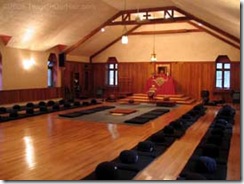
Time to Say Good-Bye

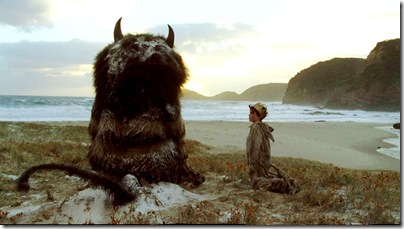
Where the Wild Things Are

On Turning Ten 
by Billy Collins

The whole idea of it makes me feel
like I'm coming down with something,
something worse than any stomach ache
or the headaches I get from reading in bad light--
a kind of measles of the spirit,
a mumps of the psyche,
a disfiguring chicken pox of the soul.

You tell me it is too early to be looking back,
but that is because you have forgotten
the perfect simplicity of being one
and the beautiful complexity introduced by two.
But I can lie on my bed and remember every digit.
At four I was an Arabian wizard.
I could make myself invisible
by drinking a glass of milk a certain way.
At seven I was a soldier, at nine a prince.

But now I am mostly at the window
watching the late afternoon light.
Back then it never fell so solemnly
against the side of my tree house,
and my bicycle never leaned against the garage
as it does today,
all the dark blue speed drained out of it.

This is the beginning of sadness, I say to myself,
as I walk through the universe in my sneakers.
It is time to say good-bye to my imaginary friends,
time to turn the first big number.

It seems only yesterday I used to believe
there was nothing under my skin but light.
If you cut me I could shine.
But now when I fall upon the sidewalks of life,
I skin my knees. I bleed.

Where The Wild Things Are

Sunday, October 18, 2009

All Ground is Holy

Frederick Franck "These Ten Commandments on seeing/drawing were revealed to me on a mountain, but also in a meadow, on a beach and even in the subway. For their revelation did not come all at once, but in installments, as it were, over the years, and always while I was busy drawing, and invariably on holy ground. But that may be because, while drawing, all ground is holy: unseparated from the Whole."

~ Frederick Franck, from The Awakened Eye

  1. You shall draw everything and every day

  2. You shall not wait for inspiration, for it comes not while you wait but while you work

  3. You shall forget all you think you know and, even more,
    all you have been taught

  4. You shall not adore your good drawings and promptly forget your bad ones

  5. You shall not draw with exhibitions in mind, nor to please any critic but yourself

  6. You shall trust none but your own eye, and make your hand follow it

  7. You shall consider the mouse you draw as more important than the contents of all the museums in the world, for

  8. You shall love the ten thousand things with all your heart and a blade of grass as yourself

  9. Let each drawing be your first: a celebration of the eye awakened

  10. You shall not worry about "being of your time", for you are your time, and it is brief

No Less Everything

Late Autumn Elms (wallpaper)

Maya
by Katha Pollitt, from The Mind-Body Problem

It’s all maya—that’s what we used to say,
Zen friends forever, rushing into the dorm
flushed from our dash through the common,
     stamping our snow-
caked boots like Cossacks: all illusion, term

papers, bad sex, no sex, my antique
real-lace camisole
lifted by the class kleptomaniac
and smuggled in atonement to Goodwill—

how scornfully we flung into our bon-
fire mere phenomena, all shadows, dreams,
as though it was not we who burned, our own
vitality we watched go up in flames!

It’s always maya—I still say that, Cartesian
to the end, and yet it comes back differently
now I believe it, everything is illusion
and yet is no less everything: love, safety,

the warm living room and the October sun
slant on the good rug, or the train today
from which I watched, beyond my dim reflection,
the silent, bright elms burn themselves away.

Hands

Dłonie (Hands)
by Maciej Jurewicz

A short documentary about silence.


@jscarroll

Saturday, October 17, 2009

What are we if we are not our stories?

Enda Walsh on his play The Walworth Farce (Druid Ireland).

Sound Living, Sound Business

Julian Treasure
TED Talks (October 2009)


[Thanks Kit!]

We Make This World

Oscar Wilde
by Company of Thieves

Episodes and parallels,
Don't you want the invitation?
Big bright accent, catty smile,
Oscar Wilde confrontation

Ah, Live like it's the style
Oh, we waltz on your front porch

We are all our own devil
And we make this world our hell

We are all our own devil
And we make this world
We make this world our hell

Porcelain teacups decorate,
Tables and the conversation,
Beauty pageants, all the time,
Is running out, the time is running out
Live like it's the style

[chorus]

Time keeps on ticking away
It's Always running away
We're always running in time
We're always running from time

[chorus]

Shopping, Yearning, Returning

Department Store Fictions
by Jason Whitmarsh, from Tomorrow’s Living Rooms

The mannequins are all in love with you
and too depressed to say it. The cashier
flirts with another cashier, who eyes you,
who eyes the sales rack of wool pants.
Behind each mirror hunches an old man
watching women adjust their skirts,
their sunglasses, their hair. Small dogs disappear
on the escalator. Everyone leans forward
at the perfume counter, asking to be touched.

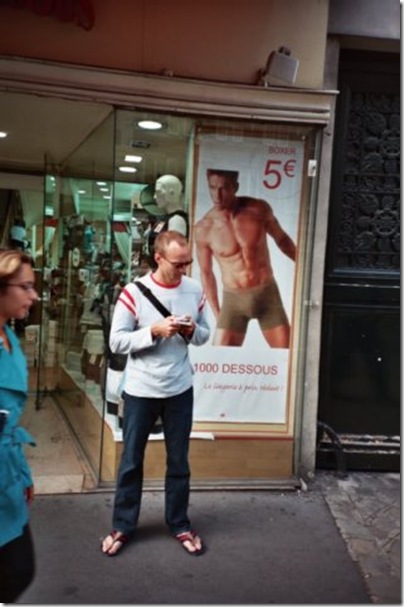
Mannequins (Paris, 2005)

i like my body
by E. E. Cummings, from Complete Poems 1904-1962 

i like my body when it is with your
body. It is so quite a new thing.
Muscles better and nerves more.
i like your body. i like what it does,
i like its hows. i like to feel the spine
of your body and its bones, and the trembling
-firm-smooth ness and which I will
again and again and again
kiss, i like kissing this and that of you,
i like, slowly stroking the, shocking fuzz
of your electric fur, and what-is-it comes
over parting flesh...And eyes big love-crumbs,
and possibly i like the thrill
of under me you quite so new

Matt (Paris, 2005)

Apology
by Jason Whitmarsh, from Tomorrow’s Living Rooms

That last love poem I gave you, I want to apologize for that. It was
crudely put and several of the metaphors leaned too heavily on sea
life. I love you so much more than that. The best part of the poem
was the beginning, and that had nothing to do with you, or me,
or how much either of us loves each other. It was just a line from
another, better poem. Most of the poem sounds defensive, like I've
been accused of not loving you, or you of not loving me. Not that
I think I don't love you, or you me. I don't. Still, one could read a
poem by someone else and it'd seem more authentic—you'd be more
likely to think that poem was dedicated to you, I mean, than to think
mine was. One could even argue, too, that by studiously avoiding
your name or any identifying traits, I was making this poem fit for
more than one person, like women in general, or a second wife, or
your very attractive sister.

[Thanks, as usual, Garrison!]

Friday, October 16, 2009

What We See

Excerpts of dialogue spoken by the Werner Heisenberg character in Michael Frayn’s Tony award winning play, Copenhagen:

How difficult it is to see even what’s in front of one’s eyes. All we possess is the present, and the present endlessly dissolves into the past…And yet how much more difficult still it is to catch the slightest glimpse of what’s behind one’s eyes.

*     *     *

Werner Heisenberg, 1965 BBC interview And that’s when I did uncertainty. Walking round Faelled Park on my own one horrible raw February night. It’s very late, and as soon as I’ve turned off into the park I’m completely alone in the darkness. I start to think about what you’d see, if you could train a telescope on me from the mountains of Norway.

You’d see me by the street lamps on the Blegdamsvej, then nothing as I vanished into the darkness, then another glimpse of me as I passed the lamp-post in front of the bandstand. And that’s what we see in the cloud chamber. Not a continuous track but a series of glimpses — a series of collisions between the passing electron and various molecules of water vapour…

Or think of you, on your great papal progress to Leiden in 1925. What did Margrethe see of that, at home here in Copenhagen? A picture postcard from Hamburg, perhaps. Then one from Leiden. One from Göttingen. One from Berlin. Because what we see in the cloud chamber are not even the collisions themselves, but the water-droplets that condense around them, as big as cities around a traveler — no, vastly bigger still, relatively — complete countries — Germany…Holland…Germany again. There is no track, there are no precise addresses; only a vague list of countries visited. I don’t know why we hadn’t thought of it before, except that we were too busy arguing to think at all.

What We Remember

“We’re constantly being swayed in what we do by just a little teeny change, something that comes, for examples, from our past experience with a certain kind of situation. But what we remember from the previous situation is not just the facts and not just the outcome that may be good or bad. We also remember whether or not what we felt was good or bad. This is something that people need to understand. When you are making decisions, any day of your life, the [choices] you make are going to produce a good or bad outcome – or something in between. You don’t only remember what the factual result is, but also what the emotional result is. And that tandem of fact and associated emotion is critical. And of course most of what we construct as wisdom, over time, is actually a result of cultivating that knowledge about how our emotions behaved – what we learned from them.”

~ Antonio Damasio, in conversation with David Brooks on the topic of emotions from the perspective of neuroscience and evolution during the Aspen Institute on July 4, 2009.

Thursday, October 15, 2009

COMBO

@rydercarroll

Persistent Improvements

From “How Mindfulness Can Make for Better Doctors,” by Pauline W. Chen, M.D., New York Times (October 15, 20090:

Last month, The Journal of the American Medical Association published the results of a study examining the effects of a year-long course for primary care physicians on mindfulness, that ability to be in the zone and present in the moment purposefully and without judgment. Seventy physicians enrolled and participated in the four components of the course — mindfulness meditation; writing sessions; discussions; and lectures on topics like managing conflict, setting boundaries and self-care.

The effects of the sessions were dramatic. The participating doctors became more mindful, less burned out and less emotionally exhausted. But two additional findings surprised the investigators. Several of the improvements persisted even after the yearlong course ended. And, those changes correlated with a significant increase in attributes that contribute to patient-centered care, such as empathy and valuing the psychosocial factors that might affect a patient’s illness experience.

More…

[Thanks Kit!]

Tuesday, October 13, 2009

Life Without the Interference of the Mind

Excerpts from “The Power of Eckhart Tolle’s Now,” a conversation with Krista Tippett on Speaking of Faith (October 8, 2009):

The Power of Eckhart Tolle's Now[What we are talking about is] being fully alive and fully engaging with life in the present moment, which is where life happens. Fully responding to the needs of this moment, not rejecting this moment, not arguing with this moment, but being open to it.

The vastness of it all and the compulsion to continuously interpret whatever you are experiencing at any given moment, that is no longer there. And there's great freedom in not compulsively interpreting other people, situations, and so on. Not imposing all these judgments. That's another word for it. Imposing thinking, thinking continuously on the world, which is so alive and so fresh and new at every moment.

When we impose the continuously compulsive thinking on it, then we deaden it, and we become dead to the aliveness of the world. We become dead to the aliveness in others. And so we can no longer have empathy for others when we are behind a screen of conceptualization through which we judge others.

And so, yes, the mind is beautiful. The ability to think is a great thing...It doesn't mean you become semiconscious or it doesn't mean it's like the thing that happens to you when you have a few drinks.

What we are talking about here is a state of alert attention to what is where compulsive thinking no longer operates. This means you rise above thinking to a large extent in your life. The whole thing of Zen is really about that. Zen is a very practical way of taking you beyond compulsive thinking where you can face life without the interference of the mind. Still being able to use the mind when it's needed, but not being used by it.

Monday, October 12, 2009

Extemporizing

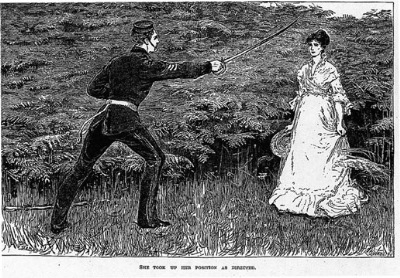
"She took up her position as directed." Troy courts Bathsheba; Cornhill illustration by Helen Paterson Allingham.

"It is safer to accept any chance that offers itself, and extemporize a procedure to fit it, than to get a good plan matured, and wait for a chance of using it."

~ Thomas Hardy, from Far from the Madding Crowd

[Thanks Linda!]

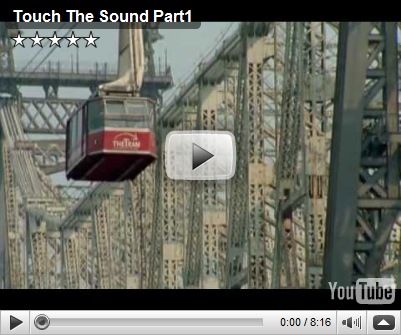
Touch the Sound

“Award-winning director and cinematographer, Thomas Riedelsheimer,  takes us on an journey through a universe of sound with percussionist Evelyn Glennie. They map a world of the senses — images and sounds. Hearing images, seeing sound. With Evelyn, we experience sound as palpable and rhythm as the basis of everything that is.”

~ From the Touch the Sound web page

Saturday, October 10, 2009

Can Fun Change Behavior?

The Fun Theory


@jscarroll

Every Particle of Earth

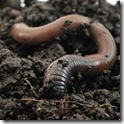
Common european earthworm (Lumbricus terrestris) "Although the conclusion may appear at first startling, it will be difficult to deny the probability, that every particle of earth forming the bed from which the turf in old pasture land springs, has passed through the intestines of worms."

~ Charles Darwin

Thursday, October 08, 2009

Autumn Leaves


Virtuoso Pamelia Kurstin plays and discusses her theremin, the not-just-for-sci-fi electronic instrument that is played without being touched. Pamelia gives Kurt Andersen a music lesson on Studio 360 (September 4, 1009).

No Different

“Rich people are no different from poor people, they always want more.”

~ Brooke Astor

Expect Nothing Always

Philip Booth "Writing poems is not a career but a lifetime of looking into, and listening to, how words see." ~ Philip Booth

By Philip Booth:

How to See Deer

Forget roadside crossings.
Go nowhere with guns.
Go elsewhere your own way,

lonely and wanting.
Or stay and be early:
next to deep woods

inhabit old orchards.
All clearings promise.
Sunrise is good,

and fog before sun.
Expect nothing always;
find your luck slowly.

Wait out the windfall.
Take your good time
to learn to read ferns;

make like a turtle:
downhill toward slow water.
Instructed by heron,

drink the pure silence.
Be compassed by wind.
If you quiver like aspen

trust your quick nature:
let your ear teach you
which way to listen.

You've come to assume
protective color; now
colors reform to

new shapes in your eye.
You've learned by now
to wait without waiting;

as if it were dusk
look into light falling:
in deep relief

things even out.
Be careless of nothing.
See what you see.

First Lesson

Lie back daughter, let your head
be tipped back in the cup of my hand.
Gently, and I will hold you. Spread
your arms wide, lie out on the stream
and look high at the gulls. A dead-
man's float is face down. You will dive
and swim soon enough where this tidewater
ebbs to the sea. Daughter, believe
me, when you tire on the long thrash
to your island, lie up, and survive.
As you float now, where I held you
and let go, remember when fear
cramps your heart what I told you:
lie gently and wide to the light-year
stars, lie back, and the sea will hold you.

Wednesday, October 07, 2009

Why We Need Art

John Keats "We now know enough to know that we will never know everything. This is why we need art: it teaches us to live with mystery. Only the artist can explore the ineffable without offering us an answer, for sometimes there is no answer. John Keats called this romantic impulse 'negative capability.' He said that certain poets, like Shakespeare, had 'the ability to remain in uncertainties, mysteries, doubts, without any irritable reaching after facts and reason.' Keats realized that just because something can't be solved, or reduced into the laws of physics, doesn't mean it isn't real. When we venture beyond the edge of our knowledge, all we have is art."

~ Jonah Lehrer, from Proust Was a Neuroscientist

Life is an Experiment

“Life consists in penetrating the unknown, and fashioning our actions in accord with the new knowledge thus acquired.”
~ Leo Tolstoy, from The Kingdom of God Is within You

“Do not be too timid and squeamish about your actions.  All life is an experiment.  The more experiments you make, the better.  What if they are a little coarse, and you may get your coat soiled or torn?  What if you do fail, and get fairly rolled in the dirt once or twice?  Up again, you shall nevermore be so afraid of a tumble again.”

~ Ralph Waldo Emerson, from Journals, November 11, 1842

“Life is a process of becoming, a combination of states we have to go through. Where people fail is that they wish to elect a state and remain in it. This is a kind of death.”

~ Anaïs Nin, from D. H. Lawrence: An Unprofessional Study

“What is a scientist after all? It is a curious [person] looking through a keyhole, the keyhole of nature, trying to know what's going on."

~ Jacques Cousteau, from The Christian Science Monitor, July 21, 1971

“The greater one's science, the deeper the sense of mystery.”

~ Vladimir Nabokov, from Strong Opinions

"Everybody's a mad scientist, and life is their lab. We're all trying to experiment to find a way to live, to solve problems, to fend off madness and chaos."

~ David Cronenberg, from Cronenberg on Cronenberg

Tuesday, October 06, 2009

The Purpose of Human Life

Jane Campion in conversation with Elvis Mitchell on The Treatment (September 16, 2009):

“What I was struck by when I read the story was how emotionally powerful it was for me. It wasn’t just the sadness, it seemed to tell the whole story of the yearning heart. But also this other thing elevated by Keats who — only twenty-five —dying, yet he had already realized something that seems to be, I think, contingent on us all to discover which is the purpose of human life — somehow to realize your consciousness and to value it. And I think in the way he explored it philosophically in his letters to his friends and in his poetry he was aware, he did listen, and I felt I learned such a lot from the story in that way.”

“If you read Louise Bourgeois, she talks about women and waiting. Her family mended tapestries and she was a great sewer and I like sewing, too. I collect women’s embroidery of tablecloths and things like that. I’ve got quite a big collection. I often give them as gifts because I find there’s enormous pathos for me in that a woman can spend all this time embroidering this thing that you’re never going to get the money back on, it’s got no immediate return, but it’s satisfying to them. I find it’s like the woman’s place in this world. It’s moving to me the way that they’re happy to make these beautiful things for other people to enjoy with no commercial return. None.”

A Shadow’s Dream

Creatures of a day
What is someone?
What is no one?
Man is merely a shadow's dream
But when god-given glory comes upon him in victory
A bright light shines on us and life is sweet
When the end comes the loss of flame brings darkness
But his glory is bright forever.

~ Pindar of Thebes (522-443 BC)

The Shadow's Dream by Jeff Scher

The Shadow’s Dream’ from Jeff Scher’s The Animated Life

Monday, October 05, 2009

Harvest

By Louise Glück from A Village Life

A Village Life It's autumn in the market—
not wise anymore to buy tomatoes.
They're beautiful still on the outside,
some perfectly round and red, the rare varieties
misshapen, individual, like human brains covered in red oilcloth—

Inside, they're gone. Black, moldy—
you can't take a bite without anxiety.
Here and there, among the tainted ones, a fruit
still perfect, picked before decay set in.

Instead of tomatoes, crops nobody really wants.
Pumpkins, a lot of pumpkins.
Gourds, ropes of dried chilies, braids of garlic.
The artisans weave dead flowers into wreaths;
they tie bits of colored yarn around dried lavender.
And people go on for a while buying these things
as though they thought the farmers would see to it
that things went back to normal:
the vines would go back to bearing new peas;
the first small lettuces, so fragile, so delicate, would begin
to poke out of the dirt.

Instead, it gets dark early.
And the rains get heavier; they carry
the weight of dead leaves.

At dusk, now, an atmosphere of threat, of foreboding.
And people feel this themselves; they give a name to the season,
harvest, to put a better face on these things.

The gourds are rotting on the ground, the sweet blue grapes are finished.
A few roots, maybe, but the ground's so hard the farmers think
it isn't worth the effort to dig them out. For what?
To stand in the marketplace under a thin umbrella, in the rain, in the cold,
no customers anymore?

And then the frost comes; there's no more question of harvest.
The snow begins; the pretense of life ends.
The earth is white now; the fields shine when the moon rises.

I sit at the bedroom window, watching the snow fall.
The earth is like a mirror:
calm meeting calm, detachment meeting detachment.

What lives, lives underground.
What dies, dies without struggle.

[More by Louise Glück from The Writer’s Almanac.]

Sunday, October 04, 2009

By Virtue of What We’ve Saved

David Treuer speaking with Krista Tippett in “Language and Meaning—An Ojibwa Story,” Speaking of Faith (October 1, 2009):

I think, for a lot of native people who are involved in language revitalization efforts—which is that a lot of times over thDavid Treuere last 50 or 60 years, a lot of native people define themselves as native by virtue of what they've lost, you know?

I'm native, because I'm poor, because I've, you know, because I was "forced" on a reservation, because I drank powdered milk and grew up in HUD housing, because I've lost my cousins, because I've struggled with alcohol or whatever. And there's validity in that, there really is. But what I really love about language revitalization, what is so key to it, is that it's always been ours. It's never been given to us. Our native languages aren't forced on us. And it's a chance to define ourselves on and in our own terms and in ways that have nothing to do with what's been taken. We can define ourselves by virtue of what we've saved.

…Marcel Proust said that, particularly speaking of writing novels, said that nothing really exists in and of itself in a book, that characters and situations and places only take on life by way of contrast. That's how novels build themselves are through creating contrasts and intentions, resolutions and more contrasts and intentions.

I think the same could be said for life, that nothing exists in and of itself. Everything exists only by way of contrasts. So in and of itself, I think Ojibwe is beautiful. Just the animal sound of the language, how it flows, to the kinds of trickery that those words themselves can bring out…But also in contrast to the English with which we are surrounded, Ojibwe seems all the more precious, you know, all the more beautiful.

A Pitiless Symphony

From Proust Was a Neuroscientist by Jonah Lehrer:

Stravinsky’s music is all violation. While the cultured public thought music was just a collection of consonant chords played in neat meter, Stravinsky realized that they were wrong. Pretty noises are boring. Music is only interesting when it confronts us with tension, and the source of tension is conflict. Stravinsky’s insight was that what the audience really wanted was to be denied what it wanted.

The Rite of Spring was the first symphonic work to express this antagonistic philosophy. Stravinsky anticipated the anticipation of his audience and then refused every single one. He took the standard springtime song and made art out of its opposite. Dissonance never submits to consonance. Order does not defeat disorder. There is an obscene amount of tension, but it never gets resolved. Everything only gets worse. And then it ends…

…Although music begins with our predilection for patterns, the feeling of music…begins when the pattern we imagine starts to break down. The Rite, of course, is one long breakdown. Stravinsky didn’t just invent some new musical patterns; he insisted on murdering our old ones. He introduced fragments of folk songs, then destroyed them with a gunshot of chromatic bullets. He took the big sonoric brushstrokes of major chords and put them through a cubist machine. Strauss is punked, Wagner is inverted, Chopin is mocked. Classicism is made cynical.

The sadistic newness of The Rite’s patterns, its stubborn refusal to conform to our learned expectations, is the dirty secret of its discontent. By disobeying the rule we think we know, Stravinsky forces us to confront the fact that we have expectations, that the mind anticipates types of order, followed by certain types of release. But in The Rite, these expectations are rendered useless. We do not know what will come next. And this makes us angry.

The emotions generated y musical tension—a tension taken to grotesque heights by Stravinsky—throb throughout the body. As soon as the orchestra starts to play, the flesh undergoes a ranges of changes. The pupils dilate, pulse and blood pressure rise, the electrical conductance of the skin lowers, and the cerebellum, a brain region associated with bodily movements, becomes unusually active. Blood is even redirected to the leg muscles. (As a result, we begin tapping our feet in time with the beat.") Sounds stir us at our biological roots. As Schopenhauer wrote, “It is we ourselves who are tortured by the strings.”

Stravinsky, of course, knew exactly how to raise our blood pressure. At first glance, this might seem like a dubious achievement. Must modern art really be so cruel? Whatever happened to beauty? But Stravinsky’s malevolence was rooted in a deep understanding of the mind. He realized that the engine of music is conflict, not consonance. The art that makes us feel is the art that makes us hurt. And nothing hurts us like a pitiless symphony.


Why is music capable of inflicting such pain? Because it works on our feelings directly. No ideas interfere with its emotion. This is why “all art aspires to the condition of music.” The symphony gives us the thrill of uncertainty—the pleasurable anxiety of searching for a pattern—but without the risks of real life. When we listen to music, we are moved by an abstraction. We feel, but we don’t know why.

…To find the echo of order in The Rite, we have to pay exquisite attention. If we fail to listen carefully, if we tune out its engineered undulations, then the whole orchestra becomes nothing more than a mutiny of noise. The music disappears. This is what Stravinsky wanted. “To listen is an effort,” he once said, “and just to hear is no merit. A duck hears also.”

Saturday, October 03, 2009

Love and Creativity

Excerpt from “Does Falling in Love Make Us More Creative?” by Nira Liberman and Oren Shapira, Scientific American: Mind Matters (September 29, 2009):

Why does the act of falling in love—or at least thinking about love—lead to such a spur of creative productivity?

Bright Star (Ben Wishaw and Abbie Cornish)

One possibility is that when we’re in love we actually think differently. This romantic hypothesis was recently tested by the psychologists Jens Förster, Kai Epstude, and Amina Özelsel at the University of Amsterdam. The researchers found that love really does alter our thoughts, and that this profound emotion affects us in a way that is different than simply thinking about sex.

Bright Star (Ben Wishaw)

The clever experiments demonstrated that love makes us think differently in that it triggers global processing, which in turn promotes creative thinking and interferes with analytic thinking. Thinking about sex, however, has the opposite effect: it triggers local processing, which in turn promotes analytic thinking and interferes with creativity.

Bright Star (Abbie Cornish)

Why does love make us think more globally? The researchers suggest that romantic love induces a long-term perspective, whereas sexual desire induces a short-term perspective. This is because love typically entails wishes and goals of prolonged attachment with a person, whereas sexual desire is typically focused on engaging in sexual activities in the "here and now". Consistent with this idea, when the researchers asked people to imagine a romantic date or a casual sex encounter, they found that those who imagined dates imagined them as occurring farther into the future than those who imagined casual sex.

Bright Star (Abbie Cornish and Ben Wishaw)

According to construal level theory (CLT), thinking about events that are farther into the future or past—or any kind psychological distancing (such as considering things or people that are physically farther away, or considering remote, unlikely alternatives to reality) triggers a more global processing style. In other words, psychological distancing makes us see the forest rather than the individual trees.

More…

Friday, October 02, 2009

An Experience Beyond Thought

"Poetic craft is a carcass, a sham. If poetry doesn't come as naturally as leaves to a tree, then it better not come at all…A poem needs understanding through the senses. The point of diving in a lake is not immediately to swim to the shore; it's to be in the lake, to luxuriate in the sensation of water. You do not work the lake out. It is an experience beyond thought. Poetry soothes and emboldens the soul to accept mystery."

~ Ben Wishaw as John Keats in Jane Campion’s Bright Star


Bright Star
by John Keats

Bright star, would I were stedfast as thou art--
Not in lone splendour hung aloft the night
And watching, with eternal lids apart,
Like nature's patient, sleepless Eremite,
The moving waters at their priestlike task
Of pure ablution round earth's human shores,
Or gazing on the new soft-fallen mask
Of snow upon the mountains and the moors--
No--yet still stedfast, still unchangeable,
Pillow'd upon my fair love's ripening breast,
To feel for ever its soft fall and swell,
Awake for ever in a sweet unrest,
Still, still to hear her tender-taken breath,
And so live ever--or else swoon to death.

Thursday, October 01, 2009

A Glorious Squandering of Motion

Planetary Matters,” by Verlyn Klinkenborg, The New York Times, September 29, 2009:

The Flint Hills of Kansas as photographed by my friend Pez Owen during her recent trek across the county with her partner Jean Rukkila.Not long ago, I found myself driving east across Kansas at dawn, cutting across the north/south band of the Flint Hills. Venus was riding bright above the horizon. And as I drove, I began to think about the morning star’s orbit around the sun.

Everything felt oddly stationary — the stars fixed overhead — except for my car humming along the blacktop and the grasses on the stone outcrops bending under a southern wind. Yet Venus was roaring along in its path, rotating clockwise on its axis while orbiting counterclockwise around the sun. Earth was roaring around the sun, too, except that our planet happens to rotate clockwise on its axis. In the grand scheme of astronomical motions — imagine, too, the rotation of the Milky Way and the overall expansion of the universe — my car had come to a virtual standstill, though I was doing 80.

KansasI cannot do the calculations to sum up all those motions, to figure out how fast and in what direction I was really moving as I drove across the prairie. It’s no easier sitting at my desk, watching October roll across the landscape, a bright day following a warm, wet night when the falling leaves adhere to every surface. Somehow, I can’t help imagining my life as a vector with a velocity and direction I cannot calculate.

Kansas

A day isn’t just a standard measure, all the same size so each fits on a calendar page. A day is a period of light, an astronomical event. I felt that on the road that Kansas dawn. The broad swath of the sun’s light rolls upward from the darkness, morning after morning, and then we roll outward into the ocean of stars at night. It seems extravagant, a glorious squandering of motion to give light, and life, to the grasses bending under the breeze, slowly retracting their shadows as the sun begins to climb.

Kansas

[Thanks Kit and Pez!]

Wednesday, September 30, 2009

A New Science of Happiness

Dacher Keltner from “Forget Survival of the Fittest: It Is Kindness That Counts,” by David DiSalvo, Scientific American Mind (September 2009):

Dacher Keltner Recent research is suggesting that our capacities for virtue and cooperation and our moral sense are old in evolutionary terms, and these capacities are found in the emotions I write about.

A new science of happiness is finding that these emotions can be readily cultivated in familiar ways, bringing out the good in others and in oneself. Here are some recent empirical examples:

  • Experiences of reverence in nature or of being around those who are morally inspiring improves people’s sense of connection to one another and their sense of purpose.
  • Meditating on a compassionate approach to others shifts resting brain activation to the left hemisphere, a region associated with happiness, and boosts immune functions.
  • Talking about what we are thankful for—in classrooms, at the dinner table or in a diary—boosts happiness, social well-being and health.
  • Devoting resources to others, rather than indulging a materialist desire, brings about lasting well-being.

This kind of science gives me many hopes for the future. At the broadest level, I hope that our culture shifts from a consumption-based, materialist culture to one that privileges the social joys (play, caring, touch, mirth) that are our older (in the evolutionary sense) sources of the good life. In more specific terms, I see this new science informing practices in almost every realm of life.

More…

Enjoy the Process

Excerpt from “Enlightenment 2.0,” a Buddhist Geeks conversation with Ben Goertzel and host Vince Horn:

I think that the idea underlying that story (Enlightenment 2.0) really came out of something that I worry about in my personal life just thinking about my own personal future. When I think about “What would I want in the future if superhuman Artificial Intelligence (AI) became possible?”

Wall-E ...I really think that the human brain architecture is limiting. So that I think if you could change your brain into a different kind of information processing system, you could achieve just better states of mind. You could feel enlightened all the time, while doing great science, while having sensory gratification, and it could be way beyond what humans can experience.

So that leads to the question of, okay, if I had the ability to change myself into some profoundly better kind of mind, would I do it all at once? Would I just flick a switch and say “Okay, change from Ben into a super mind?” Well, I wouldn't really want to do that, because that would be just too much like killing Ben, and just replacing him with the super mind. So, I get the idea that maybe I'd like to improve myself by, say twenty percent per year. So I could enjoy the process, and feel myself becoming more and more intelligent, more and more enlightened, broader and broader, and better and better.

Cylon (Battlestar Gallactica) …You think of phase transitions in physics. You have water, and you boil the water, and then it changes from a liquid into a gas, just like that. It's not like it's half liquid and half gas, right? I mean, it's like the liquid is dead, and then there's a gas.

That was the kind of theme underlining this story. There was this super-intelligent AI that people had created. The super intelligent AI, after it solved the petty little problems of world peace, and hunger, and energy for everyone, and so forth, that super-human AI set itself thinking about “Okay, how can we get rid of suffering, fundamentally?” How can we make a mind that really has a positive experience all the time, and will spread good through the world rather than spreading suffering through the world.

Then the conclusion it comes to is it is possible to have such a mind, but human beings can never grow into that, and that it, given the way that it was constructed by the humans, could never grow into that either.

So, the conclusion this AI comes to is there probably are well-structured, benevolent super minds in the universe, and in order to be sure the universe is kept peaceful and happy for them, we should all just get rid of ourselves, because we're just fundamentally screwed up, and can't even ever continuously evolve into something that's benevolently structured.

Which I don't really believe, but I think it's an interesting idea, and I wouldn't say it's impossible.

Sam Worthington as Marcus Wright (Terminator Salvation)

[So] is the AI a lunatic or does it have some profound insight that we can't appreciate? Which is a problem we're going to have broadly when we create minds better than ourselves.

Just like when my dog wants to go do something and I stop him, right? Maybe it's just because my motivational system is different than his. Like I don't care about the same things as he does. I'm not that interested in going to romp in the field like he is, and I'm just bossing him around based on my boring motivational structure.  On the other hand, sometimes I really have an insight he doesn't have, and I'm really right. He shouldn't go play in the highway, no matter how much fun it looks like.  The dog can't know, and similarly, when we have a super-human AI, we really won't be able to know. We'll have to make a gut feel decision whether to trust it or not.