After 40 years in which we’ve come to understand that dominant styles like Abstract Expressionism, Minimalism and Pop are at best gross simplifications of their periods, it often feels as though an agreed-upon master narrative is back in place.
What’s missing is art that seems made by one person out of intense personal necessity, often by hand. A lot but not all of this kind of work is painting, which seems to be becoming the art medium that dare not speak its name where museums are concerned….
…Museum curators need to think less about an artist’s career, its breakthroughs and its place in the big picture and more in terms of an artist’s life’s work pursued over time with increasing concentration and singularity.
They have a responsibility to their public and to history to be more ecumenical, to do things that seem to come from left field. They owe it to the public to present a balanced menu that involves painting as well as video and photography and sculpture. They need to think outside the hive-mind, both distancing themselves from their personal feelings to consider what’s being wrongly omitted and tapping into their own subjectivity to show us what they really love.
These things should be understood by now: The present is diverse beyond knowing, history is never completely on anyone’s side, and what we ignore today will be excavated later and held against us the way we hold previous oversights against past generations.
“One consequence of traumatic violence is that it isolates its victims. It can cut us off from other people, cutting us off from their own emotional lives until we go numb and move through the world as if only half alive. As a young person, I found something to set against my growing sense of isolation and numbness: the making of poems.
When I write a poem, I process experience. I take what's inside me — the raw, chaotic material of feeling or memory — and translate it into words and then shape those words into the rhythmical language we call a poem. This process brings me a kind of wild joy. Before I was powerless and passive in the face of my confusion, but now I am active: the powerful shaper of my experience. I am transforming it into a lucid meaning.”
“About 10 months ago, Michel Gondry met West Coast singer-songwriter Mia Doi Todd at a party. “I really fell in love with her music,” he says. “It’s incredibly fragile, personal, and very elevated.” They became friends, and soon Todd penned a new tune, Open Your Heart, that Gondry thought would work perfectly with the color-coordinated choreography he’d been wanting to use.
After signing on to direct the video for Open Your Heart, Gondry went with Todd to scout locations in east Los Angeles. ‘Basically, L.A. is not made for humans. It’s a lot of concrete and cars passing by. It’s very blank, which is a great background to put all these people with colors.’ Next, they cast their stars. ‘I needed a group of people who could move together, but it would have been too affected if they were professional dancers. We found this marching band from Riverside Community College.’ Over three sunny days, Todd and 100 or so marching band members-turned-dancers brought Gondry’s vision to life.”
Sutro Baths opened March 14, 1896 with a $1 million price tag — an extravagant public bathhouse envisioned and developed by the eccentric one-time mayor of San Francisco, Adolph Sutro. After working its way through its many lives, it burned down while being demolished on June 26, 1966.”
The room I work in is as foursquare as half a pair of dice. It holds a wooden table with a stubborn peasant’s profile, a sluggish armchair, and a teapot’s pouting Hapsburg lip. From the window I see a few skinny trees, wispy clouds, and toddlers, always happy and loud. Sometimes a windshield glints in the distance or, higher up, an airplane’s silver husk. Clearly others aren’t wasting time while I work, seeking adventures on earth or in the air. The room I work in is a camera obscura. And what is my work— waiting motionless, flipping pages, patient meditation, passivities not pleasing to that judge with the greedy gaze. I write as slowly as if I’ll live two hundred years. I seek images that don’t exist, and if they do they’re crumpled and concealed like summer clothes in winter, when frost stings the mouth. I dream of perfect concentration; if I found it I’d surely stop breathing. Maybe after all, I hear the first snow hissing, the frail melody of daylight, and the city’s gloomy rumble. I drink from a small spring, my thirst exceeds the ocean.
"There are all kinds of stories and myths that have arisen about this. Most of them are nonsense. And it became ever more apparent to me, as I worked my way up through this system, that I was not becoming a superman and I wasn’t becoming a saint and my morality was not becoming perfected. And what was happening here was a very organic process that I’ve more recently come to think of as what I call a physio-energetic process. There is some energy that arises in the body and can be developed in stages. And that’s what’s happening. All of the stuff, all of the stories that we layer on to that, that if you reach this stage, you’re going to act a certain way or you’re going to be incapable of committing various immoral acts, that’s just fantasy island...I’ve completely given up on the notion that you’re going to develop to the point of being incapable of lying, for example, or of being incapable of anger or lust."
ART AT STAKE I'll See Your Lorrain and Raise You a Turner (Studio 360)
“The directors of the New Orleans and the Indianapolis art museums have a lot more riding on this weekend's Super Bowl than a couple of bucks in the office pool. After arts blogger [Tyler Green] posed a challenge, they've each put up a treasured painting from their collections. The director of the losing city's museum will have to lend his masterpiece to the winner.”
HARD TARGETS Sports and Masculinity Explored in Art
“The multimedia exhibition Hard Targets, on view January 30–April 11, 2010 at the Wexner Center, surveys provocative artworks produced over the last 25 years that take masculinity and sports as their central themes. Ranging broadly in interest and focus from biology to commodity and locker room to stadium, Hard Targets endeavors to complicate and revise the time-honored archetype of the male athlete as an aggressive, heterosexual, hyper-competitive, emotionally remote subject. Instead, the artists in the show offer opposing views of masculinity and sport, and of the entire theater of athletic play, including the rituals and accoutrements that surround this intimate, and often still male-dominated, world. The more than 70 works—in a wide variety of media, including video, photography, mixed-media sculpture, painting, and installation—range from funny and irreverent to self-effacing and incisive.”
“The 21 artists in the show are Doug Aitken, Matthew Barney, Mark Bradford, Harun Farocki, Andreas Gursky, Douglas Gordon, David Hammons, Brian Jungen, Byron Kim, Jeff Koons, Cary Leibowitz, Glenn Ligon, Kori Newkirk, Catherine Opie (including a new suite of photographs of high school football players produced in Columbus), Philippe Parreno, Paul Pfeiffer (whose 11 exhibited pieces offer a mini-survey of this artist’s work), Collier Schorr, Sam Taylor-Wood, Hank Willis Thomas, and Jonas Wood. In addition, a video work by Joe Sola video will be presented in The Box video space during the first month of the show.”
“Each artist examines the way masculinity is characterized and ‘performed’ in a sporting context, and each suggests that the ways we view and consume sports stars and athletic events are structured by more complex systems of desire and identification than most spectators realize. The works in the exhibition open up alternative, and possibly more democratic, interpretations and inflections of sports and sports fandom than the authorized, often frankly commercial, images that most frequently and forcefully convey the cultural identity of male athletes and athleticism.”
“If we’re not careful, this is how we approach mindfulness: as an idea, one we rather like, to elevate our lives with special contemplative consideration, a method for making smarter choices and thereby assuring better outcomes. The problem is that the life before us is the only life we have. The search for meaning robs our life of meaning, sending us back into our discursive minds while right in front of us the laundry piles up…
…With only a change in perspective, the most ordinary things take on inexpressible beauty. When we don’t know, we don’t judge. And when we don’t judge, we see things in a different light. That is the light of our awareness, unfiltered by intellectual understanding, rumination, or evaluation. When we cultivate nondistracted awareness as a formal practice, we call it mindfulness meditation. When we cultivate it in our home life, we call it the laundry, the kitchen, or the yard—all the places and the ways to live mindfully by attending without distraction to whatever appears before us. But it’s hard for us to believe that attention is all there is to it, and so we complicate things with our judgment—debasing the ordinary as insignificant and idealizing the spiritual as unattainable—never seeing that the two are one.”
“Our word cipher, meaning zero or nothing, comes from the Arabic word Sifr, meaning zero. We call our numbers Arabic numerals, but they actually came from India. It was the Arabs, however, who brought the Indian numerals to Europe. It took centuries to convince Europeans to use them, even though they made calculations easier than using clumsy Roman numerals. Medieval Arab scholars also took the Indian idea of representing zero (the Arabs use a dot, ٠). This enables us to write all numbers with only ten symbols (0 to 9). Without the use of the zero, modern science would be impossible!”
The chill slipped through my skin right into my marrow where it took root and blossomed. You offered me a drink of your coffee which we both know is much stronger than I can take.
Made me consider how often people have to weigh a degree of bitterness against our thirst for warmth.
I met a woman who drinks hot water every morning. Says she never really liked coffee or tea, but she enjoys cradling a warm mug in her cold hands. Says she doesn’t feel like she’s missing anything.
There must be fifty ways I haven’t yet imagined to warm these bones.
“I have an emotional attachment to the book. I think the terminology is wrong. People talk about books being turned into movies. They're not turned into movies. They sit there in bookstores and if the movie's bad, they're still in bookstores and if the movie's good, they're in bookstores but there are more copies of them. I think there are very few examples of books that are actually damaged by movies. People either don't know the movie was made or it brings readers to the books...
The most common question I think writers are asked about this is, how much control did you have? And my answer to that is, I didn't have very much control, I don't want very much control, and I don't understand how control works. Say I knew enough about directors and actors to dictate who's going to direct a movie and who's going to star in it. Well, I don't know enough about directors of photography and they can make or break a film. I don't know anything about editing and a bad editor can completely mess a film up. I don't know anything about score composers. And these are all integral parts of a movie-making process. So I'd rather give it to somebody that I trust initially and hope that they make the right decisions."
"Love enhances global processing and creative thinking whereas sex enhances local processing and analytic thinking. Thus, contrary to the intuitive notion of creativity and analytical thought as fixed human capacities or stable personality traits, they can easily be changed by subtle cues in the environment or by mere thinking about certain situations."
~ Jens Förster, from the conclusions of the research study quoted in “Love, Lust, and Creativity,” by Scott Barry Kaufman, Psychology Today (September 10, 2009)
“Now we mostly have monks and other religious figures preaching about these ideas [compassion training]. It's quite another thing to have a hard-nosed neuroscientist like me suggest that such training may have beneficial consequences for how we act toward others as well as promoting health. Most people accept the idea that regular physical exercise is something they should do for the remainder of their lives. Imagine how different things might be if we accepted the notion that the regular practice of mental exercises to strengthen compassion is something to incorporate into everyday life…I've been talking about happiness not as a trait but as a skill, like tennis. If you want to be a good tennis player, you can't just pick up a racket—you have to practice."
There are the blood-coloured fighters of Spain There are the sky-coloured fighters of Greece The bread the blood the sky and the right to hope For all the innocents who hate evil
The light is always close to dying Life always ready to become earth But spring is reborn that is never done with A bud lifts from dark and the warmth settles
And the warmth will have the right of the selfish Their atrophied senses will not resist I hear the fire talk lightly of coolness I hear a man speak what he has not known
You who were my flesh’s sensitive conscience You I love forever you who made me You will not tolerate oppression or injury You’ll sing in dream of earthly happiness You’ll dream of freedom and I’ll continue you
“People live in bubbles unaware of each other. Each side has its narrative, each side has its dreams and sees the other as threatening those dreams. But if you enter the other’s bubble, you see his dreams, his inner world and his values. Our idea was to make the audience experience what it meant to be the other.”
~ Yaron Shani, discussing Ajami, the film that he and Scandar Copti co-directed, from “One Conflict, Many Views, No Actors,” by Ethan Bronner, New York Times (1/31/10).
If worries were stones that could be polished by rolling around repeatedly in our minds, one of the shiniest rocks in my tumbler would have to be wondering where I really belong. Growing up in Wichita, Kansas I was convinced I was being excluded from a much more Technicolor city. In New Mexico I quickly grew bored of the piercingly blue skies and yearned for thunderstorms. Ohio seemed to choose me instead of the other way around. I don't strongly identify with many of the aspects of my life and personality that make easy answers to casual questions about who I am or what I do.
All this becomes especially distressing when I'm convinced that everyone else not only knows for certain where they belong but have also managed to get there. It reminds me of the paradox that throws so many people off about meditation: the way it appears on the outside doesn’t give a very reliable indication of what it feels like on the inside.
I recently had the extravagantly good fortune to practice mindfulness intensively in an idyllic setting near the ocean, with Birds of Paradise thriving in early January, and a few peacocks adding spontaneous local color. Yet I found myself wondering if I really belonged there — even as a visitor.
As much sincere intention as I put into weeding out unrealistic assumptions about life, I've managed to hold onto the notion that some perfect fit exists for each of us. I don't want to blame this on Hollywood or religion or advertising — aren't they all just responding to the strong craving for narrative which seems to be hardwired into our nervous systems? It’s that same inherited impulse toward security and the sense that each of us is actually the main character in this one long reality show.
Practicing mindfulness over time can lead to a direct and deepening awareness that nothing is unchanging. Could this apply to my perpetual desire to belong? What if there really is no satisfying it in the same way we never seem to reach the point of having the right amount of money or time?
What if instead of finding out exactly where I belong, I put my energy into belonging where I find myself at any given moment? This means making ourselves at home scraping snow from the windshield, listening to the hold music, drinking coffee, sitting through another boring meeting, watching a great movie, waiting to see the doctor, washing our hands, and dropping off the recyclables. To really bloom where we find ourselves planted begins with settling in, soaking up whatever our roots can reach, and celebrating the sprouting as well as the whole climb toward blooming.
What would it feel like to at least attempt to notice and accept all the many points along the way — the pleasant episodes as well as the unpleasant ones? If we can practice embracing the hundreds of different places we find ourselves each day (physically, mentally, emotionally), then we're well on our way to belonging wherever we go.
"What this play, [Hecuba], says that is so disturbing is that the condition of being good is that it should always be possible for you to be morally destroyed by something that you couldn't prevent. To be a good human being is to have a kind of openness to the world, an ability to trust uncertain things beyond your own control that can lead you to be shattered in very extreme circumstances. In circumstances for which you are not yourself to blame. And I think that says something very important about the condition of the ethical life, that it is based on a trust in the uncertain, a willingness to be exposed, that we're more and more like a plant than a jewel — something rather fragile, but whose very particular beauty is inseparable from that fragility."
~ Martha Nussbaum, discussing the idea from her book, The Fragility of Goodness, with Bill Moyers back in 1988.
Meng was one of Google’s earliest software engineers and now serves as Head of the School of Personal Growth for Google University. One of his projects is the Search Inside Yourself program which is based on mindfulness and emotional intelligence. Norman Fischer has taught for the program and I just read a tweet from Meng indicating that my mindfulness teacher, Shinzen Young, is visiting Google today.
“There are as many nights as days, and the one is just as long as the other in the year's course. Even a happy life cannot be without a measure of darkness, and the word happy would lose its meaning if it were not balanced by sadness. It is far better to take things as they come along with patience and equanimity.”
Everybody says time heals everything. But what of the wretched hollow? The endless in-between? Are we just going to wait it out?
And sit here cold? Well, We'll be long gone by then. And lackluster in dust we lay Around old magazines. Fluorescent lighting sets the scene for all we could and should be being in the one life that we've got.
At St. Dyfrig once, invited to view a poem on the English department’s computer, he had clicked on How to listen and been disappointed to find mere technical instructions for playing the audio version. What he had been hoping for was advice on how to listen to poetry—and, by extension, how to listen, really listen, to what was being said all around him. It seemed he lacked some basic skill for that.
The day was mild, the light was generous. The German on the café terrace held a small book on his lap. I caught sight of the title: Mysticism for Beginners. Suddenly I understood that the swallows patrolling the streets of Montepulciano with their shrill whistles, and the hushed talk of timid travelers from Eastern, so-called Central Europe, and the white herons standing—yesterday? the day before?— like nuns in fields of rice, and the dusk, slow and systematic, erasing the outlines of medieval houses, and olive trees on little hills, abandoned to the wind and heat, and the head of the Unknown Princess that I saw and admired in the Louvre, and stained-glass windows like butterfly wings sprinkled with pollen, and the little nightingale practicing its speech beside the highway, and any journey, any kind of trip, are only mysticism for beginners, the elementary course, prelude to a test that’s been postponed.
Mr. Salwen and his wife, Joan, had always assumed that their kids would be better off in a bigger house. But after they downsized, there was much less space to retreat to, so the family members spent more time around each other. A smaller house unexpectedly turned out to be a more family-friendly house.
“We essentially traded stuff for togetherness and connectedness,” Mr. Salwen told me, adding, “I can’t figure out why everybody wouldn’t want that deal.”
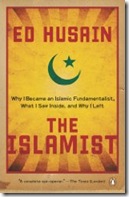
“… it must be said that al-Qaeda is just a name. It's really a mindset that we must be tackling: literalist, rejectionist, Islamist worldview. And not necessarily al-Qaeda as an organization because that can become defunct, but those ideas still remain. So it's not a war on terror as the American government has gone out of its way to suggest, but it's actually a battle of ideas.”
“The improvising is something that I nurtured in bed mostly, where if I wanted to describe a feeling, I would just do this thing where I’d force my brain to exist without preconceptions. And then, usually if I did that enough, I would just think of something — a new way to describe a feeling. And then in my newest book (Shoplifting from American Apparel), I deliberately didn’t do any of that…My detachment is more kind of trying to advocate to myself a way of living life that is kind of pre-language, just like experiencing things directly.”
For the whale is indeed wrapt up in his blubber as in a real blanket or counterpane; or, still better, an Indian poncho slipt over his head, and skirting his extremity. It is by reason of this cosy blanketing of his body, that the whale is enabled to keep himself comfortable in all weathers, in all seas, times, and tides. What would become of a Greenland whale, say, in those shuddering, icy seas of the north, if unsupplied with his cosy surtout? True, other fish are found exceedingly brisk in those Hyperborean waters; but these, be it observed, are your cold-blooded, lungless fish, whose very bellies are refrigerators; creatures, that warm themselves under the lee of an iceberg, as a traveller in winter would bask before an inn fire; whereas, like man, the whale has lungs and warm blood. Freeze his blood, and he dies. How wonderful is it then — except after explanation — that this great monster, to whom corporeal warmth is as indispensable as it is to man; how wonderful that he should be found at home, immersed to his lips for life in those Arctic waters! where, when seamen fall overboard, they are sometimes found, months afterwards, perpendicularly frozen into the hearts of fields of ice, as a fly is found glued in amber. But more surprising is it to know, as has been proved by experiment, that the blood of a Polar whale is warmer than that of a Borneo native in summer.
It does seem to me, that herein we see the rare virtue of a strong individual vitality, and the rare virtue of thick walls, and the rare virtue of interior spaciousness. Oh, man! admire and model thyself after the whale! Do thou, too, remain warm among ice. Do thou, too, live in this world without being of it. Be cool at the equator; keep thy blood fluid at the Pole. Like the great dome of St. Peter's, and like the great whale, retain, O man! in all seasons a temperature of thine own.
"Three passions, simple but overwhelmingly strong, have governed my life: the longing for love, the search for knowledge, and the unbearable pity for the suffering of mankind."
Pray to whomever you kneel down to: Jesus nailed to his wooden or plastic cross, his suffering face bent to kiss you, Buddha still under the bo tree in scorching heat, Adonai, Allah. Raise your arms to Mary that she may lay her palm on our brows, to Shekhina, Queen of Heaven and Earth, to Inanna in her stripped descent.
Then pray to the bus driver who takes you to work. On the bus, pray for everyone riding that bus, for everyone riding buses all over the world. Drop some silver and pray.
Waiting in line for the movies, for the ATM, for your latte and croissant, offer your plea. Make your eating and drinking a supplication. Make your slicing of carrots a holy act, each translucent layer of the onion, a deeper prayer.
To Hawk or Wolf, or the Great Whale, pray. Bow down to terriers and shepherds and Siamese cats. Fields of artichokes and elegant strawberries.
Make the brushing of your hair a prayer, every strand its own voice, singing in the choir on your head. As you wash your face, the water slipping through your fingers, a prayer: Water, softest thing on earth, gentleness that wears away rock.
Making love, of course, is already prayer. Skin, and open mouths worshipping that skin, the fragile cases we are poured into.
If you're hungry, pray. If you're tired. Pray to Gandhi and Dorothy Day. Shakespeare. Sappho. Sojourner Truth.
When you walk to your car, to the mailbox, to the video store, let each step be a prayer that we all keep our legs, that we do not blow off anyone else's legs. Or crush their skulls. And if you are riding on a bicycle or a skateboard, in a wheelchair, each revolution of the wheels a prayer as the earth revolves: less harm, less harm, less harm.
And as you work, typing with a new manicure, a tiny palm tree painted on one pearlescent nail or delivering soda or drawing good blood into rubber-capped vials, writing on a blackboard with yellow chalk, twirling pizzas—
With each breath in, take in the faith of those who have believed when belief seemed foolish, who persevered. With each breath out, cherish.
Pull weeds for peace, turn over in your sleep for peace, feed the birds, each shiny seed that spills onto the earth, another second of peace. Wash your dishes, call your mother, drink wine.
Shovel leaves or snow or trash from your sidewalk. Make a path. Fold a photo of a dead child around your VISA card. Scoop your holy water from the gutter. Gnaw your crust. Mumble along like a crazy person, stumbling your prayer through the streets.
"Being a prisoner really focuses on what's essential in life and there are a lot of things we can do without and still be happy. The key lessons from Bob Shumaker's story are that inside almost all of us is the capacity to overcome the most horrific of stress in our life and even ultimately learn from that stress and thrive and grow as a person."
“The principle of compassion lies at the heart of all religious, ethical and spiritual traditions, calling us always to treat all others as we wish to be treated ourselves…We urgently need to make compassion a clear, luminous and dynamic force in our polarized world. Rooted in a principled determination to transcend selfishness, compassion can break down political, dogmatic, ideological and religious boundaries. Born of our deep interdependence, compassion is essential to human relationships and to a fulfilled humanity. It is the path to enlightenment, and indispensible to the creation of a just economy and a peaceful global community.”
The dogs barked, the dogs scratched, the dogs got wet, the dogs shook, the dogs circled, the dogs slept, the dogs ate, the dogs barked; the rain fell down, the leaves fell down, the eggs fell down and cracked on the floor; the dust settled, the wood floors were scratched, the cabinets sat without doors, the trim without paint, the stuff piled up; I loaded the dishwasher, I unloaded the dishwasher, I raked the leaves, I did the laundry, I took out the garbage, I took out the recycling, I took out the yard waste. There was a bed, it was soft, there was a blanket, it was warm, there were dreams, they were good. The corn grew, the eggplant grew, the tomatoes grew, the lettuce grew, the strawberries grew, the blackberries grew; the tea kettle screamed, the computer keys clicked, the radio roared, the TV spoke. “Will they ever come home?” “Can’t I take a break?” “How do others keep their house clean?” “Will I remember this day in fifty years?” The sweet tea slipped down my throat, the brownies melted in my mouth. My mother cooked, the apple tree bloomed, the lilac bloomed, the mimosa bloomed, I bloomed.
From “A Test of Patience,” by Mats Bigert, Cabinet Magazine, Issue 34, Summer 2009:
The Pitch Drop Experiment was initiated in 1927 by Professor Thomas Parnell of the University of Queensland in Brisbane, Australia, to demonstrate for his students that some substances that appear to be solid are actually fluid. A heated sample of pitch, a naturally occurring petroleum substance, was poured into a funnel-shaped glass container and sealed. After three years, the sample had apparently coagulated and it was time to kick-start what is now the longest-running, and what must surely be one of the slowest, laboratory experiments in history. Parnell unsealed the funnel and the pitch was free to flow. After a couple of years, a drop began to form, but it took eight years for it finally to fall, the student audience of the experiment having long since graduated. The experiment continued, nevertheless, since it required no maintenance, and every eight or so years, a little baby drop left the nest of mama pitch for the growing expanse of papa pitch below. Eventually, after the eighth, and most recent, drop fell on 28 November 2000, the viscosity of pitch was finally calculated to be roughly one hundred billion times that of water.
To date, no one has ever witnessed an actual drop fall and there is no visual documentation of the dramatic event. The closest anyone has ever come was in April 1979 when Professor John Mainstone, who now maintains the experiment, came to work on a Sunday afternoon. He noted that the pitch drop was just about to touch down, but he did not have time to stay and watch. On returning the following morning, Mainstone saw, much to his chagrin, that the drop had fallen. Even modern technology has been foiled in its attempt to capture direct evidence of the pitch’s clandestine maneuvers; a video camera placed to monitor the experiment happened to fail at the very moment the eighth drop fell.
As a youth, [Tino] Sehgal was attracted to the study of dance (how people move) and political economy (how society works). His father, now retired, was an I.B.M. manager from India, his mother a German native and homemaker. Sehgal was born in London and raised primarily in Dusseldorf, Paris and a town close to Stuttgart; he has a younger sister, who grew up to become a philosopher specializing in Alfred North Whitehead. Their father talked with them in English, their mother in German. Sehgal speaks fluent English with a faint German inflection.
When he was an adolescent, Sehgal says, a direct encounter with the political process disenchanted him permanently from parliamentary politics. Friends asked him to speak at a hearing in favor of a transportation initiative in Stuttgart. “I remember seeing the minister of transportation dive and dodge,” he says. “All he could do was administer what the public opinion was, or else he would be voted out in the next election.” If electoral politics could not produce fundamental change, why bother with it? “It’s much more interesting to change the values,” he says. “I was never interested again in parliamentary politics. I became interested in culture.”
This political awakening strengthened his attraction to dance. Aside from its physical appeal, dance, in his eyes, had the virtue of creating something that disappeared at the moment it was produced. “My work comes out of my experiment with myself,” he says. “As a person in the first world, you’re quite heavy as a person in what you use up. Can I actually solve this for myself? Can I have something to do, keep myself interested and not be somebody who is situated outside society, and can I do this without transforming lots of material?”
Here is a place of disaffection Time before and time after In a dim light: neither daylight Investing form with lucid stillness Turning shadow into transient beauty With slow rotation suggesting permanence Nor darkness to purify the soul Emptying the sensual with deprivation Cleansing affection from the temporal. Neither plenitude nor vacancy. Only a flicker Over the strained time-ridden faces Distracted from distraction by distraction Filled with fancies and empty of meaning Tumid apathy with no concentration Men and bits of paper, whirled by the cold wind That blows before and after time, Wind in and out of unwholesome lungs Time before and time after. Eructation of unhealthy souls Into the faded air, the torpid Driven on the wind that sweeps the gloomy hills of London, Hampstead and Clerkenwell, Campden and Putney, Highgate, Primrose and Ludgate. Not here Not here the darkness, in this twittering world.
"The primary focus of this path of choosing wisely...is learning to stay present. Pausing very briefly, frequently throughout the day, is an almost effortless way to do this. For just a few seconds we can be right here. Meditation is another way to train in learning to stay or...learning to come back, to return to the present over and over again."
"In Zen Buddhist painting, ensō symbolizes a moment when the mind is free to simply let the body-spirit create. The brushed ink of the circle is usually done on silk or rice paper in one movement and there is no possibility of modification: it shows the expressive movement of the spirit at that time."





 “One consequence of traumatic violence is that it isolates its victims. It can cut us off from other people, cutting us off from their own emotional lives until we go numb and move through the world as if only half alive. As a young person, I found something to set against my growing sense of isolation and numbness: the making of poems.
 Reading the world


 "There are all kinds of stories and myths that have arisen about this. Most of them are nonsense. And it became ever more apparent to me, as I worked my way up through this system, that I was not becoming a superman and I wasn’t becoming a saint and my morality was not becoming perfected. And what was happening here was a very organic process that I’ve more recently come to think of as what I call a physio-energetic process. There is some energy that arises in the body and can be developed in stages. And that’s what’s happening. All of the stuff, all of the stories that we layer on to that, that if you reach this stage, you’re going to act a certain way or you’re going to be incapable of committing various immoral acts, that’s just fantasy island...I’ve completely given up on the notion that you’re going to develop to the point of being incapable of lying, for example, or of being incapable of anger or lust."



 than using clumsy Roman numerals. Medieval Arab scholars also took the Indian idea of representing


 sex enhances local processing and analytic thinking. Thus, contrary to the intuitive notion of creativity and analytical thought as fixed human capacities or stable personality traits, they can easily be changed by subtle cues in the environment or by mere thinking about certain situations."




 At St. Dyfrig once, invited to view a poem on the English department’s computer, he had clicked on How to listen and been disappointed to find mere technical instructions for playing the audio version. What he had been hoping for was advice on how to listen to poetry—and, by extension, how to listen, really listen, to what was being said all around him. It seemed he lacked some basic skill for that.
 Mysticism for Beginners



 The
The