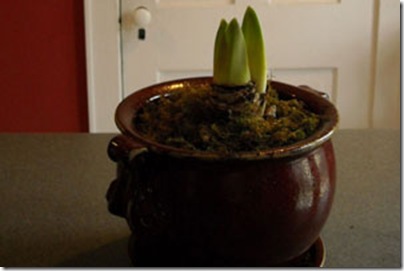
A Very Organic Process

~ Kenneth Folk, in conversation with Vince Horn, "Ordinary People Can Get Enlightened," Buddhist Geeks Podcast (Episode 156)



~ Kenneth Folk, in conversation with Vince Horn, "Ordinary People Can Get Enlightened," Buddhist Geeks Podcast (Episode 156)
ART AT STAKE
I'll See Your Lorrain and Raise You a Turner (Studio 360)
“The directors of the New Orleans and the Indianapolis art museums have a lot more riding on this weekend's Super Bowl than a couple of bucks in the office pool. After arts blogger [Tyler Green] posed a challenge, they've each put up a treasured painting from their collections. The director of the losing city's museum will have to lend his masterpiece to the winner.”
J.M.W. Turner, The Fifth Plague of Egypt
Courtesy of the Indianapolis Museum of Art
Claude Lorrain, Ideal View of Tivoli
Courtesy of the New Orleans Museum of Art
HARD TARGETS
Sports and Masculinity Explored in Art
“The multimedia exhibition Hard Targets, on view January 30–April 11, 2010 at the Wexner Center, surveys provocative artworks produced over the last 25 years that take masculinity and sports as their central themes. Ranging broadly in interest and focus from biology to commodity and locker room to stadium, Hard Targets endeavors to complicate and revise the time-honored archetype of the male athlete as an aggressive, heterosexual, hyper-competitive, emotionally remote subject. Instead, the artists in the show offer opposing views of masculinity and sport, and of the entire theater of athletic play, including the rituals and accoutrements that surround this intimate, and often still male-dominated, world. The more than 70 works—in a wide variety of media, including video, photography, mixed-media sculpture, painting, and installation—range from funny and irreverent to self-effacing and incisive.”

Joe Sola, still from St. Henry Composition
The Wexner Center for the Arts
“The 21 artists in the show are Doug Aitken, Matthew Barney, Mark Bradford, Harun Farocki, Andreas Gursky, Douglas Gordon, David Hammons, Brian Jungen, Byron Kim, Jeff Koons, Cary Leibowitz, Glenn Ligon, Kori Newkirk, Catherine Opie (including a new suite of photographs of high school football players produced in Columbus), Philippe Parreno, Paul Pfeiffer (whose 11 exhibited pieces offer a mini-survey of this artist’s work), Collier Schorr, Sam Taylor-Wood, Hank Willis Thomas, and Jonas Wood. In addition, a video work by Joe Sola video will be presented in The Box video space during the first month of the show.”

Brian Jungen, Prototype for New Understanding #23
“Each artist examines the way masculinity is characterized and ‘performed’ in a sporting context, and each suggests that the ways we view and consume sports stars and athletic events are structured by more complex systems of desire and identification than most spectators realize. The works in the exhibition open up alternative, and possibly more democratic, interpretations and inflections of sports and sports fandom than the authorized, often frankly commercial, images that most frequently and forcefully convey the cultural identity of male athletes and athleticism.”


…With only a change in perspective, the most ordinary things take on inexpressible beauty. When we don’t know, we don’t judge. And when we don’t judge, we see things in a different light. That is the light of our awareness, unfiltered by intellectual understanding, rumination, or evaluation. When we cultivate nondistracted awareness as a formal practice, we call it mindfulness meditation. When we cultivate it in our home life, we call it the laundry, the kitchen, or the yard—all the places and the ways to live mindfully by attending without distraction to whatever appears before us. But it’s hard for us to believe that attention is all there is to it, and so we complicate things with our judgment—debasing the ordinary as insignificant and idealizing the spiritual as unattainable—never seeing that the two are one.”
~ by Karen Maezen Miller, from “Do Dishes, Rake Leaves (And Don’t Forget the Endless Loads of Laundry),” Shambhala Sun, March 2010
To be alive
by Gregory Orr
To be alive: not just the carcass
But the spark.
That's crudely put, but…
If we're not supposed to dance,
Why all this music?



~ Barbara Whitesides, from Sugar Comes from Arabic: A Beginner's Guide to Arabic Letters and Words
[See also: Zero and One & Zero: The Biography of a Dangerous Idea]
The chill slipped through my skin
right into my marrow
where it took root and blossomed.
You offered me a drink
of your coffee
which we both know
is much stronger than I can take.
Made me consider how often
people have to weigh a degree of bitterness
against our thirst for warmth.
I met a woman who drinks hot water
every morning.
Says she never really liked coffee
or tea,
but she enjoys cradling a warm mug
in her cold hands.
Says she doesn’t feel like she’s missing anything.
There must be fifty ways
I haven’t yet imagined
to warm these bones.


The most common question I think writers are asked about this is, how much control did you have? And my answer to that is, I didn't have very much control, I don't want very much control, and I don't understand how control works. Say I knew enough about directors and actors to dictate who's going to direct a movie and who's going to star in it. Well, I don't know enough about directors of photography and they can make or break a film. I don't know anything about editing and a bad editor can completely mess a film up. I don't know anything about score composers. And these are all integral parts of a movie-making process. So I'd rather give it to somebody that I trust initially and hope that they make the right decisions."
~ Nick Hornby, in conversation with KCRW’s The Business producer Matt Holzman (January 25, 2010)
"Love enhances global processing and creative thinking whereas 
~ Jens Förster, from the conclusions of the research study quoted in “Love, Lust, and Creativity,” by Scott Barry Kaufman, Psychology Today (September 10, 2009)

tte
Visit the digital_nation site to learn more and about this program, watch it online, and join the conversation.

~ Richard Davidson, from “This Is Your Brain on Happiness,” by Penelope Green, O, The Oprah Magazine (March 1, 2008)
"Il y a un autre monde mais il est dans celui-ci."
Talking of Power and Love
by Paul Éluard
Between all my torments between death and self
Between my despair and the reason for living
There is injustice and this evil of men
That I cannot accept there is my anger
There are the blood-coloured fighters of Spain
There are the sky-coloured fighters of Greece
The bread the blood the sky and the right to hope
For all the innocents who hate evil
The light is always close to dying
Life always ready to become earth
But spring is reborn that is never done with
A bud lifts from dark and the warmth settles
And the warmth will have the right of the selfish
Their atrophied senses will not resist
I hear the fire talk lightly of coolness
I hear a man speak what he has not known
You who were my flesh’s sensitive conscience
You I love forever you who made me
You will not tolerate oppression or injury
You’ll sing in dream of earthly happiness
You’ll dream of freedom and I’ll continue you
“People live in bubbles unaware of each other. Each side has its narrative, each side has its dreams and sees the other as threatening those dreams. But if you enter the other’s bubble, you see his dreams, his inner world and his values. Our idea was to make the audience experience what it meant to be the other.”
~ Yaron Shani, discussing Ajami, the film that he and Scandar Copti co-directed, from “One Conflict, Many Views, No Actors,” by Ethan Bronner, New York Times (1/31/10).

If worries were stones that could be polished by rolling around repeatedly in our minds, one of the shiniest rocks in my tumbler would have to be wondering where I really belong. Growing up in Wichita, Kansas I was convinced I was being excluded from a much more Technicolor city. In New Mexico I quickly grew bored of the piercingly blue skies and yearned for thunderstorms. Ohio seemed to choose me instead of the other way around. I don't strongly identify with many of the aspects of my life and personality that make easy answers to casual questions about who I am or what I do.
All this becomes especially distressing when I'm convinced that everyone else not only knows for certain where they belong but have also managed to get there. It reminds me of the paradox that throws so many people off about meditation: the way it appears on the outside doesn’t give a very reliable indication of what it feels like on the inside.
I recently had the extravagantly good fortune to practice mindfulness intensively in an idyllic setting near the ocean, with Birds of Paradise thriving in early January, and a few peacocks adding spontaneous local color. Yet I found myself wondering if I really belonged there — even as a visitor.

Practicing mindfulness over time can lead to a direct and deepening awareness that nothing is unchanging. Could this apply to my perpetual desire to belong? What if there really is no satisfying it in the same way we never seem to reach the point of having the right amount of money or time?
What if instead of finding out exactly where I belong, I put my energy into belonging where I find myself at any given moment? This means making ourselves at home scraping snow from the windshield, listening to the hold music, drinking coffee, sitting through another boring meeting, watching a great movie, waiting to see the doctor, washing our hands, and dropping off the recyclables. To really bloom where we find ourselves planted begins with settling in, soaking up whatever our roots can reach, and celebrating the sprouting as well as the whole climb toward blooming.
What would it feel like to at least attempt to notice and accept all the many points along the way — the pleasant episodes as well as the unpleasant ones? If we can practice embracing the hundreds of different places we find ourselves each day (physically, mentally, emotionally), then we're well on our way to belonging wherever we go.
"What this play, [Hecuba], says that is so disturbing is that the condition of being good is that it should always be possible for you to be morally destroyed by something that you couldn't prevent. To be a good human being is to have a kind of openness to the world, an ability to trust uncertain things beyond your own control that can lead you to be shattered in very extreme circumstances. In circumstances for which you are not yourself to blame. And I think that says something very important about the condition of the ethical life, that it is based on a trust in the uncertain, a willingness to be exposed, that we're more and more like a plant than a jewel — something rather fragile, but whose very particular beauty is inseparable from that fragility."
~ Martha Nussbaum, discussing the idea from her book, The Fragility of Goodness, with Bill Moyers back in 1988.

Here is a excellent four-step plan for dealing with distress from Google’s Jolly Good Fellow, Chade-Meng Tan.
1. Know when you're not in pain.
2. Do not feel bad about feeling bad.
3. Do not feed the monsters.
4. Start every thought with kindness and humor.
Read more about these steps on the Huffington Post.


“There are as many nights as days, and the one is just as long as the other in the year's course. Even a happy life cannot be without a measure of darkness, and the word happy would lose its meaning if it were not balanced by sadness. It is far better to take things as they come along with patience and equanimity.”
[Thanks Alex!]

Daron Larson
Freelance Contemplative