Showing posts with label essays. Show all posts

Wednesday, August 18, 2010

To Understand the Meek

A poem and an excerpt from an essay by Marry Karr from Sinners Welcome:

Who the Meek are Not

          Not the bristle-bearded Igors bent
under burlap sacks, not peasants knee-deep
          in the rice paddy muck,
not the serfs whose quarter-moon sickles
          make the wheat fall in waves
they don’t get to eat. My friend the Franciscan
          nun says we misread
the word meek in the Bible verse that blesses them.
          To understand the meek
(she says) picture a great stallion at full gallop
          in a meadow, who—
at his master’s voice—seizes up to a stunned
          but instant halt.
So with the strain of holding that great power
          in check, the muscles
along the arched neck eddying,
          and only the velvet ears
prick forward, awaiting the next order.

Facing Altars: Poetry and Prayer
(excerpt)

To confess my unlikely Catholicism in Poetry—the journal that first published some of the godless twentieth-century disillusionaries of J. Alfred Prufrock and his pals—feels like an act of perversion kinkier than any dildo-wielding dominatrix could manage on HBO’s Real Sex Extra. I can’t even blame it on my being a cradle Catholic, some brainwashed escapee of the pleated skirt and communion veil who—after a misspent youth and facing an Eleanor Rigby-like dotage—plodded back into the confession booth some rainy Saturday.

Not victim but volunteer, I converted in 1996 after a lifetime of undiluted agnosticism. Hearing about my baptism, a friend sent me a postcard that read, “Not you on the Pope’s team. Say it ain’t so!” Well, while probably not the late Pope’s favorite Catholic (nor he my favorite Pope), I took the blessing and ate the broken bread. And just as I continue to live in America and vote despite my revulsion for many U.S. policies, I continue to take the sacraments despite my fervent aversion to certain doctrines. Call me a cafeteria Catholic if you like, but to that I’d say, Who isn’t?

Thursday, March 19, 2009

Somehow a Lot of Us Manage

A personal essay written by Alex Larson, my daughter, which she read aloud in class this week: 

It is hard to be a human.  We are born as vulnerable little nuggets, incapable of doing anything, and somehow we manage to grow and adapt into functioning beings.  We are surrounded by death, poverty, crime, all of which can drive a person to misery.  Yet somehow a lot of us manage.

If you were in my English class last year, you may have learned that I have an affinity for the elderly, and if you weren’t, you will quickly see.  Some of my friends shy away from old people because they say they are mean or grumpy.  Some even comment that they smell bad.  To that I say, people of all ages can be bitter or have poor hygiene.  But all of this is slightly irrelevant. I was never quite sure what attracted me to older folks, but thanks to Senior Thesis, I now have an idea.

Val photographed by Alex Larson for her Senior Thesis project. I got to interview twelve residents at a retirement home; most were above the age of 85.  The majority of their friends and family have died and they (obviously) live in a retirement home, which is depressing in and of itself.  Many of them were hard of hearing, needed walkers, or could see only with thick glasses.  You would think that if you lost all of your independence, that you would give up all hope, which does happen, but the group I talked to surprised me. 

Every single individual I got the chance to speak with made it clear to me that they lived very happy lives.  It is hard to grasp, as teenagers, that these people, were once our age.  They probably hated school, had to find jobs, and fought with their friends.  They have all been sick, yelled at someone, and cried.  They grew up and watched the people they loved, their parents, their siblings, their spouses, all die.  They lost their mobility and independence and were forced to move into a retirement home.  It is inspiring that people can go through so much crap and still be completely satisfied with their lives.

I learned that I admire the elderly because they are able to get through all of the dreadful situations they encounter and are still, at ages nearing 90, able to tell their life stories with smiles on their faces.  I can only hope, that if I am lucky enough to live that long, I will be able to sit down in my rocking chair with my knitting, and tell some little high school girl that I had a fantastic life.

[Thanks for letting me share this, Alex!]

Friday, February 06, 2009

Portal into the Miraculous

I remember feeling this same expectation strongly as a child. It is from Toward 2012: Perspectives on the Next Age by Daniel Pinchbeck:

Toward 2012 “All through my childhood, I felt certain that something extraordinary — absolutely amazing and out of the ordinary — was going to happen to me. The world seemed bursting with a secret that nobody would divulge, and someday this tremendous mystery would be revealed. Simply because they were older, I assumed that all adults had passed through this portal into the miraculous essence of existence, although they never spoke about it. As I approached adolescence, I began to suspect that my deepest hopes were going to be unfulfilled. By the time I went to college, I had realized, to my horror, that ‘maturity’ meant accepting constraints and being bound to a limited career path, rather than blossoming into a deeper dimension of possibility and wonder. This was a painful shock.”

[More… ]

Wednesday, February 04, 2009

Going Out of Our Nature

‘[Poetry] awakens and enlarges the mind itself by rendering it the receptacle of a thousand unapprehended combinations of thought. Poetry lifts the veil from the hidden beauty of the world, and makes familiar objects be as if they were not familiar; it reproduces all that it represents, and the impersonations clothed in its Elysian light stand thenceforward in the minds of those who have once contemplated them, as memorials of that gentle and exalted content which extends itself over all thoughts and actions with which it coexists.”

“The great secret of morals is love; or a going out of our nature, and an identification of ourselves with the beautiful which exists in thought, action, or person, not our own. A man, to be greatly good, must imagine intensely and comprehensively; he must put himself in the place of another and of many others; the pains and pleasure of his species must become his own. The great instrument of moral good is the imagination; and poetry administers to the effect by acting upon the cause.”

“Poetry enlarges the circumference of the imagination by replenishing it with thoughts of ever new delight, which have the power of attracting and assimilating to their own nature all other thoughts, and which form new intervals and interstices whose void forever craves fresh food. Poetry strengthens the faculty which is the organ of the moral nature of man, in the same manner as exercise strengthens a limb.”

~ Percy Bysshe Shelley, A Defence of Poetry

[Thanks Kit!]

Monday, March 31, 2008

Words are Much Trickier

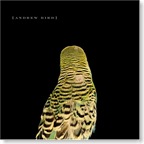
Excerpt from Andrew Bird's essay "Words Will Tell" posted on the New York Times music blog Measure for Measure:

Almost every breath contains some fragments of an escaping melody. If I shape my lips so as to whistle, my breath will take on a musical shape like sonic vapor. Words are much trickier. I would forgo words altogether if I didn’t love singing them so much. My choice of words and my voice betray so much and that’s what’s so terrifying and attractive about it.

I’m not the most forthcoming person — I only speak when I have Armchair Apocryphasomething to say. What is becoming more challenging of late is dealing with so many fully formed melodies that are unwilling to change their shape for any word. So writing lyrics becomes like running multiple code-breaking programs in your head until just the right word with just the right number of syllables, tone of vowel and finally some semblance of meaning all snap into place.

I’m kind of the opposite of the confessional singer-songwriter who fills notebooks full of poetry and intones them over a bed of chords. Meaning or “the truth that’s in my heart” usually reveals itself well after the record is released. I’m often surprised that the things I care about actually end up in my songs. Until then I’m mostly concerned with shape, tone and texture. I’m really an instrumentalist who sings words...

[Spare-Ohs]

Sunday, February 18, 2007

Be A Prodigy

"I don't recommend the writing life—at least not the one in which you move around a lot, live alone, and work odd jobs. Swing a gig where you hit the big time quick. Be a prodigy, if your agent can arrange it, and then get yourself banned in Boston. I arrived at the discipline late, at the age of twenty-nine, in part because I needed material, but mostly because I boarded a train called the Romantic Debauchery in the mistaken assumption that it would somehow get me to my destination quicker than the ones marked Hard Work and Paying Attention. Hundreds of wrong trains and many lost years later, I have learned that, despite the jovial public legends, inebriation and lucid expression are at odds with each other. If I am to write with spiritual integrity, I cannnot be a drunken butterfly."

- Poe Ballantine, "501 Minutes to Christ" (The Sun, The Best American Essays 2006)