Showing posts with label economics. Show all posts

Thursday, October 14, 2010

Taming Extremism by Promoting Education

Excerpt from “What Oman Can Teach Us,” by Nicholas D. Kristof, New York Times, October 13, 2010:

oman In short, one of the lessons of Oman is that one of the best and most cost-effective ways to tame extremism is to promote education for all.

Many researchers have found links between rising education and reduced conflict. One study published in 2006, for example, suggested that a doubling of primary school enrollment in a poor country was associated with halving the risk of civil war. Another found that raising the average educational attainment in a country by a single grade could significantly reduce the risk of conflict.

Sorry if this emphasis on education sounds like a cliché. It’s widely acknowledged in theory, and President Obama pledged as a candidate that he would start a $2 billion global education fund. But nothing has come of it. Instead, he’s spending 50 times as much this year alone on American troops in Afghanistan — even though military solutions don’t have as good a record in trouble spots as education does.

The pattern seems widespread: Everybody gives lip service to education, but nobody funds it.

Thursday, November 12, 2009

Creating a Portrait on the Cheap

From Anonyponymous: The Forgotten People Behind Everyday Words by John Marciano:

Étienne de Silhouette sil·hou·ette n. A shape distinctly outlined by background.

While living in London, Étienne de Silhouette stumbled onto the black-magic secrets of Anglo-Saxon capitalism and fiscal responsibility. He returned to Paris spreading the dark gospel, no more popular on the Champs-Élysées in the mid-1700s than now. Silhouette, however, had the ear of the royal mistress, Madame de Pompadour, through whose devices he was elevated to be Contrôleur général des finances.

To pay down the crushing debt being incurred from the ongoing Seven Years’ War, Silhouette suggested what amounted to an import of the British Window Tax, although he wanted to tax doors too, and just about everything else he could think of. Silhouette also proposed slashing the pay of bureaucrats—again, never a way into the Gallic heart—and even ordered the king to melt down the royal plate.

The most amazing thing about Silhouette’s departure after nine months in the office was that he lasted so long. Parisian ridicule of the finance minister didn’t stop with his fall from grace, and anything made on the cheap was said to be done à la silhouette, including the then-popular method of producing a portrait without having to draw, in which the “artist” traced the subject’s shadow onto a piece of black paper, cut it out, and stuck it in a frame.

Tuesday, July 14, 2009

Not Shying Away from Recessions

Economics professor Paul Zak in conversation with Krista Tippett on "The Science of Trust: Economics and Virtue," Speaking of Faith, July 9 2009:

"Economists talk of the cleansing effect of recessions. So recessions are necessary because they kind of cull out the companies that are not providing the best customer service, that are not making a profit, that are not providing some product or service that people need. And when those businesses go out of business, then those resources are redeployed to more important uses. The machines are reused; the people get different jobs. And so this keeps the economy kind of efficient. We don't want to kind of limp along and have high levels of inefficiency just because we love the name General Motors or love the name of some company if they can't kind of keep up with the herd. So competition drives that and that's an important part of maintaining efficiency.

But I think the same thing can happen in individual lives. I think as we get towards the end of every boom period, today or two years ago, the end of the 1990s and dot-com bubble, the end of the '80s and this kind of me generation, I think we do get out of whack because human beings are adaptable and we are watching what other humans are doing. We also become adaptable to this sort of yuppie, more stuff for me lifestyle.

I think, from a spiritual perspective, that recessions are also cleansing. So I think it's very important that we don't shy away from recessions and we don't try to outlaw them. I think we should say, 'Hey, there were excesses. This is how the excesses are corrected. And the excesses were both kind of on the macro level and even perhaps in my own life. Maybe I got a little over-excited about the extra bonuses I was getting and the bigger car. And now I want to sit down and reevaluate what's really important to me.' So I think there are great analogies between the micro and the macro, and we should embrace that.

Having said that, the stress issues are strong. One of the pieces of advice I like to give is: Turn off your TV. Don't listen to the pessimistic news every second of the day...

...Appropriate levels of stress are very good for human beings...There's sort of this misnomer that stress is bad. Too much stress is bad, but also too little stress is bad. So there's sort of this inverted U-curve...this sweet spot for stress that focuses your attention. So I think that when we're in that sweet spot, when we're focused, our memory's better and we're thinking clearly and we've got to figure out what to do next, that's actually very good for human beings and actually all other animals as well."

Wednesday, August 20, 2008

From We and Them to Us

"Researcher Hans Rosling uses his cool data tools to show how countries are pulling themselves out of poverty. He demos Dollar Street, comparing households of varying income levels worldwide. Then he does something really amazing."

Tuesday, July 08, 2008

Digging In with Wendell Berry

Excerpts from a conversation between Jeff Fearnside and Wendell Berry from "Digging In," The Sun Magazine (July 2008):

Photo by Andrea BurnsJeff Fearnside: I’ve noticed that the Amish seem less self-conscious than most Americans. Why do you think this is so?

Wendell Berry: I’d say that in their community, honesty is the norm. One of the most striking things about the Amish is that their countenances are open. We pity Muslim women for wearing veils, yet almost every face in this country is veiled by suspicion and fear. You can’t walk down a city street and get anybody to look at you. People’s countenances are undercover operations here.

...

JF: In your Sierra Club talk, you said that you would like conservationists to become more interested in “economic landscapes” — in working farms, ranches, and forests. Do you feel that most people’s definition of the natural world is too small?

WB: The human definition of the natural world is always going to be too small, because the world’s more diverse and complex than we can ever know. We’re not going to comprehend it; it comprehends us. The question is whether we can use it with respect. Some people in the past who knew very little biology were able to use the land without destroying it. We, who know a great deal of biology, are destroying our land in order to use it.

...

JF: I came to Kentucky after four years of living in Central Asia, and I was struck by how environmental disasters both here and there have the same causes: shortsightedness, greed, and the concentration of wealth among a powerful elite. Do you think these are simply part of human nature?

WB: Greed is a part of human nature, and greed is the root cause of these disasters. Once you have greed and the means of Wendell Berryexploitation, the high-toned rationalizations — in other words, the excuses — follow as a matter of course. A real culture functions to limit greed. Our culture functions to increase it, because, we are repeatedly told, it’s profitable to do so, though the majority of the profits go to only a few people.
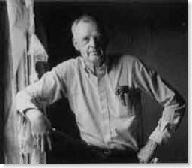
JF: We’ve talked about what consumers and producers can do to change things. What should the role of government be?

WB: The appropriate role of government should be to see that power and money don’t accumulate in too few hands.

JF: But too often governments act in their own self-interest and harm the people they’re supposed to be working for and protecting.

WB: Unless a community consists entirely of like-minded individuals, the community must, to some extent, have laws, which means government. It’s the nature of an organization like a government — or a corporation — to be self-aggrandizing and self-perpetuating. Once it starts running, it aims to keep running. The real limit on government would be reasonably independent, self-sustaining localities and communities. But if there is no local independence, then governments and other organizations have a kind of freedom that they wouldn’t have otherwise.

If you’ve got 300 million people, most of whom produce nothing for themselves or for the community and to whom everything has to be brought from somewhere else, then there’s no way you’re going to have limited government, or limited anything. All organizations feed upon the helplessness and ignorance and passivity of the people.

More...