




Where Work and Play Merge
From Free Play: Improvisation in Life and Art by Stephen Nachmanovitch:

Buddhists call this state of absorbed, selfless, absolute concentration samadhi. Samadhi is best known to be attainable through the practice of meditation, thought there is also walking samadhi , cooking samadhi, sandcastle-building samadhi, writing samadhi, fighting samadhi, lovemaking samadhi, flute-playing samadhi. When the self-clinging personality somehow drops away, we are both entranced and alert at the same time.
Babies of our own and other species seem to be often, if not usually, in a state of samadhi, and also have the unique property of putting everyone around them into a state of samadhi as well. Happy, relaxed, unmindful of self, concentrated, the baby envelops us in her own state of divine delight and expansiveness. Even when a baby is squalling and miserable, and making everyone else miserable too, she is whole and thorough about it, and is generating her own special atmosphere of squalling samadhi and misery-making samadhi…
…One of the great ways of emptying the self, along with meditation, dance, love, and play, is tuning a musical instrument. In tuning an instrument we are forced to obliterate outside noises and distractions: As the sound gets closer and closer to the pure vibration we are trying for, as the pitch moves up and down over a smaller and smaller range, we find body and mind progressively dropping away. We enter more and more deeply into the sound. We enter into a kind of trance state. This intensified listening is deep play—total immersion in the game. And once we pick up that instrument to play, our friends the audience will enter into a similar state of mind more readily in proportion to the care we have given to that process of tuning. What we discover, mysteriously, is that in tuning the instrument we tune the spirit.
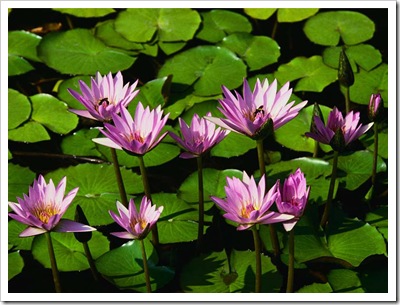
An even simpler samadhi exercise is this: Look at whatever is in front of you and say, “Yes! Yes! Yes!” to it, like Molly Bloom’s life-affirming, love-affirming mantra at the end of Ulysses. The universe of possibilities becomes visibly, tangibly larger, over a period of mere moments. When you say, “No, No, No,” the world gets smaller and heavier. Try it both ways and verify the truth of this very simple method. Look at water lilies or other highly vascular flowering plants. When the sun comes out, the flowers unfold before your eyes; when the sun goes away, they close. What the sun’s radiation and the lilies say to each other, translated through the biophysical language of chlorophyll, sugar, protein, and water, is “Yes! Yes! Yes!”

 The literature on creativity is full of tales of breakthrough experiences. These moments come when you let go of some impediment or fears, and boom—in whooshes the muse. You feel clarity, power, freedom, as something unforeseeable jumps out of you. The literature of Zen, on which I have drawn heavily because of its deep penetration of the breakthrough experience, abounds with accounts of


