




It’s All About the Coyote

Part of a discussion between Michael Barrier, author of Hollywood Cartoons: American Animation in Its Golden Age, and Radiolab producer Pat Walters from “The Universe Knows My Name,” from Radiolab, Jan. 11, 2011:
Michael Barrier: [Wile E. Coyote] is an extraordinarily human animal.
Pat Walters: And not just like in the facial expressions that he made and ways that he’d look at the camera a lot, but actually, it kind of was about the predicaments he found himself in. Take for example this one really famous cartoon (at 4:20 in the clip below). Like always, Coyote has got a plan. He has made a painting of the road. He’s put this painting right at the edge of the cliff.
MB: The idea being that the Road Runner would run through the painting, gravity would take hold of him, and he would plunge into the chasm…Instead, the Road Runner runs into the painting as if the road were actually continuing. But when the coyote tries to follow the Road Runner into the painting, he runs through the painting and falls…Gravity isn’t this uniformly indifferent force. It’s a malignant force that comes in and out of play according to how inconvenient it can be for the coyote…He’s chasing the Road Runner, but the universe is his opponent.
PW: And that’s kind of what makes the coyote seems so human. He’s in that situation that all of us feel like we’re in sometimes. Like the very laws of physics are against us.
MB: It’s almost a primitive way of thinking, but I think all of us lapse into this, you know, How can this happen? You can’t be human and not feel that way.
* * * * *
Cartoon Physics, part 1
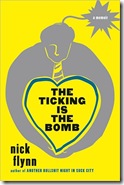
by Nick Flynn, from Some Ether
Children under, say, ten, shouldn't know
that the universe is ever-expanding,
inexorably pushing into the vacuum, galaxies
swallowed by galaxies, whole
solar systems collapsing, all of it
acted out in silence. At ten we are still learning
the rules of cartoon animation,
that if a man draws a door on a rock
only he can pass through it.
Anyone else who tries
will crash into the rock. Ten-year-olds
should stick with burning houses, car wrecks,
ships going down -- earthbound, tangible
disasters, arenas
where they can be heroes. You can run
back into a burning house, sinking ships
have lifeboats, the trucks will come
with their ladders, if you jump
you will be saved. A child
places her hand on the roof of a schoolbus,
& drives across a city of sand. She knows
the exact spot it will skid, at which point
the bridge will give, who will swim to safety
& who will be pulled under by sharks. She will learn
that if a man runs off the edge of a cliff
he will not fall
until he notices his mistake.

 For those few years when I worked in New York City public schools as an itinerant poet—Crown Heights, Harlem, the South Bronx—I’d lug a satchel heavy with books on the train every morning. Much of what I taught was directed toward finding out what the students saw every day. It was a way to honor their lives, which isn’t generally taught in public schools.
 Here’s a secret: Everyone, if they live long enough, will lose their way at some point. You will lose your way, you will wake up one morning and find yourself lost. This is a hard, simple truth. If it hasn’t happened to you yet consider yourself lucky. When it does, when one day you look around and nothing is recognizable, when you find yourself alone in a dark wood having lost the way, you may find it easier to blame someone else—an errant lover, a missing father, a bad childhood. Or it may be easier to blame the map you were given—folded too many times, out of date, tiny print. You can shake your fist at the sky, call it fate, karma, bad luck, and sometimes it is. But, for the most part, if you are honest, you will only be able to blame yourself. Life can, of course, blindside you, yet often as not we choose to be blind—agency, some call it. If you’re lucky you’ll remember a story you heard as a child, the trick of leaving a trail of breadcrumbs, the idea being that after whatever it is that is going to happen in those woods has happened, you can then retrace your steps, find your way back out. But no one said you wouldn’t be changed, by the hours, the years, spent wandering those woods.


