




Showing posts with label kindness. Show all posts
Showing posts with label kindness. Show all posts
Thursday, March 24, 2011

Sunday, March 06, 2011
Today You, Tomorrow Me
The Tire Iron and the Tamale
by Justin Horner
New York Times Sunday Magazine
March 6, 2011

Each time, when these things happened, I was disgusted with the way people didn’t bother to help. I was stuck on the side of the freeway hoping my friend’s roadside service would show, just watching tow trucks cruise past me. The people at the gas stations where I asked for a gas can told me that they couldn’t lend them out “for safety reasons,” but that I could buy a really crappy one-gallon can, with no cap, for $15. It was enough to make me say stuff like “this country is going to hell in a handbasket,” which I actually said.
But you know who came to my rescue all three times? Immigrants. Mexican immigrants. None of them spoke any English.
One of those guys stopped to help me with the blowout even though he had his whole family of four in tow. I was on the side of the road for close to three hours with my friend’s big Jeep. I put signs in the windows, big signs that said, “NEED A JACK,” and offered money. Nothing. Right as I was about to give up and start hitching, a van pulled over, and the guy bounded out.
He sized up the situation and called for his daughter, who spoke English. He conveyed through her that he had a jack but that it was too small for the Jeep, so we would need to brace it. Then he got a saw from the van and cut a section out of a big log on the side of the road. We rolled it over, put his jack on top and we were in business.
I started taking the wheel off, and then, if you can believe it, I broke his tire iron. It was one of those collapsible ones, and I wasn’t careful, and I snapped the head clean off. Damn.
No worries: he ran to the van and handed it to his wife, and she was gone in a flash down the road to buy a new tire iron. She was back in 15 minutes. We finished the job with a little sweat and cussing (the log started to give), and I was a very happy man.
The two of us were filthy and sweaty. His wife produced a large water jug for us to wash our hands in. I tried to put a 20 in the man’s hand, but he wouldn’t take it, so instead I went up to the van and gave it to his wife as quietly as I could. I thanked them up one side and down the other. I asked the little girl where they lived, thinking maybe I’d send them a gift for being so awesome. She said they lived in Mexico. They were in Oregon so Mommy and Daddy could pick cherries for the next few weeks. Then they were going to pick peaches, then go back home.
After I said my goodbyes and started walking back to the Jeep, the girl called out and asked if I’d had lunch. When I told her no, she ran up and handed me a tamale.
This family, undoubtedly poorer than just about everyone else on that stretch of highway, working on a seasonal basis where time is money, took a couple of hours out of their day to help a strange guy on the side of the road while people in tow trucks were just passing him by.
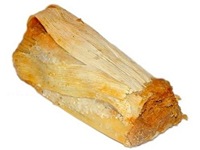
Then he rolled up his window and drove away, with his daughter waving to me from the back. I sat in my car eating the best tamale I’ve ever had, and I just started to cry. It had been a rough year; nothing seemed to break my way. This was so out of left field I just couldn’t handle it.
In the several months since then I’ve changed a couple of tires, given a few rides to gas stations and once drove 50 miles out of my way to get a girl to an airport. I won’t accept money. But every time I’m able to help, I feel as if I’m putting something in the bank.
Tuesday, March 01, 2011
Giving Ourselves a Break
Excerpt from “Go Easy on Yourself, a New Wave of Research Urges,” by Tara Parker-Pope, New York Times, Feb. 28, 2011:
Do you treat yourself as well as you treat your friends and family?
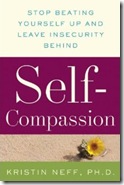
The research suggests that giving ourselves a break and accepting our imperfections may be the first step toward better health. People who score high on tests of self-compassion have less depression and anxiety, and tend to be happier and more optimistic. Preliminary data suggest that self-compassion can even influence how much we eat and may help some people lose weight.
This idea does seem at odds with the advice dispensed by many doctors and self-help books, which suggest that willpower and self-discipline are the keys to better health. But Kristin Neff, a pioneer in the field, says self-compassion is not to be confused with self-indulgence or lower standards.
“I found in my research that the biggest reason people aren’t more self-compassionate is that they are afraid they’ll become self-indulgent,” said Dr. Neff, an associate professor of human development at the University of Texas at Austin. “They believe self-criticism is what keeps them in line. Most people have gotten it wrong because our culture says being hard on yourself is the way to be.”
See also: Rekindle Warmth Toward Yourself and Others
[Thanks, Matt!]
Saturday, February 26, 2011
No Other Way to Be Human
Excerpts from "Telling Stories of Our Shared Humanity," Chris Abani, TED Talks, Feb. 2008:
What I've come to learn is that the world is never saved in grand messianic gestures, but in the simple accumulation of gentle, soft, almost invisible acts of compassion, everyday acts of compassion. In South Africa they have a phrase called ubuntu. Ubuntu comes out of a philosophy that says, the only way for me to be human is for you to reflect my humanity back at me.
But if you're like me, my humanity is more like a window. I don't really see it, I don't pay attention to it until there's a bug that's dead on the window. Then suddenly I see it, and usually, it's never good. It's usually when I'm cussing in traffic at someone who is trying to drive their car and drink coffee and send emails and make notes. So what ubuntu really says is that there is no way for us to be human without other people. It's really very simple, but really very complicated.
During the Biafran war, we were caught in the war. It was my mother with five little children. It takes her one year, through refugee camp after refugee camp, to make her way to an airstrip where we can fly out of the country. At every single refugee camp, she has to face off soldiers who want to take my elder brother Mark, who was nine, and make him a boy soldier. Can you imagine this five foot two woman, standing up to men with guns who want to kill us?
All through that one year, my mother never cried one time, not once. But when we were in Lisbon, in the airport, about to fly to England, this woman saw my mother wearing this dress, which had been washed so many times it was basically see through, with five really hungry-looking kids, came over and asked her what had happened. And she told this woman. And so this woman emptied out her suitcase and gave all of her clothes to my mother, and to us, and the toys of her kids, who didn't like that very much, but—
That was the only time she cried. And I remember years later, I was writing about my mother, and I asked her, 'Why did you cry then?"
And she said, "You know, you can steel your heart against any kind of trouble, any kind of horror. But the simple act of kindness from a complete stranger will unstitch you."
See also:
Chant:
by Chris Abani, from Dog Woman
It was the hornbill that spoke it.
In the nothing, becoming nothing,
begetting nothing; this is everything.
The world is old, the world is new
How does the darkness hide?
In the nothing, becoming nothing,
begetting nothing; this is everything.
The world is old, the world is new
The sun is no bigger than a crab.
In the nothing, becoming nothing,
begetting nothing; this is everything.
The world is old, the world is new
Hot soup is devoured from the edges.
In the nothing, becoming nothing,
begetting nothing; this is everything.
The world is old, the world is new
The blood sign is red; burning like fire.
In the nothing, becoming nothing,
begetting nothing; this is everything.
The world is old, the world is new
It has no name; silence is its name.
In the nothing, becoming nothing,
begetting nothing; this is everything.
The world is old, the world is new.
Friday, February 25, 2011
Instinctual and Repressed Kindness Let Loose

“There is approaching—and it is not so far off as it seems—a world arranged by the wisdom hid in the human heart; a world that is the organization of a strong and universal kindness; a world redeemed from the fear of institutions and of poverty. Even now, derided and discouraged as it is, socially untrained and inexperienced as it is, if the instinctual and repressed kindness of mankind were suddenly let loose upon the earth, sooner than we think would we be members one of another, sitting around one family hearthstone, and singing the song of the new humanity.”
~ George D. Herron, from The Cry for Justice: An Anthology of the Literature of Social Protest (1915)
[Thanks, Pat!]
Friday, January 21, 2011
A Process of Being Here All Along
Excerpt from “Unconditional Confidence,” by Pema Chödrön:
One of my favorite ways of expressing this attitude of gentleness [in response to fear or panic] is a quote from Trungpa Rinpoche where he says, “It’s not about cultivating one part of our self and rejecting another, but about simply looking openly at ourselves just as we are.”
So when the fear arises, it’s not trying to get rid of the fear, but looking open-heartedly. Dropping the storylines. Turning toward instead of running away. Opening up our minds and hearts because what you open up into is such a groundless, vulnerable, tender situation. But it has its huge heart. It has, not even the seeds of compassion and love, but it is a gesture of love in itself.
It probably isn’t quite accurate to say “love for the fearful mind,” but it is in a way love for a total, unconditional acceptance of your own experience. You would think that that would be the same thing as indulgence. You would think that would lead to an escalating into self-absorption and only thinking about yourself, but strangely—I think 
So this loving-kindness, this atmosphere of warmth, is allowing yourself to be as you are without justifying it or condemning it. This allowing is a process of being here all along. Not just when we like how it’s going. And as I say, instead of that making you more self-absorbed, it makes you very decent, very sane, and very open to the world and other people.
Subscribe to:
Posts (Atom)


