



No Time

Check out Jeff Scher’s blog, The Animated Life.
From “The Parade,” June 29, 2009:
The streets of the city are a non-stop parade of humanity. It’s a kind of grand, unchoreographed ballet of human locomotion. One of the great pleasures and measures of being urban is losing yourself in the crowd, with your feet and mind wandering, alone in your head but elbow to elbow with an inexhaustible supply of strangers…
We can’t help it. We are fascinated by faces and bodies alike. Every face tells a story, and the story is a mystery. The clues abound and we read them instinctively in the blink of an eye. We categorize one another as bums, businessmen, tourists, models, etc., almost unconsciously. But what fun it is to stare, and revel in the passing faces, reading wardrobe, ethnicity, posture, age. Indeed, it’s a feast with every possible variation of the species on parade. By walking in their midst we too become a part of the constantly changing people-scape and offer our own version of the mystery.
Read the whole post and watch the related video...
[Thanks Kit!]


 “To Skype or not to Skype, that is the question. But answering it invokes a larger conundrum: how to perform triage on the communication technologies that seem to multiply like Tribbles — instant messaging, texting, cellphones, softphones, iChat, Facebook, MySpace, Twitter; how to distinguish among those that will truly enhance intimacy, those that result in T.M.I. and those that, though pitching greater connectedness, in fact further disconnect us from the people we love."

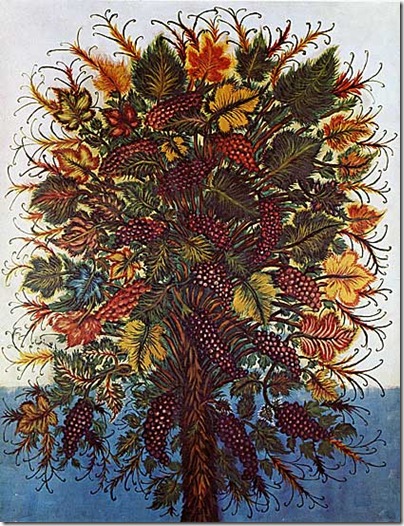






 Most of us think of love in terms of the comfort, passion, closeness, or beauty it will bring us. We imagine the enjoyment of passing hours and days with our beloved, who pleases us in touch, smell, and conversation. Perhaps we even think of living happily ever after. Unfortunately this is not love but its intoxicating sibling, idealization. Buddhists use the term “near enemy” to mean a superficial or misleading twin of a valuable state or attitude. In Buddhist parlance, then, we could say that idealization is the near enemy of love. If we mistake idealization for love, we can be harmfully misled in our connections to others and ourselves.
  The great poem is always possible.
 "I get a fine warm feeling when I'm doing well, but that pleasure is pretty much negated by the pain of getting started each day. Let's face it, writing is hell."




 George Washington Crosby began to hallucinate eight days before he died. From the rented hospital bed, placed in the middle of his own living room, he saw insects running in and out of imaginary cracks in the ceiling plaster. The panes in the windows, once snugly pointed and glazed, stood loose in their sashes. The next stiff breeze would topple them all and they would flop onto the heads of his family, who sat on the couch and the love seat and the kitchen chairs his wife had brought in to accommodate everyone. The torrent of panes would drive everyone from the room, his grandchildren in from Kansas and Atlanta and Seattle, his sister in from Florida, and he would be marooned on his bed in a moat of shattered glass. Pollen and sparrows, rain and the intrepid squirrels he had spent half his life keeping out of the bird feeders would breach the house.
  "The one thing I came away with was the ability to put myself in a place where I could gain perspective on everything I was doing at the moment."



